🌿 Toxic Positivity: When “Stay Positive” Becomes Harmful

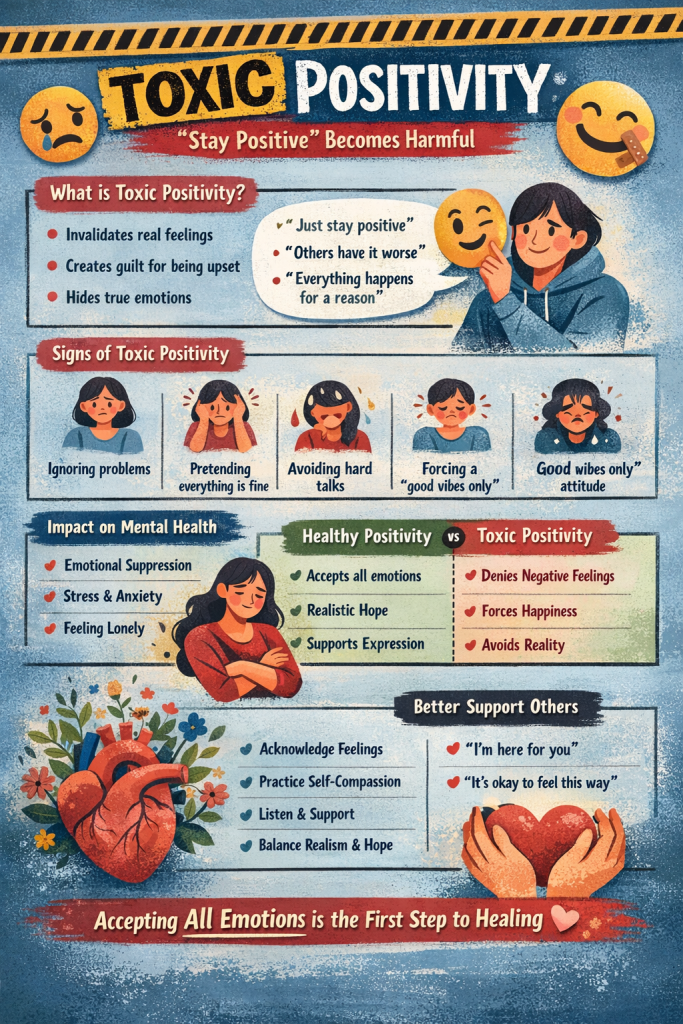
💭 What is Toxic Positivity?

  • Toxic positivity is the belief that you should always stay positive, no matter how difficult the situation is
  • It rejects or ignores negative emotions like sadness, anger, or stress
  • Common phrases include:
    • “Just stay positive”
    • “Others have it worse”
    • “Everything happens for a reason”

⚠️ Why It Can Be Harmful

  • It invalidates real feelings
  • Makes people feel guilty for being upset
  • Creates pressure to hide true emotions
  • Prevents emotional healing and growth

😔 Signs of Toxic Positivity

  • Ignoring problems instead of facing them
  • Pretending everything is okay when it’s not
  • Avoiding difficult conversations
  • Feeling uncomfortable when others express sadness
  • Forcing positivity in every situation

🧠 Impact on Mental Health

  • Builds emotional suppression
  • Increases stress and anxiety
  • Leads to feeling lonely or misunderstood
  • Stops people from seeking help
  • Can cause emotional burnout over time

💡 Healthy Positivity vs Toxic Positivity

Healthy Positivity

  • Accepts both good and bad emotions
  • Encourages realistic hope
  • Supports emotional expression

Toxic Positivity

  • Denies negative feelings
  • Forces happiness
  • Avoids reality

🌱 What to Do Instead

  • Acknowledge your feelings – It’s okay to feel sad or stressed
  • Practice self-compassion – Be kind to yourself
  • Listen without judgment – For yourself and others
  • Express emotions – Talk, write, or reflect
  • Focus on balance – Accept pain and still find hope

🤝 How to Support Others Better

Instead of saying:

  • “Just stay positive”

Try saying:

  • “I’m here for you”
  • “It’s okay to feel this way”
  • “Take your time, you’ll get through this”

🌸 Conclusion

  • Positivity is powerful, but forced positivity is not healthy
  • True mental well-being comes from accepting all emotions
  • Healing begins when we allow ourselves to feel, not hide

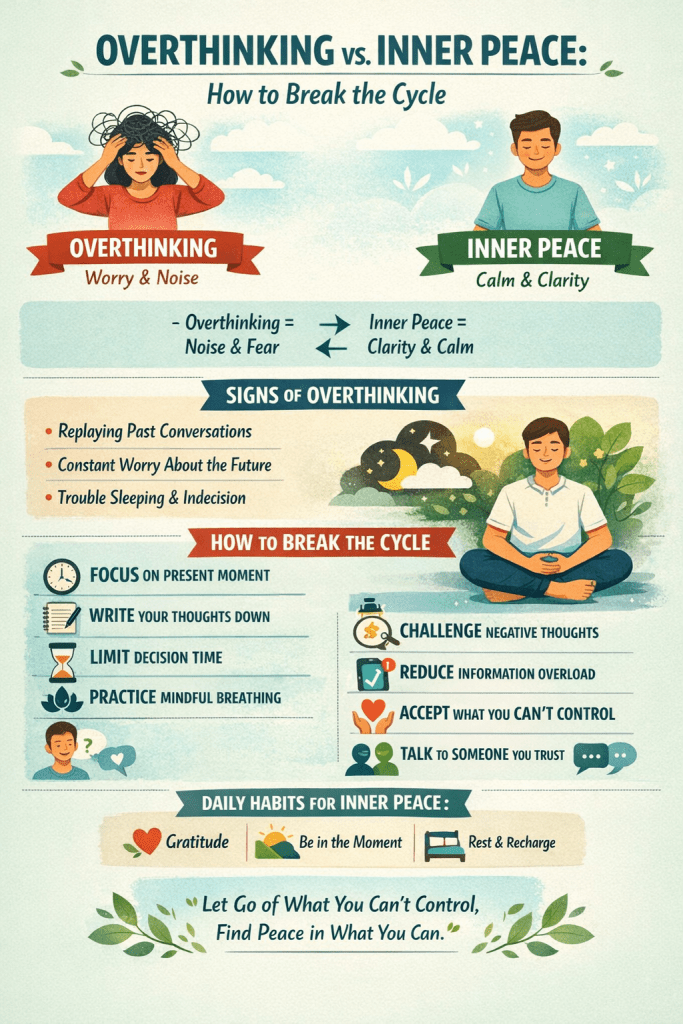
🧠 Overthinking vs. Inner Peace: How to Break the Cycle

🌪️ What is Overthinking?

  • Overthinking means constantly analyzing, worrying, or replaying situations in your mind
  • It often focuses on “what if” and worst-case scenarios
  • Instead of solving problems, it creates more stress and confusion

🕊️ What is Inner Peace?

  • Inner peace is a state of mental calm and emotional balance
  • It means accepting things you cannot control
  • A peaceful mind stays present, steady, and less reactive

⚖️ Overthinking vs. Inner Peace

  • Overthinking = Noise, doubt, fear
  • Inner Peace = Clarity, acceptance, calmness
  • Overthinking drains energy, while inner peace restores it

🚨 Signs You Are Overthinking

  • Replaying past conversations again and again
  • Constant worry about the future
  • Difficulty making decisions
  • Trouble sleeping due to racing thoughts
  • Feeling mentally exhausted without doing much

🌿 Why Do We Overthink?

  • Fear of failure or rejection
  • Need for control over everything
  • Lack of confidence in decisions
  • Past negative experiences
  • Trying to please everyone

🔓 How to Break the Overthinking Cycle

1. ⏳ Focus on the Present

  • Train your mind to stay in the current moment
  • Ask yourself: “Is this happening right now?”

2. ✍️ Write Your Thoughts Down

  • Journaling helps release thoughts instead of trapping them in your mind
  • It brings clarity and reduces mental pressure

3. 🎯 Limit Decision Time

  • Give yourself a time limit to think and decide
  • Avoid endless analysis—done is better than perfect

4. 🧘 Practice Mindfulness or Deep Breathing

  • Simple breathing exercises can calm your nervous system
  • Even 5 minutes daily makes a difference

5. 🚫 Challenge Negative Thoughts

  • Not every thought is true
  • Replace “What if everything goes wrong?” with
    “What if things turn out okay?”

6. 📵 Reduce Information Overload

  • Too much social media and comparison increase mental noise
  • Take breaks to protect your peace

7. 🤝 Accept What You Cannot Control

  • Peace begins when you stop trying to control everything
  • Focus only on your actions, not outcomes

8. 💬 Talk It Out

  • Sharing your thoughts with someone you trust reduces mental burden
  • You gain perspective and emotional relief

🌸 Daily Habits for Inner Peace

  • Start your day with gratitude
  • Spend time in silence or reflection
  • Keep your environment clean and calm
  • Practice self-compassion (be kind to yourself)
  • Get enough rest and take breaks

✨ Key Insight

  • Overthinking is not a sign of intelligence—it’s often a sign of unmanaged fear
  • Inner peace is not something you find outside—it’s something you build within

🌈 Conclusion

  • You don’t need to control every thought
  • You just need to choose which thoughts deserve your attention
  • The more you let go, the more peaceful your mind becomes

Everything Happens for a Reason

In everyday life, we often hear the phrase “Everything happens for a reason.” In Islam, this idea is deeply rooted in the belief of Qadr (Divine Decree)—that Allah has a perfect plan for everything that happens in our lives. Even when we don’t understand it, there is always wisdom behind it.


🌙 1. Allah Knows What We Do Not Know

Sometimes we feel confused, hurt, or disappointed when things don’t go our way. But Islam teaches us that Allah’s knowledge is far greater than ours.

Quran Verse:

“Perhaps you dislike something and it is good for you; and perhaps you love something and it is bad for you. And Allah knows, while you do not know.”
(Surah Al-Baqarah 2:216)

Meaning:
What we think is bad may actually protect us, and what we desire may not be good for us. Allah sees the full picture—we only see a small part.


🌱 2. Every Test Has a Purpose

Difficulties are not punishments, but tests meant to strengthen our faith and character.

Quran Verse:

“Do people think they will be left alone because they say, ‘We believe,’ and will not be tested?”
(Surah Al-Ankabut 29:2)

Meaning:
Life’s challenges are part of our journey. They help us grow, become patient, and get closer to Allah.


💭 3. Hardship Comes with Ease

No pain or struggle is permanent. Allah promises relief along with difficulty.

Quran Verse:

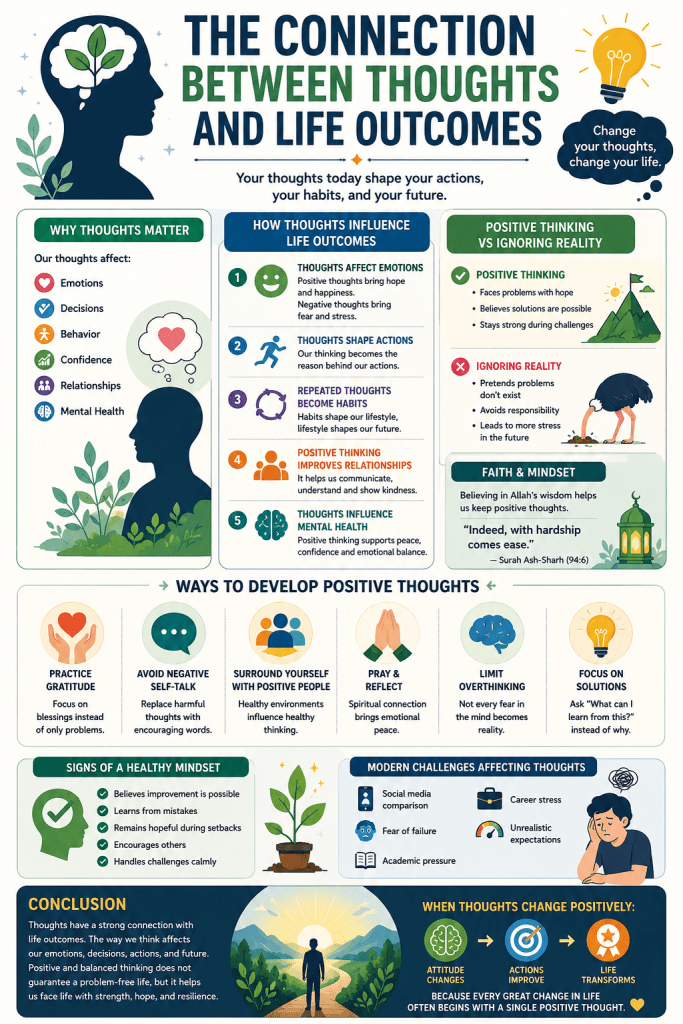
“Indeed, with hardship comes ease.”
(Surah Ash-Sharh 94:6)

Meaning:
After every difficulty, ease will come—sometimes in ways we don’t expect.


🤲 4. Allah’s Plan is Always the Best

Even when our plans fail, it doesn’t mean life is failing. It means Allah is redirecting us to something better.

Quran Verse:

“And Allah is the best of planners.”
(Surah Aal-e-Imran 3:54)

Meaning:
We plan based on what we want, but Allah plans based on what is best for us.


🌸 5. Nothing Happens Without Allah’s Permission

Every event in our life—big or small—is part of Allah’s decree.

Quran Verse:

“No disaster strikes except by permission of Allah.”
(Surah At-Taghabun 64:11)

Meaning:
This reminds us that everything is under Allah’s control, and nothing happens randomly.


🕊️ 6. Trust (Tawakkul) Brings Peace

When we truly trust Allah, our hearts become calm even in uncertain situations.

Quran Verse:

“And whoever relies upon Allah – then He is sufficient for him.”
(Surah At-Talaq 65:3)

Meaning:
When we depend on Allah, He takes care of our needs in ways we cannot imagine.


🌟 7. Real-Life Reflection

  • You didn’t get the job → Maybe a better opportunity is coming
  • A relationship ended → Maybe Allah is protecting your heart
  • You faced failure → Maybe it is preparing you for success

What feels like a setback today may be a blessing tomorrow.

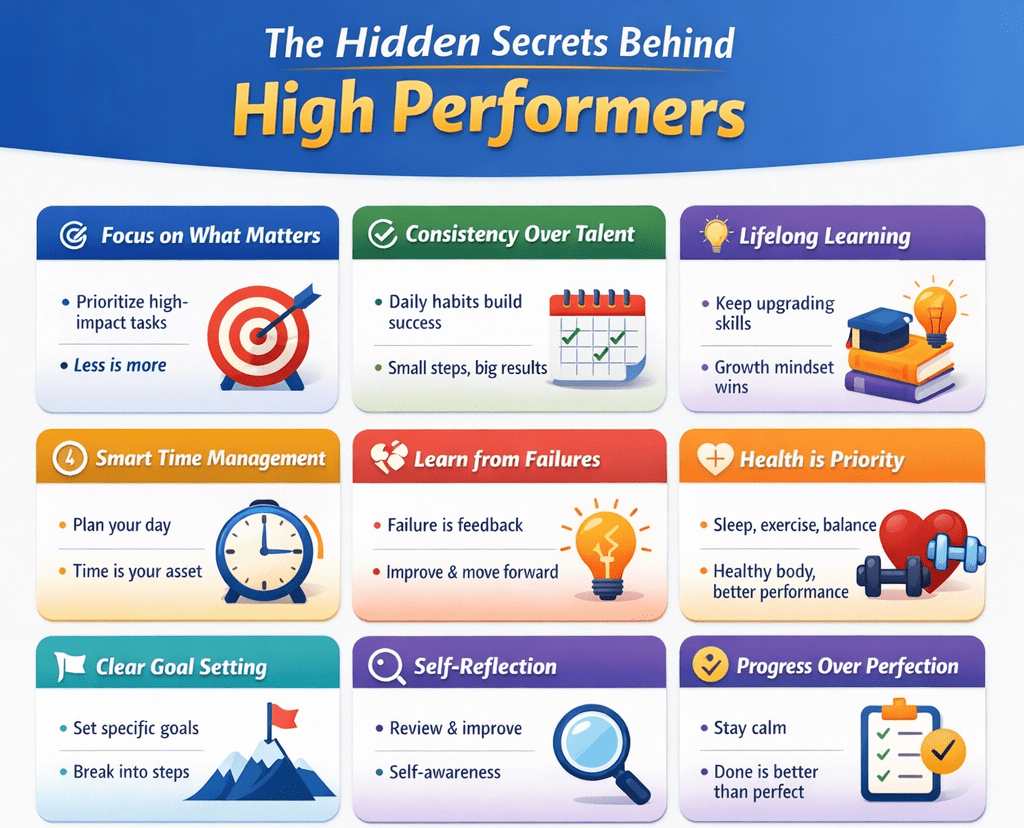
The Hidden Secrets Behind High Performers

🔹 1. They Focus on What Truly Matters

  • High performers don’t do everything — they do the right things.
  • They prioritize high-impact tasks over busy work.

👉 Secret: Saying “no” is more powerful than saying yes.


🔹 2. Consistency Beats Talent

  • They don’t rely on motivation — they build daily habits.
  • Small actions done every day create big results.

🇮🇳 Indian Insight: CBSE toppers emphasized regular study and routine, not last-minute effort.


🔹 3. They Keep Learning Always

  • High performers are lifelong learners.
  • They upgrade skills continuously to stay ahead.

👉 Secret: Growth mindset > Fixed mindset


🔹 4. They Manage Time Like Experts

  • They plan their day with clear priorities.
  • They avoid distractions and focus on deep work.

👉 Secret: Time is treated as an asset, not something to waste.


🔹 5. They Stay Strong During Failures

  • They see failure as feedback, not defeat.
  • They adapt quickly and keep moving forward.

🔹 6. They Take Care of Their Health

  • Physical and mental health are top priorities.
  • Good sleep, exercise, and balance improve performance.

🔹 7. They Set Clear Goals

  • They break big goals into smaller steps.
  • They track progress regularly.

👉 Secret: Clarity creates confidence.


🔹 8. They Reflect and Improve

  • They regularly review what worked and what didn’t.
  • This helps them improve continuously.

👉 Secret: Self-awareness is a superpower.


🔹 9. They Surround Themselves with the Right People

  • They build networks with positive and growth-oriented people.
  • Mentors and peers influence success.

👉 Secret: Your environment shapes your results.


🔹 10. They Stay Calm, Not Perfect

  • They don’t chase perfection — they focus on progress.
  • Balance and mental peace improve performance.

✅ Final Thought

👉 High performers are not “extraordinary people” —
they simply follow extraordinary habits consistently.

Success is not a secret — it’s a system.

Emotional Intelligence in the Workplace

Emotional Intelligence (EI) is the ability to understand, manage, and use emotions effectively — both your own and others’.
In today’s workplace, technical skills alone are not enough. Emotional intelligence determines how well we lead, communicate, and collaborate.


🔹 1. What is Emotional Intelligence?

Emotional Intelligence includes:

  • Self-awareness – Understanding your own emotions
  • Self-regulation – Controlling impulsive reactions
  • Motivation – Staying driven toward goals
  • Empathy – Understanding others’ feelings
  • Social skills – Building healthy relationships

“IQ may get you hired, but EQ gets you promoted.”


🔹 2. Why Emotional Intelligence Matters at Work

  • Improves communication
  • Reduces workplace conflicts
  • Builds stronger teamwork
  • Enhances leadership effectiveness
  • Increases job satisfaction

Employees with high EI create a positive and respectful work culture.

“People may forget what you said, but they will never forget how you made them feel.”


🔹 3. Emotional Intelligence in Leadership

A leader with emotional intelligence:

  • Listens actively
  • Handles criticism calmly
  • Encourages team members
  • Resolves conflicts fairly
  • Inspires trust

Such leaders create psychological safety within teams.

“Leadership is not about control, it is about connection.”


🔹 4. Emotional Intelligence and Teamwork

Teams function better when members:

  • Respect different opinions
  • Manage disagreements maturely
  • Support each other during stress
  • Communicate clearly

High EI reduces misunderstandings and strengthens cooperation.

“Strong teams are built on understanding, not just skill.”


🔹 5. How to Improve Emotional Intelligence

  • Practice self-reflection daily
  • Pause before reacting
  • Develop active listening skills
  • Seek constructive feedback
  • Show empathy in conversations

Small behavioral changes can create a big professional impact.

“Emotional intelligence is not about being emotional; it is about being emotionally smart.”


🔹 Conclusion

In modern workplaces, success depends not only on knowledge but also on emotional maturity. Emotional intelligence builds trust, strengthens relationships, and drives long-term performance.

“Your attitude and emotional control define your professional success more than your technical ability.”

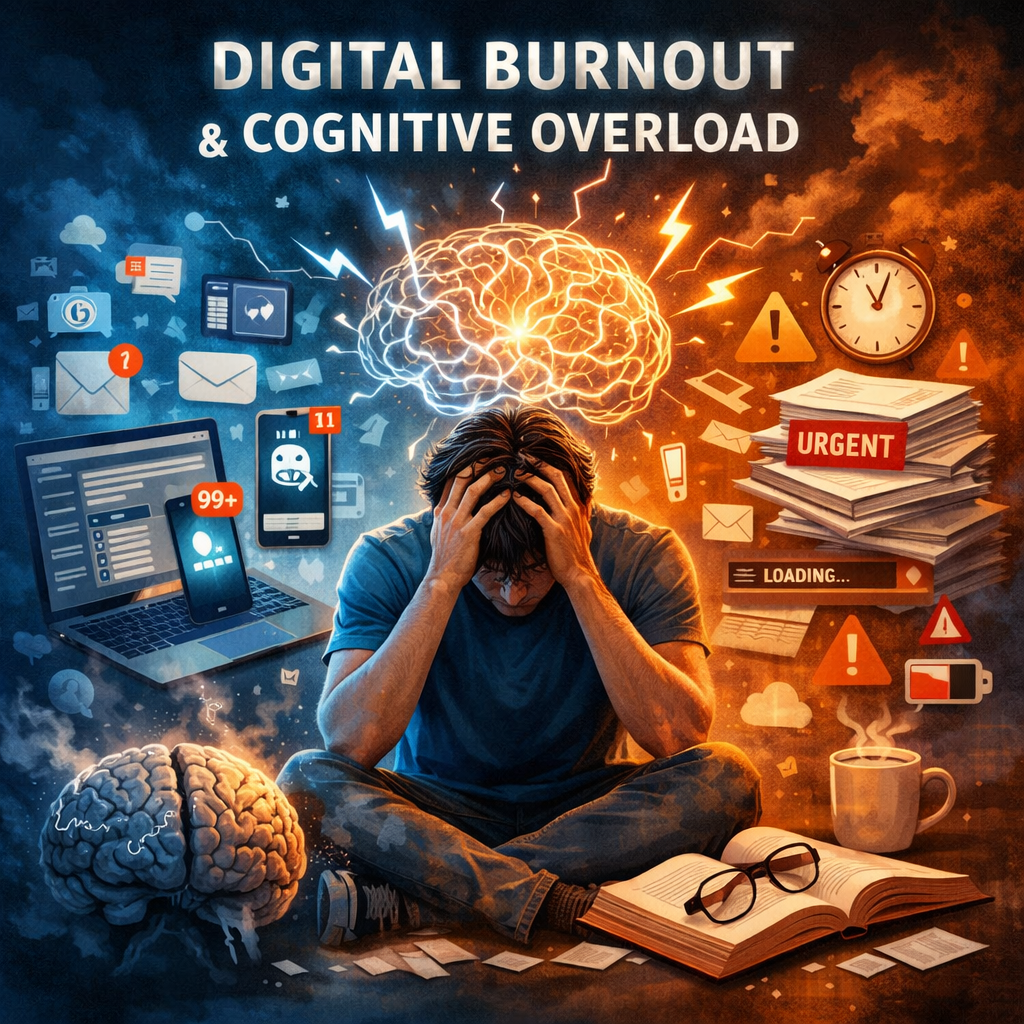
Digital Burnout and Cognitive Overload

Introduction

In today’s digital world, technology has become an inseparable part of our daily lives. From work and education to communication and entertainment, screens dominate almost every moment. While digital tools improve efficiency and connectivity, excessive and continuous exposure to them puts heavy pressure on the human mind. This growing mental strain leads to digital burnout and cognitive overload, affecting focus, emotional balance, productivity, and overall well-being. Understanding this issue is essential to creating healthier digital habits and protecting mental health in the modern age.

1. What is Digital Burnout?

  • Digital burnout happens when we feel mentally tired due to excessive screen time.
  • It is caused by constant use of phones, laptops, and digital platforms.

2. What is Cognitive Overload?

  • Cognitive overload occurs when the brain receives more information than it can process.
  • Notifications, emails, messages, and multitasking overload our thinking capacity.

3. Why is it Increasing Today?

  • Continuous online work and virtual meetings
  • Social media scrolling without breaks
  • Pressure to stay available and respond instantly
  • Information overload from news and digital content

4. Common Signs and Symptoms

  • Difficulty concentrating and remembering things
  • Mental fatigue and constant tiredness
  • Irritability and mood swings
  • Headaches and sleep problems
  • Loss of motivation and productivity

5. Impact on Mental Health

  • Increased stress and anxiety
  • Reduced attention span
  • Emotional exhaustion
  • Feeling overwhelmed even with simple tasks

6. Impact on Work and Studies

  • Lower efficiency and creativity
  • Increased errors and poor decision-making
  • Reduced learning capacity
  • Declining engagement and interest

7. How Digital Burnout Affects Daily Life

  • Less face-to-face interaction
  • Reduced quality time with family
  • Constant mental distraction
  • Difficulty enjoying offline moments

8. Simple Ways to Reduce Digital Burnout

  • Take regular screen breaks
  • Limit unnecessary notifications
  • Follow single-tasking instead of multitasking
  • Set boundaries for work and personal time
  • Practice digital detox regularly

9. Role of Mindfulness and Rest

  • Short breathing exercises calm the mind
  • Adequate sleep restores cognitive capacity
  • Mindful usage of technology improves focus

10. Conclusion

  • Digital tools are helpful, but overuse harms mental well-being.
  • Managing screen time and information flow is essential for a healthy mind.
  • Balance, awareness, and conscious digital habits can prevent burnout.

Closing Quote:
“Resting the mind is not a luxury—it is a necessity in a digital world.”

Time Alone Is Not Enough

Many people believe that spending time alone will automatically bring clarity, peace, or growth. While solitude is important, time alone by itself is not enough to create real change.

1. Alone Time Without Purpose Becomes Escape

Being alone can turn into avoidance if it lacks intention. Scrolling, overthinking, or sleeping excessively does not lead to growth.

2. Reflection Matters More Than Isolation

Growth happens when alone time is used for reflection, not just separation from others. Thinking deeply, journaling, or self-questioning gives meaning to solitude.

3. Action Is More Important Than Silence

Understanding yourself is useful, but change requires action. Time alone must lead to decisions, habits, and effort.

4. Learning Needs External Input

Books, mentors, feedback, and conversations help shape thinking. Staying only within your own thoughts can limit perspective.

5. Emotional Healing Often Needs Connection

Some healing happens through relationships, support, and communication—not only in isolation.

6. Discipline Gives Direction to Alone Time

Without discipline, alone time becomes comfort. With discipline, it becomes a tool for focus and self-improvement.

7. Balance Creates Growth

True growth comes from balancing solitude with interaction, thinking with doing, and rest with effort.

Conclusion

Time alone is valuable—but only when combined with reflection, learning, and action. Solitude prepares the mind, but progress happens when we step forward.

Quote to close:
“Silence helps you listen, but action helps you grow.”

Life Is Not Fair, But It Is Real

Life often looks unfair when we compare our journey with others. Some people move ahead quickly, while others struggle despite hard work. Accepting this truth helps us grow stronger and wiser.


1. Everyone Starts From a Different Place

Not all people begin life with the same opportunities, support, or resources. Comparing paths only creates frustration.

2. Hard Work Doesn’t Always Give Instant Results

Effort is important, but results may take time. Life tests patience before giving rewards.

3. Talent Alone Is Not Enough

Skills matter, but consistency, discipline, and resilience matter more in real life.

4. Failure Is a Part of the Process

Mistakes and setbacks are not signs of weakness. They are lessons that shape character.

5. Life Doesn’t Follow Our Plans

Unexpected changes are normal. Learning to adjust is a real-life skill.

6. Comparison Steals Peace

Social media shows highlights, not struggles. Every success has an unseen story.

7. Growth Comes From Acceptance

When we accept reality instead of resisting it, we find clarity and strength.

8. Strength Is Built in Difficult Times

Challenges teach responsibility, humility, and emotional maturity.

9. Life Rewards Those Who Keep Going

Consistency and persistence matter more than perfection.

10. Reality Makes Us Stronger

Life may not be fair, but it prepares us to face the world with courage.


Closing Thought

Life is not meant to be easy—it is meant to be lived, learned from, and grown through.

From Busy to Effective: Rethinking Productivity

Introduction

In a world that rewards constant activity, many people equate productivity with being busy. Long to-do lists, packed schedules, and endless notifications create the illusion of progress. However, true productivity is not about how much we do—it is about how effectively we use our time, energy, and focus. Moving from busyness to effectiveness requires a shift in mindset, not just better tools.


Key Ideas Explained in Simple Points

1. Being Busy Is Easy, Being Effective Is Intentional

  • Busyness fills time; effectiveness creates results
  • Effective people choose tasks deliberately
  • Outcomes matter more than effort

2. Productivity Begins in the Mind

  • Clear thinking leads to better decisions
  • Mental clutter reduces focus and efficiency
  • Calm minds work faster and better

3. Focus on What Truly Matters

  • Not all tasks deserve equal attention
  • High-impact tasks move goals forward
  • Prioritization reduces stress and overload

4. Time Alone Is Not Enough

  • Energy and attention shape performance
  • Working when mentally fresh improves quality
  • Rest is essential for sustained productivity

5. One Task at a Time

  • Multitasking reduces accuracy and speed
  • Single-tasking improves effectiveness
  • Fewer interruptions mean better results

6. Simple Planning Makes a Big Difference

  • Plan the day with clear priorities
  • Limit goals to what is realistically achievable
  • Review progress regularly

Conclusion

True productivity is not about doing more—it is about doing what matters most with clarity and purpose. When the mind is focused and priorities are clear, effectiveness replaces exhaustion, and success becomes sustainable.


Closing Quote

“Productivity is not about filling every moment with work, but about making every moment count.”

Building Consistency in a Distracted World

In today’s fast-paced digital environment, maintaining consistency has become increasingly difficult. Constant notifications, information overload, and competing priorities often disrupt focus. However, consistency remains a critical factor for personal growth, productivity, and long-term success. The following simple points explain how consistency can be built despite daily distractions.


1. Understand What Distracts You

Identify the main sources of distraction in your daily routine, such as mobile phones, social media, or multitasking. Awareness is the first step toward control.


2. Set Clear and Realistic Goals

Consistency improves when goals are specific and achievable. Break large goals into small, manageable tasks to avoid feeling overwhelmed.


3. Create a Fixed Routine

A regular schedule helps train the mind. Performing tasks at the same time each day builds habit strength and reduces decision fatigue.


4. Start Small but Stay Regular

Small actions done daily are more effective than occasional intense efforts. Even limited progress, when repeated, leads to meaningful results over time.


5. Limit Digital Interruptions

Turn off unnecessary notifications and allocate specific times for checking messages or social media. Controlled usage improves concentration.


6. Focus on One Task at a Time

Multitasking reduces efficiency and consistency. Single-tasking improves quality of work and builds discipline.


7. Track Your Progress

Maintain a simple checklist or journal to record daily efforts. Tracking creates accountability and motivates continuation.


8. Accept Imperfection and Continue

Missing a day is not failure. The key to consistency is returning to the routine without guilt or self-criticism.


9. Build Supportive Habits

Link new habits to existing ones, such as reading after dinner or planning the next day before sleeping. Habit stacking strengthens consistency.


10. Remember Your Purpose

Revisit the reason behind your goals. A clear purpose provides motivation during periods of low energy or distraction.


Conclusion

In a distracted world, consistency is not about perfection but persistence. By making small, intentional changes and staying committed, anyone can develop consistent habits that lead to long-term success and personal satisfaction.