
Introduction
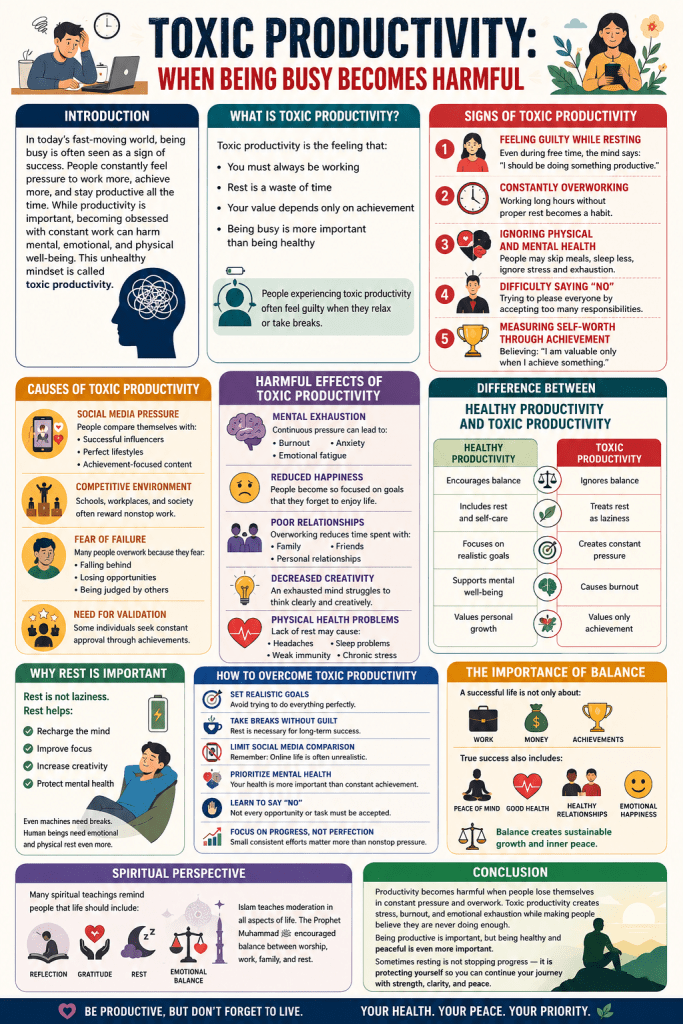
In today’s fast-moving world, being busy is often seen as a sign of success. People constantly feel pressure to work more, achieve more, and stay productive all the time. While productivity is important, becoming obsessed with constant work can harm mental, emotional, and physical well-being. This unhealthy mindset is called toxic productivity.
What is Toxic Productivity?
Toxic productivity is the feeling that:
- You must always be working
- Rest is a waste of time
- Your value depends only on achievement
- Being busy is more important than being healthy
People experiencing toxic productivity often feel guilty when they relax or take breaks.
Signs of Toxic Productivity
1. Feeling Guilty While Resting
Even during free time, the mind says:
- “I should be doing something productive.”
2. Constantly Overworking
Working long hours without proper rest becomes a habit.
3. Ignoring Physical and Mental Health
People may:
- Skip meals
- Sleep less
- Ignore stress and exhaustion
4. Difficulty Saying “No”
Trying to please everyone by accepting too many responsibilities.
5. Measuring Self-Worth Through Achievement
Believing:
- “I am valuable only when I achieve something.”
Causes of Toxic Productivity
Social Media Pressure
People compare themselves with:
- Successful influencers
- Perfect lifestyles
- Achievement-focused content
Competitive Environment
Schools, workplaces, and society often reward nonstop work.
Fear of Failure
Many people overwork because they fear:
- Falling behind
- Losing opportunities
- Being judged by others
Need for Validation
Some individuals seek constant approval through achievements.
Harmful Effects of Toxic Productivity
Mental Exhaustion
Continuous pressure can lead to:
- Burnout
- Anxiety
- Emotional fatigue
Reduced Happiness
People become so focused on goals that they forget to enjoy life.
Poor Relationships
Overworking reduces time spent with:
- Family
- Friends
- Personal relationships
Decreased Creativity
An exhausted mind struggles to think clearly and creatively.
Physical Health Problems
Lack of rest may cause:
- Headaches
- Sleep problems
- Weak immunity
- Chronic stress
Difference Between Healthy Productivity and Toxic Productivity
| Healthy Productivity | Toxic Productivity |
|---|---|
| Encourages balance | Ignores balance |
| Includes rest and self-care | Treats rest as laziness |
| Focuses on realistic goals | Creates constant pressure |
| Supports mental well-being | Causes burnout |
| Values personal growth | Values only achievement |
Why Rest is Important
Rest is not laziness.
Rest helps:
- Recharge the mind
- Improve focus
- Increase creativity
- Protect mental health
Even machines need breaks. Human beings need emotional and physical rest even more.
How to Overcome Toxic Productivity
Set Realistic Goals
Avoid trying to do everything perfectly.
Take Breaks Without Guilt
Rest is necessary for long-term success.
Limit Social Media Comparison
Remember:
- Online life is often unrealistic.
Prioritize Mental Health
Your health is more important than constant achievement.
Learn to Say “No”
Not every opportunity or task must be accepted.
Focus on Progress, Not Perfection
Small consistent efforts matter more than nonstop pressure.
The Importance of Balance
A successful life is not only about:
- Work
- Money
- Achievements
True success also includes:
- Peace of mind
- Good health
- Healthy relationships
- Emotional happiness
Balance creates sustainable growth and inner peace.
Spiritual Perspective
Many spiritual teachings remind people that life should include:
- Reflection
- Gratitude
- Rest
- Emotional balance
Islam teaches moderation in all aspects of life. The Prophet Muhammad ﷺ encouraged balance between worship, work, family, and rest.
Conclusion
Productivity becomes harmful when people lose themselves in constant pressure and overwork. Toxic productivity creates stress, burnout, and emotional exhaustion while making people believe they are never doing enough.
Being productive is important, but being healthy and peaceful is even more important.
Sometimes resting is not stopping progress — it is protecting yourself so you can continue your journey with strength, clarity, and peace.



 Why the Future Feels “Foggy”
 How to Find Peace in the Present
 Benefits of Living in the Now
 Final Thought


