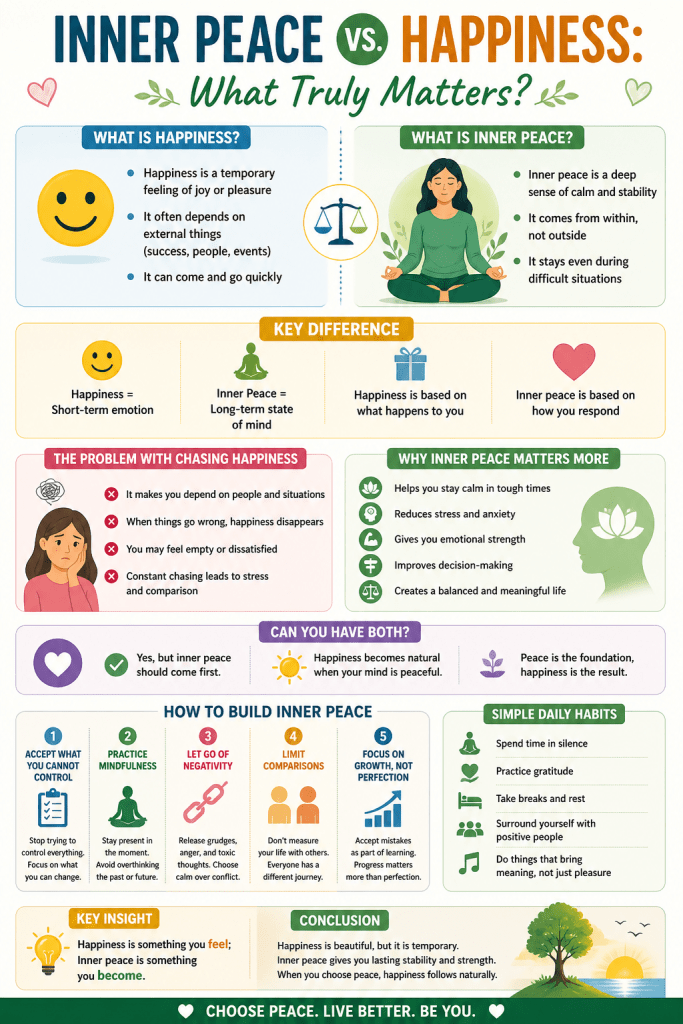
Inner Peace vs. Happiness: What Truly Matters?

💭 What is Happiness?

  • Happiness is a temporary feeling of joy or pleasure
  • It often depends on external things (success, people, events)
  • It can come and go quickly

🧘 What is Inner Peace?

  • Inner peace is a deep sense of calm and stability
  • It comes from within, not outside
  • It stays even during difficult situations

⚖️ Key Difference

  • Happiness = Short-term emotion
  • Inner Peace = Long-term state of mind
  • Happiness is based on what happens to you
  • Inner peace is based on how you respond

🌪️ The Problem with Chasing Happiness

  • It makes you depend on people and situations
  • When things go wrong, happiness disappears
  • You may feel empty or dissatisfied
  • Constant chasing leads to stress and comparison

🌸 Why Inner Peace Matters More

  • Helps you stay calm in tough times
  • Reduces stress and anxiety
  • Gives you emotional strength
  • Improves decision-making
  • Creates a balanced and meaningful life

🔄 Can You Have Both?

  • Yes, but inner peace should come first
  • Happiness becomes natural when your mind is peaceful
  • Peace is the foundation, happiness is the result

🔓 How to Build Inner Peace

1. 🧠 Accept What You Cannot Control

  • Stop trying to control everything
  • Focus on what you can change

2. 🧘 Practice Mindfulness

  • Stay present in the moment
  • Avoid overthinking the past or future

3. ❤️ Let Go of Negativity

  • Release grudges, anger, and toxic thoughts
  • Choose calm over conflict

4. 🚫 Limit Comparisons

  • Don’t measure your life with others
  • Everyone has a different journey

5. 🌱 Focus on Growth, Not Perfection

  • Accept mistakes as part of learning
  • Progress matters more than perfection

🌼 Simple Daily Habits

  • Spend time in silence
  • Practice gratitude
  • Take breaks and rest
  • Surround yourself with positive people
  • Do things that bring meaning, not just pleasure

✨ Key Insight

  • Happiness is something you feel
  • Inner peace is something you become

🌈 Conclusion

  • Happiness is beautiful, but it is temporary
  • Inner peace gives you lasting stability and strength
  • When you choose peace, happiness follows naturally

Boundaries = Peace: Protecting Your Energy

🌸 Introduction

Peace of mind is not about having a quiet life—it’s about protecting your energy. Many times, we lose our inner calm because we don’t set clear boundaries with people, work, or even ourselves. Setting boundaries is not selfish—it’s self-care.


🌿 Why Boundaries Are Important

  • Boundaries help you say yes to what matters and no to what drains you.
  • They create space for your own growth and happiness.
  • Without boundaries, people may take your time and energy for granted.
  • Protecting your energy helps you stay emotionally balanced.

🌼 Signs You Need Better Boundaries

  • You feel tired and drained after meeting certain people.
  • You often say “yes” when you want to say “no.”
  • You feel guilty for putting yourself first.
  • You don’t have time for things that bring you joy.

🌻 How to Set Healthy Boundaries

  1. Know Your Limits – Be clear about what feels right and what doesn’t.
  2. Learn to Say No – Respectfully decline things that exhaust you.
  3. Communicate Clearly – Express your needs without fear.
  4. Protect Your Time – Avoid overcommitting yourself.
  5. Let Go of Guilt – Remember, self-care is not being rude.

🌷 Benefits of Boundaries

  • More mental peace and less stress.
  • Healthier and more respectful relationships.
  • More time for self-care and passions.
  • Stronger confidence and self-respect.

🌸 Conclusion

Boundaries are not walls—they are doors that let peace in and keep negativity out. When you protect your energy, you create space for joy, balance, and growth. Remember: Boundaries = Peace.

Why ‘Good Enough’ Is the New Perfect

1. Perfection Is Exhausting

  • Striving for perfection drains time, energy, and mental peace.
  • People are realizing that chasing flawless results often leads to burnout, not happiness.

2. Progress Matters More Than Perfection

  • Taking action, even if it’s not perfect, moves you forward.
  • Small, consistent steps lead to bigger results over time.

3. Good Enough Saves Time

  • Perfecting every detail wastes valuable hours.
  • “Good enough” allows faster decision-making and quicker progress.

4. Perfection Is Often an Illusion

  • What feels perfect to one person might not to another.
  • Standards constantly change, making it impossible to please everyone.

5. Good Enough Encourages Innovation

  • When you stop fearing mistakes, you’re more willing to try new ideas.
  • Creativity flows better when you’re not stuck in a perfectionist mindset.

6. Real Success Comes from Adaptability

  • In today’s fast-moving world, flexibility is more important than flawlessness.
  • Those who adjust and move forward quickly win, not those who wait to be perfect.

7. It Improves Mental Health

  • Accepting “good enough” reduces anxiety, self-doubt, and stress.
  • It promotes a healthier relationship with yourself and your work.

8. Good Enough Builds Confidence

  • Finishing tasks (even imperfectly) builds momentum and belief in yourself.
  • You learn, grow, and improve with each completed effort.

9. The World Appreciates Authenticity, Not Perfection

  • People connect more with genuine efforts and honest mistakes.
  • Authentic work is often more inspiring than something that appears flawlessly staged.

10. Good Enough Is Sustainable

  • It’s a mindset you can maintain for the long term.
  • You stay productive, creative, and balanced without burning out.

🌟 Final Thought:

“Good enough” doesn’t mean careless. It means knowing when something is strong enough to serve its purpose — and trusting that it’s better to be real and done than stuck chasing an impossible perfect.

Rest Is Productive: Rewriting the Burnout Narrative

1. Society Glorifies Hustle Too Much

  • We are often taught that working non-stop means success.
  • But constant hustle leads to burnout, not greatness.

2. Rest Is Not Laziness

  • Taking breaks is not wasting time.
  • It is an essential part of staying healthy and productive.

3. Your Brain Needs Time to Recharge

  • Just like your phone needs charging, your brain also needs rest.
  • Regular breaks improve focus, creativity, and decision-making.

4. Quality Matters More Than Quantity

  • Working 8 straight hours without a break can lower the quality of your work.
  • Short, focused working periods with proper rest create better results.

5. Rest Helps You Solve Problems Better

  • Many great ideas come during moments of relaxation.
  • Resting allows your subconscious mind to work on challenges in the background.

6. Burnout Is a Real Threat

  • Ignoring the need for rest can lead to emotional exhaustion, low energy, and health problems.
  • Prevention is better than cure: small daily breaks are better than big recovery periods later.

7. Redefining Success Includes Well-being

  • True success includes happiness, health, and inner peace.
  • Rest is part of a balanced, meaningful life—not a break from it.

8. Practical Ways to Rest Productively

  • Take a 5-minute break every hour.
  • Get enough sleep (7-8 hours a night).
  • Go for short walks without your phone.
  • Practice deep breathing or meditation.
  • Spend time on hobbies you enjoy.

9. Final Thought: Rest Is a Power Move

  • Rest is not a weakness; it is a strategy.
  • Protecting your energy makes you stronger and more effective in everything you do.