The Power of Thoughts in Shaping Life

Introduction

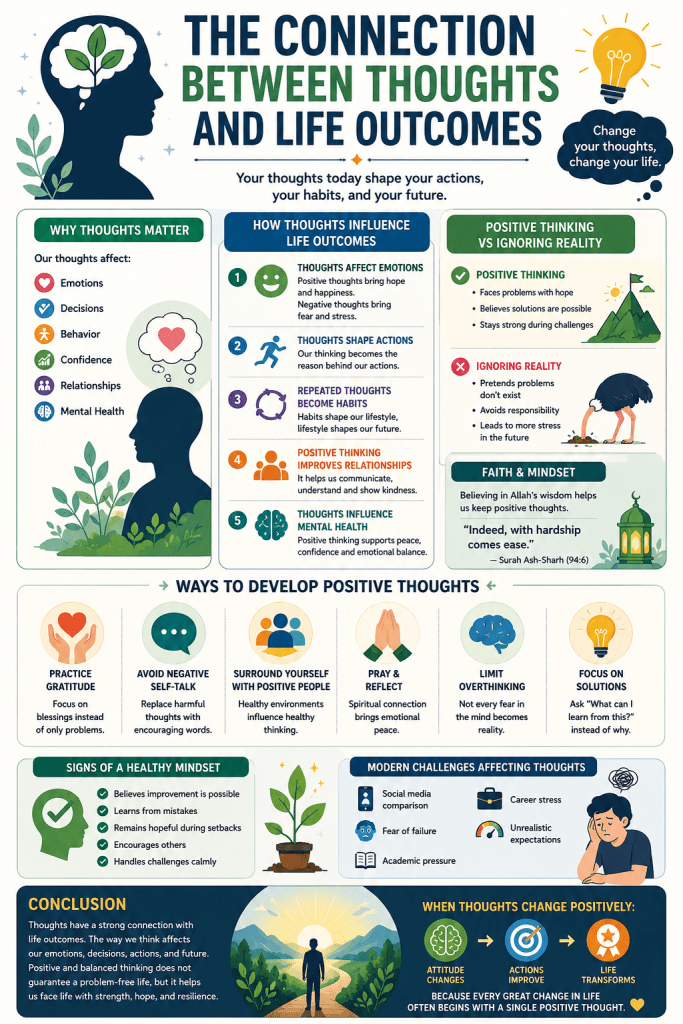
Our thoughts shape the way we see ourselves, others, and the world around us. Positive and healthy thinking can motivate growth and success, while negative thinking can create fear, stress, and hopelessness. The mind is powerful, and the thoughts we repeat daily often influence our actions, habits, and life outcomes.


Why Thoughts Matter

Thoughts are not just ideas in the mind. They affect:

  • Emotions
  • Decisions
  • Behavior
  • Confidence
  • Relationships
  • Mental health

What we think repeatedly often becomes part of our attitude and lifestyle.


How Thoughts Influence Life Outcomes

1. Thoughts Affect Emotions

Positive thoughts create:

  • Hope
  • Peace
  • Motivation
  • Happiness

Negative thoughts create:

  • Fear
  • Anxiety
  • Anger
  • Stress

Example:

  • Thinking “I can improve” builds confidence.
  • Thinking “I will always fail” creates self-doubt.

2. Thoughts Shape Actions

Our actions usually begin with our thinking.

For example:

  • A student who believes in success studies with confidence.
  • A person who constantly doubts themselves may stop trying.

Healthy thoughts encourage:

  • Hard work
  • Discipline
  • Courage
  • Consistency

3. Repeated Thoughts Become Habits

The mind learns through repetition.

If someone repeatedly thinks:

  • “I am capable,” they become more confident.
  • “Nothing good happens to me,” they may become negative and hopeless.

Over time:

  • Thoughts influence habits
  • Habits influence lifestyle
  • Lifestyle influences future outcomes

4. Positive Thinking Improves Relationships

Thoughts affect how we treat people.

Positive thinking helps people:

  • Show kindness
  • Communicate calmly
  • Forgive easily
  • Build healthy relationships

Negative thinking may lead to:

  • Misunderstanding
  • Jealousy
  • Anger
  • Isolation

5. Thoughts Influence Mental Health

Constant negative thinking can increase:

  • Stress
  • Overthinking
  • Anxiety
  • Emotional exhaustion

Positive thinking supports:

  • Emotional balance
  • Mental peace
  • Better coping skills
  • Self-confidence

The Difference Between Positive Thinking and Ignoring Reality

Positive thinking does not mean pretending problems do not exist.

It means:

  • Facing difficulties with hope
  • Believing solutions are possible
  • Staying mentally strong during challenges

Healthy thinking is realistic, balanced, and hopeful.


The Role of Faith and Mindset

Faith helps people maintain positive thoughts during difficult times.

Believing in Allah’s wisdom reminds us:

  • Every hardship has purpose
  • Difficulties are temporary
  • Patience brings reward

The Quran says:

“Indeed, with hardship comes ease.”
— Surah Ash-Sharh (94:6)

This verse teaches believers to remain hopeful even during struggles.


Ways to Develop Positive Thoughts

Practice Gratitude

Focus on blessings instead of only problems.

Avoid Negative Self-Talk

Replace harmful thoughts with encouraging words.

Surround Yourself with Positive People

Healthy environments influence healthy thinking.

Pray and Reflect

Spiritual connection brings emotional peace.

Limit Overthinking

Not every fear in the mind becomes reality.

Focus on Solutions

Instead of asking:

  • “Why is this happening to me?”
    Ask:
  • “What can I learn from this?”

Signs of a Healthy Mindset

A person with healthy thoughts:

  • Believes improvement is possible
  • Learns from mistakes
  • Remains hopeful during setbacks
  • Encourages others
  • Handles challenges calmly

Modern Challenges Affecting Thoughts

Today many people struggle with:

  • Social media comparison
  • Fear of failure
  • Academic pressure
  • Career stress
  • Unrealistic expectations

These can create negative thought patterns if not managed carefully.


Conclusion

Thoughts have a strong connection with life outcomes. The way we think affects our emotions, decisions, actions, and future. Positive and balanced thinking does not guarantee a problem-free life, but it helps people face life with strength, hope, and resilience.

A healthy mind creates a healthier life.
When thoughts change positively:

  • Attitude changes
  • Actions improve
  • Life gradually transforms

Because every great change in life often begins with a single positive thought.

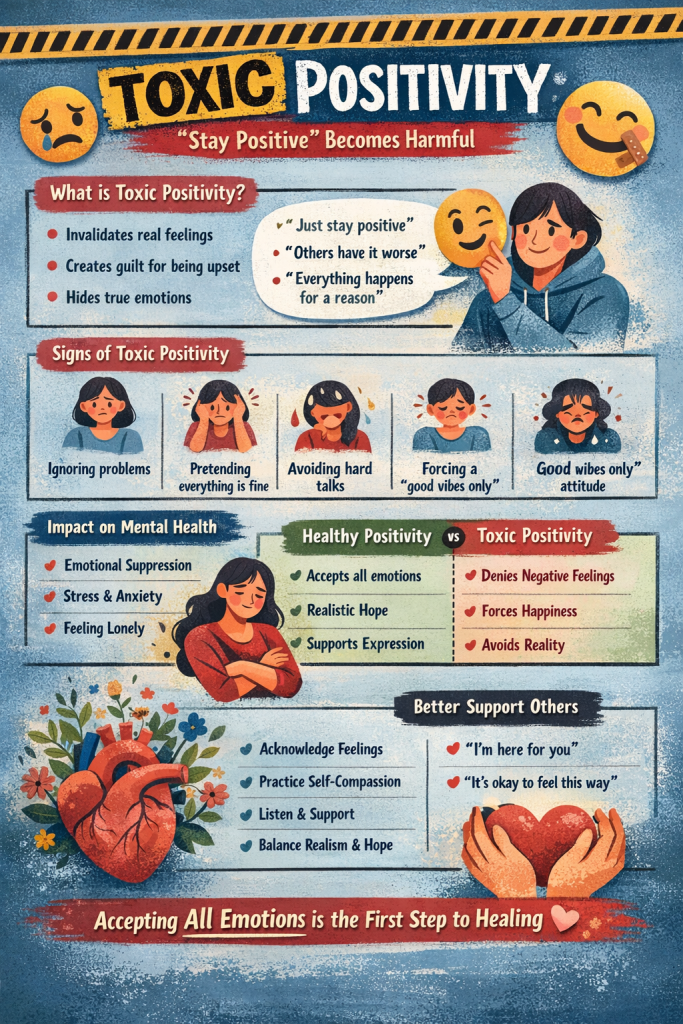
🌿 Toxic Positivity: When “Stay Positive” Becomes Harmful

💭 What is Toxic Positivity?

  • Toxic positivity is the belief that you should always stay positive, no matter how difficult the situation is
  • It rejects or ignores negative emotions like sadness, anger, or stress
  • Common phrases include:
    • “Just stay positive”
    • “Others have it worse”
    • “Everything happens for a reason”

⚠️ Why It Can Be Harmful

  • It invalidates real feelings
  • Makes people feel guilty for being upset
  • Creates pressure to hide true emotions
  • Prevents emotional healing and growth

😔 Signs of Toxic Positivity

  • Ignoring problems instead of facing them
  • Pretending everything is okay when it’s not
  • Avoiding difficult conversations
  • Feeling uncomfortable when others express sadness
  • Forcing positivity in every situation

🧠 Impact on Mental Health

  • Builds emotional suppression
  • Increases stress and anxiety
  • Leads to feeling lonely or misunderstood
  • Stops people from seeking help
  • Can cause emotional burnout over time

💡 Healthy Positivity vs Toxic Positivity

Healthy Positivity

  • Accepts both good and bad emotions
  • Encourages realistic hope
  • Supports emotional expression

Toxic Positivity

  • Denies negative feelings
  • Forces happiness
  • Avoids reality

🌱 What to Do Instead

  • Acknowledge your feelings – It’s okay to feel sad or stressed
  • Practice self-compassion – Be kind to yourself
  • Listen without judgment – For yourself and others
  • Express emotions – Talk, write, or reflect
  • Focus on balance – Accept pain and still find hope

🤝 How to Support Others Better

Instead of saying:

  • “Just stay positive”

Try saying:

  • “I’m here for you”
  • “It’s okay to feel this way”
  • “Take your time, you’ll get through this”

🌸 Conclusion

  • Positivity is powerful, but forced positivity is not healthy
  • True mental well-being comes from accepting all emotions
  • Healing begins when we allow ourselves to feel, not hide

Nothing Is Personal, Yet Everything Feels Personal

Introduction

In everyday life, we often take words, actions, and silences to heart. A small change in behavior, a delayed response, or a critical comment can instantly make us question ourselves. Although logic tells us that most things are not meant personally, emotions often disagree. This inner conflict is what makes life feel heavy at times—nothing is personal, yet everything feels personal.

Why Everything Feels Personal

Human beings are emotional by nature. We connect experiences to our sense of self, which makes us interpret situations through a personal lens. When someone behaves differently, the mind immediately searches for a reason and often turns inward. This reaction is natural, but it is not always accurate.

Most Actions Reflect the Other Person

People respond based on their own stress, fears, priorities, and emotional capacity. Their words and behavior are shaped by their experiences, not by our value. Silence, distance, or harshness usually reflects what someone else is struggling with internally, even though it may feel directed at us.

How Overthinking Makes It Worse

When information is incomplete, the mind fills the gaps with assumptions. Overthinking turns neutral situations into personal failures. Emotions amplify this process, making us believe that we are the cause of every change or conflict, even when there is no clear evidence.

Understanding the Truth Without Ignoring Feelings

Saying “nothing is personal” does not mean dismissing emotions. Feelings are real and valid, but they do not always represent the full truth. The key is to acknowledge emotions without tying them to self-worth. This balance helps us stay grounded and emotionally healthy.

Letting Go of Unnecessary Emotional Weight

When we stop personalizing everything, relationships feel lighter. We react less and understand more. We learn to pause, reflect, and choose responses rather than acting from hurt. This shift reduces emotional exhaustion and brings inner calm.

Final Thoughts

Nothing is personal, yet everything feels personal because we care deeply. Growth begins when care is guided by awareness instead of assumption. By separating others’ actions from our self-worth, we create space for peace, clarity, and emotional resilience. What others do is about them; how we respond defines us.

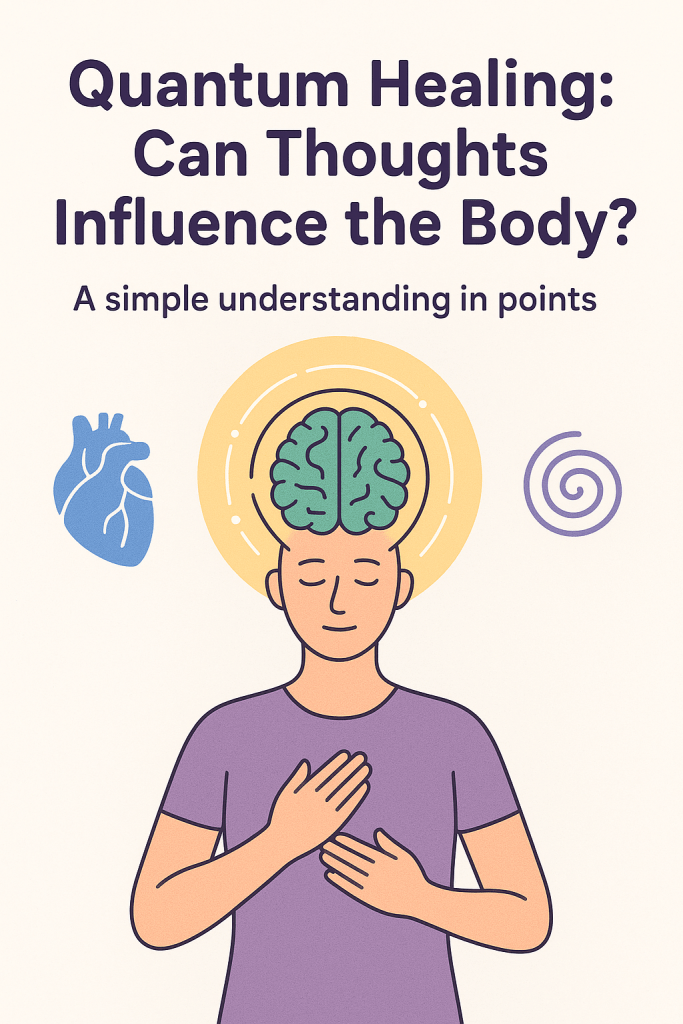
Quantum Healing: Can Thoughts Influence the Body?

1. Introduction: What is Quantum Healing?

  • Quantum healing is the idea that the mind and body are deeply connected.
  • It suggests that your thoughts, emotions, and beliefs can influence your physical health.
  • This concept is inspired by principles from quantum physics, which show that energy and consciousness can affect matter.

2. Everything in the Body Is Energy

  • At the smallest level, your body is made of atoms and energy—not just solid matter.
  • Your heartbeat, breathing, emotions, and thoughts all produce energy signals.
  • If your energy is balanced, you feel healthy; if it is disturbed, you feel unwell.

3. Thoughts Create Real Changes in the Body

  • When you think positively, your brain releases “good chemicals” like dopamine and serotonin.
  • When stressed or worried, your brain releases cortisol, which can weaken immunity.
  • This shows that thoughts have a direct physical impact.

4. The Observer Effect: Why Attention Matters

  • In quantum physics, particles behave differently when observed.
  • Similarly, when you focus your mind on healing, your body responds to that attention.
  • Meditation, prayer, and positive intention activate the body’s natural repair systems.

5. Emotions Carry Energy

  • Joy, gratitude, and love create high-energy states that support healing.
  • Fear, anger, and sadness create low-energy states that may slow down healing.
  • Shifting emotional energy can shift physical well-being.

6. Placebo Effect: Proof That Belief Heals

  • Doctors around the world have seen patients recover simply because they believed a treatment would work.
  • The mind convinced the body to heal—this is a real scientific example of quantum-like healing.

7. Daily Practices That Encourage Quantum Healing

  • Meditate for a few minutes every day to calm your energy.
  • Use positive affirmations (“My body is healing. I am strong.”).
  • Practice gratitude to raise emotional energy.
  • Visualize healing, imagining your body becoming healthier.
  • Stay conscious of your thoughts—replace negative ones gently.

8. Final Thoughts

  • Quantum healing doesn’t replace medical treatment, but it supports it.
  • Your mind is powerful—your thoughts can influence your body more than you realize.
  • When you change your thoughts, you change your energy.
  • When you change your energy, your body responds.

Calmness and Clarity in Everyday Life

🌿 Introduction

Life today often feels rushed, noisy, and overwhelming. Between responsibilities, technology, and constant demands, our minds rarely find rest. Yet, calmness and clarity are not luxuries—they are essential for balance, decision-making, and happiness. With simple practices, we can bring peace into our everyday life.


🌸 Simple Ways to Cultivate Calmness and Clarity

  1. Start Your Day Slowly
    • Avoid rushing into your phone or work.
    • Begin with a few minutes of quiet breathing, stretching, or gratitude.
  2. Practice Mindful Breathing
    • A few deep breaths can instantly reduce stress.
    • Breathing anchors the mind and helps you focus better.
  3. Declutter Your Surroundings
    • A clean space clears mental clutter.
    • Keep only what is useful and meaningful around you.
  4. Take Short Breaks
    • Step away from work, screens, or noise.
    • Even 5 minutes of silence refreshes the mind.
  5. Limit Information Overload
    • Too much news, social media, or notifications creates anxiety.
    • Be selective with what you consume daily.
  6. Spend Time in Nature
    • Walking in a park, sitting under a tree, or listening to birds brings instant calm.
    • Nature naturally clears the mind.
  7. Write It Out
    • Journaling helps release confusion and emotions.
    • Clarity often comes when thoughts are on paper.
  8. Stay Present
    • Worrying about the future or replaying the past disturbs peace.
    • Focus on what you can do right now.
  9. Practice Gratitude
    • Recognize small blessings daily.
    • Gratitude shifts the mind from chaos to calm.
  10. End the Day with Reflection
    • Review your day with kindness, not judgment.
    • Let go of stress before you sleep.

🌟 Conclusion

Calmness and clarity don’t come from escaping life—they come from how we live each moment. By slowing down, simplifying, and staying present, we can handle challenges with peace instead of pressure. A calm mind sees clearly, and a clear mind lives fully.

Conscious Mind and Unconscious Mind

Introduction

Our mind is like an iceberg – the part we see is small, while most of it lies hidden below the surface. The conscious mind is what we are aware of right now, and the unconscious mind silently works in the background, shaping our thoughts, habits, and behavior.


1. What is the Conscious Mind?

  • The conscious mind is the active and aware part of our thinking.
  • It deals with present thoughts, logical reasoning, and decision-making.
  • Example: When you read a book, solve a problem, or talk to someone – you use your conscious mind.

2. What is the Unconscious Mind?

  • The unconscious mind is the hidden part of the mind that stores feelings, memories, and habits.
  • It influences our actions and emotions without us realizing it.
  • Example: When you ride a bicycle after years, your unconscious mind helps you remember how.

3. Key Differences

  • Conscious mind → Aware, logical, short-term.
  • Unconscious mind → Hidden, emotional, long-term memory.
  • Conscious is like the tip of the iceberg, unconscious is the huge part under water.

4. Role in Daily Life

  • Conscious mind helps in planning and decision-making.
  • Unconscious mind stores beliefs, fears, and automatic habits.
  • Example: Brushing teeth daily becomes automatic because of the unconscious mind.

5. How They Work Together

  • The conscious mind gives instructions.
  • The unconscious mind carries them out repeatedly until they become habits.
  • Example: If you consciously repeat positive affirmations, your unconscious starts believing them.

6. Why Understanding Both is Important

  • Helps in self-improvement by changing negative habits.
  • Builds awareness of hidden fears and emotions.
  • Allows us to use the power of the unconscious mind for success, creativity, and confidence.

Conclusion

The conscious and unconscious minds are two sides of the same coin. The conscious mind decides what we want, while the unconscious mind helps us achieve it. By becoming more aware of how both work, we can shape our thoughts, habits, and future in a positive way.

🌟 Perception Is Everything: The Way You See Life Shapes Your Life

🔍 What Is Perception?

  • Perception is how you see, understand, and interpret the world around you.
  • It’s based on your thoughts, beliefs, experiences, and emotions.
  • Two people can go through the same situation but feel completely different—because of perception.

🌈 Why Perception Matters in Life

  • Your thoughts shape your reality.
    If you see problems, you feel stuck. If you see opportunities, you feel hopeful.
  • Perception affects your emotions.
    How you feel is often based on how you see what’s happening, not the event itself.
  • It guides your decisions.
    The way you view people, situations, or even yourself affects the choices you make.
  • It impacts your relationships.
    Misunderstandings often arise not from facts but from different perceptions.
  • It builds or breaks confidence.
    If you perceive yourself as capable, you’ll take action. If you don’t, you’ll hold back.

💡 Real-Life Examples

  • A rainy day:
    One person sees it as gloomy, another sees it as cozy and peaceful.
  • Criticism:
    One sees it as an attack, another sees it as a chance to grow.
  • Failure:
    Some see it as the end, others see it as feedback.

🔁 How to Shift Your Perception

  • Pause and reflect before reacting.
  • Ask yourself: “Is there another way to see this?”
  • Practice gratitude – it changes your focus from lack to abundance.
  • Surround yourself with positive influences – they shape your lens.
  • Challenge negative thoughts and replace them with balanced thinking.

🧠 Final Thought

“We don’t see things as they are, we see them as we are.”

When you change your perception, you change your life.
It’s not always the world that needs to change — sometimes it’s just how you’re looking at it.

Brain Vs Heart

When making decisions, we often face the dilemma of whether to follow our brain or our heart. Both have their strengths and weaknesses, and each plays a crucial role in guiding our choices.


1. The Role of the Brain: Logic and Reason

  • Analyzes the facts: The brain is great at processing information and considering logical consequences.
  • Helps with practical decisions: For decisions that require careful planning or long-term considerations, the brain helps us look at the bigger picture and make choices that make sense.
  • Avoids impulsive decisions: It helps us weigh pros and cons and avoid choices based on emotion alone.

Example: Deciding whether to accept a job offer based on salary, benefits, and long-term career goals.


2. The Role of the Heart: Emotion and Passion

  • Follows instincts: The heart is often associated with our emotions, desires, and passions. It guides us when we feel something deeply.
  • Helps with personal fulfillment: When decisions align with our values, dreams, and what truly makes us happy, the heart plays a vital role.
  • Promotes creativity and risk-taking: Sometimes, the heart encourages us to take risks that the brain might avoid due to fear of failure.

Example: Choosing a career path or relationship based on passion and personal happiness.


3. When to Follow the Brain

  • Financial decisions: When money or security is at stake, logical thinking often leads to better outcomes.
  • Long-term commitments: Decisions that impact your future (e.g., buying a house or planning for retirement) require careful analysis.
  • Avoiding rash actions: If the decision could result in harm or regret, relying on the brain helps avoid impulsive choices.

4. When to Follow the Heart

  • Personal growth: Decisions about pursuing hobbies, passions, or dreams might be guided more by the heart for a fulfilling life.
  • Relationships: Emotional connections often guide decisions in friendships, family, and love, where happiness is the primary goal.
  • Taking risks: If you feel a strong pull toward something, the heart can encourage you to step out of your comfort zone.

5. Striking a Balance: Brain and Heart Together

  • Blend logic and emotion: Ideally, the brain and heart work together. Use logic to make practical decisions and emotions to ensure you are not sacrificing your happiness.
  • Trust your intuition: Sometimes, your brain and heart will guide you in the same direction. If your mind and heart align, it might be a good sign that you are on the right path.
  • Evaluate the situation: Ask yourself: Is this decision one that should be based on reason and practicality, or does it require passion and emotional investment?

Conclusion: The Best of Both Worlds

There’s no simple answer to whether the brain or heart is the better guide. Use both in the right proportions based on the situation. Sometimes, logic should lead the way, while at other times, following your heart may lead to deeper fulfillment. The key is finding harmony between reason and emotion to make decisions that are both wise and meaningful.

Understanding Human Behaviour: The Science Behind Everyday Actions

Human behavior is a complex interplay of psychological, social, and biological factors. Understanding it can help us navigate our interactions and improve our personal and professional lives. Here’s a breakdown of key concepts that explain the science behind our everyday actions.

1. Biological Influences

  • Genetics: Our genetic makeup can predispose us to certain behaviors, such as aggression or sociability.
  • Brain Chemistry: Neurotransmitters (e.g., serotonin, dopamine) influence mood and behavior, affecting how we respond to situations.
  • Hormones: Hormonal changes can impact emotions and behavior, particularly during adolescence, pregnancy, and menopause.

2. Psychological Factors

  • Cognition: Our thoughts shape our perceptions and reactions. Cognitive processes determine how we interpret experiences.
  • Emotions: Emotions play a critical role in decision-making and behavior. They can drive us toward action or lead to inaction.
  • Learning: Behavioral conditioning (classical and operant) explains how we learn from experiences and adapt our behavior accordingly.

3. Social Influences

  • Culture: Cultural norms and values significantly shape behavior. They dictate what is considered acceptable or unacceptable in society.
  • Socialization: Family, peers, and community influence our beliefs, attitudes, and behaviors from a young age.
  • Group Dynamics: Our behavior often changes in group settings due to peer pressure, conformity, or the desire for acceptance.

4. Situational Context

  • Environment: The physical and social environment can trigger specific behaviors. For example, crowded spaces can lead to anxiety or aggression.
  • Circumstances: Our actions can vary depending on immediate circumstances (e.g., stress, fatigue) and how we perceive them.

5. Motivation and Goals

  • Intrinsic vs. Extrinsic Motivation: Understanding what drives us—internal satisfaction or external rewards—can explain our behavior in different contexts.
  • Goal Setting: Clear goals can enhance motivation and influence our actions toward achieving them.

6. Behavioral Patterns

  • Habits: Repeated behaviors become habits, often performed unconsciously. Understanding how habits form can help us change unwanted behaviors.
  • Routines: Daily routines structure our lives and can have a significant impact on our overall well-being and productivity.

7. Application in Everyday Life

  • Self-Reflection: Regularly assessing your thoughts and emotions can lead to greater self-awareness and informed decision-making.
  • Empathy: Understanding human behavior can improve interpersonal relationships and foster empathy.
  • Conflict Resolution: Recognizing the factors influencing behavior can aid in resolving conflicts more effectively.

Conclusion

Understanding human behavior is essential for navigating life’s complexities. By exploring the biological, psychological, social, and situational influences on our actions, we can enhance our self-awareness and improve our interactions with others. This knowledge equips us to make more informed choices, foster positive relationships, and lead fulfilling lives.

Practical Ways to Manage Anger and Frustration in Daily Life

Anger and frustration are natural emotions, but how we manage them makes all the difference. Controlling these emotions can help improve relationships, mental well-being, and overall quality of life. Here are simple, practical tips to help you manage anger and frustration in real-life situations.


1. Take Deep Breaths

  • When you feel anger rising, pause and take slow, deep breaths.
  • Deep breathing helps relax the mind and body by lowering your heart rate.
  • Inhale deeply through your nose, hold for a few seconds, then exhale slowly through your mouth.

2. Count to 10

  • Before reacting, count slowly to 10.
  • This gives you a moment to collect your thoughts and prevents immediate, impulsive reactions.
  • If needed, count higher or walk away until you calm down.

3. Use Positive Self-Talk

  • Replace negative thoughts with calming, positive statements like:
    • “I can handle this.”
    • “Stay calm, this will pass.”
  • Positive self-talk helps shift your mindset from anger to problem-solving.

4. Identify Triggers

  • Recognize the situations or people that trigger your anger.
  • Avoid these triggers if possible, or plan ahead on how to react more calmly when faced with them.

5. Take a Break

  • Stepping away from a heated situation can prevent it from escalating.
  • A short walk, listening to music, or a brief distraction can give you a fresh perspective and cool down your emotions.

6. Practice Empathy

  • Try to understand the other person’s perspective. This can reduce anger by shifting focus from blame to understanding.
  • Ask yourself: “What is the other person feeling? Why are they acting this way?”

7. Channel Energy Productively

  • Engage in physical activities like exercise, walking, or even cleaning when frustrated.
  • Physical activity releases tension and redirects your energy in a positive way.

8. Express Yourself Calmly

  • Once you’ve calmed down, express your feelings clearly and respectfully.
  • Use “I” statements to avoid sounding accusatory, such as, “I feel upset when…”

9. Solve the Problem

  • Instead of focusing on your anger, work towards finding a solution to the problem.
  • Break down the issue into manageable steps, and focus on what you can control.

10. Practice Gratitude

  • Regularly reflecting on the things you are grateful for can reduce overall frustration and improve your mood.
  • Start or end your day by listing things you appreciate, helping to foster a positive outlook.

Final Thoughts

Learning to manage anger and frustration takes practice, but these simple strategies can help you handle challenging situations more calmly and effectively. Remember, it’s not about suppressing your emotions but managing them in a way that leads to positive outcomes for yourself and others.