This blog is a handy guide that helps you streamline your daily tasks, save and grow your money, and get better at handling your feelings. It’s filled with easy-to-follow advice that makes a big difference in how you work, spend, and feel. Dive into our Pioneeredge.io site for practical tips and tricks that make life smoother and more fulfilling.
What is Inner Dialogue? Inner dialogue is the conversation you have with yourself in your mind every day. It shapes how you feel, think, and act.
Why Self-Talk Matters Positive or negative, your self-talk influences your mood, confidence, and stress levels. It affects your mental well-being deeply.
Negative Self-Talk Can Harm When your inner voice is critical or harsh, it can increase anxiety, lower self-esteem, and lead to feelings of depression.
Positive Self-Talk Builds Resilience Encouraging and kind self-talk helps you cope better with challenges, boosts confidence, and supports emotional health.
How to Notice Your Self-Talk Start by paying attention to your thoughts. Are they mostly positive, negative, or neutral? Awareness is the first step.
Common Negative Self-Talk Patterns
Catastrophizing: Expecting the worst outcome
Black-and-white thinking: Seeing things as all good or all bad
Personalizing: Blaming yourself unfairly
Steps to Rewrite Your Inner Dialogue
Catch negative thoughts as they happen.
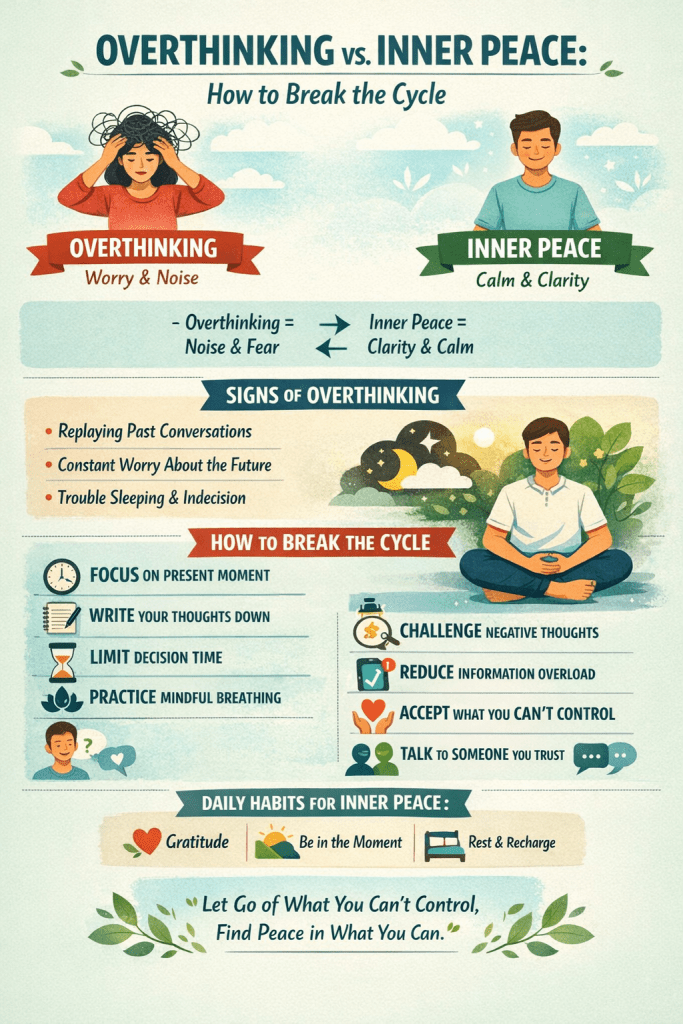
Challenge them — ask if they are really true or helpful.
Replace them with kinder, realistic thoughts.
Practice regularly until positive self-talk becomes natural.
Examples of Positive Self-Talk
Instead of “I always fail,” say, “I am learning and improving every day.”
Instead of “I can’t handle this,” say, “I will do my best, and that is enough.”
Use Affirmations Simple positive statements repeated daily can strengthen your new inner dialogue. For example, “I am worthy,” or “I can face challenges calmly.”
Benefits of Positive Self-Talk
Reduced stress and anxiety
Better problem-solving skills
Increased motivation and focus
Stronger emotional resilience
Self-Talk and Mental Health Changing your inner dialogue can be a powerful tool alongside therapy, meditation, and self-care for improving mental health.
Final Thought Your mind listens to your inner voice every moment. Choose words that heal, encourage, and empower you.
Life often presents unexpected challenges—whether it’s a personal crisis, a global shift, or professional struggles. Resilience allows us to recover and grow through these times. Here’s how to build and maintain resilience in moments of uncertainty:
🌱 1. Accept What You Can’t Control
Don’t resist change; learn to adapt.
Let go of the need for certainty.
“You can’t stop the waves, but you can learn to surf.” – Jon Kabat-Zinn
💭 2. Shift Your Perspective
See challenges as opportunities for growth.
Ask, “What can this teach me?”
“In the middle of difficulty lies opportunity.” – Albert Einstein
🧘 3. Practice Self-Care
Prioritize sleep, nutrition, and physical activity.
Engage in hobbies that help you relax and unwind.
“Self-care is how you take your power back.” – Lalah Delia
🧠 4. Strengthen Your Mindset
Practice gratitude daily to shift your focus.
Use positive affirmations and challenge negative thoughts.
“It’s not the strongest of the species that survive, nor the most intelligent, but the one most responsive to change.” – Charles Darwin
🤝 5. Stay Connected
Lean on friends, family, or support groups.
Build a network that lifts you up in tough times.
“The best way to find yourself is to lose yourself in the service of others.” – Mahatma Gandhi
🗓️ 6. Take One Day at a Time
Focus on making the best of today, not worrying about tomorrow.
Don’t dwell on the unknown future.
“Do not anticipate trouble, or worry about what may never happen. Keep in the sunlight.” – Benjamin Franklin
📚 7. Keep Learning and Growing
Constantly evolve by reading, reflecting, and adapting.
Embrace new skills and knowledge to overcome difficulties.
“The only way to deal with this life meaningfully is to find one’s passion and follow it.” – Dalai Lama
🌟 Final Thought:
Resilience isn’t about avoiding challenges—it’s about facing them head-on, learning from them, and growing stronger. By nurturing your body, mind, and relationships, you can endure uncertainty and emerge more powerful.