The Power of Thoughts in Shaping Life

Introduction

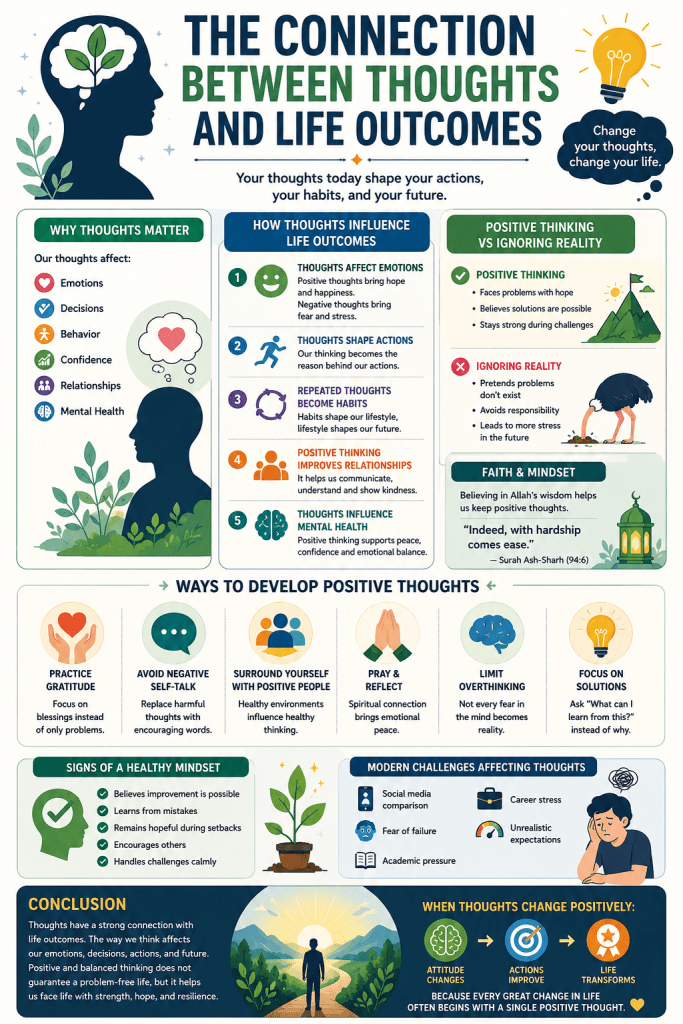
Our thoughts shape the way we see ourselves, others, and the world around us. Positive and healthy thinking can motivate growth and success, while negative thinking can create fear, stress, and hopelessness. The mind is powerful, and the thoughts we repeat daily often influence our actions, habits, and life outcomes.


Why Thoughts Matter

Thoughts are not just ideas in the mind. They affect:

  • Emotions
  • Decisions
  • Behavior
  • Confidence
  • Relationships
  • Mental health

What we think repeatedly often becomes part of our attitude and lifestyle.


How Thoughts Influence Life Outcomes

1. Thoughts Affect Emotions

Positive thoughts create:

  • Hope
  • Peace
  • Motivation
  • Happiness

Negative thoughts create:

  • Fear
  • Anxiety
  • Anger
  • Stress

Example:

  • Thinking “I can improve” builds confidence.
  • Thinking “I will always fail” creates self-doubt.

2. Thoughts Shape Actions

Our actions usually begin with our thinking.

For example:

  • A student who believes in success studies with confidence.
  • A person who constantly doubts themselves may stop trying.

Healthy thoughts encourage:

  • Hard work
  • Discipline
  • Courage
  • Consistency

3. Repeated Thoughts Become Habits

The mind learns through repetition.

If someone repeatedly thinks:

  • “I am capable,” they become more confident.
  • “Nothing good happens to me,” they may become negative and hopeless.

Over time:

  • Thoughts influence habits
  • Habits influence lifestyle
  • Lifestyle influences future outcomes

4. Positive Thinking Improves Relationships

Thoughts affect how we treat people.

Positive thinking helps people:

  • Show kindness
  • Communicate calmly
  • Forgive easily
  • Build healthy relationships

Negative thinking may lead to:

  • Misunderstanding
  • Jealousy
  • Anger
  • Isolation

5. Thoughts Influence Mental Health

Constant negative thinking can increase:

  • Stress
  • Overthinking
  • Anxiety
  • Emotional exhaustion

Positive thinking supports:

  • Emotional balance
  • Mental peace
  • Better coping skills
  • Self-confidence

The Difference Between Positive Thinking and Ignoring Reality

Positive thinking does not mean pretending problems do not exist.

It means:

  • Facing difficulties with hope
  • Believing solutions are possible
  • Staying mentally strong during challenges

Healthy thinking is realistic, balanced, and hopeful.


The Role of Faith and Mindset

Faith helps people maintain positive thoughts during difficult times.

Believing in Allah’s wisdom reminds us:

  • Every hardship has purpose
  • Difficulties are temporary
  • Patience brings reward

The Quran says:

“Indeed, with hardship comes ease.”
— Surah Ash-Sharh (94:6)

This verse teaches believers to remain hopeful even during struggles.


Ways to Develop Positive Thoughts

Practice Gratitude

Focus on blessings instead of only problems.

Avoid Negative Self-Talk

Replace harmful thoughts with encouraging words.

Surround Yourself with Positive People

Healthy environments influence healthy thinking.

Pray and Reflect

Spiritual connection brings emotional peace.

Limit Overthinking

Not every fear in the mind becomes reality.

Focus on Solutions

Instead of asking:

  • “Why is this happening to me?”
    Ask:
  • “What can I learn from this?”

Signs of a Healthy Mindset

A person with healthy thoughts:

  • Believes improvement is possible
  • Learns from mistakes
  • Remains hopeful during setbacks
  • Encourages others
  • Handles challenges calmly

Modern Challenges Affecting Thoughts

Today many people struggle with:

  • Social media comparison
  • Fear of failure
  • Academic pressure
  • Career stress
  • Unrealistic expectations

These can create negative thought patterns if not managed carefully.


Conclusion

Thoughts have a strong connection with life outcomes. The way we think affects our emotions, decisions, actions, and future. Positive and balanced thinking does not guarantee a problem-free life, but it helps people face life with strength, hope, and resilience.

A healthy mind creates a healthier life.
When thoughts change positively:

  • Attitude changes
  • Actions improve
  • Life gradually transforms

Because every great change in life often begins with a single positive thought.

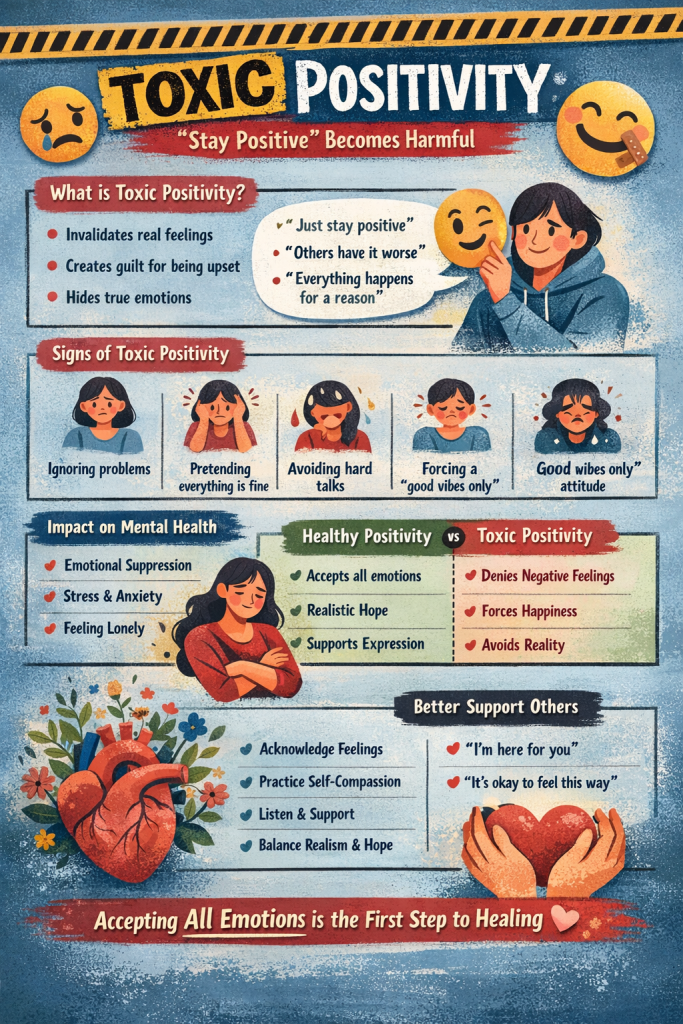
🌿 Toxic Positivity: When “Stay Positive” Becomes Harmful

💭 What is Toxic Positivity?

  • Toxic positivity is the belief that you should always stay positive, no matter how difficult the situation is
  • It rejects or ignores negative emotions like sadness, anger, or stress
  • Common phrases include:
    • “Just stay positive”
    • “Others have it worse”
    • “Everything happens for a reason”

⚠️ Why It Can Be Harmful

  • It invalidates real feelings
  • Makes people feel guilty for being upset
  • Creates pressure to hide true emotions
  • Prevents emotional healing and growth

😔 Signs of Toxic Positivity

  • Ignoring problems instead of facing them
  • Pretending everything is okay when it’s not
  • Avoiding difficult conversations
  • Feeling uncomfortable when others express sadness
  • Forcing positivity in every situation

🧠 Impact on Mental Health

  • Builds emotional suppression
  • Increases stress and anxiety
  • Leads to feeling lonely or misunderstood
  • Stops people from seeking help
  • Can cause emotional burnout over time

💡 Healthy Positivity vs Toxic Positivity

Healthy Positivity

  • Accepts both good and bad emotions
  • Encourages realistic hope
  • Supports emotional expression

Toxic Positivity

  • Denies negative feelings
  • Forces happiness
  • Avoids reality

🌱 What to Do Instead

  • Acknowledge your feelings – It’s okay to feel sad or stressed
  • Practice self-compassion – Be kind to yourself
  • Listen without judgment – For yourself and others
  • Express emotions – Talk, write, or reflect
  • Focus on balance – Accept pain and still find hope

🤝 How to Support Others Better

Instead of saying:

  • “Just stay positive”

Try saying:

  • “I’m here for you”
  • “It’s okay to feel this way”
  • “Take your time, you’ll get through this”

🌸 Conclusion

  • Positivity is powerful, but forced positivity is not healthy
  • True mental well-being comes from accepting all emotions
  • Healing begins when we allow ourselves to feel, not hide

Gut Health = Mental Health? Exploring the Mind-Body Connection

🧠 What Is the Gut-Brain Connection?

  • Your gut and brain are closely linked through a communication network called the gut-brain axis.
  • The gut is often called the “second brain” because it contains millions of nerve cells.
  • Signals travel both ways — from brain to gut and gut to brain.

🦠 Role of Gut Microbiome

  • The gut is home to trillions of bacteria known as the gut microbiome.
  • These microbes help digest food, fight infections, and influence brain function.
  • A healthy gut microbiome produces neurotransmitters like serotonin, which boosts mood.

😟 How Poor Gut Health Affects the Mind

  • Unhealthy gut = inflammation, poor digestion, and mood issues.
  • Linked to anxiety, depression, and even brain fog.
  • Stress and poor diet can disturb gut bacteria, worsening mental health symptoms.

🥦 Signs Your Gut May Be Affecting Your Mental Health

  • Frequent bloating, gas, or constipation
  • Feeling anxious or low for no clear reason
  • Trouble concentrating or feeling tired all the time
  • Craving sugar or processed food often

🥗 How to Support a Healthy Gut (and Mind)

  1. Eat more fiber – Fruits, vegetables, and whole grains feed good bacteria.
  2. Include probiotics – Yogurt, fermented foods like idli/dosa batter.
  3. Reduce sugar and junk food – They feed bad bacteria.
  4. Stay hydrated – Water helps digestion.
  5. Exercise regularly – Boosts gut and brain health.
  6. Sleep well – Gut repair happens during rest.
  7. Manage stress – Try meditation, yoga, or deep breathing.

💡 Final Thought

  • A healthy gut = a healthier mind.
  • Small changes in your diet and lifestyle can bring big benefits to both mental clarity and emotional well-being.
  • Take care of your gut — your brain will thank you!

Mind Over Scroll: Reclaiming Focus in a Noisy World

🌐 The Problem: Constant Distraction

  • We live in an age of endless scrolling — social media, news feeds, and notifications.
  • Our attention is constantly pulled in different directions.
  • The average person checks their phone over 100 times a day.
  • This digital overload leads to reduced focus, stress, and productivity.

🧠 Why Focus Matters

  • Focus is the foundation of deep work and creative thinking.
  • Without it, tasks take longer and quality suffers.
  • Regaining control of your attention helps improve mental health, relationships, and overall well-being.

📱 Signs You’re Trapped in the Scroll Loop

  • You reach for your phone first thing in the morning.
  • You feel anxious when you’re offline.
  • You struggle to complete tasks without checking your phone.
  • You lose track of time while using social media.

🔁 The Cycle of Digital Distraction

  1. You feel bored or stressed.
  2. You open your phone for a “quick check.”
  3. Minutes turn into hours.
  4. You feel guilty and unproductive.
  5. You repeat the cycle.

🛠️ How to Reclaim Your Focus

1. Digital Declutter

  • Unfollow unnecessary accounts.
  • Turn off non-essential notifications.
  • Use “Do Not Disturb” mode during work hours.

2. Set Time Limits

  • Use built-in app timers (like Screen Time or Digital Wellbeing).
  • Try the Pomodoro technique – 25 minutes of focus, 5-minute break.

3. Create Phone-Free Zones

  • Keep your phone out of the bedroom and dining area.
  • Use a real alarm clock instead of your phone.

4. Practice Mindfulness

  • Start your day with 5 minutes of deep breathing or journaling.
  • Take short walks without your phone.

5. Replace Scrolling with Purposeful Habits

  • Read a physical book.
  • Do a puzzle or doodle.
  • Call a friend instead of texting.

🌟 Benefits of Reclaiming Focus

  • Improved concentration and memory.
  • Better sleep and reduced anxiety.
  • More meaningful connections with people.
  • Increased time for hobbies and passions.

✅ Final Thought

It’s not about quitting technology — it’s about using it mindfully.
When you choose mind over scroll, you gain back your most valuable asset: your attention.

Why ‘Good Enough’ Is the New Perfect

1. Perfection Is Exhausting

  • Striving for perfection drains time, energy, and mental peace.
  • People are realizing that chasing flawless results often leads to burnout, not happiness.

2. Progress Matters More Than Perfection

  • Taking action, even if it’s not perfect, moves you forward.
  • Small, consistent steps lead to bigger results over time.

3. Good Enough Saves Time

  • Perfecting every detail wastes valuable hours.
  • “Good enough” allows faster decision-making and quicker progress.

4. Perfection Is Often an Illusion

  • What feels perfect to one person might not to another.
  • Standards constantly change, making it impossible to please everyone.

5. Good Enough Encourages Innovation

  • When you stop fearing mistakes, you’re more willing to try new ideas.
  • Creativity flows better when you’re not stuck in a perfectionist mindset.

6. Real Success Comes from Adaptability

  • In today’s fast-moving world, flexibility is more important than flawlessness.
  • Those who adjust and move forward quickly win, not those who wait to be perfect.

7. It Improves Mental Health

  • Accepting “good enough” reduces anxiety, self-doubt, and stress.
  • It promotes a healthier relationship with yourself and your work.

8. Good Enough Builds Confidence

  • Finishing tasks (even imperfectly) builds momentum and belief in yourself.
  • You learn, grow, and improve with each completed effort.

9. The World Appreciates Authenticity, Not Perfection

  • People connect more with genuine efforts and honest mistakes.
  • Authentic work is often more inspiring than something that appears flawlessly staged.

10. Good Enough Is Sustainable

  • It’s a mindset you can maintain for the long term.
  • You stay productive, creative, and balanced without burning out.

🌟 Final Thought:

“Good enough” doesn’t mean careless. It means knowing when something is strong enough to serve its purpose — and trusting that it’s better to be real and done than stuck chasing an impossible perfect.

The Loneliness Epidemic: How to Build Meaningful Connections

In today’s fast-paced world, loneliness has become an epidemic, affecting people of all ages. Despite living in an increasingly connected world, many feel isolated and disconnected.

1. Understanding the Loneliness Epidemic

  • Growing Problem: Loneliness is no longer just about being physically alone—it’s about feeling emotionally disconnected from others.
  • Impact on Health: Studies show that loneliness can have serious effects on mental and physical health, contributing to issues like depression, anxiety, and even cardiovascular problems.

2. The Role of Technology in Loneliness

  • Social Media Paradox: While technology connects us online, it often creates a sense of superficiality. Online interactions can sometimes leave us feeling more alone than before.
  • The Need for Real Conversations: Text messages and likes are not a substitute for genuine, face-to-face connections. Real conversations foster deeper bonds.

3. Quality Over Quantity in Friendships

  • Deep Connections Matter: It’s not about having hundreds of friends, but about building meaningful, authentic relationships with a few people.
  • Emotional Support: True connections provide a source of emotional support, understanding, and mutual care.

4. Steps to Build Meaningful Connections

  • Be Present: Take the time to listen, really listen, when someone is speaking. Showing genuine interest in others builds trust and rapport.
  • Vulnerability: Don’t be afraid to open up about your feelings, struggles, and thoughts. Vulnerability fosters deeper connections and shows that you’re approachable.
  • Engage in Activities: Join clubs, take up hobbies, or volunteer. Being part of a group with shared interests increases the chances of meeting like-minded individuals.
  • Quality Time: Spend time with people you care about without distractions. Put away your phone and focus on the moment.

5. Combatting the Stigma of Loneliness

  • It’s Okay to Feel Lonely: Many people experience loneliness, but it’s not something to be ashamed of. Acknowledging it is the first step toward overcoming it.
  • Seeking Help: If loneliness feels overwhelming, don’t hesitate to seek professional help. Therapy can be a great way to process feelings and develop strategies for connection.

6. Building Stronger Communities

  • Support Systems: Communities, whether physical or virtual, play a crucial role in combating loneliness. Strengthening these networks helps individuals feel seen and valued.
  • Reach Out: If you notice someone is struggling with loneliness, reach out. Small acts of kindness, like inviting someone for coffee or a walk, can make a huge difference.

7. Conclusion

Loneliness is a complex issue, but it’s one that can be addressed with intention and effort. By prioritizing meaningful connections, being vulnerable, and taking active steps to engage with others, we can create a support system that combats isolation and fosters a sense of belonging. Together, we can break the cycle of loneliness and build stronger, more connected communities.

Keep Moving Forward: Don’t Let Criticism Hold You Back

Criticism is something we all face, whether we’re just starting or already on the path to success. It can come from anyone—friends, family, or even strangers—and while some feedback is helpful, much of it is negative or discouraging. The important thing to remember is that criticism often reflects the critic, not you. You can’t please everyone, and focusing too much on others’ opinions can lead to self-doubt. Instead, stay focused on your goals, believe in yourself, and use challenges to grow.

1. Criticism Happens to Everyone

  • Everyone gets criticized at some point in life.
  • The more you succeed, the more people will have opinions.
  • Remember, even the most successful people were criticized.
  • Criticism is part of the journey, so don’t take it too personally.

2. Criticism Often Reflects the Critic

  • Sometimes, people criticize because they are unhappy with themselves.
  • Criticism can come from jealousy or fear of change.
  • It often has more to do with the critic’s issues than with you.
  • Don’t let other people’s insecurities affect your confidence.

3. Don’t Let Negative Feedback Lower Your Confidence

  • Criticism can make you doubt yourself, but don’t let it.
  • Focus on your strengths and the progress you’ve made.
  • Build your self-confidence by reminding yourself of your abilities.
  • Believe in yourself, even when others doubt you.

4. Separate Constructive Criticism from Destructive Criticism

  • Constructive criticism helps you improve, so use it to grow.
  • Destructive criticism is meant to hurt, so ignore it.
  • If the feedback is helpful, take it. If it’s harmful, let it go.
  • Learn from what’s useful and forget the rest.

5. Stay Focused on Your Future

  • Don’t let criticism distract you from your goals.
  • Stay focused on what you want to achieve.
  • Keep your future in mind, and don’t let negativity slow you down.
  • Set clear goals and work towards them every day.

6. Use Criticism as Fuel

  • Use negative comments to motivate you to work harder.
  • Turn criticism into energy to keep pushing forward.
  • Let it remind you why you’re working towards your goals.
  • Show the critics that you can succeed no matter what they say.

7. Remember Your Achievements

  • Look back at what you’ve already accomplished.
  • Let your past success remind you that you can keep going.
  • Don’t let criticism erase the progress you’ve made.
  • Focus on how far you’ve come and what you’ll achieve next.

8. Surround Yourself with Positivity

  • Spend time with people who lift you up and support you.
  • Positive people will help you stay focused and motivated.
  • Avoid those who constantly criticize or bring negativity into your life.
  • A good support system can help you keep moving forward.

9. Keep Improving and Moving Forward

  • Criticism is just one of the challenges you’ll face.
  • As long as you’re growing and improving, you’re on the right path.
  • Keep learning, and don’t let criticism stop your progress.
  • Move forward, knowing that success will come with persistence.

10. Trust Yourself

  • Trust your instincts and believe in your abilities.
  • No one knows your potential better than you.
  • Stay true to yourself and your goals.
  • Don’t let anyone else’s opinion define what you’re capable of achieving.

Self-Awareness: Understanding Yourself for Personal Growth

What Is Self-Awareness?

  • Quote: “Knowing yourself is the beginning of all wisdom.” – Aristotle
  • Self-awareness is the ability to recognize and understand your own thoughts, emotions, and behaviors.
  • It helps you identify how you react to different situations and how others perceive you.

Why Self-Awareness Is Important

  • Quote: “When I discover who I am, I’ll be free.” – Ralph Ellison
  • It helps you make better decisions, build healthier relationships, and manage emotions effectively.
  • Example: If you realize that stress makes you impatient, you can take steps to manage stress before it affects your behavior.

Types of Self-Awareness

  • Quote: “What we perceive about ourselves is greatly a reflection of how we will end up living our lives.” – Stephen Richards
  • Internal Self-Awareness: Understanding your emotions, values, and goals.
    • Example: Knowing that you value honesty can help you avoid situations where you feel pressured to be dishonest.
  • External Self-Awareness: Understanding how others see you.
    • Example: If people see you as quiet, but you think of yourself as outgoing, you may need to align your self-perception with your actions.

Benefits of Self-Awareness

  • Quote: “Self-awareness gives you the capacity to learn from your mistakes as well as your successes.” – Lawrence Bossidy
  • Improved Emotional Control: You can respond to situations more calmly.
    • Example: When you’re aware that certain topics make you angry, you can prepare to stay calm during difficult conversations.
  • Better Relationships: Understanding your own needs and recognizing others’ emotions improves communication.
    • Example: Being aware of your need for personal space helps you set boundaries in relationships.

How to Develop Self-Awareness

  • Quote: “The unexamined life is not worth living.” – Socrates
  • Reflect on Your Feelings: Take time to think about your emotions and why you feel them.
    • Example: After a tough day, reflect on why you felt upset and how you handled it.
  • Seek Feedback: Ask trusted friends or colleagues how they perceive you.
    • Example: If a colleague says you seem stressed, it might help you realize you’re overwhelmed and need to make changes.
  • Practice Mindfulness: Stay present and observe your thoughts without judgment.
    • Example: During a stressful moment, pause and notice your thoughts instead of reacting immediately.

Common Obstacles to Self-Awareness

  • Denial: Refusing to acknowledge your flaws or emotions.
    • Example: Telling yourself you’re always right, even when faced with feedback that suggests otherwise.
  • Fear of Self-Reflection: Avoiding deeper thinking because you’re afraid of what you’ll find.
    • Example: Not wanting to admit that you may need to make uncomfortable changes in your life.

How Self-Awareness Leads to Growth

  • Quote: “Self-awareness is not just relaxation and not just meditation. It must combine relaxation with activity and dynamism. Technology can aid that.” – Deepak Chopra
  • Recognizing your strengths and weaknesses helps you set realistic goals and improve over time.
  • Example: If you’re aware that procrastination is a weakness, you can work on time management skills to overcome it.

Conclusion

  • Quote: “Your visions will become clear only when you can look into your own heart. Who looks outside, dreams; who looks inside, awakes.” – Carl Jung
  • Self-awareness is the key to personal growth and better relationships.
  • By understanding yourself, you can make positive changes in your life, handle challenges more effectively, and become the best version of yourself.

Thinking is the Root Cause of All Suffering

Understanding the Power of Thoughts

  • Our thoughts shape how we perceive and experience life.
  • Example: If you constantly think about failure, you may start to believe you’re not capable, even when there’s no real evidence to support that.

Negative Thinking Leads to Suffering

  • Dwelling on negative thoughts can create unnecessary mental pain.
  • Example: Worrying about things beyond your control, like what others think of you, can lead to anxiety and stress, even if the situation is harmless.

Overthinking Amplifies Problems

  • Thinking too much about a problem often makes it seem bigger than it is.
  • Example: If you overthink a minor mistake at work, it might feel like a disaster, causing you to feel more stress than the situation warrants.

Attachment to Thoughts Creates Suffering

  • Becoming too attached to certain ideas or outcomes can lead to disappointment and frustration.
  • Example: If you’re fixated on getting a promotion and it doesn’t happen, the attachment to that expectation can cause deep emotional pain.

The Illusion of Control Through Thinking

  • We often believe that by thinking more, we can control outcomes, but this can create stress.
  • Example: A person may obsess over how to make everything perfect in their life, only to feel overwhelmed when things don’t go as planned.

Judgmental Thinking Creates Unhappiness

  • Constantly judging yourself or others leads to dissatisfaction.
  • Example: If you compare yourself to others and think you’re not good enough, it can cause feelings of inadequacy and low self-esteem.

Living in the Past or Future Causes Suffering

  • When we focus on past regrets or future worries, we miss the present moment and create stress.
  • Example: Thinking about past mistakes or worrying about future problems robs you of the peace and joy available in the present.

Breaking Free from the Cycle of Thought-Based Suffering

  • Mindfulness helps reduce the power thoughts have over you by bringing focus to the present moment.
  • Example: Practicing meditation can help calm the mind and reduce overthinking, allowing you to experience life without being overwhelmed by thoughts.

Accepting Impermanence Reduces Suffering

  • Realizing that thoughts and emotions are temporary helps reduce suffering.
  • Example: Understanding that bad moods or stressful thoughts will pass can help you avoid getting stuck in negative thinking patterns.

Conclusion

  • Thinking, when not controlled, can become the root cause of much of our suffering.
  • Learning to manage our thoughts and staying present can help reduce mental stress and bring peace.

The Role of Self-Compassion in Achieving Emotional Well-being and Peace

1. What is Self-Compassion?

  • Self-compassion means being kind and forgiving toward yourself, especially during tough times.
  • Example: If you made a mistake at work, instead of harsh self-criticism, you support yourself by saying, “Everyone makes mistakes.”

2. Why is Self-Compassion Important?

  • It reduces self-criticism, stress, and mental pressure.
  • Example: If you fail an exam, instead of thinking “I’m not good enough,” self-compassion helps you say, “This was tough, but I can improve.”

3. Three Elements of Self-Compassion

  • Self-Kindness: Be gentle with yourself instead of harsh and judgmental.
    • Example: Missing a deadline at work—tell yourself, “It’s okay to make mistakes sometimes.”
  • Common Humanity: Recognize that everyone experiences setbacks.
    • Example: Struggling with weight loss? Remember, many people face the same challenge, and you’re not alone.
  • Mindfulness: Acknowledge your emotions without letting them overwhelm you.
    • Example: After a job rejection, mindfulness helps you accept the disappointment without overthinking it.

4. How Self-Compassion Promotes Mental Peace

  • Reduces Anxiety and Stress: Self-kindness relieves inner turmoil and leads to a calmer mind.
    • Example: After a stressful day, letting yourself rest without guilt reduces stress.
  • Improves Emotional Well-being: Helps you process criticism constructively without internalizing negativity.
    • Example: After receiving feedback at work, focus on learning from it instead of thinking you’re terrible at your job.
  • Boosts Resilience: Enables you to bounce back from challenges without getting discouraged.
    • Example: An athlete who loses a competition views it as a learning experience rather than a personal failure.

5. Practical Ways to Cultivate Self-Compassion

  • Positive Self-Talk: Replace negative thoughts with positive affirmations.
    • Example: Instead of “I’m not good at anything,” say, “I’m learning and improving.”
  • Forgive Yourself: Let go of mistakes and move forward.
    • Example: If you forget a friend’s birthday, forgive yourself and make amends instead of dwelling on guilt.
  • Take Breaks: Allow yourself rest when needed.
    • Example: After completing a big project, take time to relax without feeling guilty.
  • Practice Mindfulness: Stay aware of your emotions without judgment.
    • Example: When overwhelmed, pause and acknowledge your feelings without reacting negatively.

6. Benefits of Self-Compassion for Daily Life

  • Improved Relationships: Self-compassion makes you more understanding and patient with others.
    • Example: Being kind to yourself after a stressful day helps you treat your family with patience.
  • Greater Happiness: Encourages a positive outlook and reduces feelings of inadequacy.
    • Example: Missing a personal goal like exercising becomes an opportunity to adjust your approach rather than feeling like a failure.
  • Inner Balance: Helps you stay calm and focused in tough situations.
    • Example: During financial stress, self-compassion allows you to calmly assess and plan without panic.

7. Final Thoughts

  • Practicing self-compassion leads to mental peace and balance.
  • It helps you stay resilient in the face of challenges, and by treating yourself with kindness, you can handle life’s ups and downs with a peaceful mind.