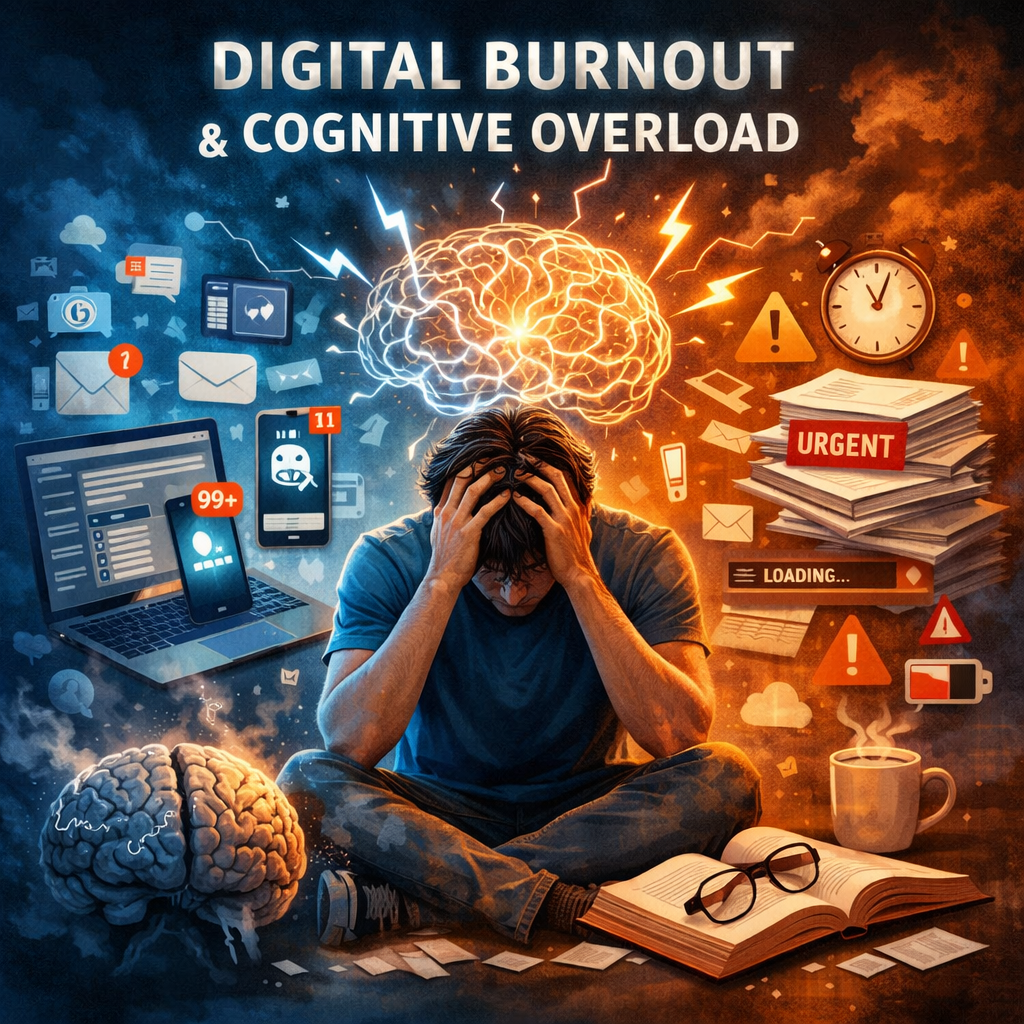
Digital Burnout and Cognitive Overload

Introduction

In today’s digital world, technology has become an inseparable part of our daily lives. From work and education to communication and entertainment, screens dominate almost every moment. While digital tools improve efficiency and connectivity, excessive and continuous exposure to them puts heavy pressure on the human mind. This growing mental strain leads to digital burnout and cognitive overload, affecting focus, emotional balance, productivity, and overall well-being. Understanding this issue is essential to creating healthier digital habits and protecting mental health in the modern age.

1. What is Digital Burnout?

  • Digital burnout happens when we feel mentally tired due to excessive screen time.
  • It is caused by constant use of phones, laptops, and digital platforms.

2. What is Cognitive Overload?

  • Cognitive overload occurs when the brain receives more information than it can process.
  • Notifications, emails, messages, and multitasking overload our thinking capacity.

3. Why is it Increasing Today?

  • Continuous online work and virtual meetings
  • Social media scrolling without breaks
  • Pressure to stay available and respond instantly
  • Information overload from news and digital content

4. Common Signs and Symptoms

  • Difficulty concentrating and remembering things
  • Mental fatigue and constant tiredness
  • Irritability and mood swings
  • Headaches and sleep problems
  • Loss of motivation and productivity

5. Impact on Mental Health

  • Increased stress and anxiety
  • Reduced attention span
  • Emotional exhaustion
  • Feeling overwhelmed even with simple tasks

6. Impact on Work and Studies

  • Lower efficiency and creativity
  • Increased errors and poor decision-making
  • Reduced learning capacity
  • Declining engagement and interest

7. How Digital Burnout Affects Daily Life

  • Less face-to-face interaction
  • Reduced quality time with family
  • Constant mental distraction
  • Difficulty enjoying offline moments

8. Simple Ways to Reduce Digital Burnout

  • Take regular screen breaks
  • Limit unnecessary notifications
  • Follow single-tasking instead of multitasking
  • Set boundaries for work and personal time
  • Practice digital detox regularly

9. Role of Mindfulness and Rest

  • Short breathing exercises calm the mind
  • Adequate sleep restores cognitive capacity
  • Mindful usage of technology improves focus

10. Conclusion

  • Digital tools are helpful, but overuse harms mental well-being.
  • Managing screen time and information flow is essential for a healthy mind.
  • Balance, awareness, and conscious digital habits can prevent burnout.

Closing Quote:
“Resting the mind is not a luxury—it is a necessity in a digital world.”

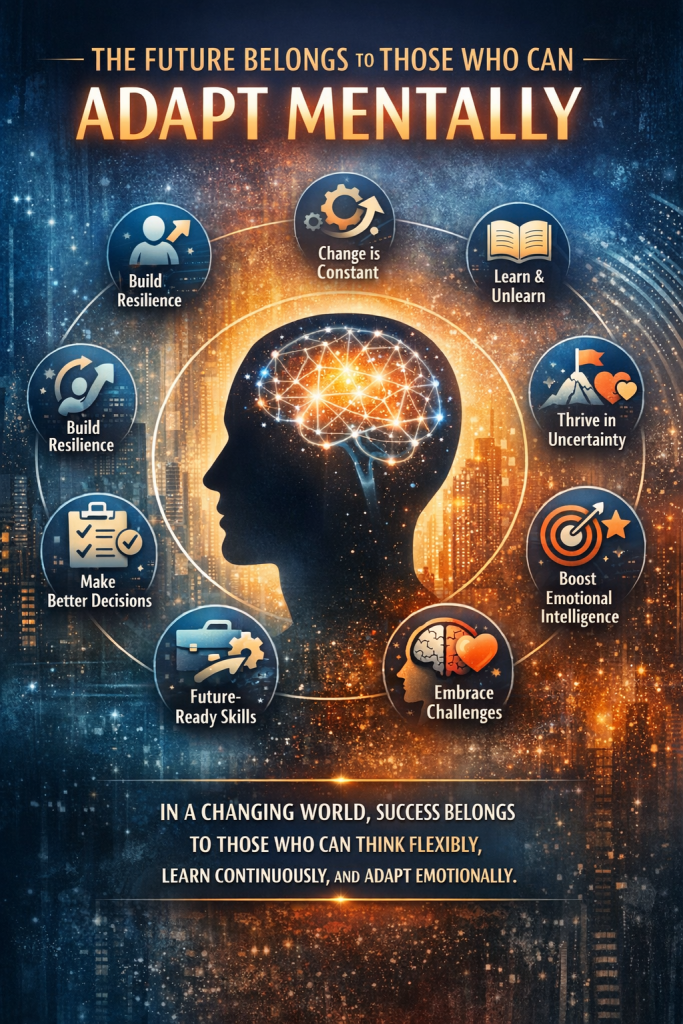
The Future Belongs to Those Who Can Adapt Mentally

In a rapidly changing world, success is no longer determined only by intelligence, talent, or experience. The ability to adapt mentally has become the most important life skill. Below are simple, clear points explaining why mental adaptability shapes the future.


1. Change Is Constant, Not Optional

Technology, workplaces, and lifestyles are evolving faster than ever. Those who mentally resist change experience stress and stagnation, while adaptable minds learn to adjust and move forward.


2. Mental Flexibility Enables Faster Learning

Adaptable individuals are open to unlearning old habits and acquiring new skills. This learning mindset allows them to stay relevant in education, careers, and personal growth.


3. Resilient Minds Handle Uncertainty Better

The future is unpredictable. Mental adaptability helps individuals remain calm during uncertainty, view challenges as temporary, and respond with problem-solving rather than panic.


4. Adaptability Strengthens Emotional Intelligence

Mentally adaptable people regulate emotions effectively, accept feedback positively, and adjust behavior based on situations. This improves relationships and leadership effectiveness.


5. Fixed Mindsets Limit Growth

A rigid mindset clings to comfort zones and fears failure. In contrast, adaptable minds see failure as feedback and change as an opportunity for improvement.


6. Mental Adaptation Supports Well-Being

Being mentally flexible reduces stress, anxiety, and burnout. Acceptance and adjustment protect mental health in high-pressure environments.


7. Future Careers Demand Cognitive Agility

Jobs of the future will require continuous upskilling. Mental adaptability enables individuals to transition across roles, industries, and technologies with confidence.


8. Adaptable Minds Make Better Decisions

Open-minded thinking allows individuals to evaluate situations objectively, consider alternatives, and make informed decisions even with limited information.


9. Growth Begins with Self-Awareness

Understanding one’s thoughts, beliefs, and emotional patterns is the first step toward mental adaptability. Awareness creates choice rather than automatic reactions.


10. Adaptability Is a Trainable Skill

Mental flexibility can be developed through reflection, lifelong learning, mindfulness, and embracing new experiences.


Conclusion

The future will not favor the strongest or the smartest, but those who can think flexibly, learn continuously, and adapt emotionally. Mental adaptability is no longer optional—it is the foundation for sustainable success and well-being in an uncertain world.