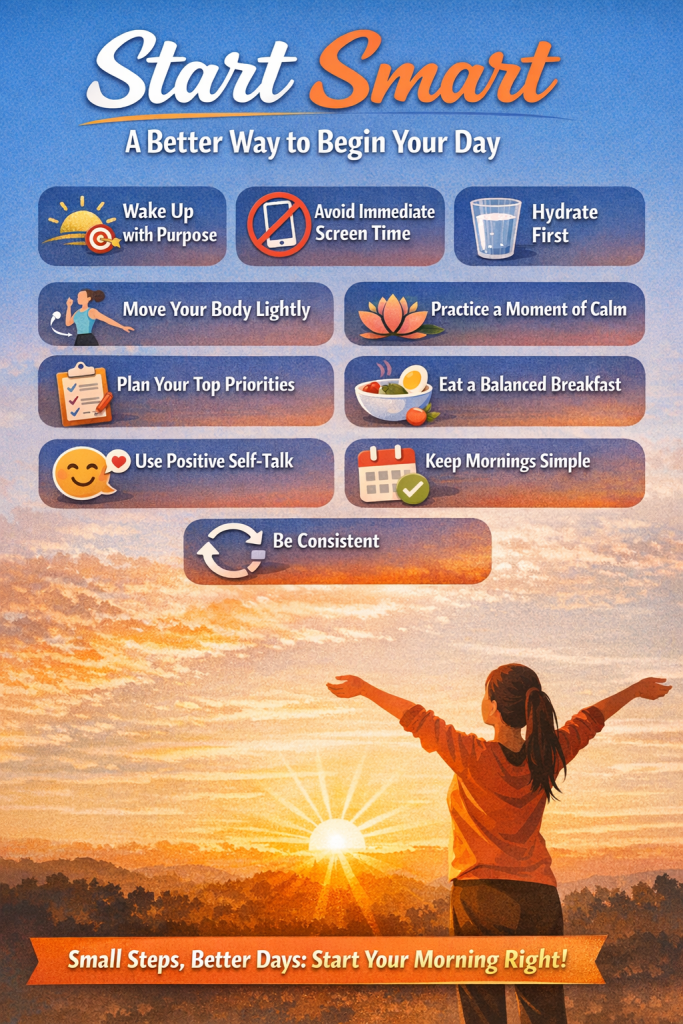
Start Smart: A Better Way to Begin Your Day

How you begin your morning often determines how effective, calm, and focused the rest of your day will be. A smart start does not require drastic changes. Small, intentional actions can create clarity, energy, and direction. Below are simple, practical points to help you start your day better.


1. Wake Up with Purpose

Avoid rushing out of bed. Take a moment to remind yourself of one important task or goal for the day. This creates direction and reduces mental clutter.


2. Avoid Immediate Screen Time

Checking your phone immediately can increase stress and distraction. Give your mind at least 15–20 minutes before engaging with messages or social media.


3. Hydrate First

Drinking water soon after waking up helps activate your body, improves concentration, and supports overall health.


4. Move Your Body Lightly

Simple stretching, a short walk, or light exercise boosts blood circulation and helps you feel more alert and positive.


5. Practice a Moment of Calm

Spend a few minutes in silence, deep breathing, or prayer/meditation. This improves emotional balance and mental clarity.


6. Plan Your Top Priorities

List two or three important tasks for the day. Clear priorities reduce overwhelm and improve productivity.


7. Eat a Balanced Breakfast

A healthy breakfast supports energy levels and concentration. Avoid skipping meals or relying only on caffeine.


8. Use Positive Self-Talk

Begin your day with encouraging thoughts. Confidence in the morning strengthens resilience throughout the day.


9. Keep Mornings Simple

Avoid overloading your schedule early in the day. A calm morning sets the tone for better decision-making.


10. Be Consistent

A smart start works best when practiced daily. Consistency turns good habits into lasting routines.


Conclusion

Starting smart is about being intentional, not perfect. A few mindful steps each morning can lead to improved focus, reduced stress, and better outcomes—both personally and professionally. When you begin your day with clarity, the rest of the day follows naturally.

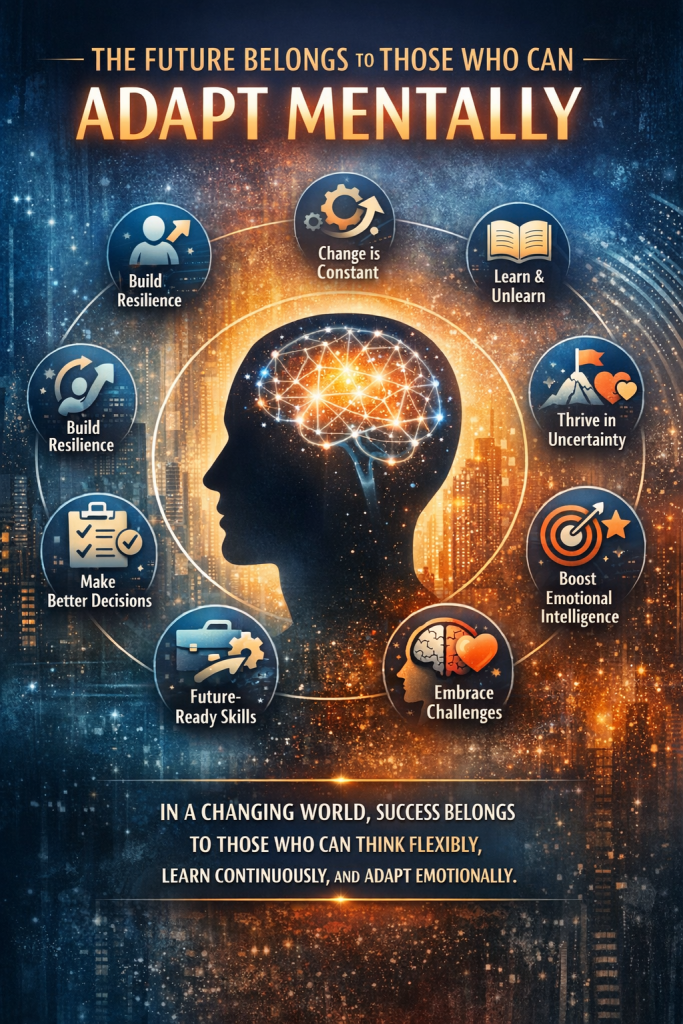
The Future Belongs to Those Who Can Adapt Mentally

In a rapidly changing world, success is no longer determined only by intelligence, talent, or experience. The ability to adapt mentally has become the most important life skill. Below are simple, clear points explaining why mental adaptability shapes the future.


1. Change Is Constant, Not Optional

Technology, workplaces, and lifestyles are evolving faster than ever. Those who mentally resist change experience stress and stagnation, while adaptable minds learn to adjust and move forward.


2. Mental Flexibility Enables Faster Learning

Adaptable individuals are open to unlearning old habits and acquiring new skills. This learning mindset allows them to stay relevant in education, careers, and personal growth.


3. Resilient Minds Handle Uncertainty Better

The future is unpredictable. Mental adaptability helps individuals remain calm during uncertainty, view challenges as temporary, and respond with problem-solving rather than panic.


4. Adaptability Strengthens Emotional Intelligence

Mentally adaptable people regulate emotions effectively, accept feedback positively, and adjust behavior based on situations. This improves relationships and leadership effectiveness.


5. Fixed Mindsets Limit Growth

A rigid mindset clings to comfort zones and fears failure. In contrast, adaptable minds see failure as feedback and change as an opportunity for improvement.


6. Mental Adaptation Supports Well-Being

Being mentally flexible reduces stress, anxiety, and burnout. Acceptance and adjustment protect mental health in high-pressure environments.


7. Future Careers Demand Cognitive Agility

Jobs of the future will require continuous upskilling. Mental adaptability enables individuals to transition across roles, industries, and technologies with confidence.


8. Adaptable Minds Make Better Decisions

Open-minded thinking allows individuals to evaluate situations objectively, consider alternatives, and make informed decisions even with limited information.


9. Growth Begins with Self-Awareness

Understanding one’s thoughts, beliefs, and emotional patterns is the first step toward mental adaptability. Awareness creates choice rather than automatic reactions.


10. Adaptability Is a Trainable Skill

Mental flexibility can be developed through reflection, lifelong learning, mindfulness, and embracing new experiences.


Conclusion

The future will not favor the strongest or the smartest, but those who can think flexibly, learn continuously, and adapt emotionally. Mental adaptability is no longer optional—it is the foundation for sustainable success and well-being in an uncertain world.

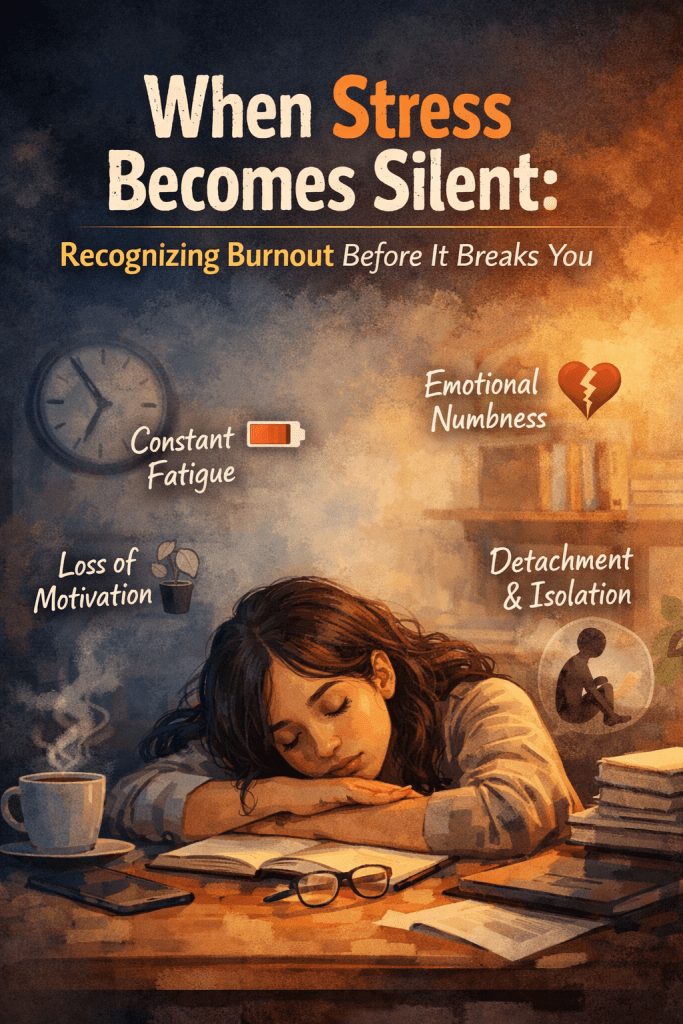
When Stress Becomes Silent: Recognizing Burnout Before It Breaks You

Introduction

Stress is often visible. We feel tired, worried, or overwhelmed and we talk about it.
Burnout, however, is different. It grows quietly. Many people do not realize they are burned out until their health, motivation, or relationships begin to suffer. Understanding early signs of burnout can help us take action before it becomes serious.


What Is Silent Burnout?

Silent burnout happens when prolonged stress is ignored or normalized. A person may continue working, meeting responsibilities, and appearing “fine” while internally feeling drained and disconnected.

It is not sudden. It develops slowly due to continuous pressure without enough rest, emotional support, or recovery.


Early Signs You Should Not Ignore

  • Constant tiredness even after rest
  • Loss of interest in work or daily activities
  • Feeling emotionally numb or detached
  • Irritability over small issues
  • Difficulty concentrating or making decisions
  • Frequent headaches, body pain, or sleep problems
  • Feeling unappreciated or hopeless

These signs are often dismissed as “just stress,” but they may indicate burnout.


Why Burnout Goes Unnoticed

  • We get used to being busy all the time
  • We believe taking rest is a weakness
  • We prioritize work over health
  • We feel guilty for slowing down
  • Others praise us for “handling everything”

Over time, this mindset makes burnout invisible.


Difference Between Stress and Burnout

  • Stress: Too many demands, but you still care
  • Burnout: Emotional exhaustion, loss of motivation, and feeling empty

Stress makes you feel overloaded. Burnout makes you feel drained and disconnected.


How to Prevent Burnout Early

  • Take regular breaks without guilt
  • Set realistic limits on work and responsibilities
  • Learn to say no when needed
  • Talk openly about how you feel
  • Prioritize sleep, nutrition, and physical activity
  • Do at least one activity daily that brings calm or joy

Small changes practiced consistently make a big difference.


When to Seek Support

If exhaustion, sadness, or detachment lasts for weeks, professional help is important. Speaking to a counselor, mentor, or healthcare professional is a sign of strength, not weakness.


Final Thoughts

Burnout does not announce itself loudly. It whispers through fatigue, silence, and loss of joy. Listening early can protect your mental and physical well-being.

Taking care of yourself is not optional. It is essential for long-term success and a healthy life.

Daily Stress vs. Chronic Stress: Knowing the Difference

Introduction

Stress is a part of everyday life. Deadlines, responsibilities, and unexpected situations often create pressure. However, not all stress is the same. Understanding the difference between daily stress and chronic stress helps us manage our mental health better and prevent long-term harm.


What Is Daily Stress?

Daily stress is short-term and usually linked to routine activities or temporary challenges.

Common causes:

  • Tight schedules or deadlines
  • Exams, meetings, or presentations
  • Traffic, minor conflicts, or small setbacks

Key characteristics:

  • Lasts for a short period
  • Reduces once the situation is resolved
  • Can sometimes improve focus and motivation

Example:
Feeling nervous before an exam but relaxed once it is over.


What Is Chronic Stress?

Chronic stress is long-lasting and occurs when stressful situations continue without relief.

Common causes:

  • Ongoing financial problems
  • Long-term work pressure
  • Family conflicts or caregiving responsibilities
  • Unresolved emotional issues

Key characteristics:

  • Persists for weeks or months
  • Feels constant and overwhelming
  • Affects both mental and physical health

Example:
Feeling anxious and exhausted every day due to prolonged work pressure.


Key Differences Between Daily and Chronic Stress

  • Duration:
    Daily stress is temporary; chronic stress is continuous.
  • Impact:
    Daily stress is manageable; chronic stress is harmful.
  • Recovery:
    Daily stress fades with rest; chronic stress does not easily go away.
  • Health effects:
    Chronic stress may lead to anxiety, depression, sleep issues, and fatigue.

Why Knowing the Difference Matters

  • Helps you recognize when stress becomes unhealthy
  • Encourages timely self-care and support
  • Prevents burnout and long-term mental health issues

Ignoring chronic stress can slowly affect emotional well-being, relationships, and overall quality of life.


Simple Ways to Manage Stress

  • Practice deep breathing or mindfulness
  • Maintain a healthy daily routine
  • Take short breaks and rest adequately
  • Share concerns with trusted people
  • Seek professional help when stress feels constant

Final Thoughts

Stress is unavoidable, but suffering is not. While daily stress is a normal part of life, chronic stress is a warning sign that should not be ignored. By understanding the difference, we can take better care of our minds and lead healthier, more balanced lives.

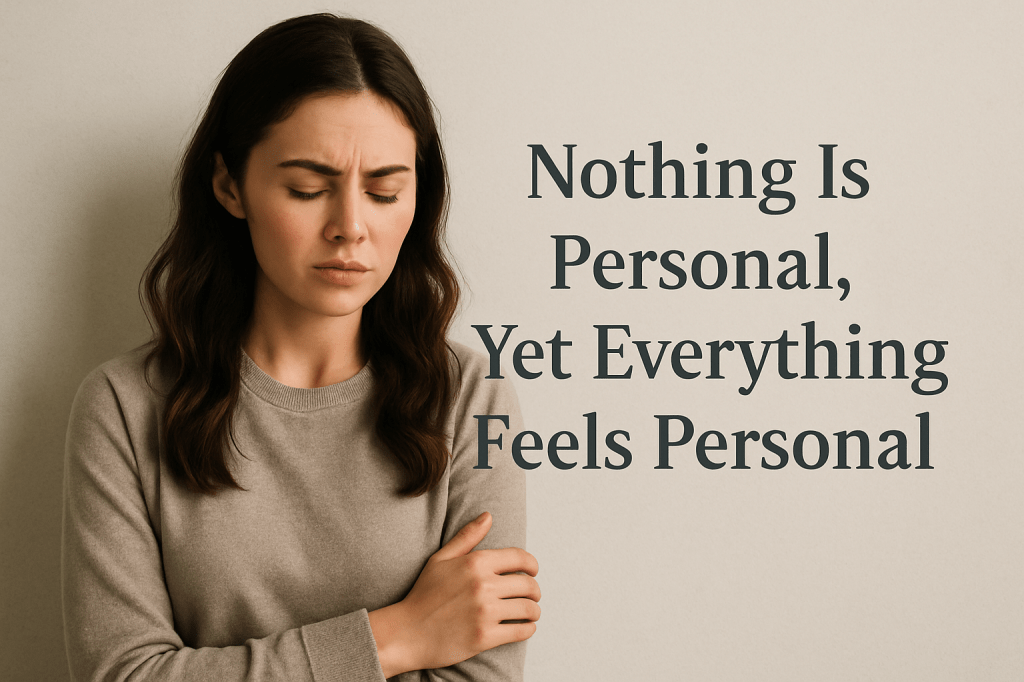
Nothing Is Personal, Yet Everything Feels Personal

Introduction

In everyday life, we often take words, actions, and silences to heart. A small change in behavior, a delayed response, or a critical comment can instantly make us question ourselves. Although logic tells us that most things are not meant personally, emotions often disagree. This inner conflict is what makes life feel heavy at times—nothing is personal, yet everything feels personal.

Why Everything Feels Personal

Human beings are emotional by nature. We connect experiences to our sense of self, which makes us interpret situations through a personal lens. When someone behaves differently, the mind immediately searches for a reason and often turns inward. This reaction is natural, but it is not always accurate.

Most Actions Reflect the Other Person

People respond based on their own stress, fears, priorities, and emotional capacity. Their words and behavior are shaped by their experiences, not by our value. Silence, distance, or harshness usually reflects what someone else is struggling with internally, even though it may feel directed at us.

How Overthinking Makes It Worse

When information is incomplete, the mind fills the gaps with assumptions. Overthinking turns neutral situations into personal failures. Emotions amplify this process, making us believe that we are the cause of every change or conflict, even when there is no clear evidence.

Understanding the Truth Without Ignoring Feelings

Saying “nothing is personal” does not mean dismissing emotions. Feelings are real and valid, but they do not always represent the full truth. The key is to acknowledge emotions without tying them to self-worth. This balance helps us stay grounded and emotionally healthy.

Letting Go of Unnecessary Emotional Weight

When we stop personalizing everything, relationships feel lighter. We react less and understand more. We learn to pause, reflect, and choose responses rather than acting from hurt. This shift reduces emotional exhaustion and brings inner calm.

Final Thoughts

Nothing is personal, yet everything feels personal because we care deeply. Growth begins when care is guided by awareness instead of assumption. By separating others’ actions from our self-worth, we create space for peace, clarity, and emotional resilience. What others do is about them; how we respond defines us.

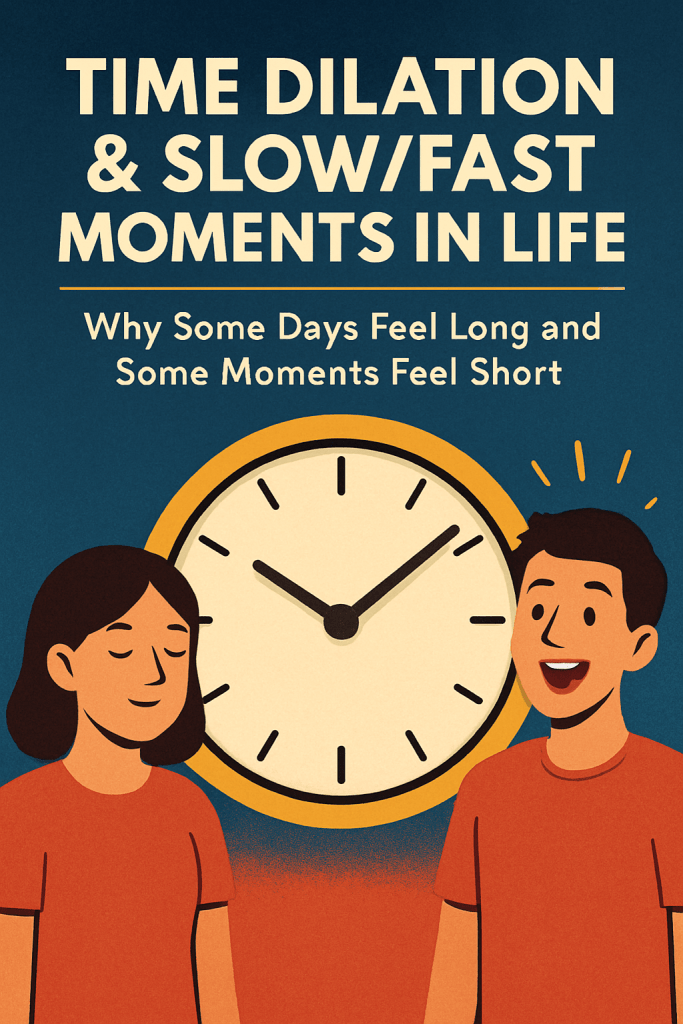
Time Dilation & Slow/Fast Moments in Life

Why Some Days Feel Long and Some Moments Feel Short

1. Time doesn’t always feel the same

In physics, time dilation means time can move slower or faster depending on conditions.
In life, our mind creates its own version of this — some moments stretch endlessly, while others vanish instantly.

2. Happy moments always feel fast

When we are joyful, engaged, or doing something we love, time feels like it’s flying.
Our brain is fully present, so we don’t notice time passing.

3. Painful or boring moments feel slow

Waiting in a queue, sitting in a dull class, or going through emotional pain — these moments feel heavy.
We keep checking the clock, so time feels stretched.

4. Emotional weight changes our sense of time

Fear, stress, sadness, or anxiety make every second feel longer.
The mind becomes hyper-aware, slowing the experience.

5. Surprises and excitement speed things up

A fun trip, a celebration, or meeting someone special — these moments disappear quickly because the brain is busy collecting happy memories.

6. Routine makes days blur together

When every day looks the same, we stop noticing details.
That’s why weeks pass fast when life becomes repetitive.

7. Focus changes time

When we are absorbed — studying, painting, cooking, or working with passion — time disappears.
This is “flow,” our personal time warp.

8. Memories also shape how time feels

A boring hour feels long while living it, but short when we look back.
A beautiful moment feels short while living it, but long in memory.

9. Time slows down during big life events

Accidents, emotional shocks, or deep realizations feel like slow motion.
The brain records every detail — stretching the moment.

10. Time speeds up with age

As we grow older, our brain receives fewer “new” experiences.
Fewer new memories = time feels faster.

11. We can control our ‘time feeling’

Not real time — but how we experience it.
By staying present, adding variety, and slowing down mentally, we can stretch good moments and soften painful ones.

12. The lesson: Time is emotional, not mechanical

Clock time is fixed, but felt time changes every day.
Understanding this helps us appreciate moments more deeply.

Quantum Superposition: You Can Be More Than One Version of Yourself

Introduction

In quantum physics, superposition means a particle can exist in multiple states at the same time until someone observes it. This mind-bending idea isn’t just for scientists. It mirrors our personal journey. In life, we often forget that we too carry many possible versions of ourselves waiting to unfold.


1. You carry many possibilities within you

In superposition, a particle can be here and there.
In life, you can be strong and scared. Brave and unsure. Learning and leading.
You don’t have to fit into one fixed label.

Your identity is a wide horizon, not a locked room.


2. You don’t have to decide who you are immediately

Superposition teaches that reality settles only when observed.
Similarly, you don’t need to rush your life decisions.
Career, relationships, dreams — these don’t always need instant clarity.
Give yourself permission to explore before choosing.


3. You can reinvent yourself anytime

Just like a particle collapses into a specific state when observed, you can choose which version of yourself to activate today.
Want to be more confident? More disciplined? More patient?
You can select that version and let it grow.

The choice becomes the turning point.


4. Your circumstances do not define your potential

Superposition reminds us that there is always more happening beneath the surface.
Your potential isn’t limited by your past or present situation.
There are countless paths hidden inside you, waiting to be chosen.


5. You are allowed to grow in different directions

People often feel pressure to be consistent, predictable, or a “single type” of person.
But you can be a creative thinker and a practical planner.
A dreamer and a doer.
A calm person and a bold decision-maker.

Life becomes richer when you embrace your complexity instead of hiding it.


6. Your future is a collection of possibilities

Superposition shows that reality isn’t fixed.
Your future isn’t fixed either.
Small shifts in choice, mindset, and habits can unlock entirely new paths.

Every day, you decide which version of yourself steps forward.


Final Thoughts

Quantum superposition gently reminds us that we are not stuck. We are not one-dimensional. We are not limited to a single identity or destiny. Within each of us lives a constellation of possibilities, waiting to be chosen at the right moment.

You are allowed to evolve.
You are allowed to change.

Quantum Healing: Can Thoughts Influence the Body?

1. Introduction: What is Quantum Healing?

  • Quantum healing is the idea that the mind and body are deeply connected.
  • It suggests that your thoughts, emotions, and beliefs can influence your physical health.
  • This concept is inspired by principles from quantum physics, which show that energy and consciousness can affect matter.

2. Everything in the Body Is Energy

  • At the smallest level, your body is made of atoms and energy—not just solid matter.
  • Your heartbeat, breathing, emotions, and thoughts all produce energy signals.
  • If your energy is balanced, you feel healthy; if it is disturbed, you feel unwell.

3. Thoughts Create Real Changes in the Body

  • When you think positively, your brain releases “good chemicals” like dopamine and serotonin.
  • When stressed or worried, your brain releases cortisol, which can weaken immunity.
  • This shows that thoughts have a direct physical impact.

4. The Observer Effect: Why Attention Matters

  • In quantum physics, particles behave differently when observed.
  • Similarly, when you focus your mind on healing, your body responds to that attention.
  • Meditation, prayer, and positive intention activate the body’s natural repair systems.

5. Emotions Carry Energy

  • Joy, gratitude, and love create high-energy states that support healing.
  • Fear, anger, and sadness create low-energy states that may slow down healing.
  • Shifting emotional energy can shift physical well-being.

6. Placebo Effect: Proof That Belief Heals

  • Doctors around the world have seen patients recover simply because they believed a treatment would work.
  • The mind convinced the body to heal—this is a real scientific example of quantum-like healing.

7. Daily Practices That Encourage Quantum Healing

  • Meditate for a few minutes every day to calm your energy.
  • Use positive affirmations (“My body is healing. I am strong.”).
  • Practice gratitude to raise emotional energy.
  • Visualize healing, imagining your body becoming healthier.
  • Stay conscious of your thoughts—replace negative ones gently.

8. Final Thoughts

  • Quantum healing doesn’t replace medical treatment, but it supports it.
  • Your mind is powerful—your thoughts can influence your body more than you realize.
  • When you change your thoughts, you change your energy.
  • When you change your energy, your body responds.

✨ The Quantum Leap: Small Changes That Create Big Shifts in Life

Life doesn’t always change through big decisions or dramatic moments.
Sometimes, it changes through tiny actions—small steps that create powerful results over time.
In quantum physics, a “quantum leap” is a small jump of energy that leads to a big transformation.
The same idea applies to our lives.

Here’s how small changes can create big shifts, just like a quantum leap.


🌟 1. Small Changes Create New Possibilities

In quantum theory, even a tiny shift in energy can move a particle to a completely new state.
In life, a small habit change can move you to a new version of yourself.

Example:

  • Reading for 10 minutes a day can slowly turn you into a knowledgeable, confident person.
  • Drinking one extra glass of water daily can improve your energy level.

🌟 2. Every Action Raises Your “Energy Level”

Quantum leaps happen when energy increases.
Similarly, when you make small improvements, your mindset, confidence, and lifestyle rise to a higher level.

Example:

  • Waking up just 15 minutes earlier each day may give you extra time to plan your day calmly.
  • Writing three things you’re grateful for shifts your emotional energy instantly.

🌟 3. You Don’t Need Big Motivation — Just Tiny Momentum

Quantum jumps don’t require huge force; they happen instantly when enough small energy builds up.
Tiny efforts create steady momentum.

Example:

  • Walking only 2,000 steps more each day leads to better health over months.
  • Learning one new English word daily improves communication without pressure.

🌟 4. Small Decisions Change Your Direction

Even the slightest shift in angle can change your destination completely—just like how a particle’s path changes with a tiny impulse.
Small decisions today create a new future.

Example:

  • Choosing to save ₹20 a day becomes ₹600 a month and ₹7,200 a year.
  • Choosing to reduce screen time by 10 minutes daily improves focus and sleep.

🌟 5. The Power of Changing Your Environment Slightly

In quantum physics, particles change behavior depending on their environment.
Similarly, your surroundings influence your habits and mindset.

Example:

  • Keeping fruits on your table helps you eat healthier.
  • Placing books near your bed encourages reading.

🌟 6. Small Mindset Shifts Lead to Big Emotional Growth

A slight shift in thinking can transform how you feel, behave, and respond.

Example:

  • Changing the thought “I can’t do this” to “I will try” opens new opportunities.
  • Replacing negative self-talk with kinder words reduces stress.

🌟 7. Small Daily Improvements Compound Over Time

Just like small energy additions create a quantum jump, small daily efforts compound into major life progress.

Example:

  • Practicing a skill for just 5 minutes a day leads to mastery over months.
  • Saving small amounts regularly builds financial stability.

✨ Final Thought

A quantum leap is not magic.
It is the result of consistent small steps that slowly build enough energy to create a big transformation.

You don’t need huge changes.
You just need to begin—with one small step today.

The Pain of Not Knowing: Why Uncertainty Hurts More Than the Truth

1. Uncertainty feels heavier than truth

  • Not knowing what will happen next can be more painful than facing a hard truth.
  • Our mind keeps searching for answers that aren’t clear yet.

2. The mind wants control

  • The human mind likes to plan and predict.
  • When life becomes uncertain, we feel lost and anxious.
  • We overthink and imagine the worst outcomes.

3. The unknown creates fear

  • We fear what we can’t see or understand.
  • Even bad news feels easier than waiting and wondering.
  • Uncertainty fills our thoughts with “what ifs.”

4. It drains emotional energy

  • We move between hope and worry, again and again.
  • It’s mentally tiring and emotionally exhausting.
  • The heart feels heavy because there’s no clear answer.

5. The truth brings relief

  • Once we know the truth, we can accept it and move forward.
  • Truth gives direction, while uncertainty keeps us stuck.

6. Acceptance is the key

  • Life will always have unknowns.
  • Accepting uncertainty brings peace.
  • Trust that time will reveal the answers when you’re ready.

7. The hidden lesson

  • Uncertainty teaches patience and faith.
  • It helps us grow stronger and more flexible.
  • Sometimes, not knowing is life’s way of helping us learn to let go.

Final Thought

The pain of not knowing is real, but it’s also temporary.
When we stop fighting the unknown and trust the process, peace slowly finds its way back to us. 🌿