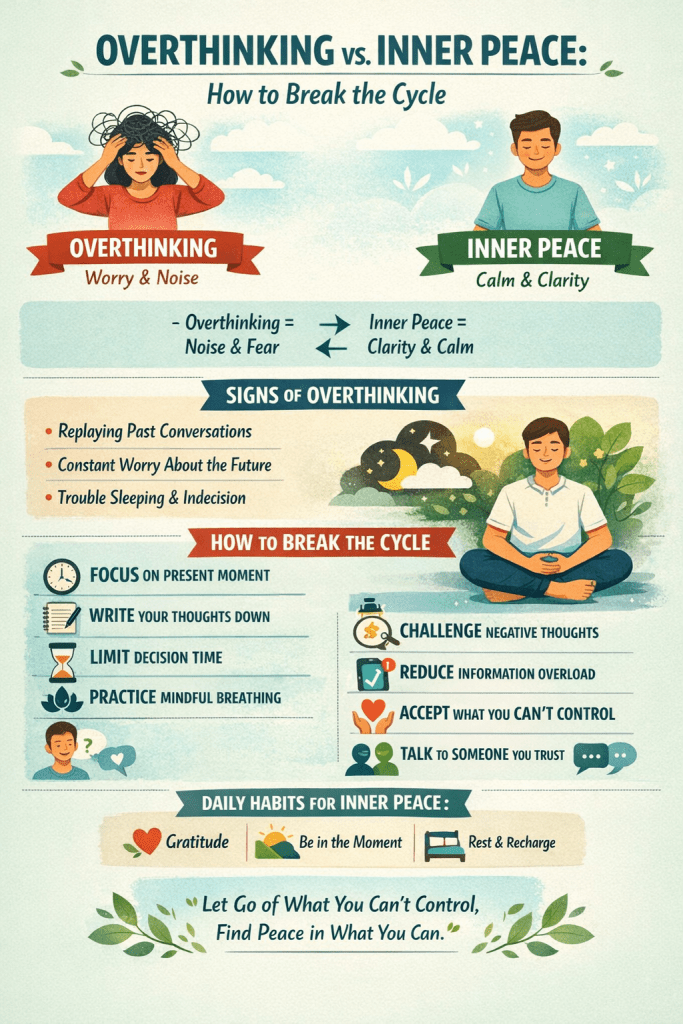
🧠 Overthinking vs. Inner Peace: How to Break the Cycle

🌪️ What is Overthinking?

  • Overthinking means constantly analyzing, worrying, or replaying situations in your mind
  • It often focuses on “what if” and worst-case scenarios
  • Instead of solving problems, it creates more stress and confusion

🕊️ What is Inner Peace?

  • Inner peace is a state of mental calm and emotional balance
  • It means accepting things you cannot control
  • A peaceful mind stays present, steady, and less reactive

⚖️ Overthinking vs. Inner Peace

  • Overthinking = Noise, doubt, fear
  • Inner Peace = Clarity, acceptance, calmness
  • Overthinking drains energy, while inner peace restores it

🚨 Signs You Are Overthinking

  • Replaying past conversations again and again
  • Constant worry about the future
  • Difficulty making decisions
  • Trouble sleeping due to racing thoughts
  • Feeling mentally exhausted without doing much

🌿 Why Do We Overthink?

  • Fear of failure or rejection
  • Need for control over everything
  • Lack of confidence in decisions
  • Past negative experiences
  • Trying to please everyone

🔓 How to Break the Overthinking Cycle

1. ⏳ Focus on the Present

  • Train your mind to stay in the current moment
  • Ask yourself: “Is this happening right now?”

2. ✍️ Write Your Thoughts Down

  • Journaling helps release thoughts instead of trapping them in your mind
  • It brings clarity and reduces mental pressure

3. 🎯 Limit Decision Time

  • Give yourself a time limit to think and decide
  • Avoid endless analysis—done is better than perfect

4. 🧘 Practice Mindfulness or Deep Breathing

  • Simple breathing exercises can calm your nervous system
  • Even 5 minutes daily makes a difference

5. 🚫 Challenge Negative Thoughts

  • Not every thought is true
  • Replace “What if everything goes wrong?” with
    “What if things turn out okay?”

6. 📵 Reduce Information Overload

  • Too much social media and comparison increase mental noise
  • Take breaks to protect your peace

7. 🤝 Accept What You Cannot Control

  • Peace begins when you stop trying to control everything
  • Focus only on your actions, not outcomes

8. 💬 Talk It Out

  • Sharing your thoughts with someone you trust reduces mental burden
  • You gain perspective and emotional relief

🌸 Daily Habits for Inner Peace

  • Start your day with gratitude
  • Spend time in silence or reflection
  • Keep your environment clean and calm
  • Practice self-compassion (be kind to yourself)
  • Get enough rest and take breaks

✨ Key Insight

  • Overthinking is not a sign of intelligence—it’s often a sign of unmanaged fear
  • Inner peace is not something you find outside—it’s something you build within

🌈 Conclusion

  • You don’t need to control every thought
  • You just need to choose which thoughts deserve your attention
  • The more you let go, the more peaceful your mind becomes

Be Proactive, Not Reactive

Introduction

Life constantly throws challenges and opportunities at us. How we handle them defines the quality of our journey. Being reactive—waiting for situations to unfold before acting—can lead to stress and missed opportunities. On the other hand, being proactive allows us to take control, plan ahead, and create positive outcomes. Proactive people don’t wait for things to happen; they make things happen.

1. What Does It Mean to Be Proactive?

  • Being proactive means taking initiative, anticipating challenges, and acting before situations demand it.
  • It’s about focusing on solutions rather than being overwhelmed by problems.

2. The Problem with Being Reactive

  • Reacting often means making decisions based on emotions, like panic or frustration.
  • It leads to rushed actions and a feeling of being out of control.

3. Benefits of Being Proactive

  • Better Control: You direct your life instead of letting circumstances dictate your path.
  • Improved Planning: You’re prepared for challenges before they arise.
  • Reduced Stress: Tackling problems early prevents them from becoming crises.
  • More Opportunities: A proactive approach often opens doors that others miss.

4. Examples of Proactive vs. Reactive

  • Proactive: Saving money regularly for emergencies.
    Reactive: Borrowing money last minute when faced with unexpected expenses.
  • Proactive: Seeking feedback at work to improve performance.
    Reactive: Waiting for a problem to occur before addressing it.

5. Steps to Be Proactive

  • Set Clear Goals: Know what you want and work steadily toward it.
  • Plan Ahead: Break tasks into smaller steps and start early.
  • Anticipate Challenges: Think about potential obstacles and prepare solutions.
  • Take Responsibility: Acknowledge your role in shaping outcomes instead of blaming circumstances.

6. Building a Proactive Mindset

  • Focus on what you can control and let go of what you can’t.
  • Practice mindfulness to stay calm and think clearly.
  • Surround yourself with people who encourage growth and positivism.

7. Overcoming Challenges to Stay Proactive

  • Stress and uncertainty can make it easy to fall back into reactive habits.
  • Build small habits like daily planning and reflecting on your actions to stay proactive.

8. Proactive People Inspire Change

  • Your proactive mindset can influence others to take charge of their lives.
  • Together, proactive actions can lead to broader positive changes in communities and workplaces.

Take Charge of Your Life

Life may not always go as planned, but a proactive mindset helps you navigate its twists and turns with confidence. Start small—create a goal, plan ahead, and take the first step. Being proactive isn’t just about solving problems; it’s about creating opportunities and leading a purposeful life. Remember, proactive people shape their destiny, while reactive people let circumstances define them.