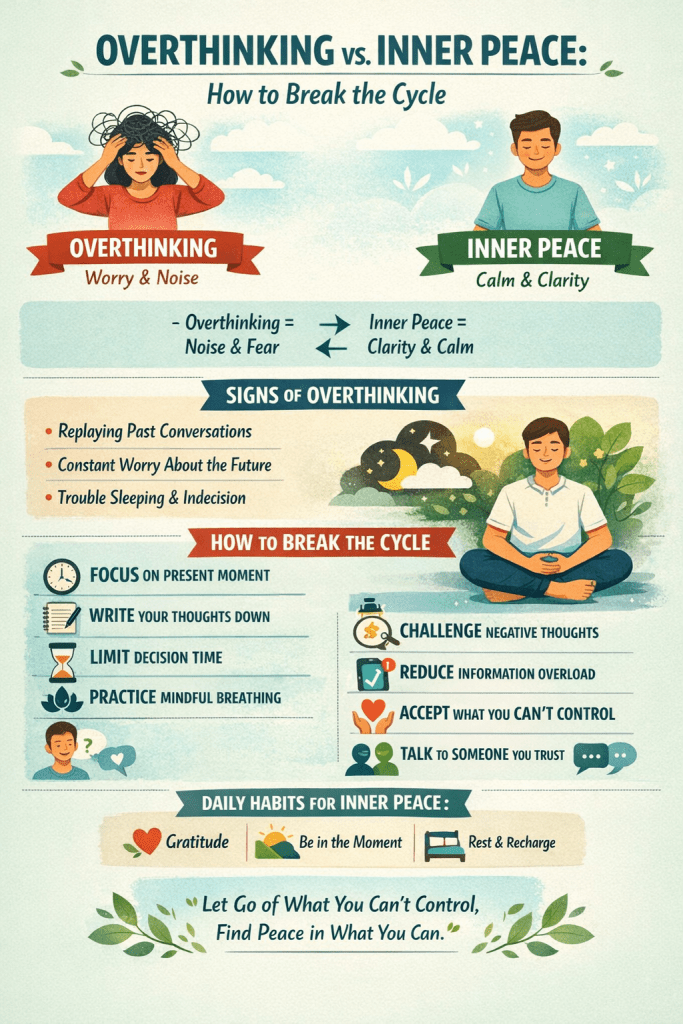
🧠 Overthinking vs. Inner Peace: How to Break the Cycle

🌪️ What is Overthinking?

  • Overthinking means constantly analyzing, worrying, or replaying situations in your mind
  • It often focuses on “what if” and worst-case scenarios
  • Instead of solving problems, it creates more stress and confusion

🕊️ What is Inner Peace?

  • Inner peace is a state of mental calm and emotional balance
  • It means accepting things you cannot control
  • A peaceful mind stays present, steady, and less reactive

⚖️ Overthinking vs. Inner Peace

  • Overthinking = Noise, doubt, fear
  • Inner Peace = Clarity, acceptance, calmness
  • Overthinking drains energy, while inner peace restores it

🚨 Signs You Are Overthinking

  • Replaying past conversations again and again
  • Constant worry about the future
  • Difficulty making decisions
  • Trouble sleeping due to racing thoughts
  • Feeling mentally exhausted without doing much

🌿 Why Do We Overthink?

  • Fear of failure or rejection
  • Need for control over everything
  • Lack of confidence in decisions
  • Past negative experiences
  • Trying to please everyone

🔓 How to Break the Overthinking Cycle

1. ⏳ Focus on the Present

  • Train your mind to stay in the current moment
  • Ask yourself: “Is this happening right now?”

2. ✍️ Write Your Thoughts Down

  • Journaling helps release thoughts instead of trapping them in your mind
  • It brings clarity and reduces mental pressure

3. 🎯 Limit Decision Time

  • Give yourself a time limit to think and decide
  • Avoid endless analysis—done is better than perfect

4. 🧘 Practice Mindfulness or Deep Breathing

  • Simple breathing exercises can calm your nervous system
  • Even 5 minutes daily makes a difference

5. 🚫 Challenge Negative Thoughts

  • Not every thought is true
  • Replace “What if everything goes wrong?” with
    “What if things turn out okay?”

6. 📵 Reduce Information Overload

  • Too much social media and comparison increase mental noise
  • Take breaks to protect your peace

7. 🤝 Accept What You Cannot Control

  • Peace begins when you stop trying to control everything
  • Focus only on your actions, not outcomes

8. 💬 Talk It Out

  • Sharing your thoughts with someone you trust reduces mental burden
  • You gain perspective and emotional relief

🌸 Daily Habits for Inner Peace

  • Start your day with gratitude
  • Spend time in silence or reflection
  • Keep your environment clean and calm
  • Practice self-compassion (be kind to yourself)
  • Get enough rest and take breaks

✨ Key Insight

  • Overthinking is not a sign of intelligence—it’s often a sign of unmanaged fear
  • Inner peace is not something you find outside—it’s something you build within

🌈 Conclusion

  • You don’t need to control every thought
  • You just need to choose which thoughts deserve your attention
  • The more you let go, the more peaceful your mind becomes

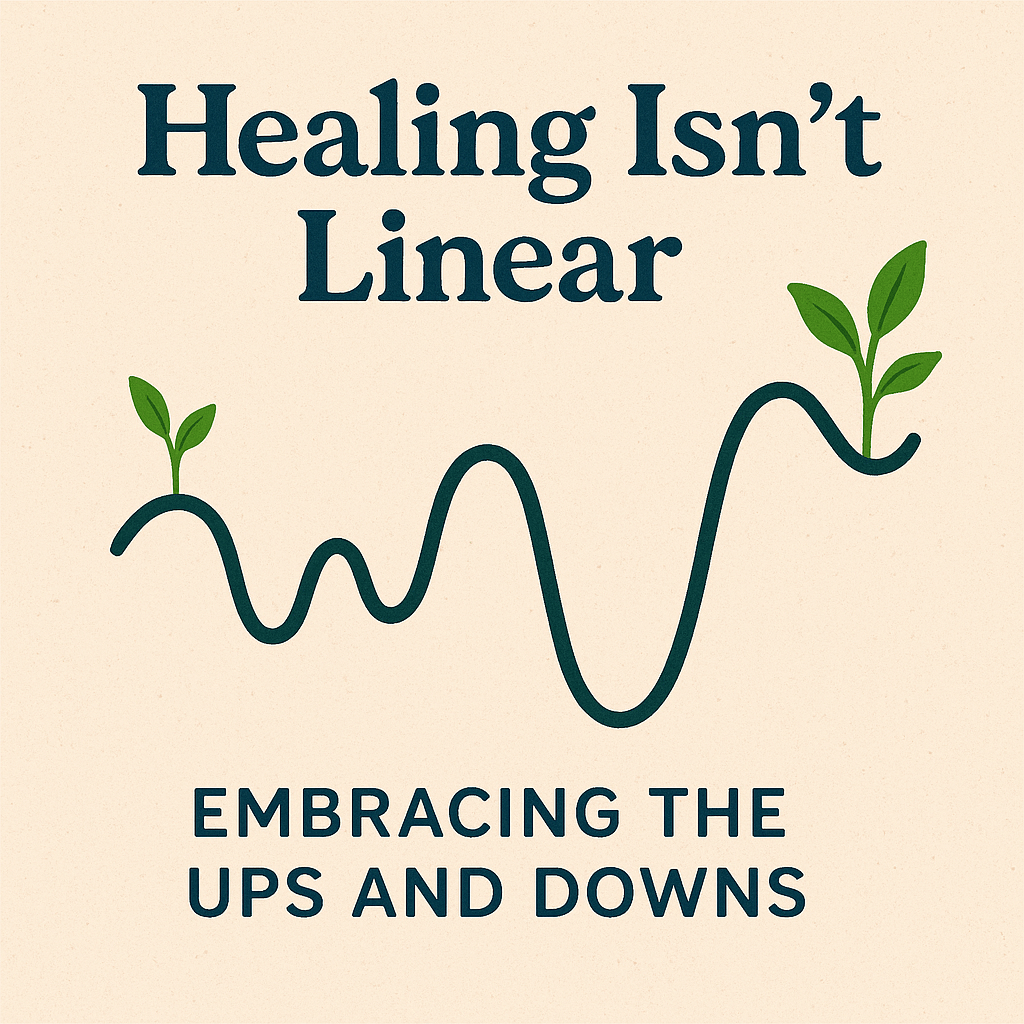
🌱 Healing Isn’t Linear: Embracing the Ups and Downs

Healing—whether emotional, mental, or physical—is not a straight path. It’s a journey filled with progress, setbacks, and moments that may feel like you’re going in circles. And that’s okay.


1. Healing Takes Time

  • Recovery doesn’t happen overnight.
  • It’s okay to take days, weeks, or even years.
  • Be patient with yourself.

2. It’s Normal to Have Good and Bad Days

  • Some days you’ll feel strong, other days you won’t.
  • Bad days don’t erase your progress.
  • Every step, even backward, is part of the journey.

3. Progress Isn’t Always Visible

  • Just because you can’t see improvement doesn’t mean it’s not happening.
  • Inner changes often take time to show on the outside.

4. Setbacks Are Not Failures

  • Falling back into old patterns is common.
  • It’s not a failure—it’s part of learning and growing.
  • Use it as a lesson, not a reason to give up.

5. Celebrate Small Wins

  • Even small steps matter—like getting out of bed, saying “no,” or smiling again.
  • Every tiny win adds up to big change.

6. Your Journey Is Unique

  • Don’t compare your healing to others.
  • Everyone heals at their own pace and in their own way.
  • What works for someone else may not work for you—and that’s okay.

7. Allow Yourself to Feel

  • Don’t hide your emotions—feel them.
  • Crying, anger, or sadness are not signs of weakness.
  • Emotions are part of processing and healing.

8. Ask for Help When You Need It

  • You don’t have to do it alone.
  • Talk to a friend, therapist, or support group.
  • Asking for help is a strength, not a weakness.

9. Be Kind to Yourself

  • Talk to yourself with love and compassion.
  • You’re doing your best, and that’s enough.
  • Replace self-criticism with encouragement.

10. Healing Is Ongoing

  • Healing doesn’t mean you’ll never feel pain again.
  • It means you learn to carry it with more strength and less fear.
  • It’s about growing through what you go through.

🌼 Final Thought:

Healing isn’t a straight line—it’s a journey of twists, turns, detours, and growth. Embrace the process, honor your progress, and trust that every step—even the tough ones—is leading you toward a stronger you.