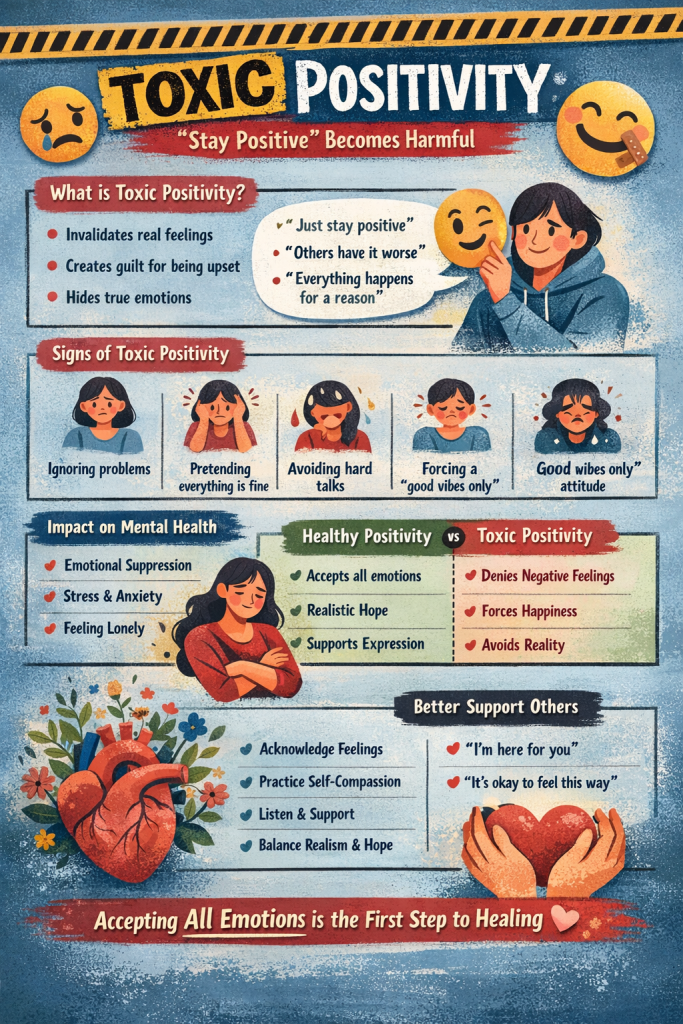
🌿 Toxic Positivity: When “Stay Positive” Becomes Harmful

💭 What is Toxic Positivity?

  • Toxic positivity is the belief that you should always stay positive, no matter how difficult the situation is
  • It rejects or ignores negative emotions like sadness, anger, or stress
  • Common phrases include:
    • “Just stay positive”
    • “Others have it worse”
    • “Everything happens for a reason”

⚠️ Why It Can Be Harmful

  • It invalidates real feelings
  • Makes people feel guilty for being upset
  • Creates pressure to hide true emotions
  • Prevents emotional healing and growth

😔 Signs of Toxic Positivity

  • Ignoring problems instead of facing them
  • Pretending everything is okay when it’s not
  • Avoiding difficult conversations
  • Feeling uncomfortable when others express sadness
  • Forcing positivity in every situation

🧠 Impact on Mental Health

  • Builds emotional suppression
  • Increases stress and anxiety
  • Leads to feeling lonely or misunderstood
  • Stops people from seeking help
  • Can cause emotional burnout over time

💡 Healthy Positivity vs Toxic Positivity

Healthy Positivity

  • Accepts both good and bad emotions
  • Encourages realistic hope
  • Supports emotional expression

Toxic Positivity

  • Denies negative feelings
  • Forces happiness
  • Avoids reality

🌱 What to Do Instead

  • Acknowledge your feelings – It’s okay to feel sad or stressed
  • Practice self-compassion – Be kind to yourself
  • Listen without judgment – For yourself and others
  • Express emotions – Talk, write, or reflect
  • Focus on balance – Accept pain and still find hope

🤝 How to Support Others Better

Instead of saying:

  • “Just stay positive”

Try saying:

  • “I’m here for you”
  • “It’s okay to feel this way”
  • “Take your time, you’ll get through this”

🌸 Conclusion

  • Positivity is powerful, but forced positivity is not healthy
  • True mental well-being comes from accepting all emotions
  • Healing begins when we allow ourselves to feel, not hide

Breaking Out of Mental Blocks and Comfort Zones

Stepping out of mental blocks and comfort zones can lead to personal growth, innovation, and new opportunities.

  1. Understand Your Mental Blocks
  • Identify Triggers: Notice situations where you feel stuck or unmotivated.
  • Self-Reflection: Reflect on why these blocks occur—fear of failure, self-doubt, or overthinking?
  • Acknowledge Patterns: Recognize recurring thoughts or behaviors that prevent progress.

2. Acknowledge the Comfort Zone Trap

  • Recognize Comfort Habits: We often do what’s familiar to avoid discomfort or risk.
  • Reflect on Potential Stagnation: Comfort zones feel safe, but they can also prevent growth and limit experiences.
  • Identify the Costs: Consider what you might miss out on by staying in your comfort zone.

3. Set Small, Manageable Goals

  • Start Small: Break big challenges into smaller, achievable goals.
  • Daily Challenges: Commit to doing one small thing each day that stretches you.
  • Celebrate Progress: Acknowledge each small win to build confidence and momentum.

4. Embrace a Growth Mindset

  • Shift Your Perspective: Believe that abilities and intelligence can be developed with effort.
  • Learn from Setbacks: View failures and mistakes as learning experiences.
  • Challenge Yourself: Seek out opportunities that promote learning and personal growth.

5. Use Visualization Techniques

  • Imagine Success: Visualize yourself successfully breaking through challenges.
  • Picture the Journey: Visualize the steps you’ll take and the effort involved.
  • Build Confidence: Use visualization to reinforce positive outcomes and reduce anxiety.

6. Take Calculated Risks

  • Start with Low-Stakes Risks: Try something slightly uncomfortable but not overwhelming.
  • Push Gradually: Increase the difficulty or novelty of challenges over time.
  • Learn as You Go: Use each risk as an opportunity to learn and adapt.

7. Surround Yourself with Supportive People

  • Seek Encouragement: Surround yourself with people who encourage growth and resilience.
  • Learn from Others: Observe how others handle challenges or push their limits.
  • Build Accountability: Share your goals with someone who can support and motivate you.

8. Challenge Negative Thoughts

  • Recognize Limiting Beliefs: Question thoughts that say “I can’t” or “I’m not good enough.”
  • Replace with Positives: Use affirmations or positive statements to shift your mindset.
  • Focus on Strengths: Remind yourself of past successes to build self-belief.

9. Develop Healthy Coping Strategies

  • Practice Stress Relief: Use meditation, journaling, or exercise to manage stress and fear.
  • Embrace Discomfort: Recognize that growth often feels uncomfortable, and that’s okay.
  • Build Resilience: Use each step out of your comfort zone to strengthen resilience over time.

10. Reflect and Adapt Regularly

  • Assess Progress: Periodically review how far you’ve come and what you’ve learned.
  • Adjust Goals: Refine your goals as you grow, setting new ones as you conquer old challenges.
  • Stay Open to Change: Be open to evolving as you overcome each mental block or comfort zone.

Self-Awareness: Understanding Yourself for Personal Growth

What Is Self-Awareness?

  • Quote: “Knowing yourself is the beginning of all wisdom.” – Aristotle
  • Self-awareness is the ability to recognize and understand your own thoughts, emotions, and behaviors.
  • It helps you identify how you react to different situations and how others perceive you.

Why Self-Awareness Is Important

  • Quote: “When I discover who I am, I’ll be free.” – Ralph Ellison
  • It helps you make better decisions, build healthier relationships, and manage emotions effectively.
  • Example: If you realize that stress makes you impatient, you can take steps to manage stress before it affects your behavior.

Types of Self-Awareness

  • Quote: “What we perceive about ourselves is greatly a reflection of how we will end up living our lives.” – Stephen Richards
  • Internal Self-Awareness: Understanding your emotions, values, and goals.
    • Example: Knowing that you value honesty can help you avoid situations where you feel pressured to be dishonest.
  • External Self-Awareness: Understanding how others see you.
    • Example: If people see you as quiet, but you think of yourself as outgoing, you may need to align your self-perception with your actions.

Benefits of Self-Awareness

  • Quote: “Self-awareness gives you the capacity to learn from your mistakes as well as your successes.” – Lawrence Bossidy
  • Improved Emotional Control: You can respond to situations more calmly.
    • Example: When you’re aware that certain topics make you angry, you can prepare to stay calm during difficult conversations.
  • Better Relationships: Understanding your own needs and recognizing others’ emotions improves communication.
    • Example: Being aware of your need for personal space helps you set boundaries in relationships.

How to Develop Self-Awareness

  • Quote: “The unexamined life is not worth living.” – Socrates
  • Reflect on Your Feelings: Take time to think about your emotions and why you feel them.
    • Example: After a tough day, reflect on why you felt upset and how you handled it.
  • Seek Feedback: Ask trusted friends or colleagues how they perceive you.
    • Example: If a colleague says you seem stressed, it might help you realize you’re overwhelmed and need to make changes.
  • Practice Mindfulness: Stay present and observe your thoughts without judgment.
    • Example: During a stressful moment, pause and notice your thoughts instead of reacting immediately.

Common Obstacles to Self-Awareness

  • Denial: Refusing to acknowledge your flaws or emotions.
    • Example: Telling yourself you’re always right, even when faced with feedback that suggests otherwise.
  • Fear of Self-Reflection: Avoiding deeper thinking because you’re afraid of what you’ll find.
    • Example: Not wanting to admit that you may need to make uncomfortable changes in your life.

How Self-Awareness Leads to Growth

  • Quote: “Self-awareness is not just relaxation and not just meditation. It must combine relaxation with activity and dynamism. Technology can aid that.” – Deepak Chopra
  • Recognizing your strengths and weaknesses helps you set realistic goals and improve over time.
  • Example: If you’re aware that procrastination is a weakness, you can work on time management skills to overcome it.

Conclusion

  • Quote: “Your visions will become clear only when you can look into your own heart. Who looks outside, dreams; who looks inside, awakes.” – Carl Jung
  • Self-awareness is the key to personal growth and better relationships.
  • By understanding yourself, you can make positive changes in your life, handle challenges more effectively, and become the best version of yourself.