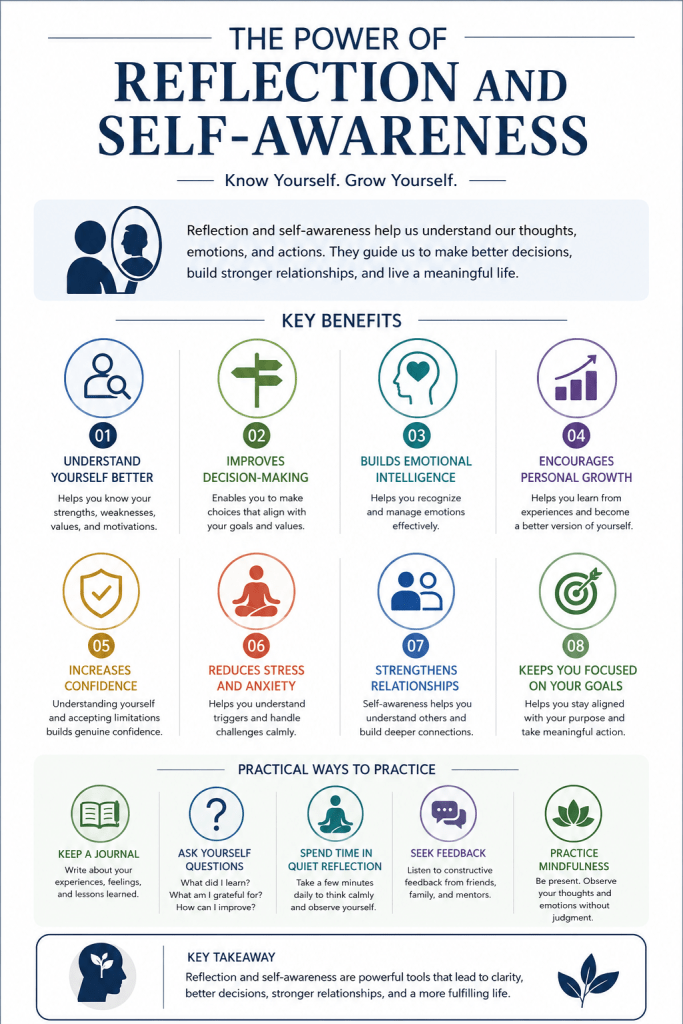
The Power of Reflection and Self-Awareness

Introduction

In a world filled with constant distractions and busy schedules, taking time to reflect on our thoughts, actions, and experiences is often overlooked. Reflection and self-awareness are powerful tools that help us understand ourselves better, make wiser decisions, and lead more meaningful lives. By looking inward, we gain clarity about who we are, what we value, and where we want to go.


What is Reflection?

Reflection is the process of thinking deeply about our experiences, actions, and feelings. It helps us learn from the past, understand the present, and prepare for the future.

Reflection allows us to:

  • Learn from our experiences
  • Recognize our strengths and weaknesses
  • Understand our emotions
  • Improve our decisions and actions

What is Self-Awareness?

Self-awareness is the ability to understand our thoughts, emotions, behaviors, and their impact on ourselves and others.

A self-aware person:

  • Understands personal strengths and limitations
  • Recognizes emotions and reactions
  • Accepts constructive feedback
  • Makes conscious and thoughtful decisions

Why Reflection and Self-Awareness Matter

1. Helps Us Understand Ourselves Better

Reflection enables us to discover:

  • What motivates us
  • What makes us happy
  • What challenges us
  • What values guide our lives

2. Improves Decision-Making

When we understand ourselves, we can:

  • Make better choices
  • Set realistic goals
  • Avoid impulsive decisions

3. Builds Emotional Intelligence

Self-awareness helps us:

  • Recognize emotions
  • Manage stress effectively
  • Respond thoughtfully instead of reacting emotionally

4. Encourages Personal Growth

Reflection allows us to:

  • Learn from mistakes
  • Identify areas for improvement
  • Develop positive habits

5. Increases Confidence

Knowing our strengths and accepting our limitations helps build genuine self-confidence and self-acceptance.

6. Reduces Stress and Anxiety

Understanding our thoughts and emotions helps us handle challenges with greater calmness and resilience.

7. Strengthens Relationships

When we understand ourselves better, we become more understanding, empathetic, and respectful toward others.

8. Keeps Us Focused on Our Goals

Reflection helps us stay connected to our purpose and ensures our actions align with our values and aspirations.


Simple Ways to Practice Reflection and Self-Awareness

Keep a Journal

Write about:

  • Daily experiences
  • Thoughts and feelings
  • Lessons learned

Ask Yourself Meaningful Questions

Examples:

  • What did I learn today?
  • What am I grateful for?
  • How could I improve?

Spend Time in Quiet Reflection

Take a few minutes each day to:

  • Think calmly
  • Observe your thoughts
  • Reflect on your actions

Seek Feedback

Listen to constructive feedback from:

  • Friends
  • Family members
  • Mentors

Practice Mindfulness

Pay attention to:

  • Your thoughts
  • Your emotions
  • Your surroundings

Without judgment or criticism.


Benefits in Everyday Life

Reflection and self-awareness can help in:

  • Academic success
  • Career development
  • Leadership growth
  • Better relationships
  • Improved mental well-being
  • Personal fulfillment

A Spiritual Perspective

Many spiritual traditions encourage self-reflection as a path to wisdom and personal growth. In Islam, self-accountability (Muhasabah) is highly valued. Reflecting on our actions helps us become better individuals and strengthens our relationship with Allah.

The Quran encourages believers to think deeply and reflect:

“Indeed, in that are signs for a people who give thought.”
(Quran 16:11)

Reflection helps us appreciate life’s blessings, learn from experiences, and remain mindful of our purpose.


Conclusion

Reflection and self-awareness are not just personal development tools; they are essential life skills. They help us understand ourselves, improve our relationships, make better decisions, and grow into better versions of ourselves.

Taking a few moments each day to reflect can bring greater clarity, confidence, and peace of mind. The more we understand ourselves, the more effectively we can navigate life’s challenges and opportunities.

Key Takeaway

“Knowing yourself is the beginning of growth. Reflecting on your experiences is the pathway to wisdom, confidence, and a more meaningful life.”

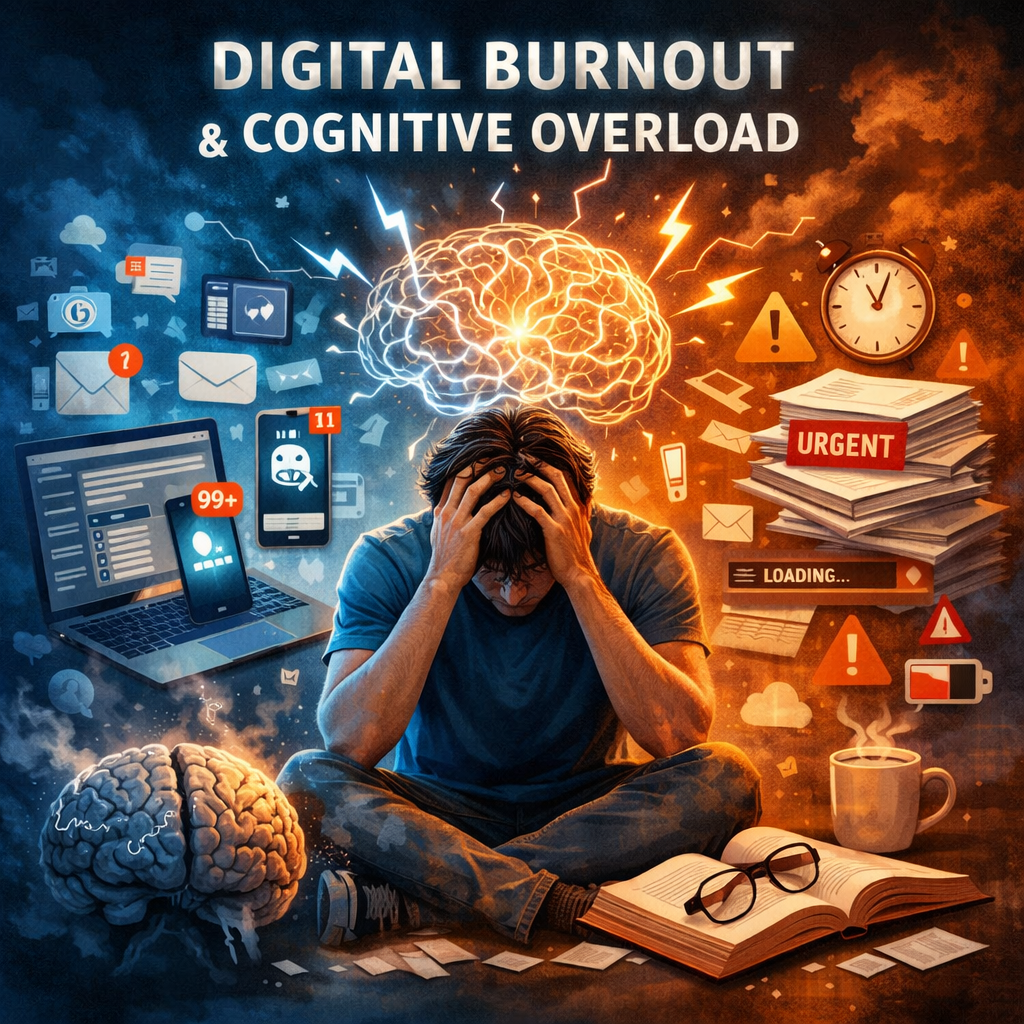
Digital Burnout and Cognitive Overload

Introduction

In today’s digital world, technology has become an inseparable part of our daily lives. From work and education to communication and entertainment, screens dominate almost every moment. While digital tools improve efficiency and connectivity, excessive and continuous exposure to them puts heavy pressure on the human mind. This growing mental strain leads to digital burnout and cognitive overload, affecting focus, emotional balance, productivity, and overall well-being. Understanding this issue is essential to creating healthier digital habits and protecting mental health in the modern age.

1. What is Digital Burnout?

  • Digital burnout happens when we feel mentally tired due to excessive screen time.
  • It is caused by constant use of phones, laptops, and digital platforms.

2. What is Cognitive Overload?

  • Cognitive overload occurs when the brain receives more information than it can process.
  • Notifications, emails, messages, and multitasking overload our thinking capacity.

3. Why is it Increasing Today?

  • Continuous online work and virtual meetings
  • Social media scrolling without breaks
  • Pressure to stay available and respond instantly
  • Information overload from news and digital content

4. Common Signs and Symptoms

  • Difficulty concentrating and remembering things
  • Mental fatigue and constant tiredness
  • Irritability and mood swings
  • Headaches and sleep problems
  • Loss of motivation and productivity

5. Impact on Mental Health

  • Increased stress and anxiety
  • Reduced attention span
  • Emotional exhaustion
  • Feeling overwhelmed even with simple tasks

6. Impact on Work and Studies

  • Lower efficiency and creativity
  • Increased errors and poor decision-making
  • Reduced learning capacity
  • Declining engagement and interest

7. How Digital Burnout Affects Daily Life

  • Less face-to-face interaction
  • Reduced quality time with family
  • Constant mental distraction
  • Difficulty enjoying offline moments

8. Simple Ways to Reduce Digital Burnout

  • Take regular screen breaks
  • Limit unnecessary notifications
  • Follow single-tasking instead of multitasking
  • Set boundaries for work and personal time
  • Practice digital detox regularly

9. Role of Mindfulness and Rest

  • Short breathing exercises calm the mind
  • Adequate sleep restores cognitive capacity
  • Mindful usage of technology improves focus

10. Conclusion

  • Digital tools are helpful, but overuse harms mental well-being.
  • Managing screen time and information flow is essential for a healthy mind.
  • Balance, awareness, and conscious digital habits can prevent burnout.

Closing Quote:
“Resting the mind is not a luxury—it is a necessity in a digital world.”

The Synergy of Mind and Body: Self-Care Practices for Total Health

The mind and body are deeply connected, and taking care of both is essential for overall well-being. Understanding and nurturing this connection is key to effective self-care.

  1. Understanding the Mind-Body Link
    • The mind and body are not separate; they influence each other constantly. Our thoughts, emotions, and mental states can affect our physical health, and vice versa.
  2. Mental Health Impacts Physical Health
    • Stress, anxiety, and depression can manifest as physical symptoms like headaches, fatigue, muscle tension, or digestive issues.
    • Positive mental states like happiness and calm can promote better immune function, improve sleep, and boost energy levels.
  3. Physical Health Influences Mental Health
    • Regular physical activity boosts mood by releasing endorphins, which reduce stress and improve mental clarity.
    • A healthy diet rich in nutrients also supports brain function, reducing feelings of anxiety or depression.
  4. Self-Care Practices that Strengthen the Mind-Body Connection
    • Exercise: Whether it’s yoga, walking, or strength training, physical activity helps release pent-up tension, reduces anxiety, and improves mood.
    • Mindfulness and Meditation: These practices center the mind, reduce stress, and help you tune in to both physical and emotional needs.
    • Adequate Sleep: A good night’s sleep recharges the body and mind, enhancing emotional stability and cognitive function.
    • Healthy Eating: A balanced diet filled with fruits, vegetables, and whole grains can improve both mood and energy levels, making it easier to manage stress.
    • Deep Breathing: Simple breathing exercises can calm the nervous system, reduce heart rate, and help in moments of stress.
  5. The Power of Positive Thinking
    • Cultivating a positive mindset can reduce the physical effects of stress, such as high blood pressure and muscle tension. Positive thoughts promote relaxation and well-being.
  6. Stress Management and Relaxation
    • Chronic stress can lead to various health issues, including digestive problems and high blood pressure. Practicing relaxation techniques like progressive muscle relaxation or guided imagery can relieve tension and improve both mental and physical health.
  7. Emotional Expression
    • Suppressing emotions can negatively affect physical health. Self-care through emotional expression, such as talking with loved ones or journaling, can release built-up emotional tension and prevent it from manifesting as physical ailments.
  8. The Importance of Self-Awareness
    • Being aware of your body’s signals—such as fatigue, tension, or pain—allows you to address your needs before they escalate into more serious issues.
  9. Self-Care for Balance
    • The key to effective self-care lies in balancing both mental and physical health. Taking time for activities that nurture your body and mind will help you achieve a holistic sense of well-being.

    Life is Not About Waiting for the Storm to Pass: A Guide to Embracing Challenges

    Life is filled with challenges and uncertainties, but rather than waiting for them to disappear, it’s essential to learn how to navigate through them. Here’s a simple guide on how to embrace life’s storms and find strength in adversity.

    1. Embrace the Present Moment

    • Accept the current situation, no matter how challenging it may be. Acknowledge your feelings and experiences without judgment.
    • Quote: “Life isn’t about waiting for the storm to pass; it’s about learning how to dance in the rain.” – Vivian Greene

    2. Practice Mindfulness

    • Mindfulness involves being fully present and engaged in the here and now. It helps you stay grounded and focused amidst chaos.
    • Tips: Practice deep breathing exercises, meditation, or mindful walking to center yourself.
    • Quote: “The present moment is the only time over which we have dominion.” – Thích Nhất Hạnh

    3. Develop Resilience

    • Resilience is the ability to bounce back from adversity. Building resilience helps you cope with stress and recover from setbacks.
    • Tips: Focus on your strengths, maintain a positive outlook, and seek support from friends and family.
    • Quote: “Do not judge me by my success, judge me by how many times I fell down and got back up again.” – Nelson Mandela

    4. Stay Positive

    • A positive mindset can transform how you perceive and react to challenges. Look for the silver lining in difficult situations.
    • Tips: Keep a gratitude journal, practice positive affirmations, and surround yourself with supportive people.
    • Quote: “Keep your face always toward the sunshine—and shadows will fall behind you.” – Walt Whitman

    5. Take Action

    • Instead of waiting for problems to resolve themselves, take proactive steps to address them. Even small actions can make a significant difference.
    • Tips: Break down large tasks into manageable steps, set realistic goals, and celebrate small victories.
    • Quote: “The best way to predict the future is to create it.” – Peter Drucker

    6. Learn and Grow

    • Every challenge is an opportunity to learn and grow. Reflect on your experiences and use them to build a better future.
    • Tips: Keep a journal of your experiences, seek feedback, and be open to new perspectives.
    • Quote: “In the middle of difficulty lies opportunity.” – Albert Einstein

    7. Seek Support

    • You don’t have to face storms alone. Reach out for support from friends, family, or professionals.
    • Tips: Join support groups, talk to a therapist, or simply share your feelings with a trusted friend.
    • Quote: “We rise by lifting others.” – Robert Ingersoll

    8. Focus on What You Can Control

    • Focus your energy on the aspects of your life that you can influence and let go of what you cannot.
    • Tips: Make a list of things you can control, prioritize your actions, and practice letting go of worry.
    • Quote: “You may not control all the events that happen to you, but you can decide not to be reduced by them.” – Maya Angelou

    Conclusion

    Embracing life’s challenges and learning to navigate through them is essential for personal growth and happiness. By staying present, practicing mindfulness, and maintaining a positive attitude, you can dance in the rain and find joy amidst the storms.