
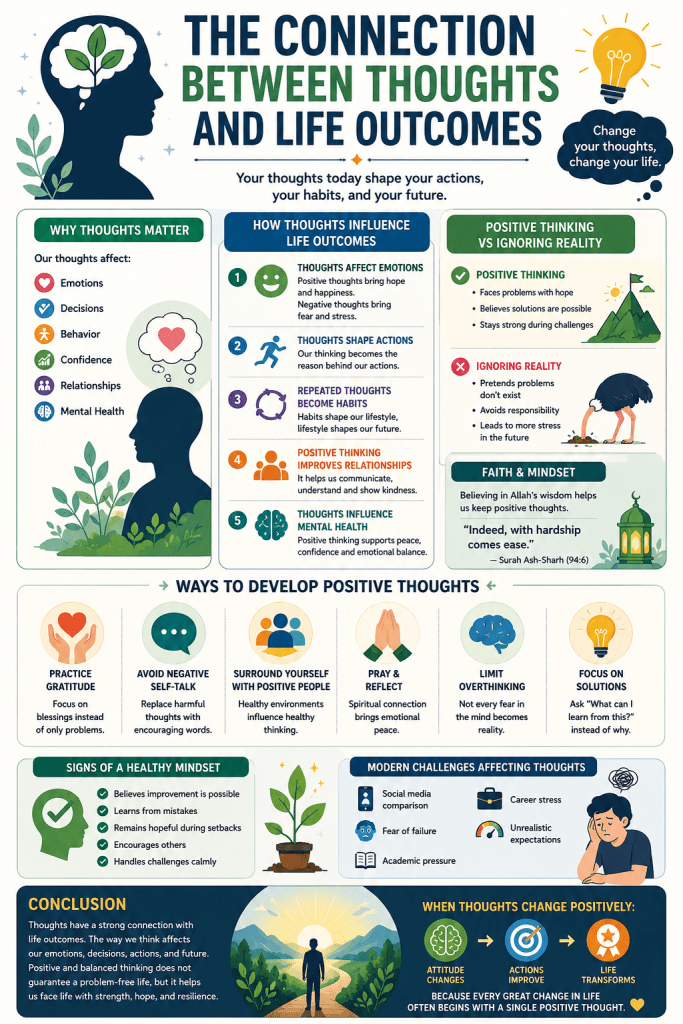
Introduction
Our thoughts shape the way we see ourselves, others, and the world around us. Positive and healthy thinking can motivate growth and success, while negative thinking can create fear, stress, and hopelessness. The mind is powerful, and the thoughts we repeat daily often influence our actions, habits, and life outcomes.
Why Thoughts Matter
Thoughts are not just ideas in the mind. They affect:
- Emotions
- Decisions
- Behavior
- Confidence
- Relationships
- Mental health
What we think repeatedly often becomes part of our attitude and lifestyle.
How Thoughts Influence Life Outcomes
1. Thoughts Affect Emotions
Positive thoughts create:
- Hope
- Peace
- Motivation
- Happiness
Negative thoughts create:
- Fear
- Anxiety
- Anger
- Stress
Example:
- Thinking “I can improve” builds confidence.
- Thinking “I will always fail” creates self-doubt.
2. Thoughts Shape Actions
Our actions usually begin with our thinking.
For example:
- A student who believes in success studies with confidence.
- A person who constantly doubts themselves may stop trying.
Healthy thoughts encourage:
- Hard work
- Discipline
- Courage
- Consistency
3. Repeated Thoughts Become Habits
The mind learns through repetition.
If someone repeatedly thinks:
- “I am capable,” they become more confident.
- “Nothing good happens to me,” they may become negative and hopeless.
Over time:
- Thoughts influence habits
- Habits influence lifestyle
- Lifestyle influences future outcomes
4. Positive Thinking Improves Relationships
Thoughts affect how we treat people.
Positive thinking helps people:
- Show kindness
- Communicate calmly
- Forgive easily
- Build healthy relationships
Negative thinking may lead to:
- Misunderstanding
- Jealousy
- Anger
- Isolation
5. Thoughts Influence Mental Health
Constant negative thinking can increase:
- Stress
- Overthinking
- Anxiety
- Emotional exhaustion
Positive thinking supports:
- Emotional balance
- Mental peace
- Better coping skills
- Self-confidence
The Difference Between Positive Thinking and Ignoring Reality
Positive thinking does not mean pretending problems do not exist.
It means:
- Facing difficulties with hope
- Believing solutions are possible
- Staying mentally strong during challenges
Healthy thinking is realistic, balanced, and hopeful.
The Role of Faith and Mindset
Faith helps people maintain positive thoughts during difficult times.
Believing in Allah’s wisdom reminds us:
- Every hardship has purpose
- Difficulties are temporary
- Patience brings reward
The Quran says:
“Indeed, with hardship comes ease.”
— Surah Ash-Sharh (94:6)
This verse teaches believers to remain hopeful even during struggles.
Ways to Develop Positive Thoughts
Practice Gratitude
Focus on blessings instead of only problems.
Avoid Negative Self-Talk
Replace harmful thoughts with encouraging words.
Surround Yourself with Positive People
Healthy environments influence healthy thinking.
Pray and Reflect
Spiritual connection brings emotional peace.
Limit Overthinking
Not every fear in the mind becomes reality.
Focus on Solutions
Instead of asking:
- “Why is this happening to me?”
Ask: - “What can I learn from this?”
Signs of a Healthy Mindset
A person with healthy thoughts:
- Believes improvement is possible
- Learns from mistakes
- Remains hopeful during setbacks
- Encourages others
- Handles challenges calmly
Modern Challenges Affecting Thoughts
Today many people struggle with:
- Social media comparison
- Fear of failure
- Academic pressure
- Career stress
- Unrealistic expectations
These can create negative thought patterns if not managed carefully.
Conclusion
Thoughts have a strong connection with life outcomes. The way we think affects our emotions, decisions, actions, and future. Positive and balanced thinking does not guarantee a problem-free life, but it helps people face life with strength, hope, and resilience.
A healthy mind creates a healthier life.
When thoughts change positively:
- Attitude changes
- Actions improve
- Life gradually transforms
Because every great change in life often begins with a single positive thought.

