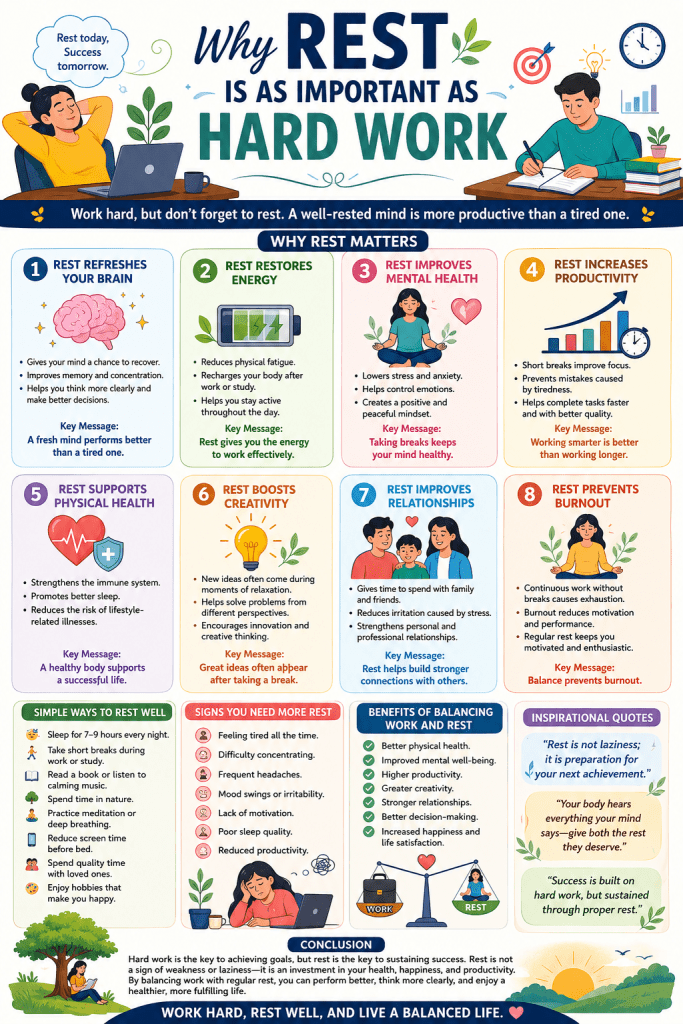
Why Rest Is as Important as Hard Work

“Work hard, but don’t forget to rest. A well-rested mind is more productive than a tired one.”

🌿 Introduction

Many people believe that working longer hours leads to greater success. While hard work is essential, rest is equally important. Taking time to relax and recharge helps improve physical health, mental well-being, and overall productivity. Success comes from balancing effort with proper rest.


🌟 Why Rest Matters

1. 🧠 Rest Refreshes Your Brain

  • Gives your mind a chance to recover.
  • Improves memory and concentration.
  • Helps you think more clearly and make better decisions.

Key Message: A fresh mind performs better than a tired one.


2. 💪 Rest Restores Energy

  • Reduces physical fatigue.
  • Recharges your body after work or study.
  • Helps you stay active throughout the day.

Key Message: Rest gives you the energy to work effectively.


3. 😊 Rest Improves Mental Health

  • Lowers stress and anxiety.
  • Helps control emotions.
  • Creates a positive and peaceful mindset.

Key Message: Taking breaks keeps your mind healthy.


4. 🚀 Rest Increases Productivity

  • Short breaks improve focus.
  • Prevents mistakes caused by tiredness.
  • Helps complete tasks faster and with better quality.

Key Message: Working smarter is better than working longer.


5. ❤️ Rest Supports Physical Health

  • Strengthens the immune system.
  • Promotes better sleep.
  • Reduces the risk of lifestyle-related illnesses.

Key Message: A healthy body supports a successful life.


6. 💡 Rest Boosts Creativity

  • New ideas often come during moments of relaxation.
  • Helps solve problems from different perspectives.
  • Encourages innovation and creative thinking.

Key Message: Great ideas often appear after taking a break.


7. 🤝 Rest Improves Relationships

  • Gives time to spend with family and friends.
  • Reduces irritation caused by stress.
  • Strengthens personal and professional relationships.

Key Message: Rest helps build stronger connections with others.


8. ⚖️ Rest Prevents Burnout

  • Continuous work without breaks causes exhaustion.
  • Burnout reduces motivation and performance.
  • Regular rest keeps you motivated and enthusiastic.

Key Message: Balance prevents burnout.


🌼 Simple Ways to Rest Well

  • 😴 Sleep for 7–9 hours every night.
  • 🚶 Take short breaks during work or study.
  • 📖 Read a book or listen to calming music.
  • 🌳 Spend time in nature.
  • 🧘 Practice meditation or deep breathing.
  • 📱 Reduce screen time before bed.
  • 👨‍👩‍👧 Spend quality time with loved ones.
  • 🎨 Enjoy hobbies that make you happy.

⚠️ Signs You Need More Rest

  • Feeling tired all the time.
  • Difficulty concentrating.
  • Frequent headaches.
  • Mood swings or irritability.
  • Lack of motivation.
  • Poor sleep quality.
  • Reduced productivity.

🌱 Benefits of Balancing Work and Rest

  • Better physical health.
  • Improved mental well-being.
  • Higher productivity.
  • Greater creativity.
  • Stronger relationships.
  • Better decision-making.
  • Increased happiness and life satisfaction.

💬 Inspirational Quotes

“Rest is not laziness; it is preparation for your next achievement.”

“Your body hears everything your mind says—give both the rest they deserve.”

“Success is built on hard work, but sustained through proper rest.”


✅ Conclusion

Hard work is the key to achieving goals, but rest is the key to sustaining success. Rest is not a sign of weakness or laziness—it is an investment in your health, happiness, and productivity. By balancing work with regular rest, you can perform better, think more clearly, and enjoy a healthier, more fulfilling life.

Remember: Work hard, rest well, and live a balanced life. 🌿

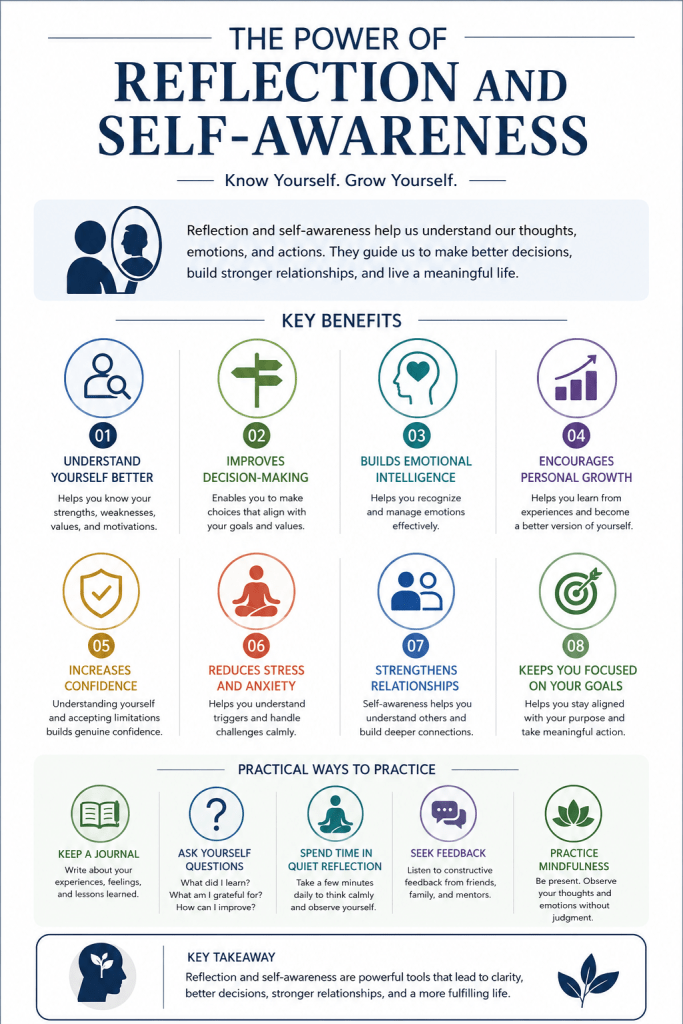
The Power of Reflection and Self-Awareness

Introduction

In a world filled with constant distractions and busy schedules, taking time to reflect on our thoughts, actions, and experiences is often overlooked. Reflection and self-awareness are powerful tools that help us understand ourselves better, make wiser decisions, and lead more meaningful lives. By looking inward, we gain clarity about who we are, what we value, and where we want to go.


What is Reflection?

Reflection is the process of thinking deeply about our experiences, actions, and feelings. It helps us learn from the past, understand the present, and prepare for the future.

Reflection allows us to:

  • Learn from our experiences
  • Recognize our strengths and weaknesses
  • Understand our emotions
  • Improve our decisions and actions

What is Self-Awareness?

Self-awareness is the ability to understand our thoughts, emotions, behaviors, and their impact on ourselves and others.

A self-aware person:

  • Understands personal strengths and limitations
  • Recognizes emotions and reactions
  • Accepts constructive feedback
  • Makes conscious and thoughtful decisions

Why Reflection and Self-Awareness Matter

1. Helps Us Understand Ourselves Better

Reflection enables us to discover:

  • What motivates us
  • What makes us happy
  • What challenges us
  • What values guide our lives

2. Improves Decision-Making

When we understand ourselves, we can:

  • Make better choices
  • Set realistic goals
  • Avoid impulsive decisions

3. Builds Emotional Intelligence

Self-awareness helps us:

  • Recognize emotions
  • Manage stress effectively
  • Respond thoughtfully instead of reacting emotionally

4. Encourages Personal Growth

Reflection allows us to:

  • Learn from mistakes
  • Identify areas for improvement
  • Develop positive habits

5. Increases Confidence

Knowing our strengths and accepting our limitations helps build genuine self-confidence and self-acceptance.

6. Reduces Stress and Anxiety

Understanding our thoughts and emotions helps us handle challenges with greater calmness and resilience.

7. Strengthens Relationships

When we understand ourselves better, we become more understanding, empathetic, and respectful toward others.

8. Keeps Us Focused on Our Goals

Reflection helps us stay connected to our purpose and ensures our actions align with our values and aspirations.


Simple Ways to Practice Reflection and Self-Awareness

Keep a Journal

Write about:

  • Daily experiences
  • Thoughts and feelings
  • Lessons learned

Ask Yourself Meaningful Questions

Examples:

  • What did I learn today?
  • What am I grateful for?
  • How could I improve?

Spend Time in Quiet Reflection

Take a few minutes each day to:

  • Think calmly
  • Observe your thoughts
  • Reflect on your actions

Seek Feedback

Listen to constructive feedback from:

  • Friends
  • Family members
  • Mentors

Practice Mindfulness

Pay attention to:

  • Your thoughts
  • Your emotions
  • Your surroundings

Without judgment or criticism.


Benefits in Everyday Life

Reflection and self-awareness can help in:

  • Academic success
  • Career development
  • Leadership growth
  • Better relationships
  • Improved mental well-being
  • Personal fulfillment

A Spiritual Perspective

Many spiritual traditions encourage self-reflection as a path to wisdom and personal growth. In Islam, self-accountability (Muhasabah) is highly valued. Reflecting on our actions helps us become better individuals and strengthens our relationship with Allah.

The Quran encourages believers to think deeply and reflect:

“Indeed, in that are signs for a people who give thought.”
(Quran 16:11)

Reflection helps us appreciate life’s blessings, learn from experiences, and remain mindful of our purpose.


Conclusion

Reflection and self-awareness are not just personal development tools; they are essential life skills. They help us understand ourselves, improve our relationships, make better decisions, and grow into better versions of ourselves.

Taking a few moments each day to reflect can bring greater clarity, confidence, and peace of mind. The more we understand ourselves, the more effectively we can navigate life’s challenges and opportunities.

Key Takeaway

“Knowing yourself is the beginning of growth. Reflecting on your experiences is the pathway to wisdom, confidence, and a more meaningful life.”

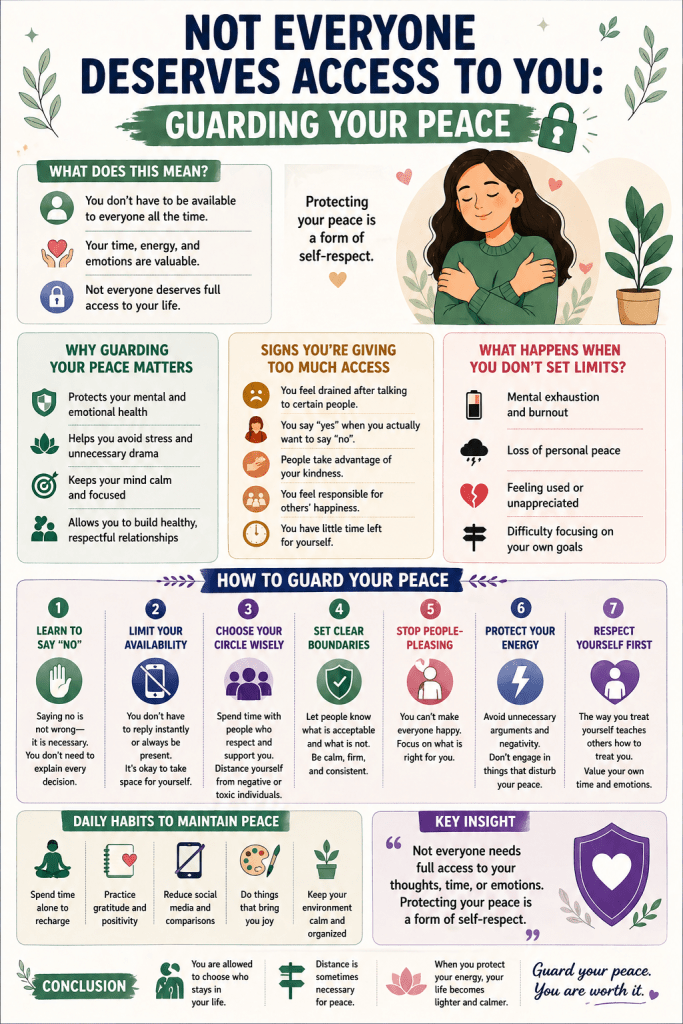
🌿 Not Everyone Deserves Access to You: Guarding Your Peace

💭 What Does This Mean?

  • You don’t have to be available to everyone all the time
  • Your time, energy, and emotions are valuable
  • Not everyone deserves full access to your life

🧠 Why Guarding Your Peace Matters

  • Protects your mental and emotional health
  • Helps you avoid stress and unnecessary drama
  • Keeps your mind calm and focused
  • Allows you to build healthy, respectful relationships

🚨 Signs You’re Giving Too Much Access

  • You feel drained after talking to certain people
  • You say “yes” when you actually want to say “no”
  • People take advantage of your kindness
  • You feel responsible for others’ happiness
  • You have little time left for yourself

🌪️ What Happens When You Don’t Set Limits?

  • Mental exhaustion and burnout
  • Loss of personal peace
  • Feeling used or unappreciated
  • Difficulty focusing on your own goals

🔐 How to Guard Your Peace

1. 🚫 Learn to Say “No”

  • Saying no is not wrong—it is necessary
  • You don’t need to explain every decision

2. ⏳ Limit Your Availability

  • You don’t have to reply instantly or always be present
  • It’s okay to take space for yourself

3. 🧍‍♀️ Choose Your Circle Wisely

  • Spend time with people who respect and support you
  • Distance yourself from negative or toxic individuals

4. 🗣️ Set Clear Boundaries

  • Let people know what is acceptable and what is not
  • Be calm, firm, and consistent

5. ❤️ Stop People-Pleasing

  • You can’t make everyone happy
  • Focus on what is right for you

6. 🧘 Protect Your Energy

  • Avoid unnecessary arguments and negativity
  • Don’t engage in things that disturb your peace

7. 🪞 Respect Yourself First

  • The way you treat yourself teaches others how to treat you
  • Value your own time and emotions

🌸 Daily Habits to Maintain Peace

  • Spend time alone to recharge
  • Practice gratitude and positivity
  • Reduce social media and comparisons
  • Do things that bring you joy
  • Keep your environment calm and organized

✨ Key Insight

  • Not everyone needs full access to your thoughts, time, or emotions
  • Protecting your peace is a form of self-respect

🌈 Conclusion

  • You are allowed to choose who stays in your life
  • Distance is sometimes necessary for peace
  • When you protect your energy, your life becomes lighter and calmer

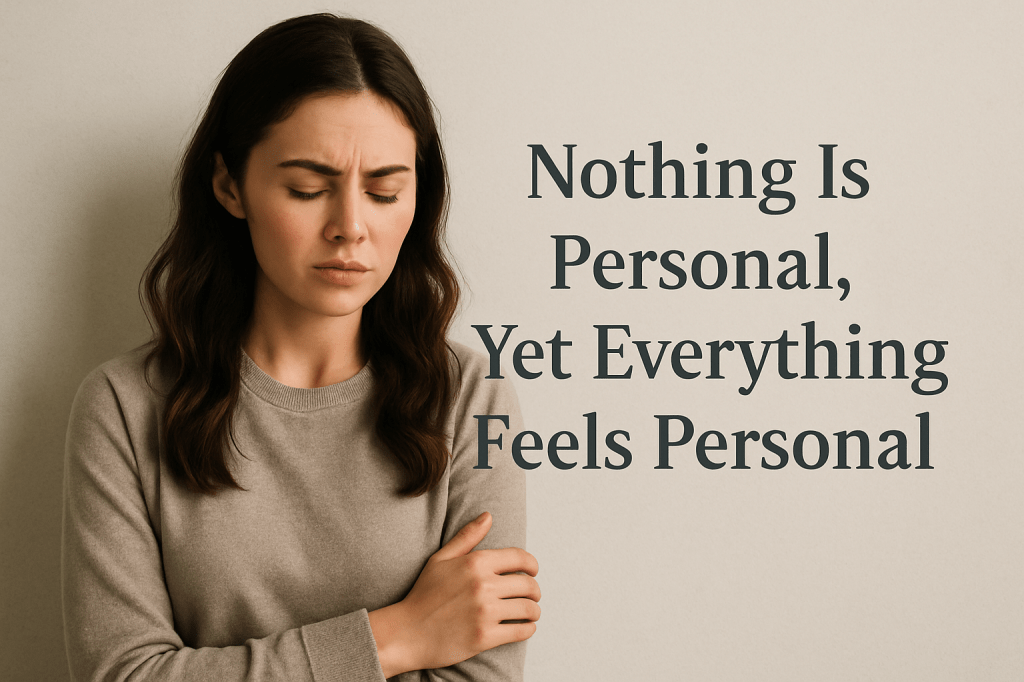
Nothing Is Personal, Yet Everything Feels Personal

Introduction

In everyday life, we often take words, actions, and silences to heart. A small change in behavior, a delayed response, or a critical comment can instantly make us question ourselves. Although logic tells us that most things are not meant personally, emotions often disagree. This inner conflict is what makes life feel heavy at times—nothing is personal, yet everything feels personal.

Why Everything Feels Personal

Human beings are emotional by nature. We connect experiences to our sense of self, which makes us interpret situations through a personal lens. When someone behaves differently, the mind immediately searches for a reason and often turns inward. This reaction is natural, but it is not always accurate.

Most Actions Reflect the Other Person

People respond based on their own stress, fears, priorities, and emotional capacity. Their words and behavior are shaped by their experiences, not by our value. Silence, distance, or harshness usually reflects what someone else is struggling with internally, even though it may feel directed at us.

How Overthinking Makes It Worse

When information is incomplete, the mind fills the gaps with assumptions. Overthinking turns neutral situations into personal failures. Emotions amplify this process, making us believe that we are the cause of every change or conflict, even when there is no clear evidence.

Understanding the Truth Without Ignoring Feelings

Saying “nothing is personal” does not mean dismissing emotions. Feelings are real and valid, but they do not always represent the full truth. The key is to acknowledge emotions without tying them to self-worth. This balance helps us stay grounded and emotionally healthy.

Letting Go of Unnecessary Emotional Weight

When we stop personalizing everything, relationships feel lighter. We react less and understand more. We learn to pause, reflect, and choose responses rather than acting from hurt. This shift reduces emotional exhaustion and brings inner calm.

Final Thoughts

Nothing is personal, yet everything feels personal because we care deeply. Growth begins when care is guided by awareness instead of assumption. By separating others’ actions from our self-worth, we create space for peace, clarity, and emotional resilience. What others do is about them; how we respond defines us.

Time is the Greatest Currency

Introduction

People often believe that money is the most powerful resource, but in reality, time is the greatest currency we have. Unlike money, time cannot be saved in a bank, borrowed, or replaced. Once it’s gone, it’s gone forever. The way we spend our time shapes our happiness, relationships, and success in life.


Why Time is More Valuable than Money

  • Money can be earned, lost, and earned again, but time can never return.
  • Everyone, no matter how rich or poor, gets the same 24 hours a day.
  • Time is the foundation on which all achievements are built.

How Time Works Like Currency

  • Every day, we spend time on different activities, just like we spend money.
  • Using time on growth, learning, or meaningful relationships is like making a smart investment.
  • Wasting time on unimportant things is like losing money on a bad deal.

Using Time Wisely

  • Prioritize what truly matters: health, family, and personal growth.
  • Learn to say no to distractions and unnecessary commitments.
  • Manage time effectively by setting goals and avoiding procrastination.
  • Remember: spending quality time with loved ones creates memories that money can’t buy.

The Real Wealth

  • True wealth isn’t measured by how much money you have, but how wisely you use your time.
  • At the end of life, people don’t wish for more money—they wish for more time with the people they love.
  • Balancing work, rest, and joy makes life meaningful.

Conclusion

Time is life’s greatest currency. Use it with care, spend it on things that bring happiness and growth, and never waste it on what doesn’t matter. Once time is gone, it never comes back—so value every moment.

Boundaries = Peace: Protecting Your Energy

🌸 Introduction

Peace of mind is not about having a quiet life—it’s about protecting your energy. Many times, we lose our inner calm because we don’t set clear boundaries with people, work, or even ourselves. Setting boundaries is not selfish—it’s self-care.


🌿 Why Boundaries Are Important

  • Boundaries help you say yes to what matters and no to what drains you.
  • They create space for your own growth and happiness.
  • Without boundaries, people may take your time and energy for granted.
  • Protecting your energy helps you stay emotionally balanced.

🌼 Signs You Need Better Boundaries

  • You feel tired and drained after meeting certain people.
  • You often say “yes” when you want to say “no.”
  • You feel guilty for putting yourself first.
  • You don’t have time for things that bring you joy.

🌻 How to Set Healthy Boundaries

  1. Know Your Limits – Be clear about what feels right and what doesn’t.
  2. Learn to Say No – Respectfully decline things that exhaust you.
  3. Communicate Clearly – Express your needs without fear.
  4. Protect Your Time – Avoid overcommitting yourself.
  5. Let Go of Guilt – Remember, self-care is not being rude.

🌷 Benefits of Boundaries

  • More mental peace and less stress.
  • Healthier and more respectful relationships.
  • More time for self-care and passions.
  • Stronger confidence and self-respect.

🌸 Conclusion

Boundaries are not walls—they are doors that let peace in and keep negativity out. When you protect your energy, you create space for joy, balance, and growth. Remember: Boundaries = Peace.

Design Your Tomorrow: Habits That Shape a Better You

✨ The life you want tomorrow is built on the choices you make today. Developing the right habits can transform your mindset, health, and future. Here are some simple habits to shape a better you:


1. Start Your Day with Intention

  • Wake up early and avoid rushing.
  • Spend a few minutes planning your day.
  • Set 1–2 top priorities instead of an overwhelming list.

2. Practice Gratitude

  • Write down 3 things you’re thankful for.
  • Gratitude shifts focus from problems to possibilities.
  • It builds positivity and emotional strength.

3. Fuel Your Body Right

  • Eat balanced meals with whole foods.
  • Stay hydrated throughout the day.
  • Avoid excess sugar and processed foods.

4. Move Your Body Daily

  • Even 20–30 minutes of walking, stretching, or yoga helps.
  • Exercise improves energy and mental clarity.
  • Consistency matters more than intensity.

5. Prioritize Learning

  • Read, listen to podcasts, or take short courses.
  • Learning keeps the brain sharp and boosts confidence.
  • Even 10 minutes a day compounds over time.

6. Declutter Your Mind

  • Journal your thoughts to reduce stress.
  • Practice mindfulness or meditation.
  • Create digital boundaries by limiting screen time.

7. Build Strong Connections

  • Spend time with people who uplift you.
  • Practice active listening and empathy.
  • Meaningful relationships improve happiness and health.

8. End Your Day with Reflection

  • Review what went well and what can improve.
  • Celebrate small wins.
  • Prepare for tomorrow with clarity.

Remember:
Small habits shape big results. You don’t need to change everything at once—just start with one habit today. Over time, your daily actions will design a tomorrow you’ll be proud of.

The Science of Happiness: What Really Makes Us Happy

Happiness isn’t just a feeling—it’s also a subject of serious scientific research. Psychologists and researchers have been studying what makes people truly happy.


1. Happiness Comes from Within

  • External things like money or possessions can bring short-term joy.
  • True happiness often comes from internal peace, purpose, and emotional well-being.

2. Strong Relationships Matter

  • Research shows that happy people have deep, meaningful relationships.
  • Spending quality time with family and friends boosts happiness levels.

3. Gratitude Changes Everything

  • Being thankful improves mood and outlook on life.
  • Try keeping a gratitude journal—write 3 things you’re thankful for every day.

4. Helping Others Boosts Your Own Joy

  • Acts of kindness release feel-good hormones like oxytocin.
  • Volunteering or helping someone, even in small ways, makes us feel more connected and fulfilled.

5. Experiences Bring More Joy Than Things

  • Travel, hobbies, and shared memories bring lasting happiness.
  • Material items give temporary pleasure, but experiences create meaningful stories.

6. Physical Activity Improves Mood

  • Exercise releases endorphins, also known as “happy hormones.”
  • Even a 20-minute walk can lift your mood.

7. Mindfulness Reduces Stress and Increases Joy

  • Being present in the moment helps reduce anxiety about the past or future.
  • Practicing meditation or deep breathing can increase emotional balance.

8. A Sense of Purpose Fuels Long-Term Happiness

  • Doing work or activities that feel meaningful makes life more satisfying.
  • This could be a career, hobby, or helping others.

9. Sleep Is Crucial for Emotional Health

  • Lack of sleep affects mood, focus, and overall happiness.
  • Aim for 7–9 hours of quality sleep each night.

10. Happiness Is a Habit

  • Like exercise, happiness needs regular practice.
  • Surround yourself with positivity, avoid toxic environments, and choose joy daily.

Final Thought:

Happiness isn’t about always being cheerful. It’s about building a life with balance, meaning, and emotional strength. By understanding the science behind it, we can take small steps every day to live a happier life.

From Burnout to Balance: Practical Self-Care Tips for Busy Professionals

1. Understand Burnout:

  • Recognize the Signs: Common indicators of burnout include persistent fatigue, irritability, lack of motivation, and feelings of inadequacy. Acknowledge these signs early to address them effectively.
  • Know It’s Common: Burnout is prevalent in high-stress environments. Understanding that many experience it can reduce feelings of isolation.

2. Prioritize Self-Care:

  • Make It Non-Negotiable: Schedule self-care just like you would a work meeting. Treat this time as essential for your well-being.
  • Daily Breaks: Aim for short breaks every hour. Use this time to stretch, hydrate, or take a short walk.

3. Set Boundaries:

  • Learn to Say No: Evaluate new commitments critically. If they do not align with your priorities, it’s okay to decline.
  • Create Clear Boundaries: Define your work hours and stick to them. Communicate these boundaries to your colleagues and supervisors.

4. Practice Mindfulness:

  • Incorporate Techniques: Start with just five minutes of meditation or deep breathing exercises daily.
  • Focus on the Present: Engage in activities mindfully, whether it’s eating, walking, or even working. This can reduce stress and enhance focus.

5. Stay Active:

  • Find Activities You Enjoy: Whether it’s yoga, dancing, or jogging, choose something that brings you joy. This makes it easier to stay consistent.
  • Short Workouts Matter: Even 10-15 minutes of exercise can boost mood and energy.

6. Get Quality Sleep:

  • Aim for 7-9 Hours: Prioritize sleep as a cornerstone of health. Lack of sleep exacerbates stress and burnout.
  • Establish a Bedtime Routine: Wind down with calming activities like reading or gentle stretches. Avoid screens at least an hour before bed.

7. Foster Connections:

  • Maintain Relationships: Regularly connect with friends and family, whether through calls, texts, or in-person meetings. Social support is vital for mental health.
  • Seek Professional Networks: Join groups or associations in your field to share experiences and gain support from peers.

8. Take Time Off:

  • Use Vacation Days: Time away from work can reset your mindset and reduce stress.
  • Regular Mini-Breaks: Even a day off every few months can help recharge your batteries and prevent burnout.

9. Limit Screen Time:

  • Designate Tech-Free Periods: Set boundaries around technology use, especially during meals or family time, to enhance relationships and relaxation.
  • Unplug Before Bed: Establish a routine that includes shutting down devices at least an hour before sleep to improve sleep quality.

10. Reflect and Adjust:

  • Regular Assessments: Take time weekly or monthly to reflect on your workload and emotional health. Adjust your routines as needed.
  • Be Open to Change: If certain practices aren’t working, don’t hesitate to try new strategies or seek professional guidance, like therapy or coaching.

Conclusion: Transitioning from burnout to balance is a continuous journey. By actively implementing these self-care strategies, busy professionals can create a more sustainable and fulfilling work-life balance. Prioritize your well-being and remember that taking care of yourself ultimately enhances your productivity and happiness.

Self-Awareness: Understanding Yourself for Personal Growth

What Is Self-Awareness?

  • Quote: “Knowing yourself is the beginning of all wisdom.” – Aristotle
  • Self-awareness is the ability to recognize and understand your own thoughts, emotions, and behaviors.
  • It helps you identify how you react to different situations and how others perceive you.

Why Self-Awareness Is Important

  • Quote: “When I discover who I am, I’ll be free.” – Ralph Ellison
  • It helps you make better decisions, build healthier relationships, and manage emotions effectively.
  • Example: If you realize that stress makes you impatient, you can take steps to manage stress before it affects your behavior.

Types of Self-Awareness

  • Quote: “What we perceive about ourselves is greatly a reflection of how we will end up living our lives.” – Stephen Richards
  • Internal Self-Awareness: Understanding your emotions, values, and goals.
    • Example: Knowing that you value honesty can help you avoid situations where you feel pressured to be dishonest.
  • External Self-Awareness: Understanding how others see you.
    • Example: If people see you as quiet, but you think of yourself as outgoing, you may need to align your self-perception with your actions.

Benefits of Self-Awareness

  • Quote: “Self-awareness gives you the capacity to learn from your mistakes as well as your successes.” – Lawrence Bossidy
  • Improved Emotional Control: You can respond to situations more calmly.
    • Example: When you’re aware that certain topics make you angry, you can prepare to stay calm during difficult conversations.
  • Better Relationships: Understanding your own needs and recognizing others’ emotions improves communication.
    • Example: Being aware of your need for personal space helps you set boundaries in relationships.

How to Develop Self-Awareness

  • Quote: “The unexamined life is not worth living.” – Socrates
  • Reflect on Your Feelings: Take time to think about your emotions and why you feel them.
    • Example: After a tough day, reflect on why you felt upset and how you handled it.
  • Seek Feedback: Ask trusted friends or colleagues how they perceive you.
    • Example: If a colleague says you seem stressed, it might help you realize you’re overwhelmed and need to make changes.
  • Practice Mindfulness: Stay present and observe your thoughts without judgment.
    • Example: During a stressful moment, pause and notice your thoughts instead of reacting immediately.

Common Obstacles to Self-Awareness

  • Denial: Refusing to acknowledge your flaws or emotions.
    • Example: Telling yourself you’re always right, even when faced with feedback that suggests otherwise.
  • Fear of Self-Reflection: Avoiding deeper thinking because you’re afraid of what you’ll find.
    • Example: Not wanting to admit that you may need to make uncomfortable changes in your life.

How Self-Awareness Leads to Growth

  • Quote: “Self-awareness is not just relaxation and not just meditation. It must combine relaxation with activity and dynamism. Technology can aid that.” – Deepak Chopra
  • Recognizing your strengths and weaknesses helps you set realistic goals and improve over time.
  • Example: If you’re aware that procrastination is a weakness, you can work on time management skills to overcome it.

Conclusion

  • Quote: “Your visions will become clear only when you can look into your own heart. Who looks outside, dreams; who looks inside, awakes.” – Carl Jung
  • Self-awareness is the key to personal growth and better relationships.
  • By understanding yourself, you can make positive changes in your life, handle challenges more effectively, and become the best version of yourself.