This blog is a handy guide that helps you streamline your daily tasks, save and grow your money, and get better at handling your feelings. It’s filled with easy-to-follow advice that makes a big difference in how you work, spend, and feel. Dive into our Pioneeredge.io site for practical tips and tricks that make life smoother and more fulfilling.
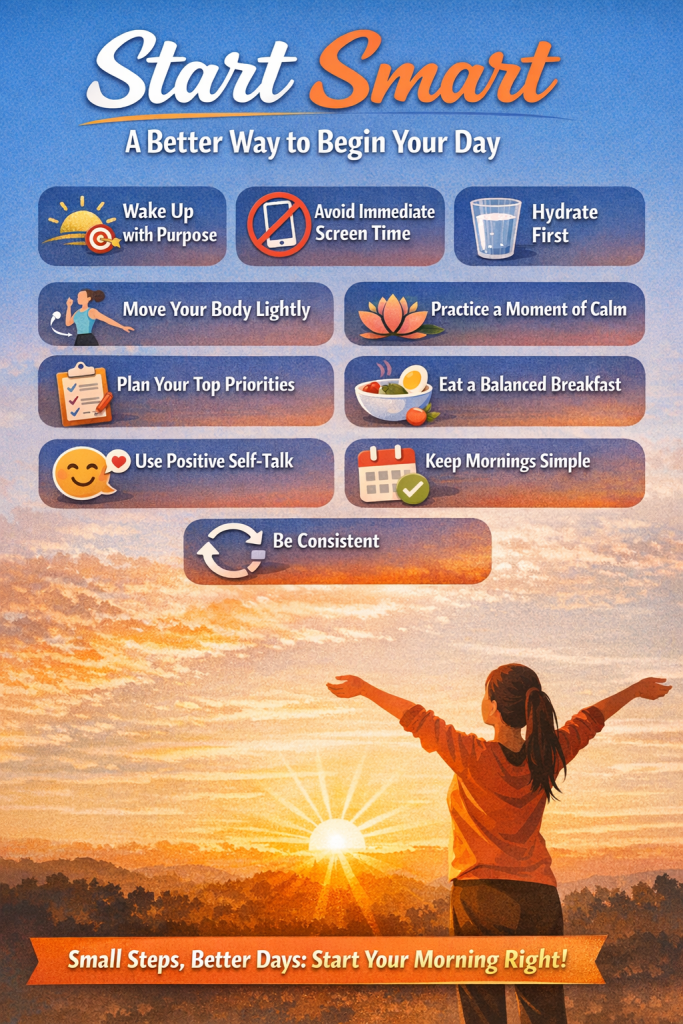
How you begin your morning often determines how effective, calm, and focused the rest of your day will be. A smart start does not require drastic changes. Small, intentional actions can create clarity, energy, and direction. Below are simple, practical points to help you start your day better.
1. Wake Up with Purpose
Avoid rushing out of bed. Take a moment to remind yourself of one important task or goal for the day. This creates direction and reduces mental clutter.
2. Avoid Immediate Screen Time
Checking your phone immediately can increase stress and distraction. Give your mind at least 15–20 minutes before engaging with messages or social media.
3. Hydrate First
Drinking water soon after waking up helps activate your body, improves concentration, and supports overall health.
4. Move Your Body Lightly
Simple stretching, a short walk, or light exercise boosts blood circulation and helps you feel more alert and positive.
5. Practice a Moment of Calm
Spend a few minutes in silence, deep breathing, or prayer/meditation. This improves emotional balance and mental clarity.
6. Plan Your Top Priorities
List two or three important tasks for the day. Clear priorities reduce overwhelm and improve productivity.
7. Eat a Balanced Breakfast
A healthy breakfast supports energy levels and concentration. Avoid skipping meals or relying only on caffeine.
8. Use Positive Self-Talk
Begin your day with encouraging thoughts. Confidence in the morning strengthens resilience throughout the day.
9. Keep Mornings Simple
Avoid overloading your schedule early in the day. A calm morning sets the tone for better decision-making.
10. Be Consistent
A smart start works best when practiced daily. Consistency turns good habits into lasting routines.
Conclusion
Starting smart is about being intentional, not perfect. A few mindful steps each morning can lead to improved focus, reduced stress, and better outcomes—both personally and professionally. When you begin your day with clarity, the rest of the day follows naturally.
Life often feels heavy with worries and endless tasks. One gentle way to relax the mind is through visualization exercises—using the power of imagination to create peaceful mental images.
🌸 What is Visualization?
Visualization is a mental technique where you picture calming scenes, places, or experiences in your mind.
It helps your brain and body feel as if you are truly there, creating relaxation.
Simple, safe, and can be practiced anywhere.
“The mind is everything. What you think, you become.” – Buddha
🌊 Simple Visualization Exercises
Peaceful Beach Scene
Close your eyes and imagine waves gently washing the shore.
Feel the breeze, hear the waves, and sense the warmth of the sun.
Stay in this image for 2–3 minutes.
Forest Walk
Picture yourself walking on a soft forest path.
Hear birds singing, smell fresh earth, and feel calm with every step.
Let the greenery soothe your mind.
Light and Energy Visualization
Imagine a warm golden light above your head.
Slowly let it flow through your body, melting away stress.
Feel lighter and more refreshed.
Safe Place Technique
Create a mental image of a place where you feel completely safe.
It could be a childhood home, a mountain cabin, or even a dream space.
Visit this place in your mind whenever you feel anxious.
“Imagination is the beginning of creation.” – George Bernard Shaw
🌼 Benefits of Visualization
Reduces stress and anxiety.
Improves focus and mental clarity.
Creates a sense of inner peace and balance.
Helps the body feel physically relaxed.
“Your calm mind is the ultimate weapon against your challenges.” – Bryant McGill
🌙 Final Thought
Visualization is like giving your mind a mini-vacation. Just a few minutes daily can restore calm, energy, and clarity. Close your eyes, breathe deeply, and paint a peaceful picture in your mind.
Introduction: Our energy is our most valuable resource. Unlike time, which is fixed, energy determines how effectively we live, work, and grow. Focusing on what truly matters allows us to achieve more, reduce stress, and create a meaningful life. By putting Energy First, we can make conscious choices about where to invest our effort and attention.
1. Understand Your Energy, Not Just Time
Time is fixed; energy is what powers your actions.
Notice when you feel most alert and focused.
Plan your most important tasks during high-energy periods.
2. Identify What Truly Matters
List tasks, goals, and relationships that impact your growth and happiness.
Ask yourself: “Does this matter in the long run?”
Say no to distractions and low-value activities.
3. Protect Your Energy
Avoid unnecessary stress and negative people.
Take breaks, rest, and recharge regularly.
Use mindfulness or short meditation to reset your energy.
4. Focus on One Thing at a Time
Multitasking drains energy and reduces effectiveness.
Complete high-priority tasks before moving to others.
Use the “Energy First” principle: high energy → high impact tasks.
5. Create Energy-Boosting Habits
Exercise, healthy eating, and quality sleep boost your energy.
Start your day with tasks that give satisfaction or momentum.
Limit social media and other energy-draining activities.
6. Align Energy with Goals
Spend energy on actions that bring you closer to your goals.
Regularly review priorities and adjust where your energy goes.
Celebrate small wins to maintain motivation and energy.
Conclusion: Your energy is your most valuable resource. Prioritizing what truly matters helps you achieve more, feel better, and live a meaningful life. Always put Energy First and let it guide your daily choices.
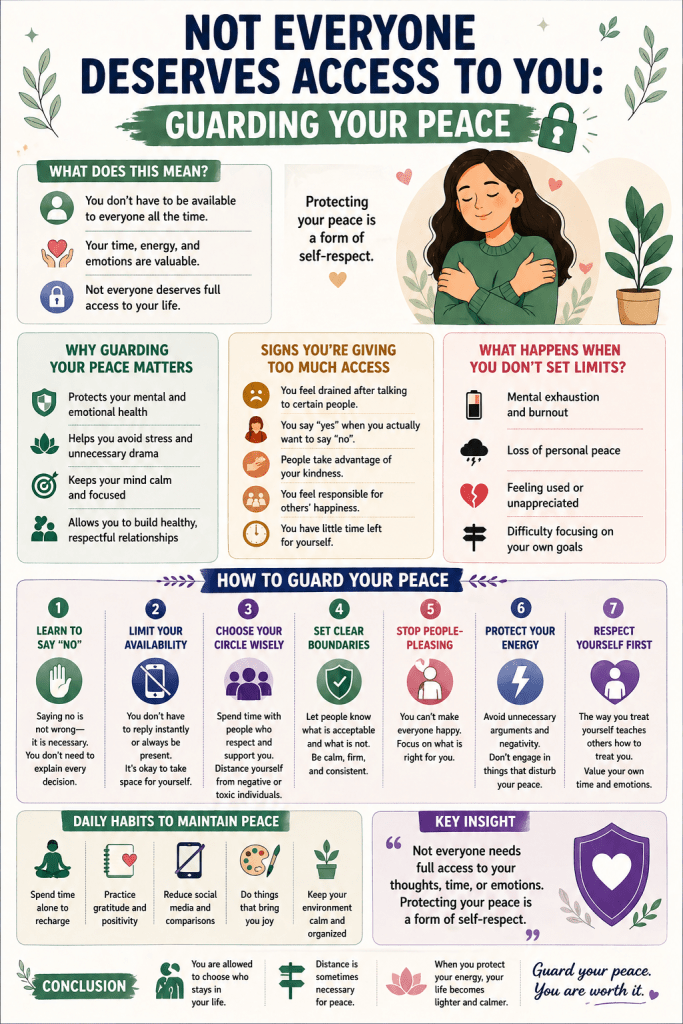
Peace of mind is not about having a quiet life—it’s about protecting your energy. Many times, we lose our inner calm because we don’t set clear boundaries with people, work, or even ourselves. Setting boundaries is not selfish—it’s self-care.
🌿 Why Boundaries Are Important
Boundaries help you say yes to what matters and no to what drains you.
They create space for your own growth and happiness.
Without boundaries, people may take your time and energy for granted.
Protecting your energy helps you stay emotionally balanced.
🌼 Signs You Need Better Boundaries
You feel tired and drained after meeting certain people.
You often say “yes” when you want to say “no.”
You feel guilty for putting yourself first.
You don’t have time for things that bring you joy.
🌻 How to Set Healthy Boundaries
Know Your Limits – Be clear about what feels right and what doesn’t.
Learn to Say No – Respectfully decline things that exhaust you.
Communicate Clearly – Express your needs without fear.
Protect Your Time – Avoid overcommitting yourself.
Let Go of Guilt – Remember, self-care is not being rude.
🌷 Benefits of Boundaries
More mental peace and less stress.
Healthier and more respectful relationships.
More time for self-care and passions.
Stronger confidence and self-respect.
🌸 Conclusion
Boundaries are not walls—they are doors that let peace in and keep negativity out. When you protect your energy, you create space for joy, balance, and growth. Remember: Boundaries = Peace.
Life often gives us emotions we don’t want—sadness, anger, disappointment, or fear. Many people try to hide these feelings or push them away, but doing so only makes the pain heavier. True strength lies in accepting your emotions, not suppressing them.
✨ Simple Points to Remember
Acceptance is the first step to healing – When you allow yourself to feel, you give space for recovery to begin.
Suppression creates stress – Bottled-up emotions don’t disappear; they show up as anxiety, irritability, or even health issues.
Feeling is not weakness – It takes courage to admit when you’re hurt or struggling.
Expression brings clarity – Talking, journaling, or creative outlets help you understand your emotions better.
Acceptance leads to growth – Once you face your feelings, you can learn from them and move forward stronger.
Peace comes with honesty – Pretending drains energy; being truthful with yourself brings inner calm.
You’re not alone – Everyone experiences pain, and sharing it can connect you with others who understand.
🌸 Final Thought
Remember, acceptance is not about giving up—it’s about letting go of denial. When you accept what you feel, you open the door to healing, growth, and peace.
Just like software, life too can get messy with bugs — stress, confusion, bad habits, or procrastination. It’s time to debug your life and upgrade your system!
🔍 1. Identify the Bugs
Notice what’s draining your energy — toxic habits, overthinking, negative people, or clutter.
Keep a journal or note what triggers stress or low moods.
🧹 2. Clear the Cache (Declutter)
Clean your space — a tidy environment boosts mental clarity.
Let go of emotional baggage: forgive, release, reset.
🔄 3. Restart Often
Take short breaks, walk in nature, or meditate.
Sleep well — it’s the best reset button for your brain.
🧭 4. Update Your Mindset
Replace “I can’t” with “How can I?”
Feed your mind with positive content — books, podcasts, or uplifting people.
⌛ 5. Fix Procrastination Bugs
Use the 5-minute rule: “I’ll do this just for 5 minutes.”
Break big tasks into tiny steps.
🔐 6. Strengthen Your Firewall (Boundaries)
Learn to say “no” without guilt.
Protect your time and peace like your passwords.
⚙️ 7. Install Healthy Habits
Eat well, move daily, and stay hydrated.
Start small — one habit at a time is enough to change your life.
🌐 8. Connect to Good Networks
Surround yourself with people who lift you up, not pull you down.
Share your progress, and ask for help when needed.
🧑💻 9. Run Daily Diagnostics
End each day with reflection: What went well? What can improve?
Appreciate small wins and keep learning.
🚀 10. Keep Debugging
Life won’t be perfect, but you can keep improving.
Debugging is not a one-time task — it’s a habit of self-awareness and self-care.
💡 Final Thought:
You don’t need to be perfect — just better than yesterday. Keep debugging. Keep evolving.
💬 Final Thought: When you truly focus on you, life becomes simpler, clearer, and more fulfilling. The best version of your life starts with the best version of you.
In recent years, you might have heard phrases like “I’m in my main character era” or “Livelike the main character.” But what does it really mean? And why is it trending?
Let’s break it down simply.
🌟 What Is “Main Character Energy”?
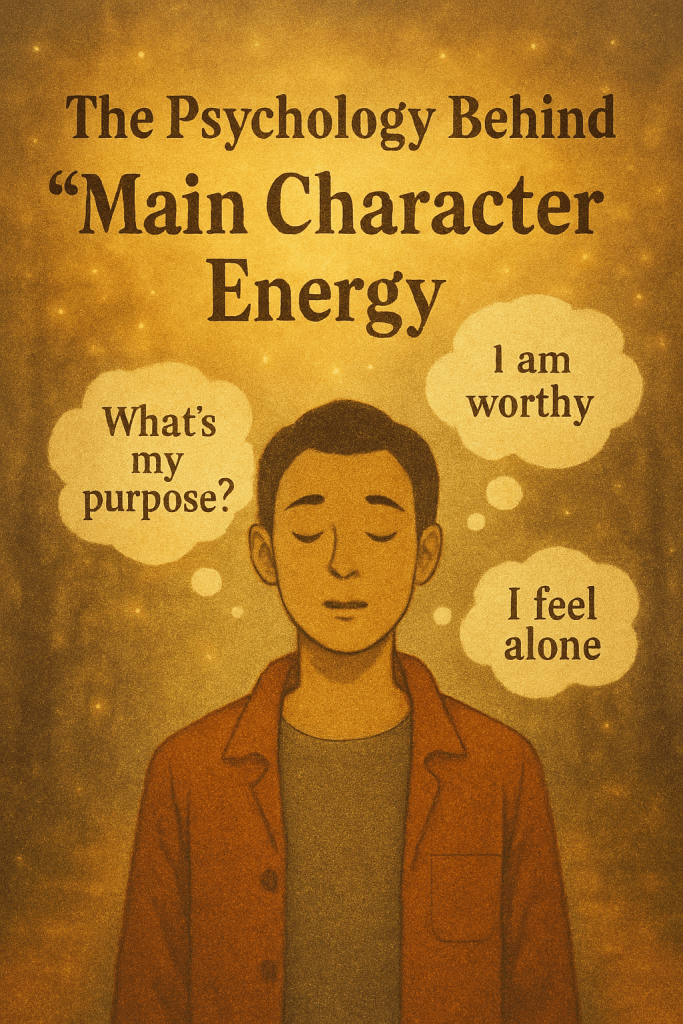
Main Character Energy (MCE) is a mindset where a person sees themselves as the lead in their own life story. It’s about confidence, self-awareness, and making choices that align with your values, not just blending into the background.
“You are the author of your own story. Don’t hand the pen to someone else.”
🧠 Why It Feels So Good (Psychological Reasons)
Boosts Self-Esteem
When you feel like the ‘main character,’ you value yourself more.
Example: Dressing up just for a walk because it makes you feel good.
Encourages Mindfulness
You become more aware of your surroundings and actions.
Example: Drinking coffee slowly while enjoying the moment, like you’re in a movie scene.
Helps Create a Strong Identity
You start asking: What kind of person do I want to be?
This leads to intentional decisions, not just going with the crowd.
Inspires Personal Growth
Main characters overcome challenges.
Example: You treat a bad day not as the end—but as the middle of your character arc.
“You either walk inside your story and own it, or you stand outside and hustle for your worthiness.” — Brené Brown
🎬 Main Character Energy vs. Narcissism
It’s important to note that MCE is not about being self-obsessed or thinking others are less important. It’s about:
✅ Confidence — not arrogance ✅ Self-love — not selfishness ✅ Growth — not perfection
“You can be the main character of your life without needing to be the center of everyone else’s.”
✨ Practical Ways to Step into Your Main Character Energy
Create Your “Main Character” Morning Routine
Start your day with intention. Stretch, journal, listen to music that motivates you.
Example: Brew your coffee slowly, stand by the window, and soak in the moment — like the intro scene of a movie.
Dress for the Mood You Want to Create
Wear outfits that make you feel confident, even if you’re not going anywhere fancy.
Example: Wear that bold shirt or lipstick just because it feels you.
Narrate Your Day (Internally or Out Loud!)
Turn simple moments into powerful scenes.
Example: Walking to the bus stop? Imagine you’re the hero heading to an important mission.
Celebrate Small Wins Like Big Victories
Whether it’s finishing a to-do list or making it through a hard day, clap for yourself.
Example: Treat yourself to a solo coffee date after a productive week.
Set a Soundtrack for Your Life
Make playlists that match your vibe — “Confidence Mode,” “Healing Era,” or “Rising Strong.”
Music/podcast makes every moment feel cinematic and empowering.
Say Yes to Solo Moments
Take yourself out for a nature walk, or bookstore visit. You don’t need company to enjoy your life.
Example: A quiet Sunday spent journaling and reflecting can feel like a self-love scene.
📖 Final Thought
You don’t need to wait for someone to give you permission. You are already the main character. Every small act of self-care, courage, and intention writes a better version of your life story.
“The moment you start acting like life is a movie, everything changes. The mood, the energy, the plot—it’s all in your hands.”
In our modern, fast-paced world, there’s a growing desire to slow down and live more intentionally.
Slow living encompasses mindfulness, simplicity, and intentionality as core principles.
Understanding Slow Living:
“The essence of life is not in the great victories and grand failures, but in the simple joys of everyday living.” – Mahatma Gandhi
Slow living encourages us to resist the urge to constantly rush through life and instead focus on being present and mindful in each moment.
It involves savoring experiences, cultivating gratitude, and prioritizing meaningful connections over material possessions or external achievements.
The Essence of Minimalism:
“Simplicity is the ultimate sophistication.” – N. R. Narayana Murthy
Minimalism is a lifestyle choice that advocates for intentional living with fewer material possessions and distractions.
By decluttering our physical and mental spaces, we create room for clarity, creativity, and peace of mind.
Benefits of Intentional Living:
“The mind is everything. What you think, you become.” – Swami Vivekananda
Intentional living involves aligning our actions with our values and priorities to live a more purposeful life.
It empowers us to make conscious choices, set meaningful goals, and cultivate habits that support our well-being and personal growth.
Practical Tips for Embracing Slow Living:
“Take rest; a field that has rested gives a bountiful crop.” – Osho
Prioritize self-care by incorporating practices like meditation, journaling, or spending time in nature.
Simplify your surroundings by decluttering your home, digital devices, and schedule to reduce overwhelm and create space for what truly matters.
Cultivate mindfulness by being fully present in each moment, practicing gratitude, and embracing the beauty of simplicity.
Set boundaries to protect your time and energy, saying no to activities or commitments that don’t align with your values or priorities.
Embracing slow living, minimalism, and intentional living offers a transformative path to a more fulfilling and meaningful life. By adopting these principles and practices, we can cultivate greater happiness, contentment, and inner peace amidst the chaos of modern life.