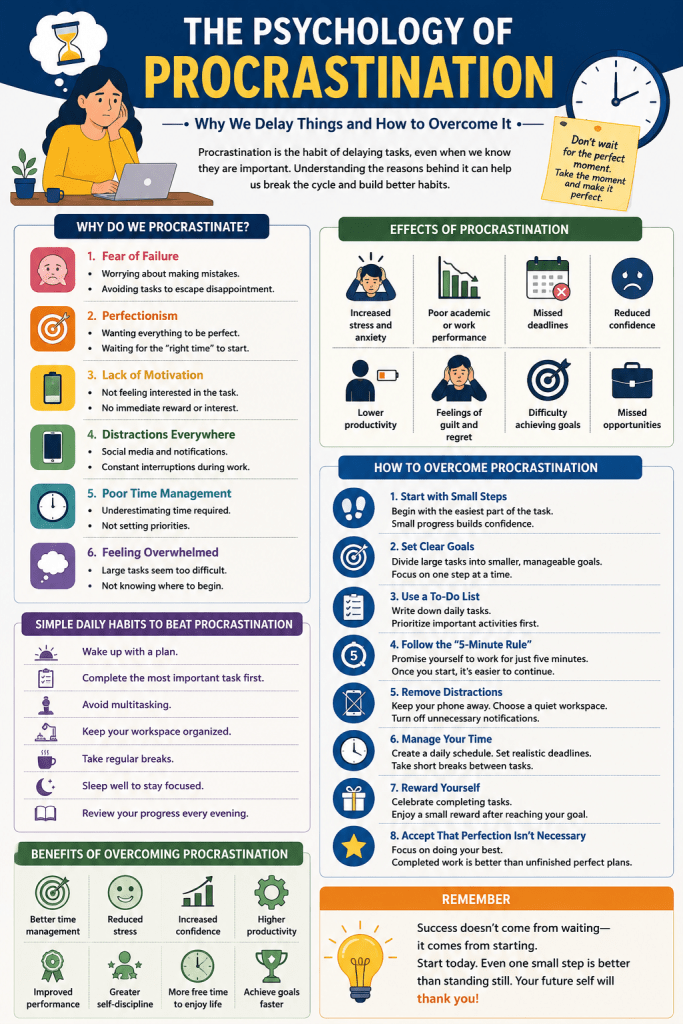
The Psychology of Procrastination

Why We Delay Things and How to Overcome It

“Procrastination is not about being lazy—it’s about understanding why we avoid certain tasks and learning how to take the first step.”

🌱 Introduction

Almost everyone procrastinates at some point. Whether it’s delaying homework, postponing an important project, or avoiding household chores, procrastination is a common habit. While taking occasional breaks is normal, repeatedly putting off important tasks can lead to stress, missed opportunities, and reduced productivity.

Understanding the psychology behind procrastination can help us break the cycle and develop better habits.


🧠 What Is Procrastination?

Procrastination is the habit of delaying or postponing tasks, even when we know they are important and should be completed on time.

It often means choosing short-term comfort over long-term success.


🤔 Why Do People Procrastinate?

1. 😟 Fear of Failure

  • Worrying about making mistakes.
  • Feeling that the work won’t be good enough.
  • Avoiding tasks to escape disappointment.

Key Message: Fear often stops us before we even begin.


2. 🎯 Perfectionism

  • Wanting everything to be perfect.
  • Waiting for the “right time” to start.
  • Spending too much time planning instead of doing.

Key Message: Progress is more important than perfection.


3. 😴 Lack of Motivation

  • Not feeling interested in the task.
  • Finding the work boring or difficult.
  • Losing focus because there is no immediate reward.

Key Message: Action often creates motivation.


4. 📱 Distractions Everywhere

  • Social media notifications.
  • Mobile phones and online entertainment.
  • Constant interruptions during work or study.

Key Message: Small distractions can lead to big delays.


5. ⏳ Poor Time Management

  • Underestimating how long tasks will take.
  • Not setting priorities.
  • Waiting until the last minute.

Key Message: Planning your time reduces procrastination.


6. 😰 Feeling Overwhelmed

  • Seeing a large task as too difficult.
  • Not knowing where to begin.
  • Giving up before starting.

Key Message: Breaking big tasks into smaller steps makes them easier.


⚠️ Effects of Procrastination

  • Increased stress and anxiety.
  • Poor academic or work performance.
  • Missed deadlines.
  • Reduced confidence.
  • Lower productivity.
  • Feelings of guilt and regret.
  • Difficulty achieving personal and professional goals.

🌟 How to Overcome Procrastination

✅ Start with Small Steps

  • Begin with the easiest part of the task.
  • Small progress builds confidence.

✅ Set Clear Goals

  • Divide large tasks into smaller, manageable goals.
  • Focus on completing one step at a time.

✅ Use a To-Do List

  • Write down daily tasks.
  • Prioritize important activities first.

✅ Follow the “5-Minute Rule”

  • Promise yourself to work for just five minutes.
  • Once you start, it’s often easier to continue.

✅ Remove Distractions

  • Keep your phone away while studying or working.
  • Choose a quiet workspace.
  • Turn off unnecessary notifications.

✅ Manage Your Time

  • Create a daily schedule.
  • Set realistic deadlines.
  • Take short breaks between tasks.

✅ Reward Yourself

  • Celebrate completing tasks.
  • Enjoy a small reward after reaching your goal.

✅ Accept That Perfection Isn’t Necessary

  • Focus on doing your best.
  • Remember that completed work is better than unfinished perfect plans.

💡 Simple Daily Habits to Beat Procrastination

  • Wake up with a plan.
  • Complete the most important task first.
  • Avoid multitasking.
  • Keep your workspace organized.
  • Take regular breaks.
  • Sleep well to stay focused.
  • Review your progress every evening.

🌈 Benefits of Overcoming Procrastination

  • Better time management.
  • Reduced stress.
  • Increased confidence.
  • Higher productivity.
  • Improved academic and work performance.
  • Greater self-discipline.
  • More free time to enjoy life.

📌 Conclusion

Procrastination is a habit that can affect anyone, but it can be overcome with awareness, planning, and consistent action. Instead of waiting for motivation, take the first small step. Every completed task brings you closer to your goals and builds confidence for the next challenge.

Remember, success doesn’t come from waiting—it comes from starting.

🌟 Final Thought

Start today. Even one small step is better than standing still. Your future self will thank you!

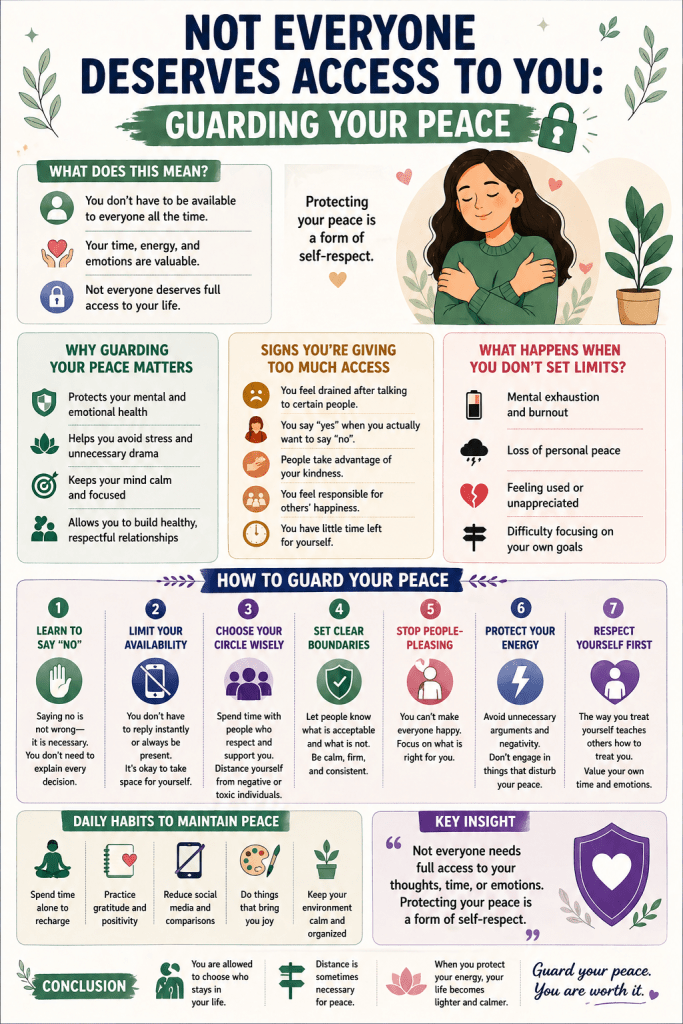
🌿 Not Everyone Deserves Access to You: Guarding Your Peace

💭 What Does This Mean?

  • You don’t have to be available to everyone all the time
  • Your time, energy, and emotions are valuable
  • Not everyone deserves full access to your life

🧠 Why Guarding Your Peace Matters

  • Protects your mental and emotional health
  • Helps you avoid stress and unnecessary drama
  • Keeps your mind calm and focused
  • Allows you to build healthy, respectful relationships

🚨 Signs You’re Giving Too Much Access

  • You feel drained after talking to certain people
  • You say “yes” when you actually want to say “no”
  • People take advantage of your kindness
  • You feel responsible for others’ happiness
  • You have little time left for yourself

🌪️ What Happens When You Don’t Set Limits?

  • Mental exhaustion and burnout
  • Loss of personal peace
  • Feeling used or unappreciated
  • Difficulty focusing on your own goals

🔐 How to Guard Your Peace

1. 🚫 Learn to Say “No”

  • Saying no is not wrong—it is necessary
  • You don’t need to explain every decision

2. ⏳ Limit Your Availability

  • You don’t have to reply instantly or always be present
  • It’s okay to take space for yourself

3. 🧍‍♀️ Choose Your Circle Wisely

  • Spend time with people who respect and support you
  • Distance yourself from negative or toxic individuals

4. 🗣️ Set Clear Boundaries

  • Let people know what is acceptable and what is not
  • Be calm, firm, and consistent

5. ❤️ Stop People-Pleasing

  • You can’t make everyone happy
  • Focus on what is right for you

6. 🧘 Protect Your Energy

  • Avoid unnecessary arguments and negativity
  • Don’t engage in things that disturb your peace

7. 🪞 Respect Yourself First

  • The way you treat yourself teaches others how to treat you
  • Value your own time and emotions

🌸 Daily Habits to Maintain Peace

  • Spend time alone to recharge
  • Practice gratitude and positivity
  • Reduce social media and comparisons
  • Do things that bring you joy
  • Keep your environment calm and organized

✨ Key Insight

  • Not everyone needs full access to your thoughts, time, or emotions
  • Protecting your peace is a form of self-respect

🌈 Conclusion

  • You are allowed to choose who stays in your life
  • Distance is sometimes necessary for peace
  • When you protect your energy, your life becomes lighter and calmer

🌱 Change is Painful but Necessary

Change is one of the hardest things in life—but it’s also one of the most important. Growth never comes without discomfort. Let’s explore why change hurts, and why it’s still absolutely worth it.


🔹 1. Pain Comes from Leaving the Comfort Zone

  • We are naturally wired to prefer comfort and routine.
  • Change feels like a threat to that security.
  • But comfort doesn’t lead to growth—only stagnation.

Quote:
“Life begins at the end of your comfort zone.” — Neale Donald Walsch


🔹 2. Change Forces Growth

  • Pain from change is often the birth pain of a stronger version of you.
  • Whether it’s switching careers, ending toxic habits, or healing emotionally—it pushes you to evolve.

Quote:
“Growth is painful. Change is painful. But nothing is as painful as staying stuck somewhere you don’t belong.” — Mandy Hale


🔹 3. Temporary Pain, Long-term Gain

  • Yes, change hurts initially—but the rewards are lasting.
  • You become more confident, independent, and emotionally mature.

Quote:
“Don’t fear failure. Fear being in the exact same place next year as you are today.”


🔹 4. Change Breaks Illusions

  • Often, change removes people or situations that weren’t right for us.
  • Pain reveals truth. Truth leads to freedom.

Quote:
“Sometimes painful things can teach us lessons that we didn’t think we needed to know.”


🔹 5. Without Change, There’s No Future

  • Sticking to old habits and avoiding risks limits possibilities.
  • Every successful person has had to go through some kind of painful transformation.

Quote:
“The secret of change is to focus all of your energy not on fighting the old, but on building the new.” — Socrates


🔹 6. Change Builds Resilience

  • Every time you go through change and survive it, you become more resilient.
  • You start to trust yourself even in uncertainty.

Quote:
“The measure of intelligence is the ability to change.” — Albert Einstein


🌟 Final Thought:

Change might hurt. But staying the same when you’re meant to grow—hurts even more in the long run. Embrace the discomfort. Walk through the storm. Because on the other side of change is the life you truly want.