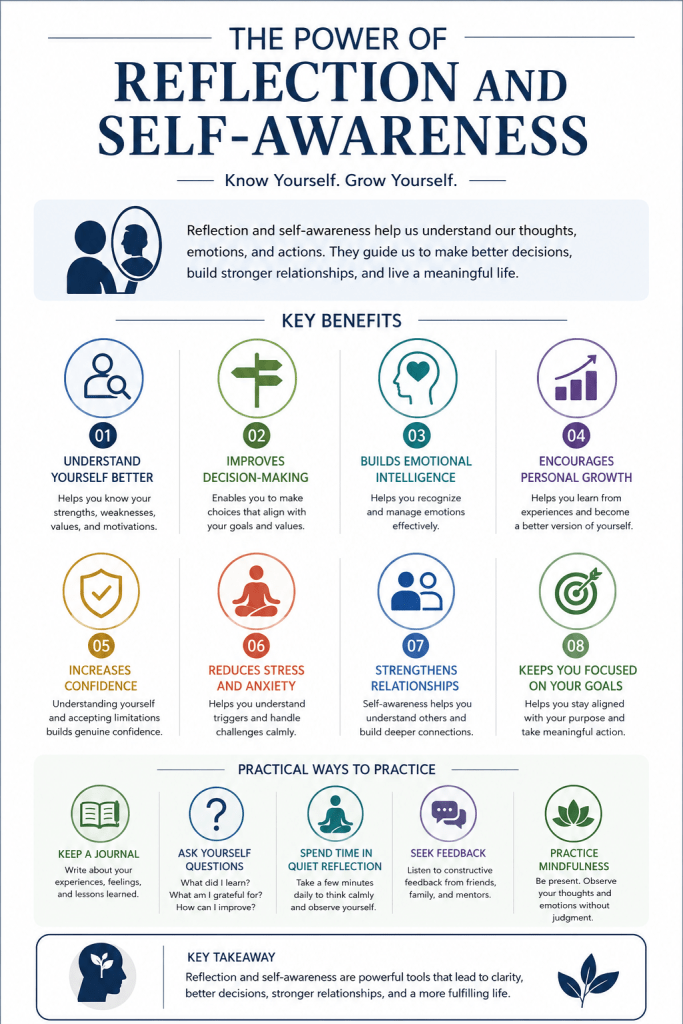
The Power of Reflection and Self-Awareness

Introduction

In a world filled with constant distractions and busy schedules, taking time to reflect on our thoughts, actions, and experiences is often overlooked. Reflection and self-awareness are powerful tools that help us understand ourselves better, make wiser decisions, and lead more meaningful lives. By looking inward, we gain clarity about who we are, what we value, and where we want to go.


What is Reflection?

Reflection is the process of thinking deeply about our experiences, actions, and feelings. It helps us learn from the past, understand the present, and prepare for the future.

Reflection allows us to:

  • Learn from our experiences
  • Recognize our strengths and weaknesses
  • Understand our emotions
  • Improve our decisions and actions

What is Self-Awareness?

Self-awareness is the ability to understand our thoughts, emotions, behaviors, and their impact on ourselves and others.

A self-aware person:

  • Understands personal strengths and limitations
  • Recognizes emotions and reactions
  • Accepts constructive feedback
  • Makes conscious and thoughtful decisions

Why Reflection and Self-Awareness Matter

1. Helps Us Understand Ourselves Better

Reflection enables us to discover:

  • What motivates us
  • What makes us happy
  • What challenges us
  • What values guide our lives

2. Improves Decision-Making

When we understand ourselves, we can:

  • Make better choices
  • Set realistic goals
  • Avoid impulsive decisions

3. Builds Emotional Intelligence

Self-awareness helps us:

  • Recognize emotions
  • Manage stress effectively
  • Respond thoughtfully instead of reacting emotionally

4. Encourages Personal Growth

Reflection allows us to:

  • Learn from mistakes
  • Identify areas for improvement
  • Develop positive habits

5. Increases Confidence

Knowing our strengths and accepting our limitations helps build genuine self-confidence and self-acceptance.

6. Reduces Stress and Anxiety

Understanding our thoughts and emotions helps us handle challenges with greater calmness and resilience.

7. Strengthens Relationships

When we understand ourselves better, we become more understanding, empathetic, and respectful toward others.

8. Keeps Us Focused on Our Goals

Reflection helps us stay connected to our purpose and ensures our actions align with our values and aspirations.


Simple Ways to Practice Reflection and Self-Awareness

Keep a Journal

Write about:

  • Daily experiences
  • Thoughts and feelings
  • Lessons learned

Ask Yourself Meaningful Questions

Examples:

  • What did I learn today?
  • What am I grateful for?
  • How could I improve?

Spend Time in Quiet Reflection

Take a few minutes each day to:

  • Think calmly
  • Observe your thoughts
  • Reflect on your actions

Seek Feedback

Listen to constructive feedback from:

  • Friends
  • Family members
  • Mentors

Practice Mindfulness

Pay attention to:

  • Your thoughts
  • Your emotions
  • Your surroundings

Without judgment or criticism.


Benefits in Everyday Life

Reflection and self-awareness can help in:

  • Academic success
  • Career development
  • Leadership growth
  • Better relationships
  • Improved mental well-being
  • Personal fulfillment

A Spiritual Perspective

Many spiritual traditions encourage self-reflection as a path to wisdom and personal growth. In Islam, self-accountability (Muhasabah) is highly valued. Reflecting on our actions helps us become better individuals and strengthens our relationship with Allah.

The Quran encourages believers to think deeply and reflect:

“Indeed, in that are signs for a people who give thought.”
(Quran 16:11)

Reflection helps us appreciate life’s blessings, learn from experiences, and remain mindful of our purpose.


Conclusion

Reflection and self-awareness are not just personal development tools; they are essential life skills. They help us understand ourselves, improve our relationships, make better decisions, and grow into better versions of ourselves.

Taking a few moments each day to reflect can bring greater clarity, confidence, and peace of mind. The more we understand ourselves, the more effectively we can navigate life’s challenges and opportunities.

Key Takeaway

“Knowing yourself is the beginning of growth. Reflecting on your experiences is the pathway to wisdom, confidence, and a more meaningful life.”

Boundaries = Peace: Protecting Your Energy

🌸 Introduction

Peace of mind is not about having a quiet life—it’s about protecting your energy. Many times, we lose our inner calm because we don’t set clear boundaries with people, work, or even ourselves. Setting boundaries is not selfish—it’s self-care.


🌿 Why Boundaries Are Important

  • Boundaries help you say yes to what matters and no to what drains you.
  • They create space for your own growth and happiness.
  • Without boundaries, people may take your time and energy for granted.
  • Protecting your energy helps you stay emotionally balanced.

🌼 Signs You Need Better Boundaries

  • You feel tired and drained after meeting certain people.
  • You often say “yes” when you want to say “no.”
  • You feel guilty for putting yourself first.
  • You don’t have time for things that bring you joy.

🌻 How to Set Healthy Boundaries

  1. Know Your Limits – Be clear about what feels right and what doesn’t.
  2. Learn to Say No – Respectfully decline things that exhaust you.
  3. Communicate Clearly – Express your needs without fear.
  4. Protect Your Time – Avoid overcommitting yourself.
  5. Let Go of Guilt – Remember, self-care is not being rude.

🌷 Benefits of Boundaries

  • More mental peace and less stress.
  • Healthier and more respectful relationships.
  • More time for self-care and passions.
  • Stronger confidence and self-respect.

🌸 Conclusion

Boundaries are not walls—they are doors that let peace in and keep negativity out. When you protect your energy, you create space for joy, balance, and growth. Remember: Boundaries = Peace.

Where is Peace of Mind?

Introduction

Finding peace of mind is something many people strive for in today’s fast-paced and often stressful world. Peace of mind is a state of mental and emotional calmness, free from worry, stress, and anxiety. Here are some simple points to guide you toward achieving peace of mind:

1. Practice Mindfulness

  • What it Means: Being present in the moment and fully aware of what you are doing.
  • How to Do It: Focus on your breathing, observe your thoughts without judgment, and take time to enjoy simple tasks.
  • Why It Helps: Mindfulness reduces anxiety and helps you appreciate life as it happens.

2. Let Go of Control

  • What it Means: Accept that not everything is within your control.
  • How to Do It: Focus on the things you can influence and let go of what you can’t.
  • Why It Helps: Trying to control everything creates stress. Letting go brings relief and clarity.

3. De-clutter Your Mind

  • What it Means: Freeing your mind from unnecessary thoughts and worries.
  • How to Do It: Prioritize your tasks, avoid multitasking, and practice relaxation techniques like meditation.
  • Why It Helps: A cluttered mind leads to overwhelm. Simplifying your thoughts helps reduce stress.

4. Stay Grateful

  • What it Means: Focusing on the positive things in your life.
  • How to Do It: Keep a gratitude journal or simply take a few moments every day to reflect on what you are thankful for.
  • Why It Helps: Gratitude shifts your mindset from focusing on problems to appreciating the good things, creating a peaceful mental state.

5. Limit External Noise

  • What it Means: Reducing distractions and unnecessary inputs from the outside world.
  • How to Do It: Take breaks from social media, reduce time spent watching negative news, and create quiet moments in your day.
  • Why It Helps: Constant noise and distractions prevent peace. A calm environment supports a calm mind.

6. Practice Self-Care

  • What it Means: Taking care of your physical and emotional well-being.
  • How to Do It: Exercise regularly, eat healthily, get enough sleep, and take time for hobbies that relax you.
  • Why It Helps: When you care for your body and mind, you feel more balanced and at ease.

7. Forgive and Let Go

  • What it Means: Releasing grudges, resentment, and anger.
  • How to Do It: Practice forgiveness, not just for others but also for yourself.
  • Why It Helps: Holding onto negative emotions weighs down your peace of mind. Forgiveness lightens your emotional burden.

8. Simplify Your Life

  • What it Means: Reducing complexity in your daily routines, responsibilities, and thoughts.
  • How to Do It: Focus on what truly matters to you, say no to unnecessary commitments, and live with fewer material distractions.
  • Why It Helps: Simplifying your life gives you more space for peace, joy, and relaxation.

9. Focus on Solutions, Not Problems

  • What it Means: Shifting your mindset to solving issues rather than dwelling on them.
  • How to Do It: When faced with challenges, ask yourself how you can resolve them rather than worrying about them.
  • Why It Helps: Focusing on solutions empowers you and reduces feelings of helplessness, leading to a more peaceful mind.

10. Create Balance

  • What it Means: Striking a balance between work, personal life, and relaxation.
  • How to Do It: Set boundaries for work hours, spend quality time with loved ones, and make sure to rest and recharge.
  • Why It Helps: Balance prevents burnout and ensures that all areas of your life contribute to peace rather than stress.

Conclusion

Peace of mind is something that can be achieved by making small, intentional changes in how you think, act, and live. By practicing mindfulness, you can create a mental space free from stress and worry. By simplifying your life, you can create this space. Letting go of control also helps. Focusing on the positives is crucial to achieving this state. Peace of mind is not a destination but a journey, and with consistent effort, you can experience it more and more in your daily life.