✨ The Quantum Leap: Small Changes That Create Big Shifts in Life

Life doesn’t always change through big decisions or dramatic moments.
Sometimes, it changes through tiny actions—small steps that create powerful results over time.
In quantum physics, a “quantum leap” is a small jump of energy that leads to a big transformation.
The same idea applies to our lives.

Here’s how small changes can create big shifts, just like a quantum leap.


🌟 1. Small Changes Create New Possibilities

In quantum theory, even a tiny shift in energy can move a particle to a completely new state.
In life, a small habit change can move you to a new version of yourself.

Example:

  • Reading for 10 minutes a day can slowly turn you into a knowledgeable, confident person.
  • Drinking one extra glass of water daily can improve your energy level.

🌟 2. Every Action Raises Your “Energy Level”

Quantum leaps happen when energy increases.
Similarly, when you make small improvements, your mindset, confidence, and lifestyle rise to a higher level.

Example:

  • Waking up just 15 minutes earlier each day may give you extra time to plan your day calmly.
  • Writing three things you’re grateful for shifts your emotional energy instantly.

🌟 3. You Don’t Need Big Motivation — Just Tiny Momentum

Quantum jumps don’t require huge force; they happen instantly when enough small energy builds up.
Tiny efforts create steady momentum.

Example:

  • Walking only 2,000 steps more each day leads to better health over months.
  • Learning one new English word daily improves communication without pressure.

🌟 4. Small Decisions Change Your Direction

Even the slightest shift in angle can change your destination completely—just like how a particle’s path changes with a tiny impulse.
Small decisions today create a new future.

Example:

  • Choosing to save ₹20 a day becomes ₹600 a month and ₹7,200 a year.
  • Choosing to reduce screen time by 10 minutes daily improves focus and sleep.

🌟 5. The Power of Changing Your Environment Slightly

In quantum physics, particles change behavior depending on their environment.
Similarly, your surroundings influence your habits and mindset.

Example:

  • Keeping fruits on your table helps you eat healthier.
  • Placing books near your bed encourages reading.

🌟 6. Small Mindset Shifts Lead to Big Emotional Growth

A slight shift in thinking can transform how you feel, behave, and respond.

Example:

  • Changing the thought “I can’t do this” to “I will try” opens new opportunities.
  • Replacing negative self-talk with kinder words reduces stress.

🌟 7. Small Daily Improvements Compound Over Time

Just like small energy additions create a quantum jump, small daily efforts compound into major life progress.

Example:

  • Practicing a skill for just 5 minutes a day leads to mastery over months.
  • Saving small amounts regularly builds financial stability.

✨ Final Thought

A quantum leap is not magic.
It is the result of consistent small steps that slowly build enough energy to create a big transformation.

You don’t need huge changes.
You just need to begin—with one small step today.

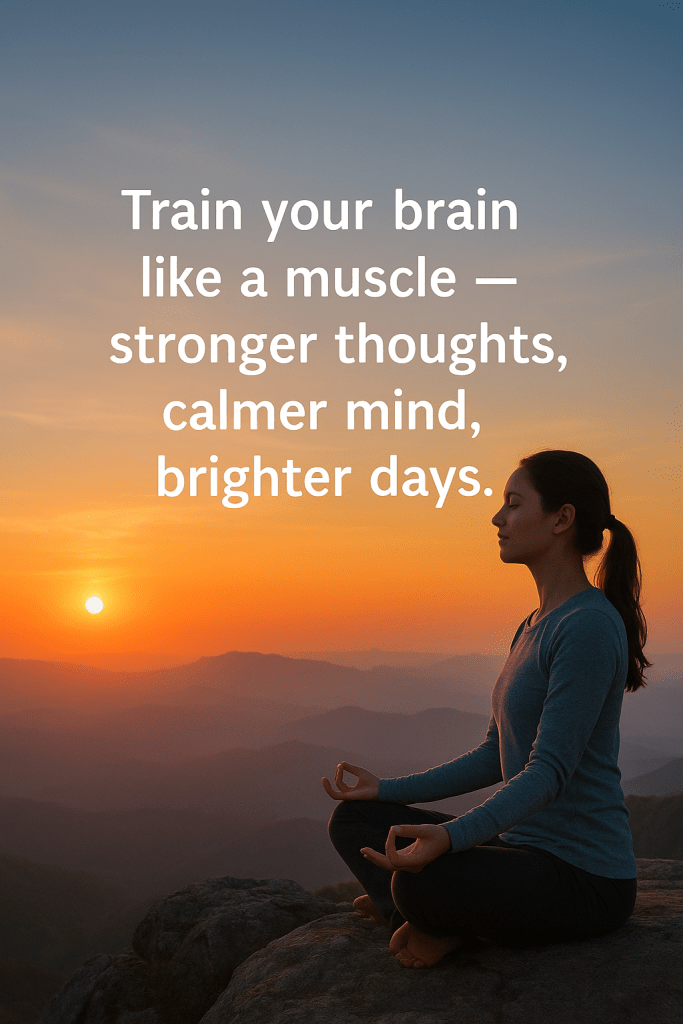
🧠 Mental Fitness: Treating Your Brain Like a Muscle

🌟 Introduction

Just like your body needs exercise to stay strong, your mind also needs regular training to stay healthy, calm, and focused.
Mental fitness isn’t about fixing problems — it’s about building strength, clarity, and emotional balance every day.

💬 “The mind is just like a muscle — the more you exercise it, the stronger it gets.”


💪 1. Train Your Brain Daily

  • Think of your brain as a muscle that grows stronger with use.
  • Do puzzles, read, learn new things, or try something different every day.
  • Challenge your routine to wake up new areas of your mind.

💬 “Great things never come from comfort zones.”


🧘‍♀️ 2. Practice Mindfulness and Meditation

  • Spend at least 10 minutes daily in silence or deep breathing.
  • It reduces stress, increases focus, and helps you stay grounded.
  • Mindfulness teaches you to live in the now, not in the noise.

💬 “Quiet the mind, and the soul will speak.” – Ma Jaya Sati Bhagavati


❤️ 3. Strengthen Emotional Resilience

  • Learn to manage emotions instead of running from them.
  • Focus on what you can control and let go of what you can’t.
  • Positive thinking is mental strength training in disguise.

💬 “You cannot control the waves, but you can learn to surf.”


🧩 4. Keep Learning and Growing

  • Pick up a new hobby, language, or creative skill.
  • Growth keeps your mind flexible and curious.
  • Every new experience builds fresh neural connections.

💬 “Once you stop learning, you start declining.” – Albert Einstein


🥗 5. Fuel Your Brain Right

  • Eat foods rich in omega-3, fruits, vegetables, and nuts.
  • Drink plenty of water and sleep well.
  • A healthy body supports a sharp, peaceful mind.

💬 “Take care of your body — it’s the only place you have to live.” – Jim Rohn


🤝 6. Build Social Connections

  • Talk, share, and connect with positive people.
  • Meaningful conversations boost happiness and mental stability.
  • Laughter and empathy are powerful mental vitamins.

💬 “Connection is the energy that exists between people when they feel seen, heard, and valued.” – Brené Brown


🏃‍♀️ 7. Move Your Body for Mental Strength

  • Walk, dance, or stretch — movement releases happy hormones.
  • Exercise improves focus, memory, and confidence.
  • A fit body supports a fit mind.

💬 “A healthy outside starts from the inside.” – Robert Urich


✍️ 8. Journal and Reflect

  • Write your thoughts to understand your emotions.
  • Journaling helps release mental clutter and find clarity.
  • It’s your daily talk with your inner self.

💬 “Writing is the painting of the voice.” – Voltaire


🌈 9. Rest and Recharge

  • Strength also means knowing when to pause.
  • Sleep, relax, and let your mind recover.
  • Rest is part of progress — not the absence of it.

💬 “Rest and self-care are not wasteful. They are acts of survival.”


🌻 Conclusion

Mental fitness is not about avoiding life’s challenges — it’s about training your mind to stay calm, confident, and creative through them.
Like your body, your brain becomes stronger with consistent care and attention.
Start small, stay steady, and your mental strength will grow — one thought at a time.

💬 “The mind is everything. What you think, you become.” – Buddha

Boundaries = Peace: Protecting Your Energy

🌸 Introduction

Peace of mind is not about having a quiet life—it’s about protecting your energy. Many times, we lose our inner calm because we don’t set clear boundaries with people, work, or even ourselves. Setting boundaries is not selfish—it’s self-care.


🌿 Why Boundaries Are Important

  • Boundaries help you say yes to what matters and no to what drains you.
  • They create space for your own growth and happiness.
  • Without boundaries, people may take your time and energy for granted.
  • Protecting your energy helps you stay emotionally balanced.

🌼 Signs You Need Better Boundaries

  • You feel tired and drained after meeting certain people.
  • You often say “yes” when you want to say “no.”
  • You feel guilty for putting yourself first.
  • You don’t have time for things that bring you joy.

🌻 How to Set Healthy Boundaries

  1. Know Your Limits – Be clear about what feels right and what doesn’t.
  2. Learn to Say No – Respectfully decline things that exhaust you.
  3. Communicate Clearly – Express your needs without fear.
  4. Protect Your Time – Avoid overcommitting yourself.
  5. Let Go of Guilt – Remember, self-care is not being rude.

🌷 Benefits of Boundaries

  • More mental peace and less stress.
  • Healthier and more respectful relationships.
  • More time for self-care and passions.
  • Stronger confidence and self-respect.

🌸 Conclusion

Boundaries are not walls—they are doors that let peace in and keep negativity out. When you protect your energy, you create space for joy, balance, and growth. Remember: Boundaries = Peace.

Design Your Tomorrow: Habits That Shape a Better You

✨ The life you want tomorrow is built on the choices you make today. Developing the right habits can transform your mindset, health, and future. Here are some simple habits to shape a better you:


1. Start Your Day with Intention

  • Wake up early and avoid rushing.
  • Spend a few minutes planning your day.
  • Set 1–2 top priorities instead of an overwhelming list.

2. Practice Gratitude

  • Write down 3 things you’re thankful for.
  • Gratitude shifts focus from problems to possibilities.
  • It builds positivity and emotional strength.

3. Fuel Your Body Right

  • Eat balanced meals with whole foods.
  • Stay hydrated throughout the day.
  • Avoid excess sugar and processed foods.

4. Move Your Body Daily

  • Even 20–30 minutes of walking, stretching, or yoga helps.
  • Exercise improves energy and mental clarity.
  • Consistency matters more than intensity.

5. Prioritize Learning

  • Read, listen to podcasts, or take short courses.
  • Learning keeps the brain sharp and boosts confidence.
  • Even 10 minutes a day compounds over time.

6. Declutter Your Mind

  • Journal your thoughts to reduce stress.
  • Practice mindfulness or meditation.
  • Create digital boundaries by limiting screen time.

7. Build Strong Connections

  • Spend time with people who uplift you.
  • Practice active listening and empathy.
  • Meaningful relationships improve happiness and health.

8. End Your Day with Reflection

  • Review what went well and what can improve.
  • Celebrate small wins.
  • Prepare for tomorrow with clarity.

Remember:
Small habits shape big results. You don’t need to change everything at once—just start with one habit today. Over time, your daily actions will design a tomorrow you’ll be proud of.

🌟 Confidence Is a Skill: Not a Trait

Many people believe confidence is something you’re born with. But the truth is — confidence is a skill you build with time, practice, and patience. Just like learning to ride a bicycle or speak a new language, confidence grows with effort.

💡 What Does It Mean That Confidence is a Skill?

  • Not just for the lucky few – Anyone can develop confidence.
  • Built through action – The more you try, the more confident you become.
  • Improves with experience – Mistakes are part of learning, not signs of failure.

✅ Why Confidence Is a Learnable Skill

  1. It Starts with Self-Belief
    You don’t need to feel ready — just believe in the possibility that you can. Small wins grow self-belief.
  2. It’s Grown Through Repetition
    Just like a muscle, the more you use it, the stronger it gets. Speak up often, take small risks, and step out regularly.
  3. Mistakes Help You Grow
    Failure doesn’t destroy confidence. It teaches. Each setback is a lesson that pushes you forward.
  4. Preparation Builds Confidence
    Being prepared for situations (interviews, presentations, etc.) naturally makes you feel more confident.
  5. Body Language Matters
    Standing tall, making eye contact, and smiling can trick your brain into feeling more confident.
  6. Positive Self-Talk is Powerful
    Replace “I can’t” with “I’m learning” or “I’ll try.” Your inner voice shapes your actions.

🔄 Confidence vs. Trait Thinking

Trait MentalitySkill Mentality
“I was born shy.”“I’m working on expressing myself better.”
“They are just confident people.”“They’ve practiced and grown confident.”
“I can’t do that.”“I can try and get better at it.”

🌱 How to Build Your Confidence Daily

  • 🎯 Set small, daily challenges (e.g., ask a question in class/meeting)
  • ✍️ Track your progress in a journal
  • 📚 Learn new things to expand your skills and comfort zones
  • 💬 Surround yourself with positive people who support growth
  • 🧠 Celebrate effort, not just results

✨ Final Thought

Confidence isn’t something you’re born with. It’s something you practice, earn, and strengthen over time. The more you show up for yourself, the more confident you become.

So next time you see a confident person, remember:
They weren’t born that way — they built it. And so can you. 💪

🌿 Soft Yet Strong: The Era of Quiet Confidence

In a world that often celebrates loud voices and bold moves, a new kind of strength is making its mark — quiet confidence. It’s calm, steady, and powerful in its own way. Let’s explore this beautiful shift.


🌟 1. What is Quiet Confidence?

  • It’s believing in yourself without needing to prove it loudly.
  • It’s the calm assurance that shows through actions, not words.
  • It’s rooted in self-awareness and inner peace.

💭 2. Why Are People Embracing It Now?

  • The fast-paced, loud world can be exhausting.
  • People are craving authenticity and calm energy.
  • Mental health awareness has shown the power of emotional balance.

🧘‍♀️ 3. Traits of Quietly Confident People

  • They listen more than they speak.
  • They stay grounded even during chaos.
  • They uplift others instead of competing with them.
  • They don’t need attention to feel valuable.

🔄 4. Softness is Not Weakness

  • Being kind, empathetic, or gentle doesn’t mean you’re weak.
  • In fact, it takes real strength to stay soft in a hard world.
  • Quiet confidence blends strength with compassion.

🌱 5. How to Build Quiet Confidence

  • Practice self-awareness and self-acceptance.
  • Set boundaries without guilt.
  • Focus on progress, not perfection.
  • Celebrate wins privately and support others openly.
  • Stay true to your values, even when no one is watching.

💼 6. In the Workplace and Leadership

  • Leaders with quiet confidence earn deep respect.
  • They guide through example, not force.
  • They create psychologically safe spaces for teams.

🧘‍♂️ 7. In Daily Life

  • You don’t need to be loud to be heard.
  • Small, consistent actions build lasting trust.
  • You inspire others just by being calm, kind, and authentic.

💬 Final Thought

Quiet confidence is the new power.
You don’t need to shout to be strong.
Being soft and sure is more than enough in this new era of strength.

Becoming Your Own Role Model: Why It Starts with You

We all look up to someone — a celebrity, a teacher, a parent, or a leader. But what if you could become the person you admire the most? Here’s why and how becoming your own role model is powerful:


🔹 1. You Know Yourself Best

  • You understand your strengths and struggles.
  • You know your journey, your efforts, and your pain.
  • Others may inspire you, but they haven’t walked in your shoes.

🔹 2. External Role Models Can Disappoint

  • People are human — they make mistakes.
  • Depending too much on others for motivation can be risky.
  • When you become your own role model, you control the standard.

🔹 3. You Become Accountable

  • You stop blaming others and take ownership of your growth.
  • You start asking: What would the best version of me do?
  • This mindset keeps you grounded and focused.

🔹 4. It Builds Self-Respect and Confidence

  • Every time you show up for yourself, your belief grows.
  • You realize you don’t need outside validation to feel worthy.
  • Confidence isn’t given — it’s built.

🔹 5. You Set the Standard for Others

  • When you lead yourself well, others notice.
  • You inspire friends, siblings, and even strangers without trying.
  • True leadership begins with self-leadership.

🔹 6. Progress Over Perfection

  • You don’t need to be perfect to be your own role model.
  • Keep learning, keep improving — that’s what matters.
  • Growth is what makes you admirable.

Simple Ways to Start

  • Set small goals and stick to them.
  • Talk kindly to yourself.
  • Celebrate progress, no matter how small.
  • Reflect often: Am I becoming the person I’d look up to?

💡 Final Thought:

You don’t need to chase someone else’s path. Build your own. Be someone you’d be proud to look up to — because it truly starts with you.

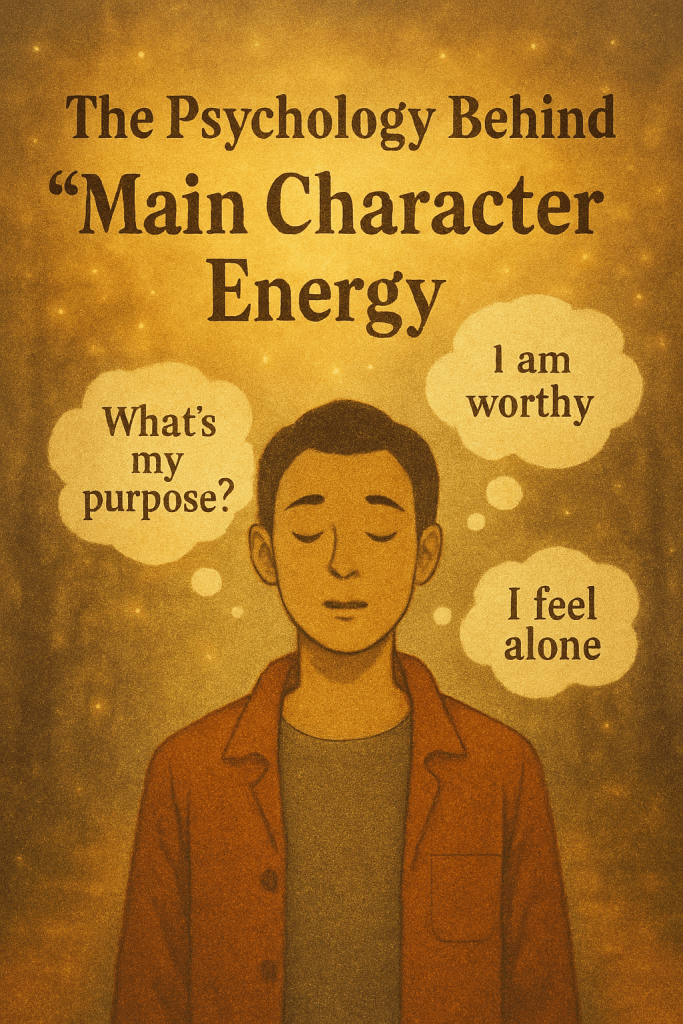
The Psychology Behind “Main Character Energy”

In recent years, you might have heard phrases like “I’m in my main character era” or “Live like the main character.” But what does it really mean? And why is it trending?

Let’s break it down simply.


🌟 What Is “Main Character Energy”?

Main Character Energy (MCE) is a mindset where a person sees themselves as the lead in their own life story. It’s about confidence, self-awareness, and making choices that align with your values, not just blending into the background.

“You are the author of your own story. Don’t hand the pen to someone else.”


🧠 Why It Feels So Good (Psychological Reasons)

  1. Boosts Self-Esteem
    • When you feel like the ‘main character,’ you value yourself more.
    • Example: Dressing up just for a walk because it makes you feel good.
  2. Encourages Mindfulness
    • You become more aware of your surroundings and actions.
    • Example: Drinking coffee slowly while enjoying the moment, like you’re in a movie scene.
  3. Helps Create a Strong Identity
    • You start asking: What kind of person do I want to be?
    • This leads to intentional decisions, not just going with the crowd.
  4. Inspires Personal Growth
    • Main characters overcome challenges.
    • Example: You treat a bad day not as the end—but as the middle of your character arc.
    “You either walk inside your story and own it, or you stand outside and hustle for your worthiness.” — Brené Brown

🎬 Main Character Energy vs. Narcissism

It’s important to note that MCE is not about being self-obsessed or thinking others are less important.
It’s about:

✅ Confidence — not arrogance
✅ Self-love — not selfishness
✅ Growth — not perfection

“You can be the main character of your life without needing to be the center of everyone else’s.”

✨ Practical Ways to Step into Your Main Character Energy

  1. Create Your “Main Character” Morning Routine
    • Start your day with intention. Stretch, journal, listen to music that motivates you.
    • Example: Brew your coffee slowly, stand by the window, and soak in the moment — like the intro scene of a movie.
  2. Dress for the Mood You Want to Create
    • Wear outfits that make you feel confident, even if you’re not going anywhere fancy.
    • Example: Wear that bold shirt or lipstick just because it feels you.
  3. Narrate Your Day (Internally or Out Loud!)
    • Turn simple moments into powerful scenes.
    • Example: Walking to the bus stop? Imagine you’re the hero heading to an important mission.
  4. Celebrate Small Wins Like Big Victories
    • Whether it’s finishing a to-do list or making it through a hard day, clap for yourself.
    • Example: Treat yourself to a solo coffee date after a productive week.
  5. Set a Soundtrack for Your Life
    • Make playlists that match your vibe — “Confidence Mode,” “Healing Era,” or “Rising Strong.”
    • Music/podcast makes every moment feel cinematic and empowering.
  6. Say Yes to Solo Moments
    • Take yourself out for a nature walk, or bookstore visit. You don’t need company to enjoy your life.
    • Example: A quiet Sunday spent journaling and reflecting can feel like a self-love scene.

📖 Final Thought

You don’t need to wait for someone to give you permission. You are already the main character.
Every small act of self-care, courage, and intention writes a better version of your life story.

“The moment you start acting like life is a movie, everything changes. The mood, the energy, the plot—it’s all in your hands.”

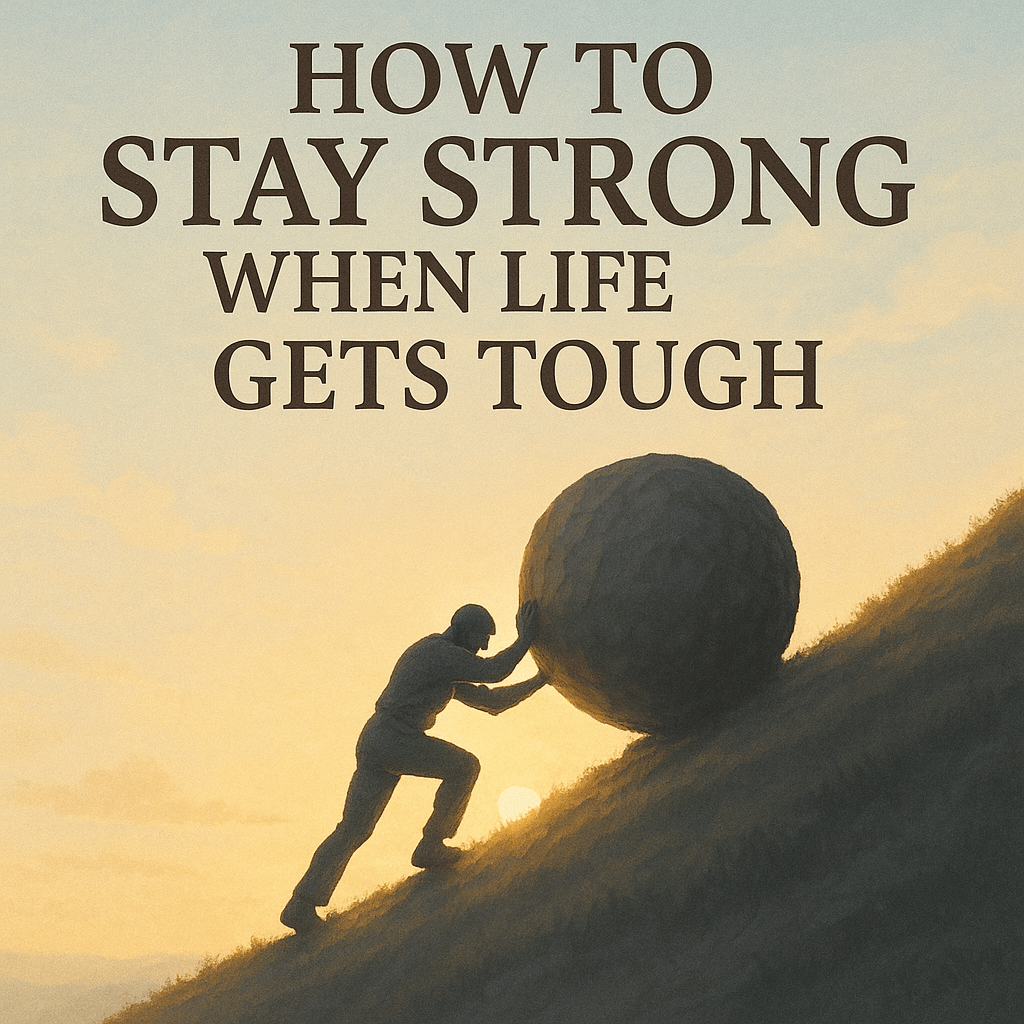
How to Stay Strong When Life Gets Tough

Mental toughness is the ability to stay strong, focused, and calm—even when life gets difficult. It doesn’t mean you’re emotionless, but that you don’t give up easily. Here’s how you can build it step by step:


1. Start Your Day with Purpose

  • Wake up with a plan or goal in mind.
  • Avoid immediately checking your phone.
  • Take 5 minutes to reflect or set your intention for the day.

2. Do Difficult Things First

  • Tackle your most challenging task early.
  • This builds confidence and discipline.
  • It also reduces stress for the rest of the day.

3. Practice Self-Control

  • Learn to say “no” when needed.
  • Avoid emotional outbursts—pause and breathe.
  • Respond, don’t react.

4. Accept What You Can’t Control

  • Don’t waste energy on things outside your control (like traffic or other people’s opinions).
  • Focus on your actions and attitude.

5. Stay Positive, But Realistic

  • Positive thinking helps—but don’t ignore problems.
  • Learn to say: “This is hard, but I can handle it.”

6. Learn from Mistakes

  • Don’t fear failure; use it as a teacher.
  • Ask yourself: What can I learn from this?
  • Keep moving forward, even after a setback.

7. Keep Promises to Yourself

  • Do what you say you’ll do, even when it’s hard.
  • This builds self-respect and inner strength.

8. Take Care of Your Body

  • Eat well, sleep enough, and exercise regularly.
  • A strong body supports a strong mind.

9. Surround Yourself with Positive People

  • Be around those who uplift and challenge you.
  • Limit time with negative or toxic influences.

10. Practice Gratitude Daily

  • Write down 3 things you’re thankful for.
  • Gratitude builds resilience and peace of mind.

Final Thought:

Mental toughness isn’t about being perfect—it’s about staying steady during ups and downs. Build it slowly, one small action at a time. Over time, you’ll notice you’re stronger, calmer, and more confident in whatever life throws at you.

Why ‘Good Enough’ Is the New Perfect

1. Perfection Is Exhausting

  • Striving for perfection drains time, energy, and mental peace.
  • People are realizing that chasing flawless results often leads to burnout, not happiness.

2. Progress Matters More Than Perfection

  • Taking action, even if it’s not perfect, moves you forward.
  • Small, consistent steps lead to bigger results over time.

3. Good Enough Saves Time

  • Perfecting every detail wastes valuable hours.
  • “Good enough” allows faster decision-making and quicker progress.

4. Perfection Is Often an Illusion

  • What feels perfect to one person might not to another.
  • Standards constantly change, making it impossible to please everyone.

5. Good Enough Encourages Innovation

  • When you stop fearing mistakes, you’re more willing to try new ideas.
  • Creativity flows better when you’re not stuck in a perfectionist mindset.

6. Real Success Comes from Adaptability

  • In today’s fast-moving world, flexibility is more important than flawlessness.
  • Those who adjust and move forward quickly win, not those who wait to be perfect.

7. It Improves Mental Health

  • Accepting “good enough” reduces anxiety, self-doubt, and stress.
  • It promotes a healthier relationship with yourself and your work.

8. Good Enough Builds Confidence

  • Finishing tasks (even imperfectly) builds momentum and belief in yourself.
  • You learn, grow, and improve with each completed effort.

9. The World Appreciates Authenticity, Not Perfection

  • People connect more with genuine efforts and honest mistakes.
  • Authentic work is often more inspiring than something that appears flawlessly staged.

10. Good Enough Is Sustainable

  • It’s a mindset you can maintain for the long term.
  • You stay productive, creative, and balanced without burning out.

🌟 Final Thought:

“Good enough” doesn’t mean careless. It means knowing when something is strong enough to serve its purpose — and trusting that it’s better to be real and done than stuck chasing an impossible perfect.