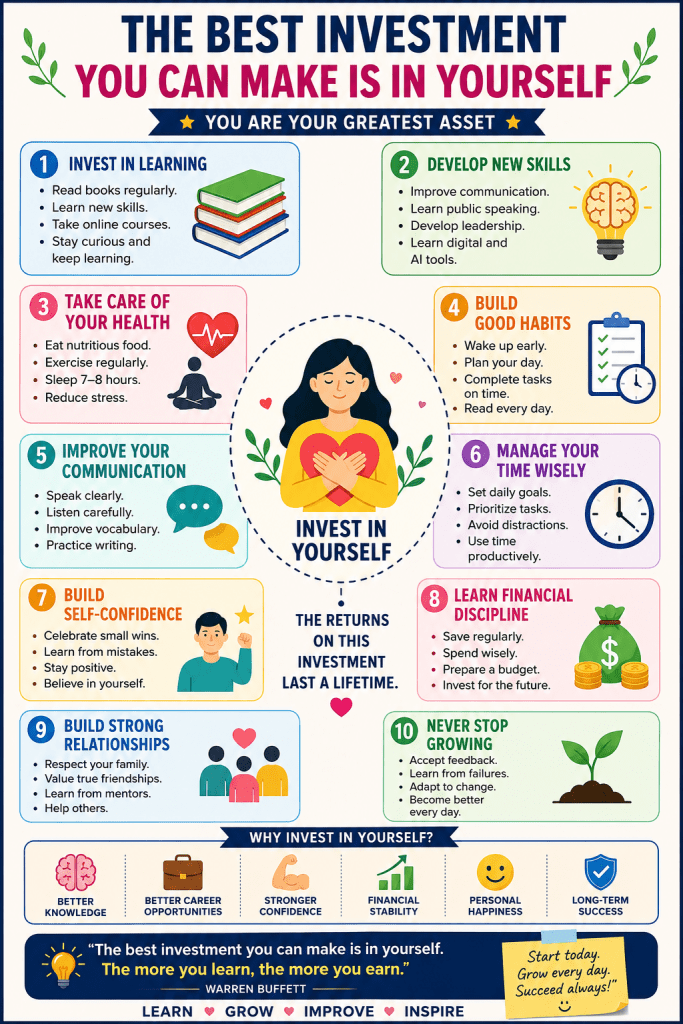
The Best Investment You Can Make Is in Yourself

“The greatest asset you will ever own is not your money—it’s you.”

Introduction

Many people dream of becoming successful, wealthy, and happy. They often invest money in land, gold, stocks, or businesses. While these are valuable investments, the best investment you can ever make is investing in yourself. When you improve your knowledge, skills, health, and character, you create opportunities that no one can take away.


1. Invest in Learning 📚

Knowledge is one of the few things that grows when you share it.

  • Read books regularly.
  • Learn new skills.
  • Attend workshops and seminars.
  • Take free online courses.
  • Stay curious and keep learning.

Simple Example:
A student who learns Excel, Power BI, or AI tools has better career opportunities than someone who only depends on classroom learning.


2. Develop New Skills 💡

Skills increase your confidence and employability.

  • Improve communication skills.
  • Learn public speaking.
  • Develop leadership qualities.
  • Improve problem-solving ability.
  • Learn digital and AI tools.

Remember:
A degree gets you an interview, but skills help you build a successful career.


3. Take Care of Your Health ❤️

Your health is your greatest wealth.

  • Eat nutritious food.
  • Exercise regularly.
  • Sleep for 7–8 hours.
  • Drink enough water.
  • Reduce stress through relaxation or meditation.

Healthy body + Healthy mind = Better performance.


4. Build Good Habits 🌱

Small daily habits create big success over time.

  • Wake up early.
  • Plan your day.
  • Complete tasks on time.
  • Read every day.
  • Avoid procrastination.

“Successful people are simply people with successful habits.”


5. Improve Your Communication 🗣️

Good communication opens many doors.

  • Speak clearly and confidently.
  • Listen carefully.
  • Improve your vocabulary.
  • Practice writing professionally.
  • Respect others’ opinions.

Communication is one of the most valuable skills in every profession.


6. Manage Your Time Wisely ⏰

Time is more valuable than money because it cannot be replaced.

  • Set daily goals.
  • Prioritize important tasks.
  • Avoid unnecessary distractions.
  • Limit excessive social media use.
  • Use your free time productively.

Every minute invested wisely brings long-term benefits.


7. Build Self-Confidence 🌟

Believe in your abilities.

  • Celebrate small achievements.
  • Learn from mistakes.
  • Stay positive.
  • Face challenges with courage.
  • Never compare yourself with others.

Confidence grows through continuous learning and practice.


8. Learn Financial Discipline 💰

Managing money wisely is an important life skill.

  • Save regularly.
  • Avoid unnecessary spending.
  • Prepare a simple budget.
  • Learn basic financial planning.
  • Invest wisely for the future.

Financial discipline provides security and peace of mind.


9. Build Strong Relationships 🤝

Success becomes more meaningful when shared with others.

  • Respect your family.
  • Value true friendships.
  • Learn from mentors.
  • Help others whenever possible.
  • Build a positive professional network.

Strong relationships create lifelong support and opportunities.


10. Never Stop Growing 🚀

Personal growth is a lifelong journey.

  • Accept feedback positively.
  • Learn from failures.
  • Adapt to change.
  • Keep improving every day.
  • Believe that every day is a new opportunity to become better.

Growth begins when you step outside your comfort zone.


Why Investing in Yourself Matters

When you invest in yourself, you gain:

  • Better knowledge
  • Stronger skills
  • Good health
  • Higher confidence
  • Better career opportunities
  • Financial stability
  • Personal happiness
  • Long-term success

These are lifelong returns that continue to grow over time.


Conclusion

Money can be lost, opportunities may come and go, but the knowledge, skills, values, and experiences you gain by investing in yourself remain with you forever. Every book you read, every new skill you learn, every healthy habit you build, and every challenge you overcome helps shape a brighter future. Start investing in yourself today because you are your greatest asset, and the returns on this investment will benefit you for a lifetime.

Remember: “Invest in yourself today, and your future self will thank you tomorrow.”

🌿 Experience Life to Understand It

We often read, hear, or imagine what life is about. But true understanding comes only when we live through it. Every step, every challenge, and every joy teaches us something.

✨ Simple Points to Reflect On:

  • Books and advice guide you, but experience shapes you.
    Reading gives knowledge, but living through situations gives wisdom.
  • Mistakes are hidden lessons.
    Failing in something doesn’t mean the end — it’s life’s way of teaching you how to grow stronger.
  • Happiness feels real only when you live it.
    Smiles, laughter, travel, friendships — experiencing them gives true joy beyond words.
  • Pain deepens your understanding.
    Hard times are not punishments, but lessons that make you value patience, resilience, and hope.
  • Relationships teach the heart.
    Love, trust, misunderstandings, forgiveness — these can’t be fully understood until you experience them.
  • Life is not about knowing everything at once.
    It’s about living every moment, step by step, and letting experiences teach you.

🌸 Closing Thought

To truly understand life, don’t just watch it — live it. Welcome every experience, whether good or bad, because each one carries a hidden meaning that shapes who you are.

🌟 Confidence Is a Skill: Not a Trait

Many people believe confidence is something you’re born with. But the truth is — confidence is a skill you build with time, practice, and patience. Just like learning to ride a bicycle or speak a new language, confidence grows with effort.

💡 What Does It Mean That Confidence is a Skill?

  • Not just for the lucky few – Anyone can develop confidence.
  • Built through action – The more you try, the more confident you become.
  • Improves with experience – Mistakes are part of learning, not signs of failure.

✅ Why Confidence Is a Learnable Skill

  1. It Starts with Self-Belief
    You don’t need to feel ready — just believe in the possibility that you can. Small wins grow self-belief.
  2. It’s Grown Through Repetition
    Just like a muscle, the more you use it, the stronger it gets. Speak up often, take small risks, and step out regularly.
  3. Mistakes Help You Grow
    Failure doesn’t destroy confidence. It teaches. Each setback is a lesson that pushes you forward.
  4. Preparation Builds Confidence
    Being prepared for situations (interviews, presentations, etc.) naturally makes you feel more confident.
  5. Body Language Matters
    Standing tall, making eye contact, and smiling can trick your brain into feeling more confident.
  6. Positive Self-Talk is Powerful
    Replace “I can’t” with “I’m learning” or “I’ll try.” Your inner voice shapes your actions.

🔄 Confidence vs. Trait Thinking

Trait MentalitySkill Mentality
“I was born shy.”“I’m working on expressing myself better.”
“They are just confident people.”“They’ve practiced and grown confident.”
“I can’t do that.”“I can try and get better at it.”

🌱 How to Build Your Confidence Daily

  • 🎯 Set small, daily challenges (e.g., ask a question in class/meeting)
  • ✍️ Track your progress in a journal
  • 📚 Learn new things to expand your skills and comfort zones
  • 💬 Surround yourself with positive people who support growth
  • 🧠 Celebrate effort, not just results

✨ Final Thought

Confidence isn’t something you’re born with. It’s something you practice, earn, and strengthen over time. The more you show up for yourself, the more confident you become.

So next time you see a confident person, remember:
They weren’t born that way — they built it. And so can you. 💪

Not Everything Is in Our Control: Learning to Let Go

Life doesn’t always go the way we plan. Sometimes, no matter how hard we try, things happen beyond our control. Learning to accept this truth can bring peace and strength.


1. Plans May Change — And That’s Okay

  • We may plan every detail, but life often surprises us.
  • Flexibility helps us handle sudden changes better.

2. We Can’t Control Other People

  • We can’t control how others think, feel, or act.
  • What we can control is our own response to them.

3. Unexpected Problems Will Arise

  • Health issues, weather changes, job losses—some things happen without warning.
  • Worrying doesn’t prevent problems; calm thinking helps us face them.

4. Letting Go Reduces Stress

  • Trying to control everything only makes us anxious.
  • Letting go gives us mental freedom and inner peace.

5. Focus on What You Can Control

  • Your attitude, choices, words, and actions are always in your hands.
  • Shifting focus here builds confidence and clarity.

6. Mistakes Happen – Learn, Don’t Blame

  • Blaming yourself for everything that goes wrong is unfair.
  • Learn the lesson, then move forward with kindness toward yourself.

7. Life Isn’t Always Fair

  • Not all efforts give the result we expect.
  • But showing up with honesty and effort still builds strength of character.

8. Accepting Uncertainty Brings Freedom

  • Life is uncertain, but that’s also what makes it interesting.
  • Accepting the unknown helps you live in the present.

9. Trust the Process

  • Sometimes delays or detours lead to better outcomes.
  • Have faith that things unfold for a reason, even if you don’t see it yet.

10. Peace Comes from Within

  • Control doesn’t create peace—acceptance does.
  • True peace comes when we stop fighting what we cannot change.

Final Thought:

You don’t have to control everything. You just need to manage your mindset, do your best, and let life flow. The rest will take care of itself.

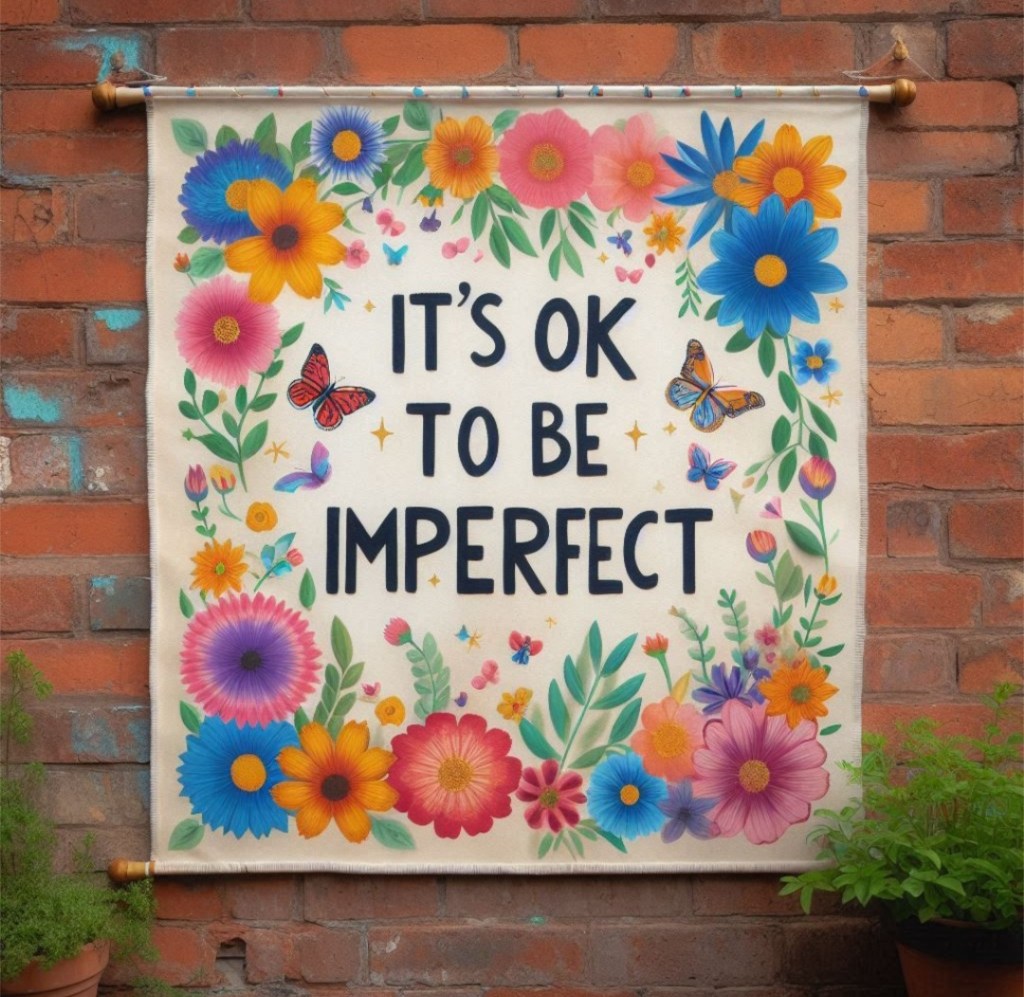
It’s Perfectly Okay to Be Imperfect

In a world that often glorifies perfection, embracing our imperfections can be a liberating and empowering experience. Here are some simple, realistic points that highlight why it’s perfectly okay to be imperfect:

1. Embrace Your Authentic Self

  • Realness Over Perfection: Embracing your imperfections allows you to be true to yourself, fostering deeper connections with others.
  • Unique Stories: Our flaws and imperfections tell our personal stories. They shape who we are and make us unique.

2. Learn and Grow

  • Mistakes as Learning Opportunities: Imperfections often come with valuable lessons. Each mistake is a chance to learn and grow, paving the way for personal development.
  • Resilience: Facing and accepting our flaws builds resilience. Overcoming challenges strengthens our character and helps us handle future setbacks more gracefully.

3. Redefine Success

  • Flawed Yet Thriving: Success doesn’t require perfection. Many successful people have faced failures and setbacks, proving that it’s our efforts and perseverance that count.
  • Setting Realistic Goals: Instead of aiming for perfection, set realistic and achievable goals. This shift in mindset leads to more sustainable success and happiness.

4. Connect with Others

  • Shared Imperfections: When we openly share our imperfections, we invite others to do the same. This creates a supportive environment where everyone feels safe to express their true selves.
  • Building Empathy: Recognizing that everyone has flaws fosters empathy and compassion, allowing us to connect more deeply with those around us.

5. Practice Self-Compassion

  • Be Kind to Yourself: Treat yourself with the same kindness and understanding that you would offer a friend. Accepting your imperfections is a form of self-love.
  • Mindfulness: Practicing mindfulness helps us stay present and appreciate ourselves as we are, rather than how we think we should be.

6. Challenge Perfectionism

  • Letting Go of High Standards: Perfectionism can be paralyzing. Challenge the notion that you must meet impossibly high standards to be worthy or successful.
  • Celebrate Progress: Focus on the progress you make rather than the end result. Celebrate small victories and the steps you take towards your goals.

7. Shift Your Perspective

  • View Imperfections as Strengths: Sometimes, our flaws can become our greatest assets. They can inspire creativity, innovation, and problem-solving.
  • A Different Lens: Try to view imperfections as a natural part of life, not something to be ashamed of. This perspective shift can lead to greater acceptance and peace.

Conclusion

Embracing imperfection is a journey, not a destination. It takes time and practice to shift our mindset, but the benefits are profound. By accepting our flaws, we open ourselves up to authenticity, growth, connection, and joy. Remember, it’s perfectly okay to be imperfect—after all, that’s what makes us human.

Breaking Free: Steps to Overcoming the Past

The journey of overcoming the past is a deeply personal and transformative process that encompasses acknowledgment, forgiveness, and personal growth. Rooted in the understanding of human behavior and the power of self-awareness, this journey offers profound insights into the complexities of our experiences and the potential for positive change.

Acknowledgment:

  • Recognize the burden of the past.
  • Confront mistakes, traumas, and regrets.
  • Embrace the discomfort of facing uncomfortable truths.

Embracing Forgiveness:

  • Forgive others and yourself.
  • Release grudges and resentments.
  • Choose liberation over bitterness.

Learning from Lessons:

  • View past experiences as opportunities for growth.
  • Extract wisdom from mistakes and missteps.
  • Embrace humility and openness to learning.

Living in the Present:

  • Cultivate mindfulness and presence.
  • Anchor yourself in the here and now.
  • Let go of past burdens and future anxieties.

Celebrating Progress:

  • Acknowledge and honor each step forward.
  • Embrace the journey’s ups and downs.
  • Recognize resilience and growth.

    Conclusion: Breaking free from the past is a journey of acknowledgment, forgiveness, learning, living in the present, and celebrating progress. Each step brings us closer to liberation and a brighter future.