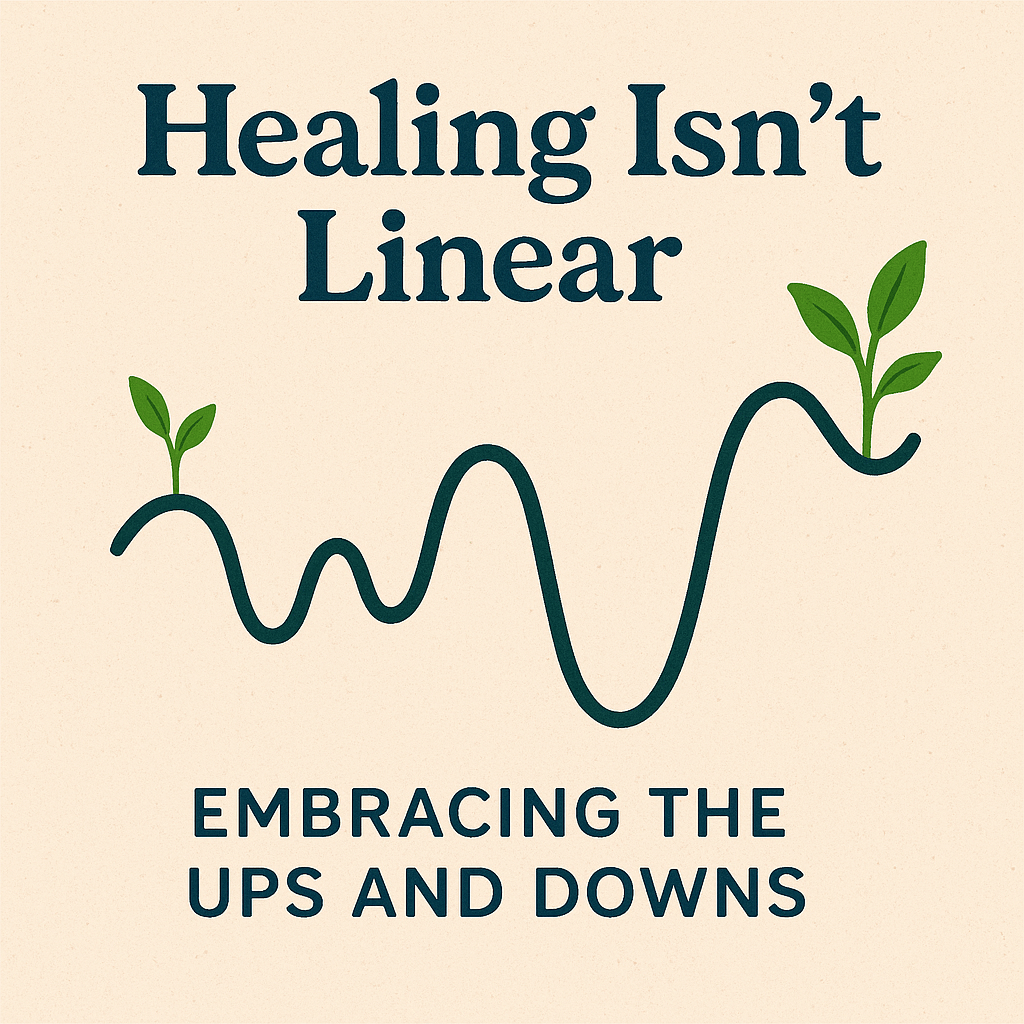
🌱 Healing Isn’t Linear: Embracing the Ups and Downs

Healing—whether emotional, mental, or physical—is not a straight path. It’s a journey filled with progress, setbacks, and moments that may feel like you’re going in circles. And that’s okay.


1. Healing Takes Time

  • Recovery doesn’t happen overnight.
  • It’s okay to take days, weeks, or even years.
  • Be patient with yourself.

2. It’s Normal to Have Good and Bad Days

  • Some days you’ll feel strong, other days you won’t.
  • Bad days don’t erase your progress.
  • Every step, even backward, is part of the journey.

3. Progress Isn’t Always Visible

  • Just because you can’t see improvement doesn’t mean it’s not happening.
  • Inner changes often take time to show on the outside.

4. Setbacks Are Not Failures

  • Falling back into old patterns is common.
  • It’s not a failure—it’s part of learning and growing.
  • Use it as a lesson, not a reason to give up.

5. Celebrate Small Wins

  • Even small steps matter—like getting out of bed, saying “no,” or smiling again.
  • Every tiny win adds up to big change.

6. Your Journey Is Unique

  • Don’t compare your healing to others.
  • Everyone heals at their own pace and in their own way.
  • What works for someone else may not work for you—and that’s okay.

7. Allow Yourself to Feel

  • Don’t hide your emotions—feel them.
  • Crying, anger, or sadness are not signs of weakness.
  • Emotions are part of processing and healing.

8. Ask for Help When You Need It

  • You don’t have to do it alone.
  • Talk to a friend, therapist, or support group.
  • Asking for help is a strength, not a weakness.

9. Be Kind to Yourself

  • Talk to yourself with love and compassion.
  • You’re doing your best, and that’s enough.
  • Replace self-criticism with encouragement.

10. Healing Is Ongoing

  • Healing doesn’t mean you’ll never feel pain again.
  • It means you learn to carry it with more strength and less fear.
  • It’s about growing through what you go through.

🌼 Final Thought:

Healing isn’t a straight line—it’s a journey of twists, turns, detours, and growth. Embrace the process, honor your progress, and trust that every step—even the tough ones—is leading you toward a stronger you.

The Power of Micro-Moments: How Small Changes Lead to Big Impact

In our fast-paced world, it’s easy to overlook the tiny moments that shape our day-to-day lives. Yet, these small shifts can lead to significant changes in our overall well-being and success. Let’s explore how focusing on “micro-moments” can create a big impact.

1. What Are Micro-Moments?

Micro-moments are small, seemingly insignificant actions or decisions that, when accumulated, lead to transformative results. They might seem trivial at first, but over time, they can reshape your habits, mindset, and life.

Quote:
“The smallest deed is better than the greatest intention.” – John Burroughs

2. The Compound Effect of Small Changes

Making small, positive changes consistently can lead to a compound effect. Just like small deposits in a bank account accumulate over time, small actions add up and create larger shifts in your life.

Example:
Reading just 10 pages of a book every day may not seem like much, but in a year, that’s over 3,650 pages—a whole library’s worth of knowledge!

Quote:
“Success is the sum of small efforts, repeated day in and day out.” – Robert Collier

3. How Micro-Moments Create Consistency

Micro-moments help build consistency. When we focus on manageable tasks rather than overwhelming goals, we stay on track and avoid burnout. A few minutes of mindfulness each morning or a short workout every day can establish long-term habits.

Example:
Start by drinking a glass of water every morning before coffee. This tiny habit sets a positive tone for the day and helps you stay hydrated.

Quote:
“It’s the little things that make the big things happen.” – John Wooden

4. Micro-Moments in Relationships

In relationships, small acts of kindness and appreciation go a long way. A genuine compliment, a simple thank you, or a quick text can strengthen bonds and improve communication.

Example:
Sending a quick “How are you?” message to a friend or family member can lift their spirits and deepen your connection.

Quote:
“Sometimes the smallest things take up the most room in your heart.” – Winnie the Pooh

5. The Power of Positive Thinking in Micro-Moments

A micro-moment can also be a shift in mindset. Changing a negative thought into a positive one, even if it’s just for a moment, can influence your day and behavior. This leads to a more optimistic outlook over time.

Example:
Instead of thinking, “I can’t do this,” try thinking, “I can try and learn.” This small shift can change your attitude toward challenges.

Quote:
“You don’t have to be great to start, but you have to start to be great.” – Zig Ziglar

6. Embracing the Moment

Sometimes, the greatest impact comes from simply being present in the moment. By embracing micro-moments of mindfulness, we can reduce stress and enhance our emotional well-being. Taking a minute to breathe deeply or smile at someone can turn your day around.

Example:
Pause for a moment to appreciate the beauty of nature around you—whether it’s a blooming flower or the sun setting. These moments of mindfulness can reset your mental state.

Quote:
“The present moment is the only moment available to us, and it is the door to all moments.” – Thich Nhat Hanh

7. Micro-Moments in Productivity

Small bursts of productivity can add up over time. Instead of waiting for the perfect conditions to start a project, start with small, actionable steps.

Example:
Set a timer for just 10 minutes to tackle a task. You’ll be surprised how much you can get done in such a short period.

Quote:
“You don’t have to be great to start, but you have to start to be great.” – Zig Ziglar

8. Small Wins Lead to Big Wins

When we accomplish small tasks, we feel a sense of achievement, boosting our motivation. These “small wins” can provide momentum to tackle bigger goals.

Example:
Completing your daily to-do list, even if it’s small, brings a sense of accomplishment and helps build confidence for tackling larger projects.

Quote:
“Success is the sum of small efforts, repeated day in and day out.” – Robert Collier


Final Thought:
Micro-moments may feel insignificant, but their cumulative power is immense. By recognizing the value of small, consistent actions, you can create profound shifts in your life. Start small, stay consistent, and watch how these moments lead to big changes over time.

Quote:
“Little things make big things happen.” – John Wooden

Mind Over Scroll: Reclaiming Focus in a Noisy World

🌐 The Problem: Constant Distraction

  • We live in an age of endless scrolling — social media, news feeds, and notifications.
  • Our attention is constantly pulled in different directions.
  • The average person checks their phone over 100 times a day.
  • This digital overload leads to reduced focus, stress, and productivity.

🧠 Why Focus Matters

  • Focus is the foundation of deep work and creative thinking.
  • Without it, tasks take longer and quality suffers.
  • Regaining control of your attention helps improve mental health, relationships, and overall well-being.

📱 Signs You’re Trapped in the Scroll Loop

  • You reach for your phone first thing in the morning.
  • You feel anxious when you’re offline.
  • You struggle to complete tasks without checking your phone.
  • You lose track of time while using social media.

🔁 The Cycle of Digital Distraction

  1. You feel bored or stressed.
  2. You open your phone for a “quick check.”
  3. Minutes turn into hours.
  4. You feel guilty and unproductive.
  5. You repeat the cycle.

🛠️ How to Reclaim Your Focus

1. Digital Declutter

  • Unfollow unnecessary accounts.
  • Turn off non-essential notifications.
  • Use “Do Not Disturb” mode during work hours.

2. Set Time Limits

  • Use built-in app timers (like Screen Time or Digital Wellbeing).
  • Try the Pomodoro technique – 25 minutes of focus, 5-minute break.

3. Create Phone-Free Zones

  • Keep your phone out of the bedroom and dining area.
  • Use a real alarm clock instead of your phone.

4. Practice Mindfulness

  • Start your day with 5 minutes of deep breathing or journaling.
  • Take short walks without your phone.

5. Replace Scrolling with Purposeful Habits

  • Read a physical book.
  • Do a puzzle or doodle.
  • Call a friend instead of texting.

🌟 Benefits of Reclaiming Focus

  • Improved concentration and memory.
  • Better sleep and reduced anxiety.
  • More meaningful connections with people.
  • Increased time for hobbies and passions.

✅ Final Thought

It’s not about quitting technology — it’s about using it mindfully.
When you choose mind over scroll, you gain back your most valuable asset: your attention.

Mastering the ‘Soft Life’: Balancing Hustle and Self-Care

What is the ‘Soft Life’?

  • The ‘Soft Life’ is about living with ease, peace, and minimal stress.
  • It doesn’t mean avoiding responsibilities but prioritizing self-care and well-being.
  • It’s a shift from the hustle culture to a balanced, mindful approach to success.

Why Balancing Hustle and Self-Care is Important

  • Hustle culture can lead to burnout and mental exhaustion.
  • A balanced life enhances productivity and happiness.
  • Self-care helps maintain energy, creativity, and motivation.

How to Master the ‘Soft Life’ While Hustling

1. Work Smart, Not Hard

✅ Set clear goals and focus on high-impact tasks.
✅ Use productivity tools like time blocking or Pomodoro technique.
✅ Delegate and outsource tasks where possible.

2. Prioritize Rest and Recovery

✅ Get enough sleep (7–9 hours per night).
✅ Take short breaks during work to refresh your mind.
✅ Schedule ‘me-time’ for relaxation and hobbies.

3. Set Boundaries

✅ Say NO to unnecessary commitments.
✅ Set work hours and stick to them.
✅ Avoid checking emails or messages during personal time.

4. Embrace Self-Care Daily

✅ Practice mindfulness or meditation.
✅ Engage in activities that bring you joy (reading, music, nature walks).
✅ Stay active—exercise, yoga, or simple stretching.

5. Choose Quality Over Quantity

✅ Focus on meaningful relationships over toxic connections.
✅ Invest in experiences rather than excessive material possessions.
✅ Simplify your lifestyle—less stress, more happiness.

6. Financial Wellness for a Soft Life

✅ Build a financial cushion (savings, emergency funds).
✅ Avoid toxic hustle for money—choose fulfilling work.
✅ Invest in passive income or side hustles for financial freedom.

Final Thoughts

  • A ‘Soft Life’ isn’t about laziness; it’s about intentional living.
  • Balance is the key—hustle when needed, but never at the cost of well-being.
  • Prioritize peace, happiness, and self-care while working towards success.

Success Without Burnout: The New Work-Life Balance

We all want to succeed, but too often, success comes at the cost of exhaustion, stress, and burnout. The good news? You don’t have to choose between success and well-being. A new approach to work-life balance is emerging—one that prioritizes both productivity and peace of mind.

Here’s how you can achieve success without burning out:

1. Redefine Success

  • Success isn’t just about long hours and hustle.
  • Focus on meaningful progress rather than overworking yourself.
  • Ask yourself: What does success really mean to you?

2. Work Smarter, Not Harder

  • Prioritize high-impact tasks instead of trying to do everything.
  • Use the 80/20 rule—focus on the 20% of tasks that bring 80% of results.
  • Batch similar tasks to save mental energy.

3. Set Clear Boundaries

  • Define work hours and stick to them.
  • Say no to tasks that drain you without adding value.
  • Avoid checking emails and messages after work hours.

4. Take Breaks (They Boost Productivity!)

  • Short breaks improve focus and creativity.
  • Try the Pomodoro Technique: Work for 25 minutes, then take a 5-minute break.
  • Step away from screens—take a walk, stretch, or meditate.

5. Prioritize Self-Care

  • Get enough sleep—it’s non-negotiable for peak performance.
  • Eat nutritious foods and stay hydrated.
  • Exercise regularly to boost energy and reduce stress.

6. Embrace Rest as a Productivity Tool

  • Resting isn’t being lazy—it helps you perform better.
  • Schedule time for hobbies, relaxation, and socializing.
  • A well-rested mind is more creative and efficient.

7. Learn to Delegate

  • You don’t have to do everything alone.
  • Delegate tasks at work and home to free up time.
  • Focus on what only you can do and let others help with the rest.

8. Disconnect to Recharge

  • Limit screen time to avoid mental exhaustion.
  • Unplug from work-related notifications during downtime.
  • Take vacations and fully disconnect from work—you’ll return more refreshed.

9. Find Joy in the Process

  • Celebrate small wins instead of just chasing big goals.
  • Enjoy the journey instead of constantly stressing about the destination.
  • Success isn’t just about achievement—it’s about enjoying life along the way.

10. Listen to Your Body and Mind

  • Pay attention to signs of burnout: fatigue, stress, lack of motivation.
  • If you feel drained, take a step back and adjust your approach.
  • Remember: Your well-being comes first—success will follow.

Final Thoughts

Success and well-being can go hand in hand. By working smarter, setting boundaries, and prioritizing rest, you can achieve your goals without burning out. The key? Sustainable productivity and a balanced life.

👉 Which of these tips do you struggle with the most? Let me know in the comments! 😊

Perfection and Procrastination: Two Sides of the Same Coin

The Drive for Perfection

  • Perfectionists often set high, unrealistic standards for themselves.
  • They aim for flawless results, fearing even minor mistakes.
  • While striving for excellence is positive, it can lead to unhealthy pressure.
  • Example: A person cleaning their room spends hours perfectly arranging bookshelves instead of tidying up the rest of the space.

“Perfection is the enemy of progress.” – Winston Churchill

How Perfection Leads to Procrastination

  • Fear of failure or producing less-than-perfect work causes delays.
  • Overthinking every detail creates a cycle of hesitation.
  • Tasks seem overwhelming, leading to avoidance rather than action.
  • Example: An employee delaying a presentation because they feel the slides aren’t visually stunning enough.

The “All or Nothing” Mindset

  • Perfectionists believe they must succeed fully or not try at all.
  • This black-and-white thinking often paralyzes progress.
  • Small steps or imperfect results are undervalued.
  • Example: A chef refusing to prepare a dish for friends because they don’t have the exact ingredients needed to replicate a professional recipe.

“Done is better than perfect.” – Sheryl Sandberg

Procrastination as a Coping Mechanism

  • Putting off tasks becomes a way to avoid the anxiety of imperfection.
  • The longer a task is delayed, the harder it becomes to start.
  • This creates a vicious cycle of guilt and stress.
  • Example: A photographer spends weeks picking the “perfect” editing software instead of working on editing photos.

Impact on Productivity

  • Perfectionists may spend excessive time on minor details, delaying completion.
  • Deadlines are missed, and opportunities may be lost.
  • Creativity and efficiency are stifled by the need for flawlessness.
  • Example: A startup founder delays pitching an idea to investors because their pitch deck isn’t “polished enough.”

Breaking the Cycle

  • Set Realistic Goals: Focus on progress, not perfection.
    • Example: A student decides to finish writing a draft essay in two hours, allowing time for edits later.
  • Embrace Imperfection: Understand that mistakes are part of growth.
    • Example: A graphic designer submits a project knowing it can always be revised based on feedback.
  • Prioritize Tasks: Tackle important tasks first and let go of perfection in less critical areas.
  • Use Time Limits: Set boundaries to avoid overanalyzing.
    • Example: A homemaker spends 30 minutes decluttering a space instead of perfecting it all day.
  • Start Small: Break tasks into manageable steps to reduce overwhelm.
    • Example: A runner starts with a 10-minute jog instead of obsessing over achieving a perfect mile time.

“Strive for progress, not perfection.” – Unknown

The Balance Between Excellence and Action

  • Strive for excellence but accept that perfection is unattainable.
  • Focus on completing tasks to the best of your ability, not flawlessly.
  • Progress, however small, is better than endless delay.
  • Example: A musician uploads their first song draft online rather than waiting to produce a studio-quality version.

Final Thoughts

  • Perfection and procrastination often coexist, feeding off each other.
  • Recognizing this link can help break free from the cycle.
  • Remember: Done is better than perfect!

Master Your Mornings: Habits of Highly Successful Individuals

How you start your morning often determines the course of your entire day. High achievers understand this and craft their mornings to align with their goals and priorities. From business tycoons to sports legends, many Indian personalities follow simple yet powerful morning routines that boost productivity, energy, and focus. By drawing inspiration from their habits, you can create your own transformative morning routine and set the stage for success.

1. Wake Up Early

  • Inspiration: Many successful people, including Tim Cook (Apple CEO) and Richard Branson (Virgin Group), wake up around 5:00 a.m. to kickstart their day.
  • Why it Works: Early mornings are peaceful and allow time for reflection, planning, and personal development. It also gives you a head start before the world gets busy.

2. Exercise for Physical and Mental Fitness

  • Inspiration: Virat Kohli, Indian cricketer, prioritizes fitness and starts his day with a workout or yoga session. Similarly, Bollywood actor Akshay Kumar swears by early morning exercise and martial arts practice.
  • Why it Works: Morning workouts boost energy levels, enhance focus, and maintain physical fitness. It sets a disciplined tone for the day.

3. Meditation and Mindfulness

  • Inspiration: Deepika Padukone, actress and mental health advocate, practices yoga and mindfulness every morning to maintain emotional balance. Oprah Winfrey and Arianna Huffington swear by meditation in the morning to ground themselves before facing the day.
  • Why it Works: Meditation helps calm the mind, reduce stress, and improve clarity, which are essential for productivity and well-being.

4. Healthy Start with Nutrition

  • Inspiration: PV Sindhu, Olympic badminton player, follows a strict and nutritious morning diet to fuel her rigorous training schedule. Chef Vikas Khanna also begins his day with fresh, wholesome food that keeps him energized.
  • Why it Works: A balanced breakfast, rich in proteins and nutrients, energizes the body and supports sustained focus throughout the day.

5. Read or Reflect for Personal Growth

  • Inspiration: Ratan Tata, industrialist and philanthropist, values quiet mornings where he reads, reflects, or plans his day. Similarly, Shiv Nadar, founder of HCL, uses early mornings for strategic thinking.
  • Why it Works: Reading or reflecting in the morning enhances knowledge, sharpens focus, and provides clarity for decision-making.

6. Gratitude and Journaling

  • Inspiration: Priyanka Chopra, global icon, practices gratitude and journals her thoughts each morning, focusing on positive intentions for the day.
  • Why it Works: Expressing gratitude promotes happiness and contentment. Journaling helps organize thoughts and track progress toward goals.

7. Plan the Day with Precision

  • Inspiration: Narayana Murthy, co-founder of Infosys, emphasizes starting the day by reviewing goals and priorities. He believes in a systematic approach to tackle daily challenges.
  • Why it Works: Having a clear plan reduces decision fatigue, saves time, and ensures that important tasks are accomplished first.

8. Stay Grounded with Spiritual Practices

  • Inspiration: Amitabh Bachchan, legendary actor, begins his day with prayer and reflection, staying connected to his values and roots.
  • Why it Works: Spiritual practices bring a sense of peace and purpose, keeping you centered amidst daily challenges.

9. Simplify with Minimalism

  • Inspiration: Dr. APJ Abdul Kalam, former President of India, was known for his simple yet impactful routines, emphasizing minimalism and focus on work.
  • Why it Works: Simplifying decisions, such as having a consistent morning routine, frees mental energy for more critical tasks.

10. Avoid Technology in the Early Hours

  • Inspiration: Sachin Tendulkar, cricket legend, prefers to keep his mornings free from gadgets to focus on himself and his family.
  • Why it Works: Avoiding technology prevents distractions and allows for a calm, focused start to the day.

Key Takeaways from Indian Achievers:

  • Start Early: Waking up early gives you time to focus on yourself and set a productive tone.
  • Embrace Fitness: Physical activity is crucial for maintaining energy and discipline.
  • Stay Mindful: Meditation or yoga promotes mental clarity and emotional balance.
  • Plan Ahead: Setting priorities ensures your energy is spent on what truly matters.
  • Stay Grounded: Spirituality or gratitude practices bring positivity and purpose to your day.

The Importance of Sleep Hygiene for Better Health and Productivity

Introduction
Sleep hygiene refers to the habits and practices that are essential for getting good quality sleep. Good sleep hygiene can significantly improve your overall well-being, mood, and productivity.

1. What is Sleep Hygiene?

  • Sleep hygiene involves creating a healthy sleep environment and maintaining habits that promote consistent, restful sleep.

2. Why Sleep is Important

  • Quality sleep is vital for physical health, mental clarity, and emotional balance. It helps the body repair itself, supports brain function, and improves mood.

3. Benefits of Good Sleep Hygiene

  • Improved sleep quality
  • Better concentration and memory
  • Enhanced mood and reduced stress
  • Stronger immune system

4. Create a Comfortable Sleep Environment

  • Keep your bedroom dark, quiet, and cool.
  • Invest in a comfortable mattress and pillows.
  • Limit distractions like electronic devices and noise.

5. Stick to a Sleep Schedule

  • Go to bed and wake up at the same time every day, even on weekends.
  • This consistency helps regulate your body’s internal clock, making it easier to fall asleep and wake up.

6. Develop a Pre – Sleep Routine

  • Engage in relaxing activities before bed, like reading, taking a warm bath, or practicing deep breathing exercises.
  • Avoid stimulating activities like watching TV or using your phone right before bed.

7. Watch What You Eat and Drink

  • Avoid large meals or caffeine close to bedtime.
  • These can interfere with your ability to fall asleep and stay asleep.

8. Get Regular Exercise

  • Regular physical activity can help you fall asleep faster and enjoy deeper sleep.
  • However, try to avoid vigorous exercise close to bedtime as it may be too stimulating.

9. Limit Naps

  • If you need to nap, keep it short (20-30 minutes) and avoid napping late in the afternoon.
  • Long or late naps can make it harder to fall asleep at night.

10. Manage Stress

  • Stress and anxiety can interfere with sleep.
  • Techniques such as meditation, yoga, or journaling can help calm your mind before bed.

11. When to Seek Help

  • If you consistently struggle with sleep despite good sleep hygiene, it may be time to consult a healthcare professional.
  • Sleep disorders, like insomnia or sleep apnea, require specialized treatment.

Conclusion
Practicing good sleep hygiene is essential for overall health and well-being. By creating a comfortable sleep environment, maintaining a regular sleep schedule, and adopting healthy habits, you can improve the quality of your sleep and enhance your daily life. Prioritize sleep hygiene to enjoy better health, mood, and productivity.

Why Experience is the Best Teacher

Introduction
Experience is often considered the best teacher. While books and lectures provide valuable knowledge, it’s through real-life experiences that we truly learn and grow. Julius Caesar’s famous quote, “Experience is the teacher of all things,” reminds us that hands-on learning is essential for personal and professional development. Here’s why experience is so important.

1. Learning by Doing

  • Practical Application: Experience allows you to apply what you’ve learned in real situations. This practical application helps solidify your understanding.
  • Hands-On Skills: Whether it’s cooking, driving, or managing a project, hands-on experience builds skills that theory alone can’t provide.

2. Lessons from Mistakes

  • Trial and Error: Making mistakes is a natural part of the learning process. Experience teaches you what works and what doesn’t.
  • Personal Growth: Mistakes are opportunities for growth. They teach resilience, problem-solving, and adaptability.

3. Building Confidence

  • Gaining Competence: As you gain experience, you become more competent in your abilities. This competence boosts your confidence.
  • Facing Challenges: Experience helps you face challenges head-on. The more you overcome, the more confident you become.

4. Understanding Nuances

  • Beyond Theory: Experience teaches you the nuances that books can’t cover. It’s the small details and subtleties that make a big difference.
  • Context Matters: Real-life situations provide context that enhances your understanding and decision-making abilities.

5. Personal Wisdom

  • Learning What Works for You: Experience helps you discover what methods, strategies, or approaches work best for you.
  • Developing Intuition: Over time, experience hones your intuition, allowing you to make quicker, more informed decisions.

6. Emotional Growth

  • Building Empathy: Experience, especially challenging ones, helps you develop empathy and understanding for others.
  • Emotional Intelligence: Dealing with different situations and people improves your emotional intelligence, which is crucial for personal and professional relationships.

7. Adaptability

  • Handling Change: Experience teaches you how to adapt to new situations, environments, and challenges.
  • Being Resourceful: The more experiences you have, the better you become at finding creative solutions to problems.

8. Lifelong Learning

  • Continuous Improvement: Experience is a lifelong teacher. Every new experience provides an opportunity to learn and grow.
  • Staying Curious: Embrace new experiences with curiosity. They keep you engaged and continuously learning.

Conclusion
Experience is indeed the teacher of all things. It provides practical knowledge, builds confidence, and fosters personal growth in ways that theoretical learning alone cannot. Embrace your experiences, learn from them, and remember that every new experience is an opportunity to grow and become better. After all, the lessons learned from experience are the ones that truly shape our lives.

Mastering the 80/20 Principle: Achieve More by Doing Less

Introduction
The 80/20 Principle, also known as the Pareto Principle, is a powerful concept that can transform the way you approach work, life, and success. It suggests that 80% of your results come from just 20% of your efforts. By focusing on the most impactful tasks, you can achieve more with less effort. Here’s how you can apply the 80/20 Principle in simple, easy steps.

Step 1: Understand the 80/20 Principle

  • Basic Idea: The 80/20 Principle means that a small portion of your activities (20%) is responsible for the majority of your outcomes (80%).
  • Example: In a business setting, 20% of your clients might generate 80% of your revenue. In your personal life, 20% of your daily activities might bring 80% of your happiness.

Step 2: Identify Your 20%

  • Review Your Activities: Make a list of all your tasks, projects, or activities.
  • Find the Key Contributors: Identify the 20% that brings the most value, whether it’s in your work, studies, or personal goals.
  • Focus on Impact: Concentrate your time and energy on these high-impact tasks. These are the tasks that move the needle the most.

Step 3: Minimize the Less Important 80%

  • Assess the Rest: Look at the remaining 80% of your activities. These usually have less impact on your overall success.
  • Eliminate or Reduce: Cut out or reduce time spent on low-impact tasks. These could be time-wasters or tasks that don’t contribute significantly to your goals.
  • Delegate if Possible: If certain low-impact tasks still need to be done, delegate them to others or find more efficient ways to handle them.

Step 4: Apply the 80/20 Principle to Different Areas

  • Work: Focus on the 20% of tasks that contribute most to your productivity, income, or job satisfaction.
  • Learning: Spend more time on the 20% of learning activities that lead to the greatest improvement in your skills or knowledge.
  • Personal Life: Identify the 20% of relationships or activities that bring you the most joy and fulfillment. Prioritize these in your daily life.

Step 5: Continuously Review and Adjust

  • Regular Assessment: Periodically review your tasks and priorities to ensure you’re still focusing on the right 20%.
  • Stay Adaptable: As your goals and life circumstances change, be ready to adjust which tasks are most important.
  • Keep Optimizing: Use the 80/20 Principle as a guide for ongoing improvement. Continuously refine your focus to achieve even better results.

Conclusion
The 80/20 Principle is a simple but effective way to enhance your productivity and focus on what truly matters. By identifying and prioritizing the 20% of tasks that yield the most significant results, you can work smarter, not harder. Remember, the key to success isn’t doing more; it’s doing more of what really counts.