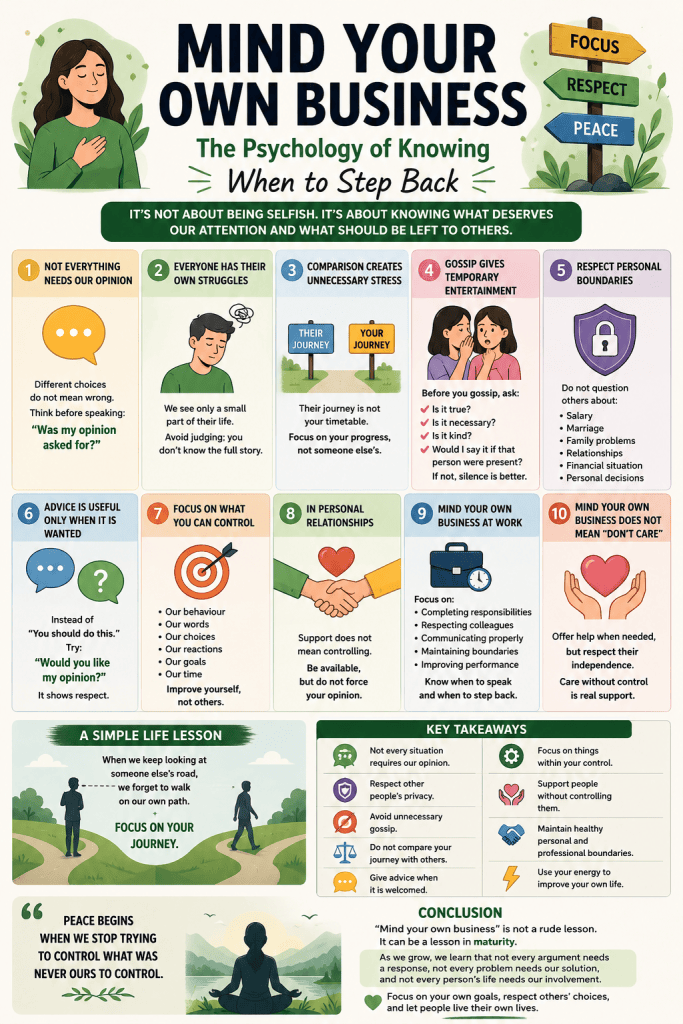
Mind Your Own Business: The Psychology of Knowing When to Step Back

In everyday life, we often become interested in other people’s choices, problems, relationships, careers, and personal matters. Sometimes we give advice because we care. But sometimes, without realizing it, we cross personal boundaries. “Mind your own business” is not about being selfish or uncaring. It is about knowing what deserves our attention and what should be left to others.

1. Not Everything Needs Our Opinion

We do not need to have an opinion about everything.

A person’s career choice, lifestyle, appearance, relationship, or personal decision may be different from ours. Different does not always mean wrong.

Think before speaking:
“Was my opinion asked for?”

2. Everyone Has Their Own Struggles

We often see only a small part of someone’s life.

A person who looks happy may be dealing with problems privately. A person who seems successful may have faced many failures before reaching that position.

Therefore, judging someone based on what we see can be unfair.

3. Comparison Creates Unnecessary Stress

Constantly watching what others are doing can make us feel that we are behind.

Someone may get a job before us.
Someone may get married earlier.
Someone may earn more.
Someone may appear more successful.

Their journey is not our timetable.

Focus on your progress instead of measuring your life against someone else’s.

4. Gossip Gives Temporary Entertainment

Talking about other people’s personal matters may feel interesting, but gossip can damage relationships and trust.

Before sharing something about another person, ask:

  • Is it true?
  • Is it necessary?
  • Is it kind?
  • Would I say it if that person were present?

If not, silence is often the better choice.

5. Respect Personal Boundaries

Everyone has a right to privacy.

We should not unnecessarily question someone about:

  • Their salary
  • Marriage
  • Family problems
  • Personal relationships
  • Financial situation
  • Personal decisions

Caring about someone does not mean having access to every part of their life.

6. Advice Is Useful Only When It Is Wanted

Good advice can help, but unwanted advice can feel like criticism.

Instead of saying:

“You should do this.”

Try:

“Would you like my opinion?”

This simple question shows respect.

7. Focus on What You Can Control

We cannot control other people’s decisions.

We can control:

  • Our behaviour
  • Our words
  • Our choices
  • Our reactions
  • Our goals
  • Our time

Life becomes easier when we spend more energy improving ourselves than correcting everyone else.

8. In Personal Relationships

Sometimes we become too involved in the lives of friends or relatives.

For example, a friend may choose to stay in a difficult relationship. We can express concern, but repeatedly forcing our opinion may push the person away.

Support does not always mean controlling. Sometimes it means being available when they need us.

9. Mind Your Own Business at Work

In the workplace, unnecessary involvement in colleagues’ personal matters can create conflict.

A professional person focuses on:

  • Completing responsibilities
  • Respecting colleagues
  • Communicating properly
  • Maintaining boundaries
  • Improving performance

Professionalism means knowing when to speak and when to step back.

10. Mind Your Own Business Does Not Mean “Don’t Care”

There is an important difference between indifference and healthy boundaries.

If someone genuinely needs help, we should offer support.

But if someone is capable of making their own decision, we should respect their independence.

Care without control is a healthy form of support.

We lose focus on our own journey.

Key Takeaways

  • Not every situation requires our opinion.
  • Respect other people’s privacy.
  • Avoid unnecessary gossip.
  • Do not compare your journey with others.
  • Give advice when it is welcomed.
  • Focus on things within your control.
  • Support people without controlling them.
  • Maintain healthy personal and professional boundaries.
  • Use your energy to improve your own life.

Conclusion

“Mind your own business” is not a rude lesson. It can be a lesson in maturity.

As we grow, we learn that not every argument needs a response, not every problem needs our solution, and not every person’s life needs our involvement.

Sometimes, the healthiest thing we can do is simply focus on our own goals, respect other people’s choices, and let people live their own lives.

“Peace begins when we stop trying to control what was never ours to control.” 🌿

The Power of Micro-Moments: How Small Changes Lead to Big Impact

In our fast-paced world, it’s easy to overlook the tiny moments that shape our day-to-day lives. Yet, these small shifts can lead to significant changes in our overall well-being and success. Let’s explore how focusing on “micro-moments” can create a big impact.

1. What Are Micro-Moments?

Micro-moments are small, seemingly insignificant actions or decisions that, when accumulated, lead to transformative results. They might seem trivial at first, but over time, they can reshape your habits, mindset, and life.

Quote:
“The smallest deed is better than the greatest intention.” – John Burroughs

2. The Compound Effect of Small Changes

Making small, positive changes consistently can lead to a compound effect. Just like small deposits in a bank account accumulate over time, small actions add up and create larger shifts in your life.

Example:
Reading just 10 pages of a book every day may not seem like much, but in a year, that’s over 3,650 pages—a whole library’s worth of knowledge!

Quote:
“Success is the sum of small efforts, repeated day in and day out.” – Robert Collier

3. How Micro-Moments Create Consistency

Micro-moments help build consistency. When we focus on manageable tasks rather than overwhelming goals, we stay on track and avoid burnout. A few minutes of mindfulness each morning or a short workout every day can establish long-term habits.

Example:
Start by drinking a glass of water every morning before coffee. This tiny habit sets a positive tone for the day and helps you stay hydrated.

Quote:
“It’s the little things that make the big things happen.” – John Wooden

4. Micro-Moments in Relationships

In relationships, small acts of kindness and appreciation go a long way. A genuine compliment, a simple thank you, or a quick text can strengthen bonds and improve communication.

Example:
Sending a quick “How are you?” message to a friend or family member can lift their spirits and deepen your connection.

Quote:
“Sometimes the smallest things take up the most room in your heart.” – Winnie the Pooh

5. The Power of Positive Thinking in Micro-Moments

A micro-moment can also be a shift in mindset. Changing a negative thought into a positive one, even if it’s just for a moment, can influence your day and behavior. This leads to a more optimistic outlook over time.

Example:
Instead of thinking, “I can’t do this,” try thinking, “I can try and learn.” This small shift can change your attitude toward challenges.

Quote:
“You don’t have to be great to start, but you have to start to be great.” – Zig Ziglar

6. Embracing the Moment

Sometimes, the greatest impact comes from simply being present in the moment. By embracing micro-moments of mindfulness, we can reduce stress and enhance our emotional well-being. Taking a minute to breathe deeply or smile at someone can turn your day around.

Example:
Pause for a moment to appreciate the beauty of nature around you—whether it’s a blooming flower or the sun setting. These moments of mindfulness can reset your mental state.

Quote:
“The present moment is the only moment available to us, and it is the door to all moments.” – Thich Nhat Hanh

7. Micro-Moments in Productivity

Small bursts of productivity can add up over time. Instead of waiting for the perfect conditions to start a project, start with small, actionable steps.

Example:
Set a timer for just 10 minutes to tackle a task. You’ll be surprised how much you can get done in such a short period.

Quote:
“You don’t have to be great to start, but you have to start to be great.” – Zig Ziglar

8. Small Wins Lead to Big Wins

When we accomplish small tasks, we feel a sense of achievement, boosting our motivation. These “small wins” can provide momentum to tackle bigger goals.

Example:
Completing your daily to-do list, even if it’s small, brings a sense of accomplishment and helps build confidence for tackling larger projects.

Quote:
“Success is the sum of small efforts, repeated day in and day out.” – Robert Collier


Final Thought:
Micro-moments may feel insignificant, but their cumulative power is immense. By recognizing the value of small, consistent actions, you can create profound shifts in your life. Start small, stay consistent, and watch how these moments lead to big changes over time.

Quote:
“Little things make big things happen.” – John Wooden