This blog is a handy guide that helps you streamline your daily tasks, save and grow your money, and get better at handling your feelings. It’s filled with easy-to-follow advice that makes a big difference in how you work, spend, and feel. Dive into our Pioneeredge.io site for practical tips and tricks that make life smoother and more fulfilling.
Life is a journey of constant change. Everything we see, feel, and experience — joy or sorrow, success or struggle — is temporary. The phrase “Nothing lasts forever” reminds us to cherish the good moments and stay strong through the bad ones.
“This too shall pass.” — Persian Proverb
💫 1. Change is the Only Constant
No matter how hard we try to hold on, life keeps moving forward. People grow, situations shift, and time heals what once felt unbreakable.
Seasons change, and so do we.
Even the strongest emotions fade or transform.
“Change is the law of life, and those who look only to the past or present are certain to miss the future.” — John F. Kennedy
🌦️ 2. Pain and Happiness Are Both Temporary
When you’re hurting, remember — your pain won’t last forever. When you’re happy, appreciate it fully — because it’s precious and fleeting. Life moves in cycles of ups and downs.
“No storm lasts forever. Hold on; be brave.” — Roy T. Bennett
🌻 3. Letting Go Brings Peace
Holding onto people, memories, or expectations can make life heavy. When we learn to let go, we make space for peace and new beginnings.
Let go with gratitude, not resistance.
Release what you cannot control.
“Sometimes letting go is an act of far greater power than defending or hanging on.” — Eckhart Tolle
🌙 4. Appreciate the Present Moment
Since nothing lasts forever, the present moment becomes priceless.
Enjoy laughter, love, and small joys while they’re here.
Be mindful — this moment is all we truly have.
“Forever is composed of nows.” — Emily Dickinson
🌺 5. Growth Comes from Endings
Endings aren’t failures; they’re transitions to something new.
Every ending carries the seed of a beginning.
Change forces us to evolve and rediscover ourselves.
“Every new beginning comes from some other beginning’s end.” — Seneca
🌤️ Conclusion
When we accept that nothing lasts forever, we stop clinging and start living. We learn to love deeply, let go gracefully, and walk forward with peace. Life becomes lighter, freer, and more meaningful when we embrace impermanence.
“The art of life lies in a constant readjustment to our surroundings.” — Kakuzo Okakura
Peace of mind is not about having a quiet life—it’s about protecting your energy. Many times, we lose our inner calm because we don’t set clear boundaries with people, work, or even ourselves. Setting boundaries is not selfish—it’s self-care.
🌿 Why Boundaries Are Important
Boundaries help you say yes to what matters and no to what drains you.
They create space for your own growth and happiness.
Without boundaries, people may take your time and energy for granted.
Protecting your energy helps you stay emotionally balanced.
🌼 Signs You Need Better Boundaries
You feel tired and drained after meeting certain people.
You often say “yes” when you want to say “no.”
You feel guilty for putting yourself first.
You don’t have time for things that bring you joy.
🌻 How to Set Healthy Boundaries
Know Your Limits – Be clear about what feels right and what doesn’t.
Learn to Say No – Respectfully decline things that exhaust you.
Communicate Clearly – Express your needs without fear.
Protect Your Time – Avoid overcommitting yourself.
Let Go of Guilt – Remember, self-care is not being rude.
🌷 Benefits of Boundaries
More mental peace and less stress.
Healthier and more respectful relationships.
More time for self-care and passions.
Stronger confidence and self-respect.
🌸 Conclusion
Boundaries are not walls—they are doors that let peace in and keep negativity out. When you protect your energy, you create space for joy, balance, and growth. Remember: Boundaries = Peace.
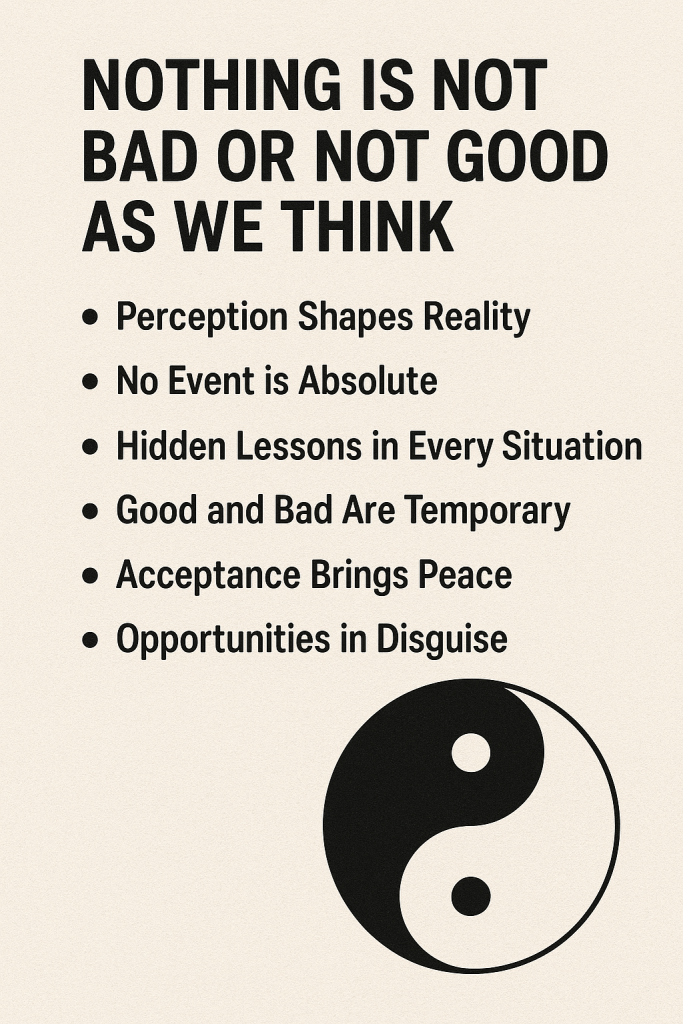
Life often surprises us with situations that we quickly label as good or bad. But in reality, many things are neither completely good nor completely bad—it is our perception that shapes how we feel about them.
Key Points
Perception Shapes Reality
What feels like a setback today may turn into a blessing tomorrow.
Example: Losing a job can seem bad, but it may lead to better opportunities.
No Event is Absolute
Life events are neutral; it is we who add the meaning.
Something that feels painful to one person might feel like growth to another.
Hidden Lessons in Every Situation
Even challenges carry lessons, strength, and wisdom.
What seems “bad” can make us stronger and more resilient.
Good and Bad Are Temporary
Joy and sorrow are like waves—they come and go.
Nothing remains permanent; every phase changes with time.
Acceptance Brings Peace
Instead of labeling things as good or bad, accepting them as experiences brings calmness.
This mindset helps us handle stress with balance.
Opportunities in Disguise
Difficulties often open doors we would never notice otherwise.
The key is to stay open-minded and patient.
Conclusion
Nothing in life is completely good or bad—it is our thoughts and judgments that create those labels. When we look at situations with an open and neutral mind, we find peace, growth, and unexpected opportunities. Life is a teacher, and every moment—whether pleasant or painful—has a purpose.
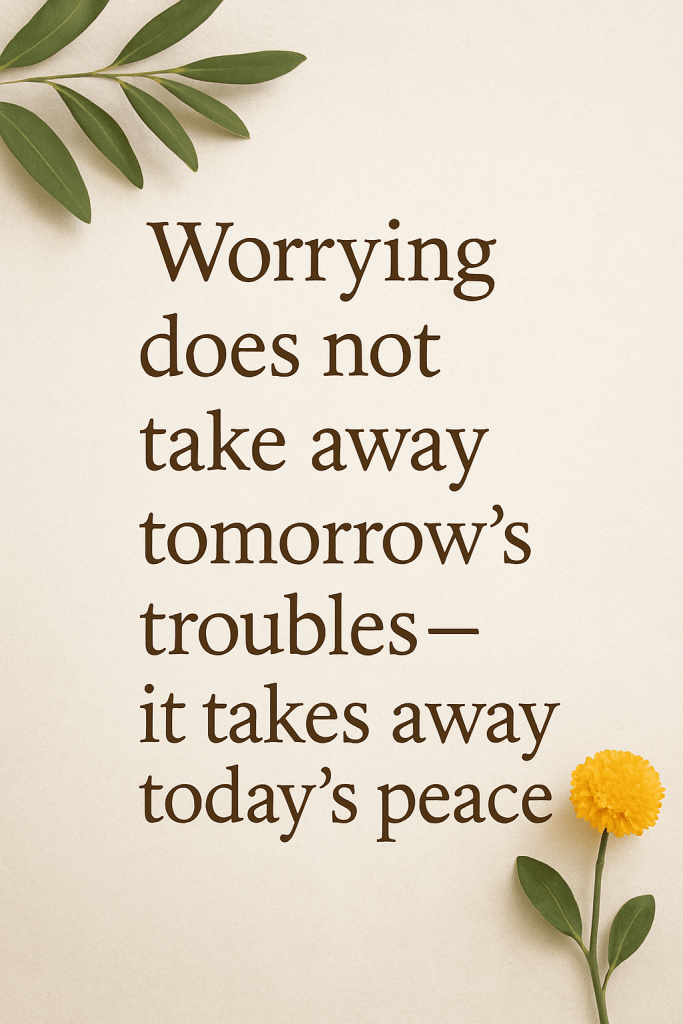
Life often feels uncertain. The future can seem unclear, and that uncertainty may cause stress or anxiety. The best way to deal with it is to bring your attention back to the present moment.
Why the Future Feels “Foggy”
We cannot control everything that lies ahead.
Overthinking future outcomes creates fear.
Expectations and “what-ifs” make the mind restless.
How to Find Peace in the Present
Focus on Your Breath – Breathing deeply calms the mind instantly.
Practice Gratitude – Note down 2–3 things you’re thankful for each day.
Do One Task at a Time – Multitasking creates stress, single-tasking brings focus.
Spend Time in Nature – Walks, fresh air, and greenery help you stay grounded.
Limit Future Worry – Replace “What if?” with “What now?”
Benefits of Living in the Now
Reduces stress and anxiety.
Improves focus and productivity.
Builds emotional resilience.
Increases happiness and inner peace.
Final Thought
The fog of the future will always exist. But when you choose to live in the present, you create clarity within yourself. Peace doesn’t come from knowing the future—it comes from embracing the moment you have right now.
Life often gives us emotions we don’t want—sadness, anger, disappointment, or fear. Many people try to hide these feelings or push them away, but doing so only makes the pain heavier. True strength lies in accepting your emotions, not suppressing them.
✨ Simple Points to Remember
Acceptance is the first step to healing – When you allow yourself to feel, you give space for recovery to begin.
Suppression creates stress – Bottled-up emotions don’t disappear; they show up as anxiety, irritability, or even health issues.
Feeling is not weakness – It takes courage to admit when you’re hurt or struggling.
Expression brings clarity – Talking, journaling, or creative outlets help you understand your emotions better.
Acceptance leads to growth – Once you face your feelings, you can learn from them and move forward stronger.
Peace comes with honesty – Pretending drains energy; being truthful with yourself brings inner calm.
You’re not alone – Everyone experiences pain, and sharing it can connect you with others who understand.
🌸 Final Thought
Remember, acceptance is not about giving up—it’s about letting go of denial. When you accept what you feel, you open the door to healing, growth, and peace.
Living a simple life is all about focusing on what truly matters and letting go of the clutter—whether it’s physical, mental, or emotional. Here’s how embracing simplicity can transform your life:
1. Less Stress, More Peace
Fewer distractions: A simplified life means fewer things to worry about. When your space is clean and clutter-free, your mind feels clearer too.
More focus on the present: With fewer worries about the past or future, you’ll feel more at ease and enjoy each moment.
Example: Without the pressure of keeping up with trends or buying the latest gadgets, you’ll feel a weight lifted from your mind, allowing you to focus on what truly brings you joy.
2. More Time for What Matters
Less busywork: Simplifying your schedule frees up time. You can say “no” to unnecessary obligations and “yes” to the things you love.
Focus on relationships: When your life isn’t filled with endless tasks, you have more time to nurture relationships with family and friends.
Example: Instead of running from one commitment to another, you can spend a leisurely afternoon with your loved ones, enjoying meaningful conversations without constantly checking the clock.
3. Better Financial Stability
Spend less, save more: A simple life encourages you to cut unnecessary spending. You’ll find yourself saving money by focusing on needs, not wants.
Avoid debt: By living within your means, you can reduce or avoid debt, creating more financial freedom and less stress.
Example: Instead of feeling pressured to buy the latest phone, you can keep using your current one and save that money for meaningful experiences, like a trip or personal growth.
4. Healthier Lifestyle
More focus on self-care: With fewer distractions, you’ll have more time to invest in your physical and mental health.
Simpler, healthier meals: Eating simple, nutritious foods instead of fast, processed meals helps you feel better and more energized.
Example: Cooking a simple, healthy meal at home not only saves you money but also improves your well-being, leaving you feeling energized and refreshed rather than sluggish.
5. Deeper Connections
More meaningful relationships: With less time spent on material pursuits, you can invest more in building genuine connections with people around you.
Real conversations: Instead of mindless scrolling on social media, you can engage in deeper, face-to-face interactions with those who matter.
Example: Instead of texting while having dinner with a friend, you’ll be fully present, which strengthens your bond and makes the experience more rewarding.
6. Freedom from Comparison
Letting go of social pressures: By living simply, you stop comparing yourself to others. You learn to appreciate what you have instead of chasing what others have.
Living for yourself: A simple life helps you focus on your own values and happiness, rather than trying to meet the expectations of others.
Example: When you no longer feel the need to buy the latest fashion trends to impress others, you find joy in dressing in a way that truly reflects your personality and makes you comfortable.
7. More Energy and Focus
Fewer decisions to make: When your life is simple, there’s less decision fatigue. By reducing clutter and focusing on essentials, your mind becomes clearer.
More productive: Simplifying your day helps you focus on what’s most important, making you more effective and less overwhelmed.
Example: Instead of feeling scattered with a long to-do list, you’ll be able to tackle the tasks that truly matter, leaving you with a sense of accomplishment.
8. Closer to Nature
Enjoying the outdoors: A simple life encourages you to spend time in nature. Whether it’s a walk in the park or a hike in the mountains, nature has a calming effect.
Living with less impact: Simplicity often means being more mindful of how you consume resources, which can lead to a more eco-friendly lifestyle.
Example: You’ll find peace by enjoying the beauty of a sunset, feeling the breeze, or appreciating a quiet moment in your garden, rather than rushing to keep up with a busy city life.
9. More Gratitude, Less Want
Appreciating the small things: When you’re not constantly chasing after more, you start to appreciate the little things—like a quiet morning, a good meal, or a kind gesture.
Contentment: Simplifying your life helps you find joy in what you already have rather than always wanting more.
Example: Instead of wishing for a bigger house, you’ll learn to love and make the most of the space you already have, creating a warm, comfortable environment that suits your needs.
10. Increased Creativity
More mental space: A simpler life clears your mind, leaving more room for creativity and innovation.
Time for hobbies: With fewer distractions, you’ll have more time and energy to explore creative outlets like painting, writing, or gardening.
Example: By cutting down on unnecessary commitments, you finally have time to pursue that photography hobby you’ve always wanted to explore, leading to greater personal fulfillment.
Final Thoughts
Living a simple life means more freedom, less stress, and deeper joy. It’s about focusing on what truly matters—whether it’s relationships, health, or inner peace. By letting go of unnecessary distractions and pressures, you’ll create space for the things that bring real value and happiness into your life. The result is a life that feels more genuine, peaceful, and fulfilling.
As I flipped through the pages of “Who Will Cry When You Die?” by Robin Sharma, I felt like I stumbled upon a hidden gem. The book is full of great ideas and simple advice that made me stop and think. In a busy world where it’s easy to get caught up in the rush, this book reminds us to slow down and appreciate what truly matters. Join me as we explore the wisdom of this book together and discover how it can help us live happier, more meaningful lives.
“Who Will Cry When You Die?” offers a roadmap for living a life of purpose, passion, and significance. By embracing the below said timeless principles and incorporating them into our daily lives, we can cultivate greater fulfillment, joy, and meaning.
Live with Purpose: Sharma emphasizes the importance of living with a sense of purpose and passion. By aligning our actions with our values and goals, we can find fulfillment and meaning in our daily lives.
Embrace Change: Change is inevitable, and embracing it is key to personal growth and development. Rather than fearing change, see it as an opportunity for learning, adaptation, and renewal.
Practice Gratitude: Cultivating an attitude of gratitude can transform our perspective and bring greater joy and contentment into our lives. Take time each day to reflect on the blessings and abundance that surround you.
Be Mindful: Mindfulness is the practice of being fully present in the moment, free from judgment or distraction. By cultivating mindfulness, we can reduce stress, enhance our focus, and deepen our appreciation for life’s simple pleasures.
Nurture Relationships: Our relationships are the cornerstone of a fulfilling life. Invest time and energy in nurturing meaningful connections with family, friends, and loved ones. Show appreciation, kindness, and compassion in your interactions.
Take Care of Yourself: Self-care is essential for overall well-being. Prioritize your physical, mental, and emotional health by adopting healthy habits, setting boundaries, and making time for activities that bring you joy and relaxation.
Seek Wisdom: Lifelong learning is a journey of discovery and growth. Be curious, explore new interests, and seek wisdom from books, mentors, and life experiences. Embrace challenges as opportunities for learning and personal development.
Leave a Legacy: Consider the impact you want to have on the world and strive to leave a positive legacy. Live with integrity, kindness, and generosity, and inspire others to do the same. Your actions have the power to ripple outwards and create lasting change.
The journey of overcoming the past is a deeply personal and transformative process that encompasses acknowledgment, forgiveness, and personal growth. Rooted in the understanding of human behavior and the power of self-awareness, this journey offers profound insights into the complexities of our experiences and the potential for positive change.
Acknowledgment:
Recognize the burden of the past.
Confront mistakes, traumas, and regrets.
Embrace the discomfort of facing uncomfortable truths.
Embracing Forgiveness:
Forgive others and yourself.
Release grudges and resentments.
Choose liberation over bitterness.
Learning from Lessons:
View past experiences as opportunities for growth.
Extract wisdom from mistakes and missteps.
Embrace humility and openness to learning.
Living in the Present:
Cultivate mindfulness and presence.
Anchor yourself in the here and now.
Let go of past burdens and future anxieties.
Celebrating Progress:
Acknowledge and honor each step forward.
Embrace the journey’s ups and downs.
Recognize resilience and growth.
Conclusion: Breaking free from the past is a journey of acknowledgment, forgiveness, learning, living in the present, and celebrating progress. Each step brings us closer to liberation and a brighter future.
Simplicity is the ultimate sophistication.” – Leonardo da Vinci
When we tidy up our stuff, it’s easier to think clearly.
Having fewer things around us helps us feel calm and focused.
It feels good to only keep what we really need.
Simple Design Looks Great:
“Beauty of style and harmony and grace and good rhythm depend on simplicity.” – Plato
Simple things like clean lines and plain colors always look nice.
If we don’t clutter up a design, it stands out and looks cool.
Simple designs can make buildings, clothes, and pictures look awesome.
Happiness in Little Things:
“Happiness is not in the mere possession of money; it lies in the joy of achievement, in the thrill of creative effort.” – Franklin D. Roosevelt
It’s the small stuff that makes us happiest.
Like a quiet moment, a walk outside, or a chat with a friend.
We don’t need fancy things to feel happy; the simple stuff works just fine.
Making Life Easier:
“Simplicity is about subtracting the obvious and adding the meaningful.” – John Maeda
Keeping our daily routines simple helps us get more done.
If we focus on the important stuff and ignore the distractions, we have more time and energy.
Doing things in a simple way can help us reach our goals faster.
Finding Peace Inside:
“Simplicity is the nature of great souls”
Simplifying our lives means not worrying about too much stuff.
When we stop trying to do everything and impress everyone, we feel more peaceful inside.
Being happy with what we have now is better than always wanting more.
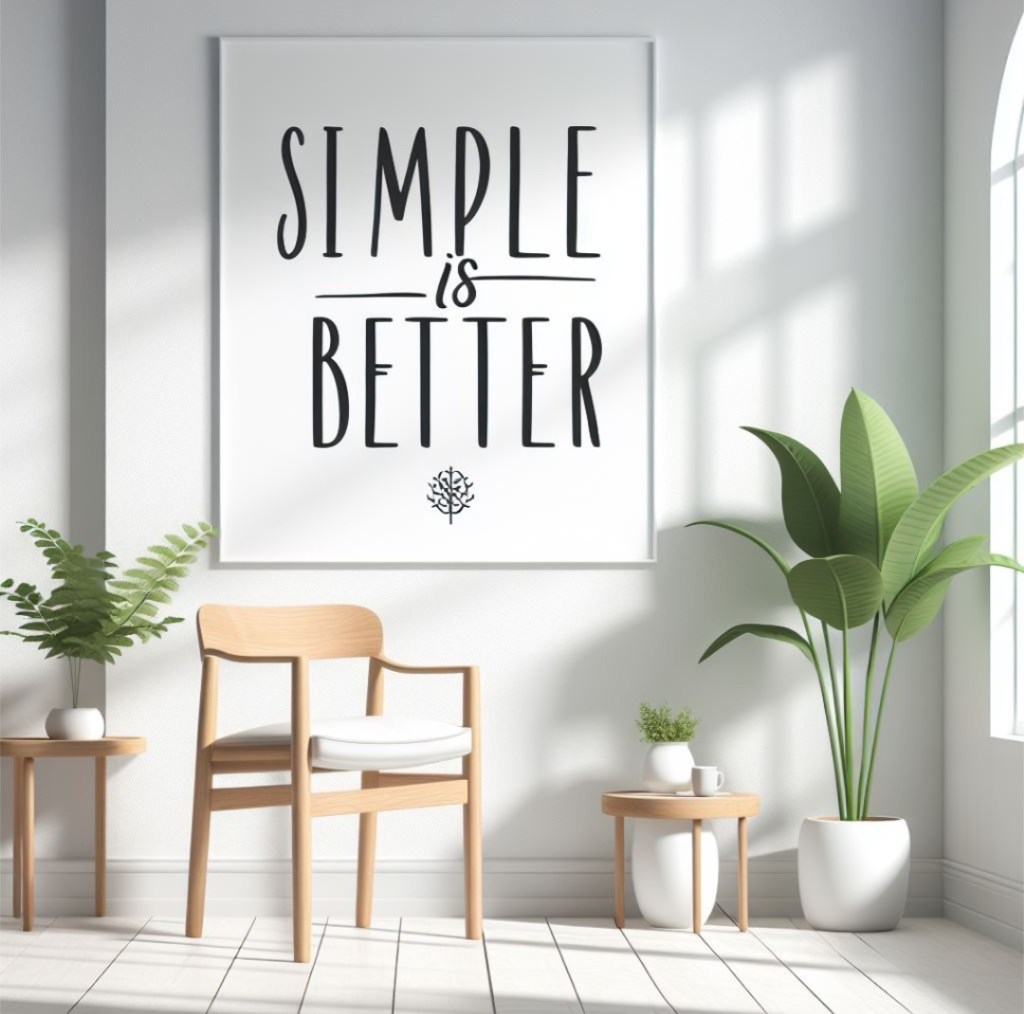
In a world that often says we need lots of fancy things to be happy, it’s good to remember that sometimes, simple is better. When we keep things simple, life feels clearer, happier, and more peaceful. So let’s take a step back, simplify, and enjoy the beauty of a simple life.



 Why the Future Feels “Foggy”
 How to Find Peace in the Present
 Benefits of Living in the Now
 Final Thought






 Pioneer Edge