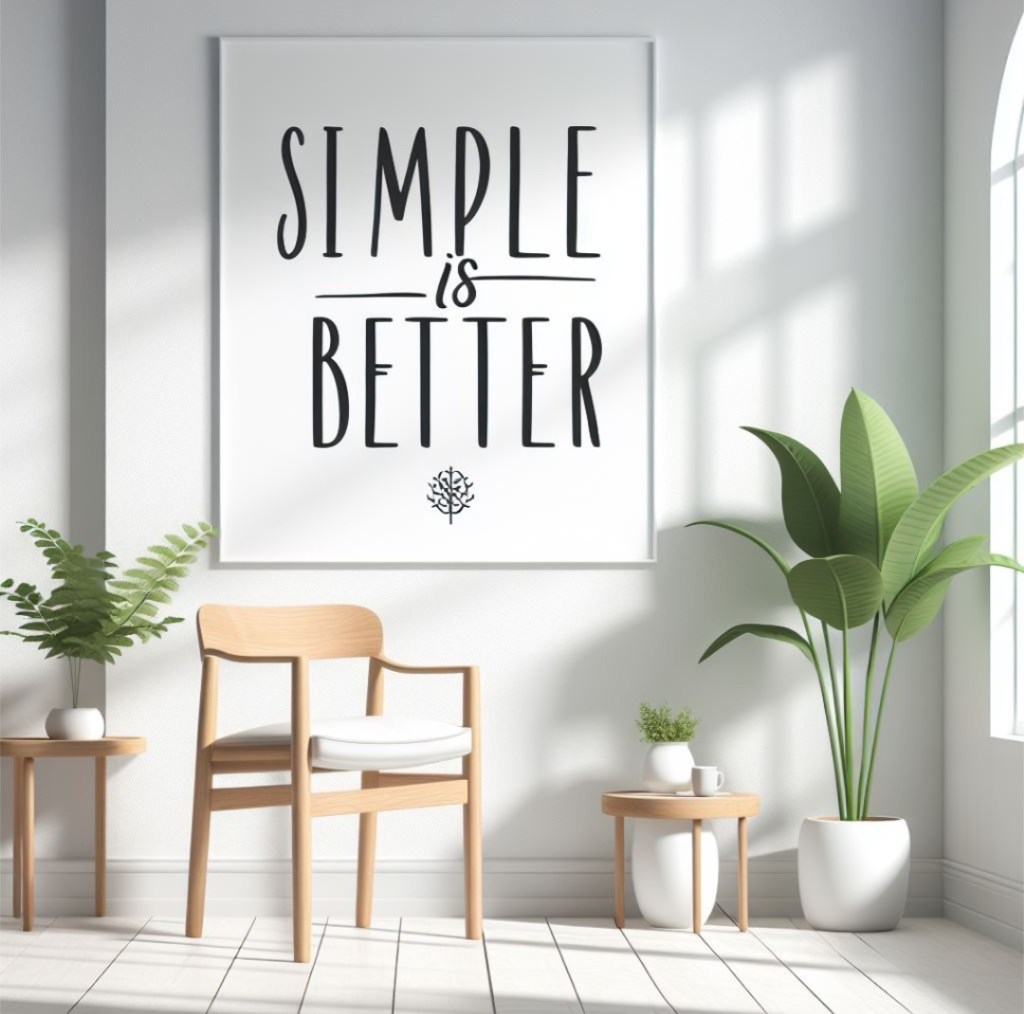
Simplicity Speaks Louder: Why Less is Truly More

Sometimes, Simple is More

  • Less Mess, Clear Mind:
  • Simplicity is the ultimate sophistication.” – Leonardo da Vinci
    • When we tidy up our stuff, it’s easier to think clearly.
    • Having fewer things around us helps us feel calm and focused.
    • It feels good to only keep what we really need.
  • Simple Design Looks Great:
  • “Beauty of style and harmony and grace and good rhythm depend on simplicity.” – Plato
    • Simple things like clean lines and plain colors always look nice.
    • If we don’t clutter up a design, it stands out and looks cool.
    • Simple designs can make buildings, clothes, and pictures look awesome.
  • Happiness in Little Things:
  • “Happiness is not in the mere possession of money; it lies in the joy of achievement, in the thrill of creative effort.” – Franklin D. Roosevelt
    • It’s the small stuff that makes us happiest.
    • Like a quiet moment, a walk outside, or a chat with a friend.
    • We don’t need fancy things to feel happy; the simple stuff works just fine.
  • Making Life Easier:
  • “Simplicity is about subtracting the obvious and adding the meaningful.” – John Maeda
    • Keeping our daily routines simple helps us get more done.
    • If we focus on the important stuff and ignore the distractions, we have more time and energy.
    • Doing things in a simple way can help us reach our goals faster.
  • Finding Peace Inside:
  • “Simplicity is the nature of great souls”
    • Simplifying our lives means not worrying about too much stuff.
    • When we stop trying to do everything and impress everyone, we feel more peaceful inside.
    • Being happy with what we have now is better than always wanting more.

In a world that often says we need lots of fancy things to be happy, it’s good to remember that sometimes, simple is better. When we keep things simple, life feels clearer, happier, and more peaceful. So let’s take a step back, simplify, and enjoy the beauty of a simple life.

Living with Purpose: Embracing Slow Living, Minimalism, and Intentional Living

  • Introduction:
    • In our modern, fast-paced world, there’s a growing desire to slow down and live more intentionally.
    • Slow living encompasses mindfulness, simplicity, and intentionality as core principles.
  • Understanding Slow Living:
    • “The essence of life is not in the great victories and grand failures, but in the simple joys of everyday living.” – Mahatma Gandhi
    • Slow living encourages us to resist the urge to constantly rush through life and instead focus on being present and mindful in each moment.
    • It involves savoring experiences, cultivating gratitude, and prioritizing meaningful connections over material possessions or external achievements.
  • The Essence of Minimalism:
    • “Simplicity is the ultimate sophistication.” – N. R. Narayana Murthy
    • Minimalism is a lifestyle choice that advocates for intentional living with fewer material possessions and distractions.
    • By decluttering our physical and mental spaces, we create room for clarity, creativity, and peace of mind.
  • Benefits of Intentional Living:
    • “The mind is everything. What you think, you become.” – Swami Vivekananda
    • Intentional living involves aligning our actions with our values and priorities to live a more purposeful life.
    • It empowers us to make conscious choices, set meaningful goals, and cultivate habits that support our well-being and personal growth.
  • Practical Tips for Embracing Slow Living:
    • “Take rest; a field that has rested gives a bountiful crop.” – Osho
    • Prioritize self-care by incorporating practices like meditation, journaling, or spending time in nature.
    • Simplify your surroundings by decluttering your home, digital devices, and schedule to reduce overwhelm and create space for what truly matters.
    • Cultivate mindfulness by being fully present in each moment, practicing gratitude, and embracing the beauty of simplicity.
    • Set boundaries to protect your time and energy, saying no to activities or commitments that don’t align with your values or priorities.
  • Embracing slow living, minimalism, and intentional living offers a transformative path to a more fulfilling and meaningful life. By adopting these principles and practices, we can cultivate greater happiness, contentment, and inner peace amidst the chaos of modern life.

Simplified Mindfulness: Easy Techniques for Everyday Wellness

In today’s fast-paced world, finding moments of peace and tranquility can feel like a luxury. However, integrating mindfulness practices into our daily lives can bring about a profound sense of calm, clarity, and well-being. Mindfulness, rooted in ancient traditions like meditation and yoga, has gained popularity in recent years as a powerful tool for managing stress, enhancing focus, and fostering inner peace. In this blog, we’ll explore easy mindfulness techniques that are applicable to all, regardless of experience level, along with inspiring quotes and practical examples to guide you on your journey to greater mindfulness.

1. Mindful Breathing:

  • Technique: Find a comfortable seated position, close your eyes, and bring your attention to your breath. Notice the sensations of each inhale and exhale, without trying to control or change your breathing.
  • Quote: “Feelings come and go like clouds in a windy sky. Conscious breathing is my anchor.” – Thich Nhat Hanh
  • Example: Take a few moments during your daily commute or before a stressful meeting to practice mindful breathing. Notice how it helps you feel more centered and grounded amidst the chaos of the day.

2. Body Scan Meditation:

  • Technique: Lie down or sit comfortably, and systematically scan your body from head to toe, noticing any sensations or areas of tension without judgment.
  • Quote: “Your body is precious. It is our vehicle for awakening. Treat it with care.” – Buddha
  • Example: Incorporate a body scan meditation into your bedtime routine to release tension and prepare your body for restful sleep. Notice how tuning into your body can promote relaxation and ease.

3. Mindful Walking:

  • Technique: Take a leisurely walk outdoors, paying attention to each step you take, the sensations in your feet, and the sights and sounds around you.
  • Quote: “Walk as if you are kissing the Earth with your feet.” – Thich Nhat Hanh
  • Example: Instead of rushing through your lunch break, go for a mindful walk in nature. Notice the beauty of your surroundings and the sense of connection it brings.

4. Gratitude Practice:

  • Technique: Take a few moments each day to reflect on three things you’re grateful for, whether big or small, and savor the feelings of appreciation.
  • Quote: “Gratitude turns what we have into enough.” – Melody Beattie
  • Example: Keep a gratitude journal by your bedside and write down three things you’re grateful for each night before going to sleep. Notice how this simple practice shifts your perspective and uplifts your mood.

5. Mindful Eating:

  • Technique: Slow down and savor each bite of your meal, paying attention to the flavors, textures, and sensations in your mouth.
  • Quote: “When you eat, just eat. When you walk, just walk. When you listen, just listen. When you breathe, just breathe.” – Zen Proverb
  • Example: Instead of multitasking while eating, dedicate one meal a day to mindful eating. Notice how it enhances your enjoyment of food and fosters a deeper connection to your body’s hunger and fullness cues.

Incorporating these simple mindfulness techniques into your daily routine can have profound benefits for your mental, emotional, and physical well-being. Remember that mindfulness is a practice, and like any skill, it requires patience, consistency, and self-compassion. By cultivating moments of mindfulness throughout your day, you can cultivate greater presence, peace, and joy in your life.

As Jon Kabat-Zinn famously said, “You can’t stop the waves, but you can learn to surf.” Embrace mindfulness as your surfboard, guiding you gracefully through the ebbs and flows of life.