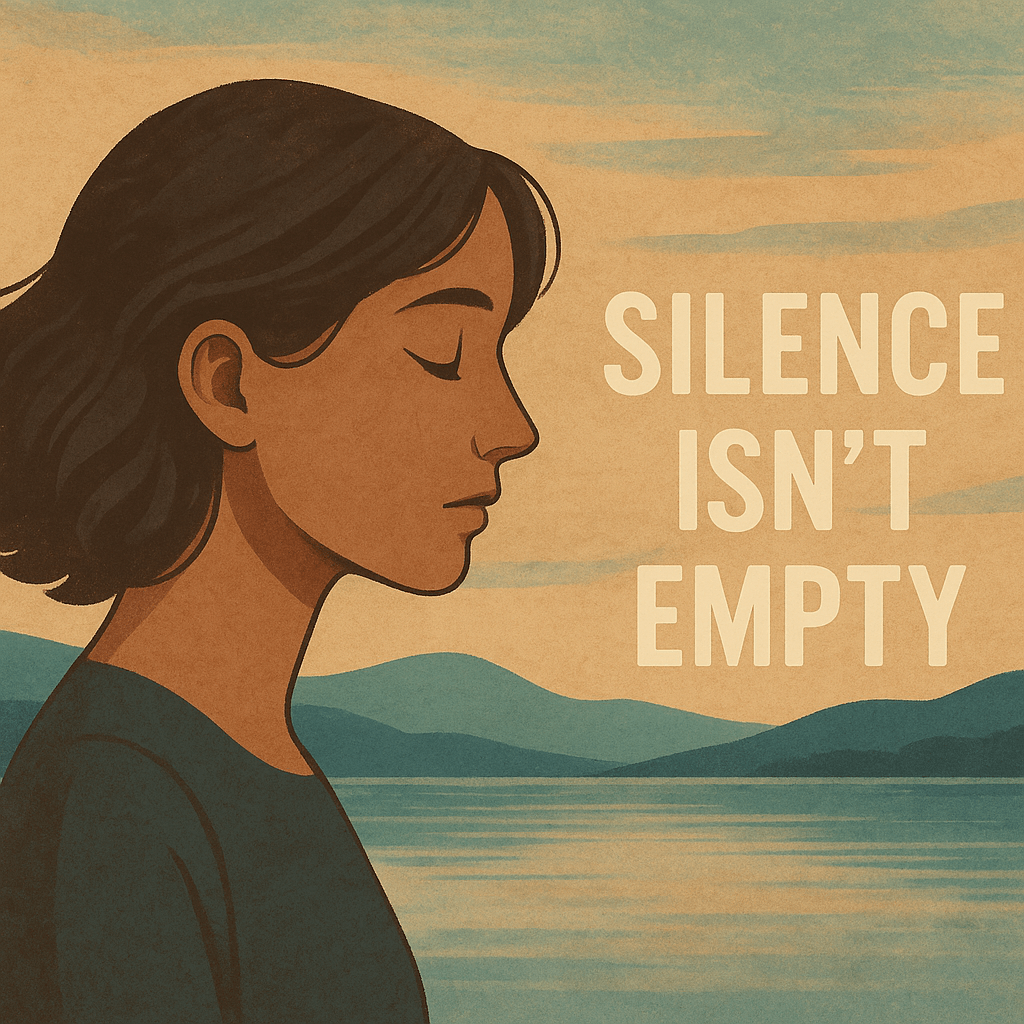
Silence Isn’t Empty

We often think of silence as just the absence of noise. But silence is much more than that. It can be a powerful tool for peace, clarity, and personal growth.


🌿 1. Silence helps you think clearly

  • It gives your mind space to process thoughts.
  • Without distractions, you can understand what’s really going on inside you.

🧠 2. Silence reduces stress

  • A quiet moment can calm your mind.
  • It helps slow down your breathing and heart rate.

🤫 3. Silence improves focus

  • In silence, you concentrate better.
  • Tasks are easier to complete without background noise.

💭 4. Silence brings inner peace

  • When everything around you is quiet, your thoughts settle.
  • You begin to feel more at ease and grounded.

🧘 5. Silence connects you with yourself

  • You can hear your inner voice.
  • It helps you understand your true feelings and desires.

🎯 6. Silence improves decision-making

  • Taking a silent pause before acting leads to better choices.
  • You avoid reacting in anger or stress.

👂 7. Silence makes you a better listener

  • By staying quiet, you really hear what others are saying.
  • It shows respect and builds stronger relationships.

💡 8. Silence sparks creativity

  • When the world is quiet, your imagination becomes active.
  • Great ideas often come during silent moments.

🙏 9. Silence brings spiritual clarity

  • Many spiritual traditions use silence to connect with a higher power.
  • It leads to deeper awareness and mindfulness.

🕊️ 10. Silence is healing

  • It refreshes your mind and soul.
  • Just a few minutes of silence a day can improve your well-being.

Conclusion

Silence isn’t empty—it’s full of meaning. In a noisy world, silence is a gift. It allows you to pause, reflect, and grow. Try sitting in silence for just a few minutes each day. You’ll be surprised how much you discover—about life, and about yourself.

Create a Better Version of Yourself

Introduction
Life is a journey of constant growth and transformation. The desire to become a better version of yourself is not about perfection—it’s about progress. It’s about making small, meaningful changes that lead to a happier, healthier, and more fulfilled life. Self-improvement doesn’t require monumental shifts; rather, it’s the result of simple, consistent actions that align with your values and aspirations.

Strategies for Self-Improvement

  1. Set SMART Goals
    • Make your goals Specific, Measurable, Achievable, Relevant, and Time-bound.
    • Example: Instead of “Get fit,” say, “I will exercise for 30 minutes, 3 times a week, for the next month.”
  2. Read 10 Pages a Day
    • Dedicate a small amount of time daily to reading books or articles.
    • Reading helps expand your knowledge and can be a source of motivation.
  3. Exercise for 20 Minutes
    • Start with short workouts—walk, jog, or do home exercises.
    • Regular exercise not only improves health but boosts your mood and energy.
  4. Practice Gratitude Daily
    • Each day, write down three things you’re grateful for.
    • This simple habit helps shift focus from problems to blessings.
  5. Use the Two-Minute Rule
    • If a task will take less than two minutes, do it immediately.
    • This helps build momentum and keeps your to-do list from piling up.
  6. Limit Social Media Time
    • Set specific time limits on how long you’ll spend on social media.
    • Instead, use that time for personal development activities, like journaling or learning.
  7. Create a Morning Routine
    • Start your day with a few positive habits, like stretching, making your bed, and having a healthy breakfast.
    • A solid morning routine sets a productive tone for the day.
  8. Find an Accountability Partner
    • Share your goals with someone who can encourage and check in on your progress.
    • This helps you stay motivated and committed to your goals.
  9. Practice Deep Breathing or Meditation
    • Dedicate a few minutes each day to relax your mind.
    • Simple breathing exercises or meditation can reduce stress and improve focus.
  10. Focus on One Task at a Time
    • Avoid multitasking; give your full attention to the task at hand.
    • This increases productivity and reduces mental fatigue.
  11. Invest in Learning New Skills
    • Spend 30 minutes a day on a skill you want to improve, like learning a language or coding.
    • Take advantage of free online courses to enhance your knowledge.
  12. Reflect Weekly
    • At the end of each week, reflect on your progress and what could be improved.
    • Adjust your plans as needed to stay on track.

Conclusion
Creating a better version of yourself doesn’t happen overnight, but with dedication and consistency, the small steps you take each day will lead to significant transformations over time. Focus on your journey, celebrate your progress, and remember that every effort counts. You already have the potential to grow—start today and embrace the process of becoming your best self!

Your Only Rival: Yesterday’s You

In a world driven by comparison and competition, it’s easy to get caught up in what others are doing. However, the most meaningful competition is the one you have with yourself. Let’s explore why focusing on personal growth rather than comparing yourself to others is the key to success and fulfillment.

1. Understanding Personal Growth

  • Personal growth is about becoming a better version of yourself.
  • It involves setting goals, overcoming challenges, and developing new skills that matter to you.

2. The Pitfalls of Comparison

  • Constantly comparing yourself to others can lead to feelings of inadequacy.
  • Everyone’s journey is different; what works for someone else might not work for you.

3. Setting Your Own Standards

  • Define what success means for you, based on your values and aspirations.
  • Focus on personal benchmarks that reflect your individual goals and progress.

4. Reflecting on Your Journey

  • Take time to reflect on where you were yesterday and how far you’ve come.
  • Keeping a journal can help track your progress and highlight areas for improvement.

5. Embracing Small Wins

  • Celebrate small achievements along the way; they contribute to your overall growth.
  • Recognizing progress, no matter how minor, fosters motivation and confidence.

6. Learning from Setbacks

  • Instead of viewing setbacks as failures, see them as opportunities to learn.
  • Each challenge faced and overcome strengthens your resilience and determination.

7. Fostering a Growth Mindset

  • Adopt a mindset that values learning and growth over perfection.
  • This perspective allows you to embrace challenges and view mistakes as part of the process.

8. Personal Accountability

  • Hold yourself accountable for your progress rather than focusing on external validation.
  • Accountability encourages you to take ownership of your growth journey.

9. Investing in Yourself

  • Prioritize self-care, education, and experiences that enrich your life.
  • Investing in yourself leads to personal fulfillment and long-term success.

10. The Journey Matters More Than the Destination

  • The path to self-improvement is ongoing; it’s about the journey, not just the end goals.
  • Embrace each step, learning and evolving along the way.

Final Thought

The only true competition is with yesterday’s you. Focus on your journey, celebrate your progress, and strive to be better every day. By competing with yourself, you unlock your potential and pave the way for a fulfilling and successful life.

What’s Meant to be Yours Will be Yours

Life doesn’t always go the way we plan. Sometimes we chase after things, hoping they’ll bring us happiness, only to find that they slip away. The idea that “what’s meant to be yours will be yours” reminds us to let go of constant control and trust that what’s right for us will come naturally.


1. Let Go of the Need for Control

  • Trying to control everything leads to stress and disappointment.
  • Life has its own timing—things come when they’re supposed to, so relax and trust the process.
  • “Sometimes, things have to go wrong in order to go right.” – Sherrilyn Kenyon

2. Find Peace in the Present

  • Focusing on the future too much can create anxiety.
  • Believing that what’s meant for you will come helps you enjoy the present moment more.

3. Accept Setbacks as Redirection

  • Not getting what you want can feel disappointing, but it often opens doors to better things.
  • “You must learn to let go. Release the stress. You were never in control anyway.” – Steve Maraboli

4. Be Patient

  • Good things take time. Rushing often makes us miss what’s truly right for us.
  • “Patience is not the ability to wait, but the ability to keep a good attitude while waiting.” – Joyce Meyer

5. Be Yourself

  • When you’re authentic, you naturally attract people and opportunities that fit who you are.
  • “What you seek is seeking you.” – Rumi

6. Trust Life’s Flow

  • Some things just fall into place without any effort. This is life’s way of showing you that it’s meant to be.
  • Let life flow and trust that the right things will come.

7. Practice Gratitude

  • Being thankful for what you have makes you more open to new opportunities.
  • “Gratitude turns what we have into enough.” – Aesop

Self-Awareness: Understanding Yourself for Personal Growth

What Is Self-Awareness?

  • Quote: “Knowing yourself is the beginning of all wisdom.” – Aristotle
  • Self-awareness is the ability to recognize and understand your own thoughts, emotions, and behaviors.
  • It helps you identify how you react to different situations and how others perceive you.

Why Self-Awareness Is Important

  • Quote: “When I discover who I am, I’ll be free.” – Ralph Ellison
  • It helps you make better decisions, build healthier relationships, and manage emotions effectively.
  • Example: If you realize that stress makes you impatient, you can take steps to manage stress before it affects your behavior.

Types of Self-Awareness

  • Quote: “What we perceive about ourselves is greatly a reflection of how we will end up living our lives.” – Stephen Richards
  • Internal Self-Awareness: Understanding your emotions, values, and goals.
    • Example: Knowing that you value honesty can help you avoid situations where you feel pressured to be dishonest.
  • External Self-Awareness: Understanding how others see you.
    • Example: If people see you as quiet, but you think of yourself as outgoing, you may need to align your self-perception with your actions.

Benefits of Self-Awareness

  • Quote: “Self-awareness gives you the capacity to learn from your mistakes as well as your successes.” – Lawrence Bossidy
  • Improved Emotional Control: You can respond to situations more calmly.
    • Example: When you’re aware that certain topics make you angry, you can prepare to stay calm during difficult conversations.
  • Better Relationships: Understanding your own needs and recognizing others’ emotions improves communication.
    • Example: Being aware of your need for personal space helps you set boundaries in relationships.

How to Develop Self-Awareness

  • Quote: “The unexamined life is not worth living.” – Socrates
  • Reflect on Your Feelings: Take time to think about your emotions and why you feel them.
    • Example: After a tough day, reflect on why you felt upset and how you handled it.
  • Seek Feedback: Ask trusted friends or colleagues how they perceive you.
    • Example: If a colleague says you seem stressed, it might help you realize you’re overwhelmed and need to make changes.
  • Practice Mindfulness: Stay present and observe your thoughts without judgment.
    • Example: During a stressful moment, pause and notice your thoughts instead of reacting immediately.

Common Obstacles to Self-Awareness

  • Denial: Refusing to acknowledge your flaws or emotions.
    • Example: Telling yourself you’re always right, even when faced with feedback that suggests otherwise.
  • Fear of Self-Reflection: Avoiding deeper thinking because you’re afraid of what you’ll find.
    • Example: Not wanting to admit that you may need to make uncomfortable changes in your life.

How Self-Awareness Leads to Growth

  • Quote: “Self-awareness is not just relaxation and not just meditation. It must combine relaxation with activity and dynamism. Technology can aid that.” – Deepak Chopra
  • Recognizing your strengths and weaknesses helps you set realistic goals and improve over time.
  • Example: If you’re aware that procrastination is a weakness, you can work on time management skills to overcome it.

Conclusion

  • Quote: “Your visions will become clear only when you can look into your own heart. Who looks outside, dreams; who looks inside, awakes.” – Carl Jung
  • Self-awareness is the key to personal growth and better relationships.
  • By understanding yourself, you can make positive changes in your life, handle challenges more effectively, and become the best version of yourself.

For Whom Are You Working? Understanding Your Work Purpose

In our busy lives, it’s easy to get caught up in daily tasks and forget to reflect on the bigger picture. One essential question to ask yourself is: “For whom am I working?” Understanding this can bring clarity and motivation to your professional life. Here are some key points to consider:

1. Yourself

  • Personal Growth: Every job or career move should contribute to your personal and professional development. Whether it’s gaining new skills, expanding your knowledge, or achieving personal goals, remember that you are investing in yourself.
  • Financial Stability: Your work provides the means to support your lifestyle and achieve financial security. This stability is crucial for your peace of mind and future planning.

2. Your Family

  • Support System: Many people work to provide for their families. This includes ensuring that your loved ones have what they need for a comfortable and secure life.
  • Role Model: By working hard and pursuing your goals, you set a positive example for your children and other family members. Your dedication can inspire them to pursue their own dreams and work hard.

3. Your Employer

  • Company Success: Your efforts contribute to the overall success and profitability of your company. When you perform well, it helps the business grow, which can lead to more opportunities for you and your colleagues.
  • Team Collaboration: Working for your employer also means supporting your team. Your contributions help create a productive and positive work environment.

4. Your Community

  • Economic Contribution: Your work helps stimulate the local economy by providing services, creating jobs, and paying taxes. This, in turn, supports public services and infrastructure.
  • Social Impact: Depending on your profession, your work may directly benefit the community. For example, teachers, healthcare workers, and public servants all play vital roles in improving society.

5. Your Future Self

  • Long-Term Goals: Think about where you want to be in the next five, ten, or twenty years. Your current work should align with your long-term goals and aspirations.
  • Retirement: Consider how your current work impacts your retirement plans. Contributing to a retirement fund and ensuring you have a sustainable career path is crucial for your future well-being.

Reflect and Reevaluate

Periodically taking the time to reflect on “for whom you are working” can help ensure that your efforts are aligned with your values and goals. It can also provide a renewed sense of purpose and motivation in your professional life.

By understanding the impact of your work on yourself, your family, your employer, your community, and your future, you can make more informed decisions and find greater satisfaction in your career.

Breaking Free: Steps to Overcoming the Past

The journey of overcoming the past is a deeply personal and transformative process that encompasses acknowledgment, forgiveness, and personal growth. Rooted in the understanding of human behavior and the power of self-awareness, this journey offers profound insights into the complexities of our experiences and the potential for positive change.

Acknowledgment:

  • Recognize the burden of the past.
  • Confront mistakes, traumas, and regrets.
  • Embrace the discomfort of facing uncomfortable truths.

Embracing Forgiveness:

  • Forgive others and yourself.
  • Release grudges and resentments.
  • Choose liberation over bitterness.

Learning from Lessons:

  • View past experiences as opportunities for growth.
  • Extract wisdom from mistakes and missteps.
  • Embrace humility and openness to learning.

Living in the Present:

  • Cultivate mindfulness and presence.
  • Anchor yourself in the here and now.
  • Let go of past burdens and future anxieties.

Celebrating Progress:

  • Acknowledge and honor each step forward.
  • Embrace the journey’s ups and downs.
  • Recognize resilience and growth.

    Conclusion: Breaking free from the past is a journey of acknowledgment, forgiveness, learning, living in the present, and celebrating progress. Each step brings us closer to liberation and a brighter future.

    Love Yourself: Embracing You for You

    In a world where we often look for happiness outside ourselves, it’s easy to forget the importance of loving who we are. But loving yourself isn’t just a nice idea—it’s essential for your well-being.

    Being Kind to Yourself: Treating You Like a Friend

    Loving yourself starts with being kind to yourself—just like you would to a friend. It means being gentle when you make mistakes, understanding when things don’t go as planned, and forgiving yourself when you need it most.

    Simple Thoughts on Kindness:

    • “You deserve to be treated with kindness, just like anyone else.”
    • “When you make a mistake, it’s okay. Everyone does sometimes.”

    Finding Peace Inside: Feeling Good About Who You Are

    When you love yourself, you feel peaceful inside. It’s like being okay with who you are, flaws and all. You find things that make you happy and do them because they bring you joy.

    Simple Ways to Find Peace:

    • “Take a deep breath and feel calm inside.”
    • “Do things that make you smile, like drawing, playing, or spending time with loved ones.”

    Being Your Own Cheerleader: Encouraging Yourself to Keep Going

    Loving yourself means being your biggest cheerleader. You encourage yourself to keep going, even when things get tough. You believe in yourself and your abilities.

    Simple Words of Encouragement:

    • “You can do it! Believe in yourself.”
    • “Even if it’s hard, keep going. You’re stronger than you think.”

    Being Real: Accepting Yourself Just as You Are

    When you love yourself, you accept yourself for who you are—no pretending, no hiding. You embrace your strengths and weaknesses, knowing they make you unique.

    Simple Ways to Accept Yourself:

    • “It’s okay to be different. That’s what makes you special.”
    • “Be proud of who you are, quirks and all.”

    Celebrating You: Doing Things You Love Because You Love You

    Loving yourself means celebrating who you are. You do things that make you happy because you love yourself enough to want joy in your life. Whether it’s dancing, singing, or just being silly, you do it because it feels good.

    Simple Ways to Celebrate:

    • “Dance like nobody’s watching because it makes you happy.”
    • “Sing your favorite song at the top of your lungs because it brings you joy.”

    You’re Worth It

    Loving yourself isn’t always easy, but it’s worth it. When you treat yourself with kindness, find peace inside, encourage yourself, accept who you are, and celebrate yourself, you’ll discover a whole new level of happiness. So, remember, you’re worth it—every bit of love and kindness you give yourself makes a difference.

    Simple Words of Wisdom:

    • “You deserve love and kindness, especially from yourself.”
    • “Believe in yourself and all that you are. You are amazing just the way you are.”

    Let’s journey together towards self-love, one step at a time, because you deserve to love yourself—always.

    Investing in Yourself: Personal Growth Strategies for an Uncertain Future

    In a world marked by constant change and unpredictability, one of the most valuable investments you can make is in yourself. Personal growth not only enhances your skills and capabilities but also equips you with the resilience and adaptability needed to thrive in an uncertain future. In this blog post, we’ll explore the importance of investing in yourself, accompanied by famous quotes and practical techniques to foster personal growth and development.


    Why Invest in Yourself?
    Investing in yourself is not only about acquiring new skills or knowledge but also about nurturing your well-being and maximizing your potential. As the famous entrepreneur Jim Rohn once said, “The only way to attract better is to become better yourself.” Here are some reasons why investing in yourself is essential for navigating an uncertain future:

    1. Enhanced Resilience: Personal growth equips you with the resilience needed to bounce back from setbacks and adapt to change effectively.
    2. Increased Confidence: As you invest in yourself and witness your growth, your confidence levels naturally soar, enabling you to tackle challenges with greater assurance.
    3. Expanding Opportunities: Continuous learning and development open up new opportunities and avenues for personal and professional advancement.
    4. Improved Well-being: Engaging in activities that promote personal growth, such as mindfulness practices or hobbies, can enhance your overall well-being and quality of life.

    Famous Quotes on Personal Growth:

    • “The only person you should try to be better than is the person you were yesterday.” – Unknown
    • “Invest in yourself. It pays the best interest.” – Benjamin Franklin
    • “The beautiful thing about learning is that no one can take it away from you.” – B.B. King

    Techniques for Personal Growth:

    1. Set Clear Goals: Define specific, achievable goals that align with your values and aspirations. Break them down into smaller, actionable steps to track your progress effectively.
    2. Continuous Learning: Cultivate a growth mindset by embracing opportunities for learning and development. This could involve reading books, taking online courses, attending workshops, or seeking mentorship.
    3. Practice Self-Reflection: Set aside time for self-reflection to assess your strengths, weaknesses, and areas for improvement. Journaling or meditation can be valuable tools for gaining clarity and insight into your personal growth journey.
    4. Step Outside Your Comfort Zone: Challenge yourself to step outside your comfort zone regularly. Growth often occurs when we push ourselves beyond familiar boundaries and embrace new experiences.
    5. Prioritize Self-Care: Remember to prioritize self-care as part of your personal growth journey. This includes taking care of your physical, emotional, and mental well-being through activities like exercise, healthy eating, and stress management techniques.
    6. Seek Feedback: Welcome constructive feedback from others as an opportunity for growth and learning. Actively seek input from mentors, peers, or trusted individuals to gain different perspectives and identify areas for improvement.

    Conclusion:
    Investing in yourself is not a one-time event but an ongoing commitment to personal growth and development. By embracing this journey and dedicating time and effort to nurture your skills, talents, and well-being, you are equipping yourself with the tools and resilience needed to navigate an uncertain future with confidence and clarity. As you embark on this journey, remember the words of Lao Tzu: “The journey of a thousand miles begins with one step.” Start investing in yourself today, and watch as you grow into the best version of yourself, ready to tackle whatever the future may hold.