This blog is a handy guide that helps you streamline your daily tasks, save and grow your money, and get better at handling your feelings. It’s filled with easy-to-follow advice that makes a big difference in how you work, spend, and feel. Dive into our Pioneeredge.io site for practical tips and tricks that make life smoother and more fulfilling.
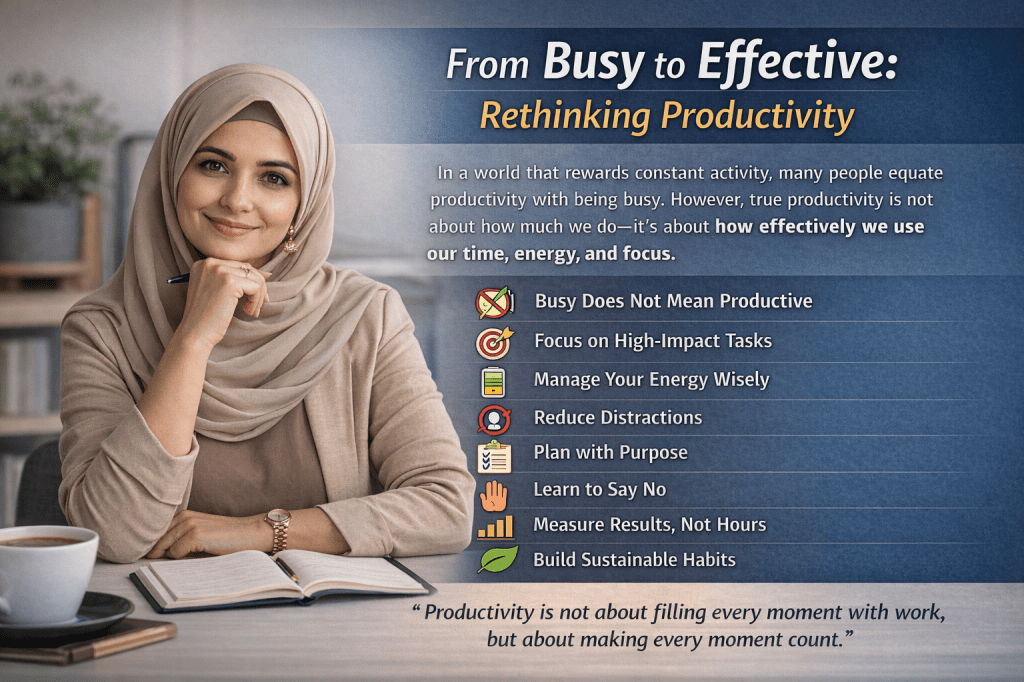
In a world that rewards constant activity, many people equate productivity with being busy. Long to-do lists, packed schedules, and endless notifications create the illusion of progress. However, true productivity is not about how much we do—it is about how effectively we use our time, energy, and focus. Moving from busyness to effectiveness requires a shift in mindset, not just better tools.
Key Ideas Explained in Simple Points
1. Being Busy Is Easy, Being Effective Is Intentional
True productivity is not about doing more—it is about doing what matters most with clarity and purpose. When the mind is focused and priorities are clear, effectiveness replaces exhaustion, and success becomes sustainable.
Closing Quote
“Productivity is not about filling every moment with work, but about making every moment count.”
There are times in life when we question everything — our choices, timing, and even our direction. We wonder if we’ve missed opportunities or fallen behind. But what if everything is actually happening just as it’s supposed to? What if, right now, you are exactly where you’re meant to be? Sometimes, peace doesn’t come from changing your situation, but from trusting the path you’re already on.
Life unfolds with purpose
Every experience, whether joyful or painful, is shaping you into the person you’re meant to become. Nothing in your journey is wasted.
God’s timing is perfect Delays aren’t denials. They are divine pauses, preparing you for something greater. You’re not late — you’re aligned with a higher plan.
Every season has a reason Life has seasons of growth, waiting, and healing. Each one serves its own purpose in helping you evolve.
Stop comparing your journey Someone else’s progress doesn’t define your own. Your path is uniquely yours, designed with care and intention.
Embrace the present moment True peace comes from acceptance. When you stop resisting where you are, you begin to see the beauty hidden in this phase.
Challenges are part of the process Struggles don’t mean you’re lost. Often, they’re lessons in disguise, guiding you toward greater strength and wisdom.
You are growing, even in silence Growth isn’t always visible. Sometimes, God works quietly behind the scenes, aligning everything perfectly for your next step.
Trust the divine plan Even when you don’t understand why things happen, believe that everything unfolds for your ultimate good.
Be grateful for the now Gratitude transforms your outlook. When you focus on what’s good right now, life feels lighter and more meaningful.
You are not behind — you’re becoming Every step, even the confusing ones, is leading you closer to where you’re supposed to be. You are learning, evolving, and becoming stronger with each experience.
✨ Final Thoughts
Life isn’t a race, and you’re not missing out on anything meant for you. Every chapter — even the slow or difficult ones — is essential to your story. Trust that this moment has a purpose, even if you can’t see it yet. When you let go of resistance and lean into faith, you’ll realize that you are right where you’re supposed to be — growing, healing, and preparing for what’s next.
🌼 Quote to Reflect On:
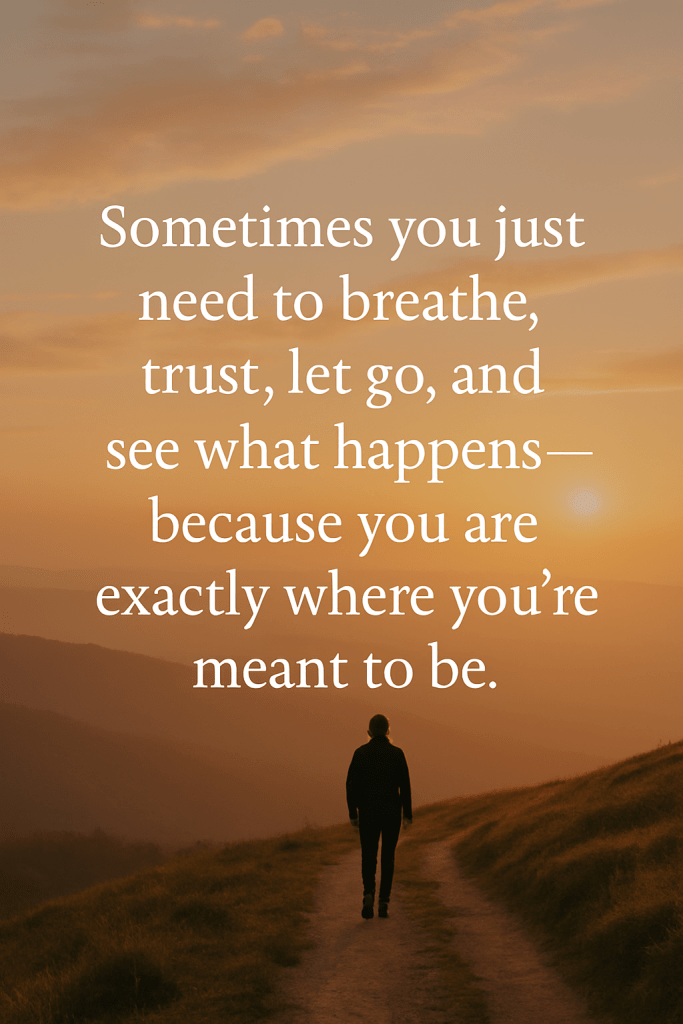
“Sometimes you just need to breathe, trust, let go, and see what happens — because you are exactly where you’re meant to be.”
Mental toughness is the ability to stay strong, focused, and calm—even when life gets difficult. It doesn’t mean you’re emotionless, but that you don’t give up easily. Here’s how you can build it step by step:
1. Start Your Day with Purpose
Wake up with a plan or goal in mind.
Avoid immediately checking your phone.
Take 5 minutes to reflect or set your intention for the day.
2. Do Difficult Things First
Tackle your most challenging task early.
This builds confidence and discipline.
It also reduces stress for the rest of the day.
3. Practice Self-Control
Learn to say “no” when needed.
Avoid emotional outbursts—pause and breathe.
Respond, don’t react.
4. Accept What You Can’t Control
Don’t waste energy on things outside your control (like traffic or other people’s opinions).
Learn to say: “This is hard, but I can handle it.”
6. Learn from Mistakes
Don’t fear failure; use it as a teacher.
Ask yourself: What can I learn from this?
Keep moving forward, even after a setback.
7. Keep Promises to Yourself
Do what you say you’ll do, even when it’s hard.
This builds self-respect and inner strength.
8. Take Care of Your Body
Eat well, sleep enough, and exercise regularly.
A strong body supports a strong mind.
9. Surround Yourself with Positive People
Be around those who uplift and challenge you.
Limit time with negative or toxic influences.
10. Practice Gratitude Daily
Write down 3 things you’re thankful for.
Gratitude builds resilience and peace of mind.
Final Thought:
Mental toughness isn’t about being perfect—it’s about staying steady during ups and downs. Build it slowly, one small action at a time. Over time, you’ll notice you’re stronger, calmer, and more confident in whatever life throws at you.
Happiness isn’t just a feeling—it’s also a subject of serious scientific research. Psychologists and researchers have been studying what makes people truly happy.
1. Happiness Comes from Within
External things like money or possessions can bring short-term joy.
True happiness often comes from internal peace, purpose, and emotional well-being.
2. Strong Relationships Matter
Research shows that happy people have deep, meaningful relationships.
Spending quality time with family and friends boosts happiness levels.
3. Gratitude Changes Everything
Being thankful improves mood and outlook on life.
Try keeping a gratitude journal—write 3 things you’re thankful for every day.
4. Helping Others Boosts Your Own Joy
Acts of kindness release feel-good hormones like oxytocin.
Volunteering or helping someone, even in small ways, makes us feel more connected and fulfilled.
5. Experiences Bring More Joy Than Things
Travel, hobbies, and shared memories bring lasting happiness.
Material items give temporary pleasure, but experiences create meaningful stories.
6. Physical Activity Improves Mood
Exercise releases endorphins, also known as “happy hormones.”
Even a 20-minute walk can lift your mood.
7. Mindfulness Reduces Stress and Increases Joy
Being present in the moment helps reduce anxiety about the past or future.
Practicing meditation or deep breathing can increase emotional balance.
8. A Sense of Purpose Fuels Long-Term Happiness
Doing work or activities that feel meaningful makes life more satisfying.
This could be a career, hobby, or helping others.
9. Sleep Is Crucial for Emotional Health
Lack of sleep affects mood, focus, and overall happiness.
Aim for 7–9 hours of quality sleep each night.
10. Happiness Is a Habit
Like exercise, happiness needs regular practice.
Surround yourself with positivity, avoid toxic environments, and choose joy daily.
Final Thought:
Happiness isn’t about always being cheerful. It’s about building a life with balance, meaning, and emotional strength. By understanding the science behind it, we can take small steps every day to live a happier life.
Life is always in motion, and time never stops for anyone.
Every second that passes is a moment we can never get back, making it important to make the most of every day.
Opportunities Come and Go
Life presents us with opportunities, but if we wait too long or hesitate, those chances may slip away.
Success often comes to those who act, not those who wait for the “perfect” moment.
Embrace Change
Life is full of changes and uncertainties; it’s important to adapt and evolve with them.
Resisting change can hold us back, while embracing it can open new doors.
Procrastination Is the Enemy
Delaying tasks or decisions often leads to missed opportunities.
Taking action, even in small steps, is key to progress and growth.
Learn to Let Go
Holding on to the past or dwelling on missed chances can prevent us from moving forward.
Focus on what you can control in the present and future, rather than what has already passed.
Seize the Moment
The present moment is all we truly have. Living mindfully helps us appreciate and make the most of each day.
Waiting for “tomorrow” often means never taking action. Start today.
Life Is a Journey, Not a Race
While life doesn’t wait, it’s important to remember that everyone moves at their own pace.
It’s not about rushing through life but making sure we’re living meaningfully and purposefully.
Pursue Your Dreams
Don’t wait for the “right time” to chase your passions or dreams. Start working towards them now, even if progress is gradual.
Life’s unpredictability means the perfect time may never come, so take action while you can.
Build and Nurture Relationships
Don’t wait to express love or gratitude to the people in your life. Life’s fleeting nature means we may not always have the chance later.
Make time for loved ones, as relationships are one of the most valuable aspects of life.
Live Without Regrets
At the end of the day, we are more likely to regret the things we didn’t do than the things we did.
Taking chances, making mistakes, and learning from them are all part of truly living.
Conclusion
Life will never pause or wait for anyone. The key to happiness and fulfillment lies in taking action, embracing change, and living fully in the present. Don’t wait for tomorrow to start living your best life—make every moment count today!
In our busy lives, it’s easy to get caught up in daily tasks and forget to reflect on the bigger picture. One essential question to ask yourself is: “For whom am I working?” Understanding this can bring clarity and motivation to your professional life. Here are some key points to consider:
1. Yourself
Personal Growth: Every job or career move should contribute to your personal and professional development. Whether it’s gaining new skills, expanding your knowledge, or achieving personal goals, remember that you are investing in yourself.
Financial Stability: Your work provides the means to support your lifestyle and achieve financial security. This stability is crucial for your peace of mind and future planning.
2. Your Family
Support System: Many people work to provide for their families. This includes ensuring that your loved ones have what they need for a comfortable and secure life.
Role Model: By working hard and pursuing your goals, you set a positive example for your children and other family members. Your dedication can inspire them to pursue their own dreams and work hard.
3. Your Employer
Company Success: Your efforts contribute to the overall success and profitability of your company. When you perform well, it helps the business grow, which can lead to more opportunities for you and your colleagues.
Team Collaboration: Working for your employer also means supporting your team. Your contributions help create a productive and positive work environment.
4. Your Community
Economic Contribution: Your work helps stimulate the local economy by providing services, creating jobs, and paying taxes. This, in turn, supports public services and infrastructure.
Social Impact: Depending on your profession, your work may directly benefit the community. For example, teachers, healthcare workers, and public servants all play vital roles in improving society.
5. Your Future Self
Long-Term Goals: Think about where you want to be in the next five, ten, or twenty years. Your current work should align with your long-term goals and aspirations.
Retirement: Consider how your current work impacts your retirement plans. Contributing to a retirement fund and ensuring you have a sustainable career path is crucial for your future well-being.
Reflect and Reevaluate
Periodically taking the time to reflect on “for whom you are working” can help ensure that your efforts are aligned with your values and goals. It can also provide a renewed sense of purpose and motivation in your professional life.
By understanding the impact of your work on yourself, your family, your employer, your community, and your future, you can make more informed decisions and find greater satisfaction in your career.
The World is a Drama Stage: We Are All Actors Playing Our Roles
Life is often compared to a drama stage, where each person plays a unique role. This analogy helps us understand our purpose and interactions in the world. Let’s explore this concept through simple points, enriched with quotes from the Quran and famous personalities.
1. The Stage is Set by God
Divine Director: Imagine God as the director of this grand play. He has crafted the script and set the stage for all of us.
Life’s Blueprint: Every event and circumstance in our lives is part of this divine blueprint, guiding us through our roles.
Quranic Insight: “He knows what is before them and what is behind them, and to Allah are all matters returned.” (Quran 22:76)
2. We Are All Actors
Unique Roles: Each person is an actor with a specific role to play. These roles vary greatly, from family members and friends to professionals and citizens.
Purposeful Actions: Our actions and decisions are like lines and movements in a play, contributing to the overall story.
William Shakespeare: “All the world’s a stage, and all the men and women merely players. They have their exits and their entrances; And one man in his time plays many parts.”
3. Interconnected Stories
Interacting Characters: Just like in a play, our lives are interconnected. We interact with other ‘actors,’ influencing and being influenced by them.
Collaborative Plot: These interactions create a complex, collaborative plot that weaves individual stories into a larger narrative.
Helen Keller: “Alone we can do so little; together we can do so much.”
4. Learning and Growth
Lessons Through Roles: Each role we play teaches us something. Challenges and triumphs alike are opportunities for learning and personal growth.
Character Development: Just as characters in a play evolve, we too develop and grow through our experiences.
Albert Einstein: “Life is like riding a bicycle. To keep your balance, you must keep moving.”
5. Acceptance and Adaptability
Embrace Your Role: Understanding that we are actors can help us accept our roles with grace. This acceptance brings peace and reduces resistance to life’s changes.
Adapt to Change: Just as actors adapt to different scenes, we must adapt to the changing circumstances in our lives, trusting that each change has a purpose.
Quranic Wisdom: “Allah does not burden a soul beyond that it can bear…” (Quran 2:286)
6. Emotional Expression
Full Spectrum of Emotions: Like actors, we express a wide range of emotions. Joy, sorrow, love, and anger are all parts of the human experience.
Authentic Performance: Embracing our emotions authentically helps us live fully and connect with others meaningfully.
Maya Angelou: “We are more alike, my friends, than we are unalike.”
7. Ultimate Purpose
Spiritual Journey: Viewing life as a play directed by God can deepen our spiritual understanding. It reminds us that there is a higher purpose behind our existence.
Divine Connection: Recognizing our roles can strengthen our connection to the divine, helping us live with intention and gratitude.
Quranic Reflection: “And He found you lost and guided [you].” (Quran 93:7)
Conclusion
Seeing the world as a drama stage where we are all actors can transform our perspective on life. It encourages us to embrace our roles, learn from our experiences, and trust in the divine direction guiding us. By playing our parts with authenticity and grace, we contribute to the beautiful, intricate story of life. As Rumi beautifully said, “We are all actors in this play, in this theatre of God’s creation.”
As I flipped through the pages of “Who Will Cry When You Die?” by Robin Sharma, I felt like I stumbled upon a hidden gem. The book is full of great ideas and simple advice that made me stop and think. In a busy world where it’s easy to get caught up in the rush, this book reminds us to slow down and appreciate what truly matters. Join me as we explore the wisdom of this book together and discover how it can help us live happier, more meaningful lives.
“Who Will Cry When You Die?” offers a roadmap for living a life of purpose, passion, and significance. By embracing the below said timeless principles and incorporating them into our daily lives, we can cultivate greater fulfillment, joy, and meaning.
Live with Purpose: Sharma emphasizes the importance of living with a sense of purpose and passion. By aligning our actions with our values and goals, we can find fulfillment and meaning in our daily lives.
Embrace Change: Change is inevitable, and embracing it is key to personal growth and development. Rather than fearing change, see it as an opportunity for learning, adaptation, and renewal.
Practice Gratitude: Cultivating an attitude of gratitude can transform our perspective and bring greater joy and contentment into our lives. Take time each day to reflect on the blessings and abundance that surround you.
Be Mindful: Mindfulness is the practice of being fully present in the moment, free from judgment or distraction. By cultivating mindfulness, we can reduce stress, enhance our focus, and deepen our appreciation for life’s simple pleasures.
Nurture Relationships: Our relationships are the cornerstone of a fulfilling life. Invest time and energy in nurturing meaningful connections with family, friends, and loved ones. Show appreciation, kindness, and compassion in your interactions.
Take Care of Yourself: Self-care is essential for overall well-being. Prioritize your physical, mental, and emotional health by adopting healthy habits, setting boundaries, and making time for activities that bring you joy and relaxation.
Seek Wisdom: Lifelong learning is a journey of discovery and growth. Be curious, explore new interests, and seek wisdom from books, mentors, and life experiences. Embrace challenges as opportunities for learning and personal development.
Leave a Legacy: Consider the impact you want to have on the world and strive to leave a positive legacy. Live with integrity, kindness, and generosity, and inspire others to do the same. Your actions have the power to ripple outwards and create lasting change.
In our journey of personal growth and fulfillment, self-awareness acts as a guiding light. It empowers us to understand our thoughts, emotions, strengths, weaknesses, and aspirations, allowing us to navigate life’s twists and turns with clarity and purpose. However, developing self-awareness requires practice and commitment.
Understanding Self-Awareness:
Self-awareness is the ability to observe and understand our own thoughts, feelings, and behaviors without judgment. It involves tuning into our inner world, recognizing patterns, and gaining insights into what drives us. When we are self-aware, we can make conscious choices, manage our emotions effectively, and live in alignment with our values and goals.
The Significance of Self-Awareness:
Enhanced Decision Making: Self-aware individuals can make decisions that are in line with their values, preferences, and long-term goals. By understanding their motivations and thought processes, they can weigh options more effectively and choose the path that resonates with them.
Improved Relationships: Self-awareness fosters empathy, communication, and understanding in relationships. When we are aware of our own emotions and behaviors, we can relate to others more authentically, cultivate deeper connections, and resolve conflicts more constructively.
Effective Stress Management: Self-awareness enables us to recognize stress triggers and coping mechanisms, allowing us to respond to stressful situations with greater resilience and composure. By understanding our emotional responses, we can navigate challenges with grace and poise.
Personal Growth: Self-awareness is the cornerstone of personal growth and development. By continuously reflecting on our experiences, strengths, and areas for improvement, we can evolve into the best versions of ourselves and lead more fulfilling lives.
Practical Exercises to Cultivate Self-Awareness:
Journaling: Set aside time each day to journal about your thoughts, feelings, and experiences. Write freely without censorship, exploring your innermost thoughts and emotions. Reflect on patterns, triggers, and insights that emerge from your writing.
Mindfulness Meditation: Practice mindfulness meditation to cultivate present-moment awareness and non-judgmental observation of your thoughts and sensations. Start with a few minutes of focused breathing, gradually increasing the duration as you become more comfortable.
Self-Reflection Questions: Set aside time for self-reflection by asking yourself probing questions about your values, goals, fears, and aspirations. Examples include: “What brings me joy?” “What are my greatest strengths?” “What limiting beliefs hold me back?”
Feedback Seeking: Solicit feedback from trusted friends, mentors, or colleagues about your strengths, weaknesses, and blind spots. Listen openly to their perspectives, embracing constructive criticism as an opportunity for growth and self-discovery.
Values Clarification: Identify your core values—principles that guide your decisions and actions. Create a list of your top values and reflect on why they are important to you. Aligning your actions with your values can enhance your sense of fulfillment and purpose.
Goal Setting: Set SMART (Specific, Measurable, Achievable, Relevant, Time-bound) goals for different areas of your life, such as career, relationships, health, and personal growth. Break down larger goals into smaller, actionable steps, and track your progress regularly.
Conclusion:
Self-awareness is a transformative skill that empowers us to live authentically, purposefully, and joyfully. By incorporating simple yet effective exercises into our daily routine, we can deepen our understanding of ourselves, unlock our inner potential, and cultivate a life of meaning and fulfillment. Embrace the journey of self-discovery with curiosity and compassion, and watch as the seeds of self-awareness blossom into profound personal growth and transformation.














 Pioneer Edge