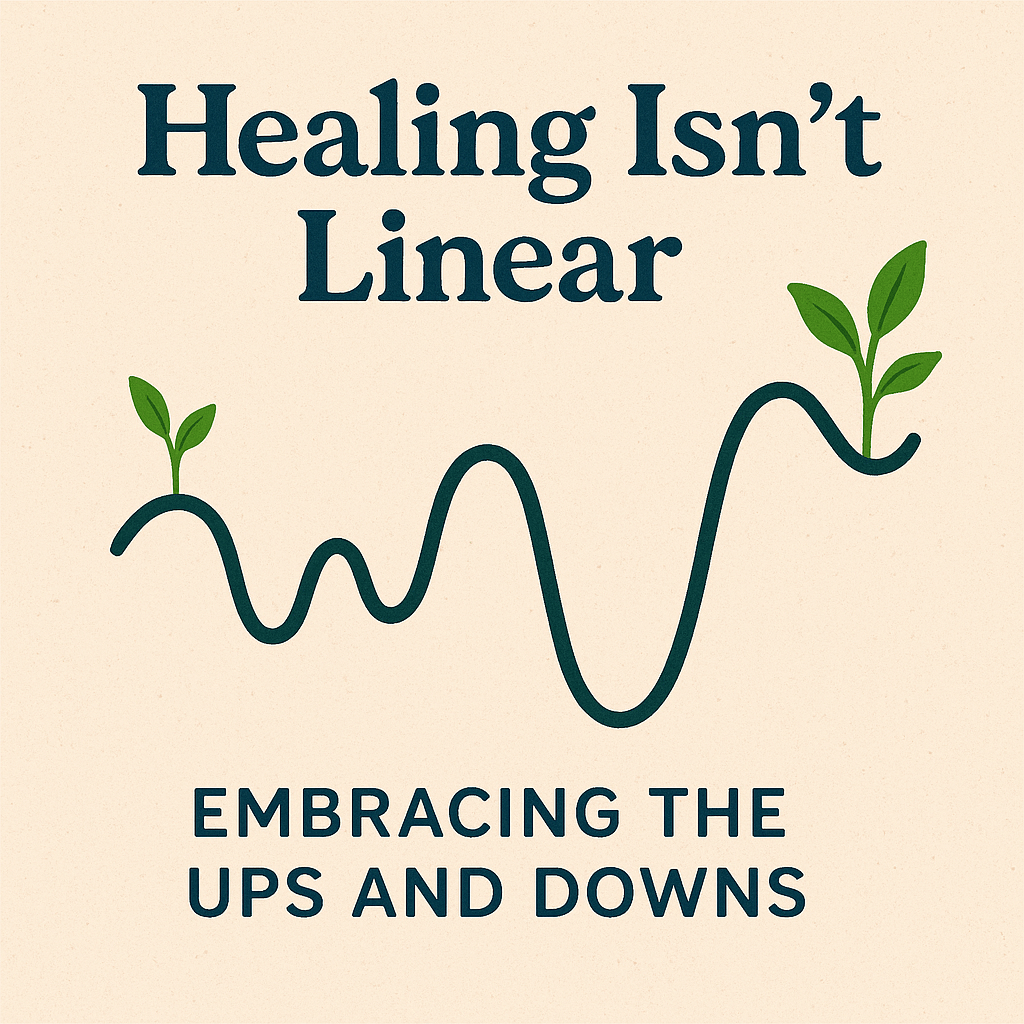
🌱 Healing Isn’t Linear: Embracing the Ups and Downs

Healing—whether emotional, mental, or physical—is not a straight path. It’s a journey filled with progress, setbacks, and moments that may feel like you’re going in circles. And that’s okay.


1. Healing Takes Time

  • Recovery doesn’t happen overnight.
  • It’s okay to take days, weeks, or even years.
  • Be patient with yourself.

2. It’s Normal to Have Good and Bad Days

  • Some days you’ll feel strong, other days you won’t.
  • Bad days don’t erase your progress.
  • Every step, even backward, is part of the journey.

3. Progress Isn’t Always Visible

  • Just because you can’t see improvement doesn’t mean it’s not happening.
  • Inner changes often take time to show on the outside.

4. Setbacks Are Not Failures

  • Falling back into old patterns is common.
  • It’s not a failure—it’s part of learning and growing.
  • Use it as a lesson, not a reason to give up.

5. Celebrate Small Wins

  • Even small steps matter—like getting out of bed, saying “no,” or smiling again.
  • Every tiny win adds up to big change.

6. Your Journey Is Unique

  • Don’t compare your healing to others.
  • Everyone heals at their own pace and in their own way.
  • What works for someone else may not work for you—and that’s okay.

7. Allow Yourself to Feel

  • Don’t hide your emotions—feel them.
  • Crying, anger, or sadness are not signs of weakness.
  • Emotions are part of processing and healing.

8. Ask for Help When You Need It

  • You don’t have to do it alone.
  • Talk to a friend, therapist, or support group.
  • Asking for help is a strength, not a weakness.

9. Be Kind to Yourself

  • Talk to yourself with love and compassion.
  • You’re doing your best, and that’s enough.
  • Replace self-criticism with encouragement.

10. Healing Is Ongoing

  • Healing doesn’t mean you’ll never feel pain again.
  • It means you learn to carry it with more strength and less fear.
  • It’s about growing through what you go through.

🌼 Final Thought:

Healing isn’t a straight line—it’s a journey of twists, turns, detours, and growth. Embrace the process, honor your progress, and trust that every step—even the tough ones—is leading you toward a stronger you.

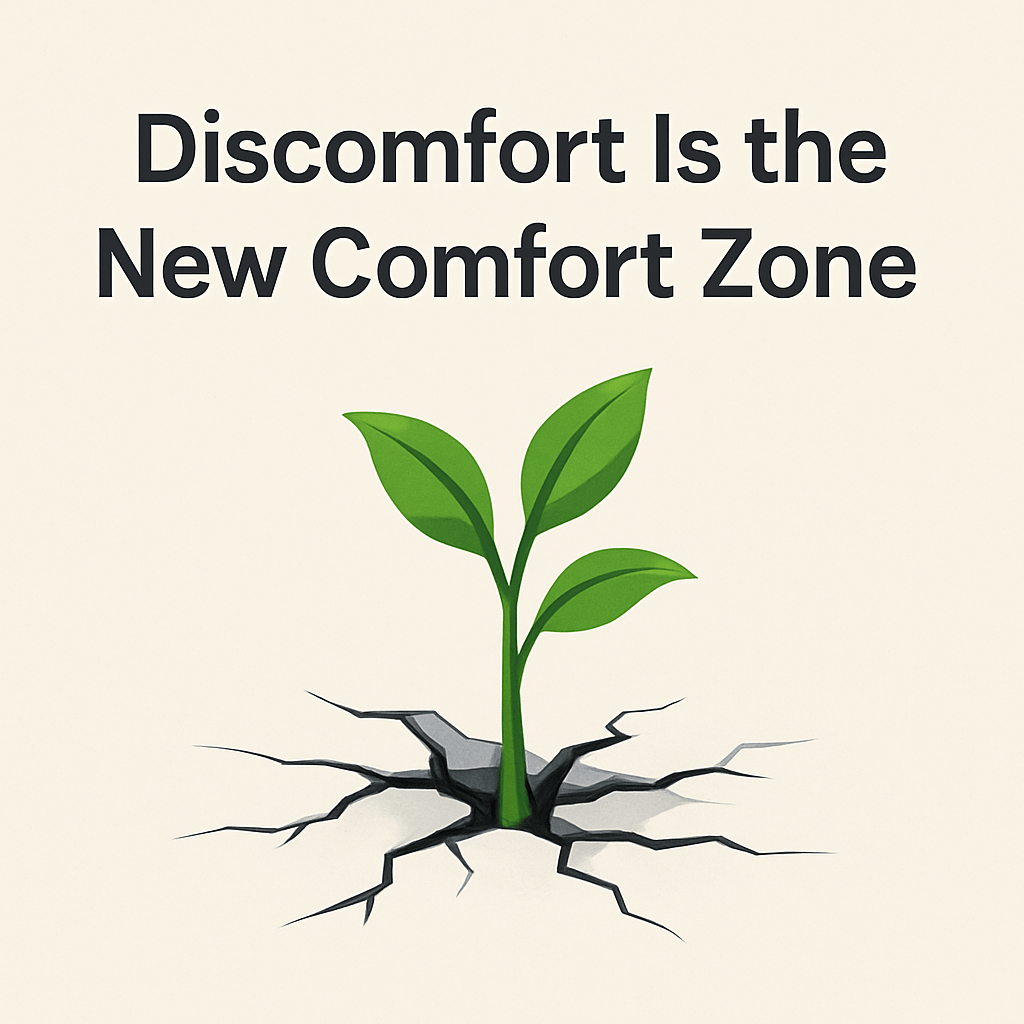
🌱 Discomfort Is the New Comfort Zone

🔹 Introduction:

In today’s fast and ever-evolving world, growth begins where comfort ends. What used to feel “safe” and “predictable” often leads to stagnation. The new-age mindset says it loud and clear:

“If it doesn’t challenge you, it won’t change you.” – Fred DeVito


🔹 Why Discomfort Should Be Welcomed:

  1. Discomfort sparks growth.
    When you face new challenges, your brain and character evolve. “Life begins at the end of your comfort zone.” – Neale Donald Walsch
  2. Comfort zones breed fear of change.
    Staying safe often means missing opportunities. “Don’t fear failure. Fear being in the same place next year.”
  3. Every breakthrough starts with uncertainty.
    The best ideas and personal revolutions happen in moments of doubt. “Growth is uncomfortable because you’ve never been here before.”
  4. Discomfort builds resilience.
    Facing new experiences strengthens your mental muscles. “Pain is temporary. Quitting lasts forever.” – Lance Armstrong
  5. You stop surviving and start thriving.
    Stepping into discomfort turns potential into progress. “Get comfortable with being uncomfortable.” – Jillian Michaels

🔹 Examples of Productive Discomfort:

  • Speaking in public for the first time.
  • Starting a business or switching careers.
  • Saying “no” when you’re used to pleasing others.
  • Waking up early for your goals.
  • Having difficult but honest conversations.

🔹 How to Embrace Discomfort:

✅ Start small – take micro-risks daily.
✅ Reframe discomfort as a teacher, not a threat.
✅ Reflect regularly – see how far you’ve come.
✅ Surround yourself with people who push you.

“Discomfort is a sign that you’re on the right path.”


🔹 Final Thought:

Discomfort isn’t a punishment — it’s a signal that you’re evolving. The more you stretch yourself, the more powerful and authentic your life becomes.

“Your comfort zone is beautiful, but nothing ever grows there.”

Healing Isn’t Linear — And That’s Okay

Healing is not a straight road. It’s a journey with ups and downs, good days and tough ones. And that’s completely normal.

Here’s a simple guide to understand and embrace the non-linear nature of healing:


💡 1. Progress Comes in Waves

  • Some days you’ll feel strong, other days not so much — both are part of healing.
  • It’s okay to have setbacks. They don’t erase the progress you’ve made.

👉 Tip: Keep a small journal. Write down even the smallest win — it helps to see how far you’ve come.


💡 2. Feel Your Feelings

  • Suppressing emotions can slow down healing.
  • Allow yourself to cry, rest, be angry, or confused.

👉 Tip: Practice deep breathing or journaling when overwhelmed. It helps release bottled-up emotions.


💡 3. Stop Comparing Your Journey

  • Everyone heals differently. What worked for someone else might not work for you — and that’s okay.

👉 Tip: Unfollow accounts or avoid people who make you feel less. Follow pages that uplift and support you.


💡 4. Healing Takes Time

  • There’s no fixed timeline for feeling better.
  • Rushing the process often adds more pressure.

👉 Tip: Focus on taking it one day at a time. Celebrate small steps.


💡 5. Rest Is Not Laziness

  • Rest is part of recovery, both physically and emotionally.
  • You’re not weak for needing a break.

👉 Tip: Schedule “rest days” just like work or errands. Use them for hobbies, naps, or doing nothing at all.


💡 6. Setbacks Are Not Failures

  • Having a tough day doesn’t mean you’re back to square one.
  • Setbacks are part of growth.

👉 Tip: Remind yourself: “This is temporary. I’ve made it through worse.”


💡 7. Ask for Help When You Need It

  • You don’t have to do it alone.
  • Talking to a friend, mentor, or therapist can bring relief.

👉 Tip: Make a small list of people you trust. Reach out to one when you feel low.


💡 8. Be Gentle With Yourself

  • Self-kindness fuels healing. Harsh self-talk doesn’t.
  • Replace “Why am I still struggling?” with “I’m doing my best, and that’s enough.”

👉 Tip: Speak to yourself like you would to a dear friend.


🌱 Final Thought

Healing isn’t a race. It’s a journey that unfolds in its own time and in its own way. Trust the process. Even on the hard days, you’re still healing.

Mastering the ‘Soft Life’: Balancing Hustle and Self-Care

What is the ‘Soft Life’?

  • The ‘Soft Life’ is about living with ease, peace, and minimal stress.
  • It doesn’t mean avoiding responsibilities but prioritizing self-care and well-being.
  • It’s a shift from the hustle culture to a balanced, mindful approach to success.

Why Balancing Hustle and Self-Care is Important

  • Hustle culture can lead to burnout and mental exhaustion.
  • A balanced life enhances productivity and happiness.
  • Self-care helps maintain energy, creativity, and motivation.

How to Master the ‘Soft Life’ While Hustling

1. Work Smart, Not Hard

✅ Set clear goals and focus on high-impact tasks.
✅ Use productivity tools like time blocking or Pomodoro technique.
✅ Delegate and outsource tasks where possible.

2. Prioritize Rest and Recovery

✅ Get enough sleep (7–9 hours per night).
✅ Take short breaks during work to refresh your mind.
✅ Schedule ‘me-time’ for relaxation and hobbies.

3. Set Boundaries

✅ Say NO to unnecessary commitments.
✅ Set work hours and stick to them.
✅ Avoid checking emails or messages during personal time.

4. Embrace Self-Care Daily

✅ Practice mindfulness or meditation.
✅ Engage in activities that bring you joy (reading, music, nature walks).
✅ Stay active—exercise, yoga, or simple stretching.

5. Choose Quality Over Quantity

✅ Focus on meaningful relationships over toxic connections.
✅ Invest in experiences rather than excessive material possessions.
✅ Simplify your lifestyle—less stress, more happiness.

6. Financial Wellness for a Soft Life

✅ Build a financial cushion (savings, emergency funds).
✅ Avoid toxic hustle for money—choose fulfilling work.
✅ Invest in passive income or side hustles for financial freedom.

Final Thoughts

  • A ‘Soft Life’ isn’t about laziness; it’s about intentional living.
  • Balance is the key—hustle when needed, but never at the cost of well-being.
  • Prioritize peace, happiness, and self-care while working towards success.

Success Without Burnout: The New Work-Life Balance

We all want to succeed, but too often, success comes at the cost of exhaustion, stress, and burnout. The good news? You don’t have to choose between success and well-being. A new approach to work-life balance is emerging—one that prioritizes both productivity and peace of mind.

Here’s how you can achieve success without burning out:

1. Redefine Success

  • Success isn’t just about long hours and hustle.
  • Focus on meaningful progress rather than overworking yourself.
  • Ask yourself: What does success really mean to you?

2. Work Smarter, Not Harder

  • Prioritize high-impact tasks instead of trying to do everything.
  • Use the 80/20 rule—focus on the 20% of tasks that bring 80% of results.
  • Batch similar tasks to save mental energy.

3. Set Clear Boundaries

  • Define work hours and stick to them.
  • Say no to tasks that drain you without adding value.
  • Avoid checking emails and messages after work hours.

4. Take Breaks (They Boost Productivity!)

  • Short breaks improve focus and creativity.
  • Try the Pomodoro Technique: Work for 25 minutes, then take a 5-minute break.
  • Step away from screens—take a walk, stretch, or meditate.

5. Prioritize Self-Care

  • Get enough sleep—it’s non-negotiable for peak performance.
  • Eat nutritious foods and stay hydrated.
  • Exercise regularly to boost energy and reduce stress.

6. Embrace Rest as a Productivity Tool

  • Resting isn’t being lazy—it helps you perform better.
  • Schedule time for hobbies, relaxation, and socializing.
  • A well-rested mind is more creative and efficient.

7. Learn to Delegate

  • You don’t have to do everything alone.
  • Delegate tasks at work and home to free up time.
  • Focus on what only you can do and let others help with the rest.

8. Disconnect to Recharge

  • Limit screen time to avoid mental exhaustion.
  • Unplug from work-related notifications during downtime.
  • Take vacations and fully disconnect from work—you’ll return more refreshed.

9. Find Joy in the Process

  • Celebrate small wins instead of just chasing big goals.
  • Enjoy the journey instead of constantly stressing about the destination.
  • Success isn’t just about achievement—it’s about enjoying life along the way.

10. Listen to Your Body and Mind

  • Pay attention to signs of burnout: fatigue, stress, lack of motivation.
  • If you feel drained, take a step back and adjust your approach.
  • Remember: Your well-being comes first—success will follow.

Final Thoughts

Success and well-being can go hand in hand. By working smarter, setting boundaries, and prioritizing rest, you can achieve your goals without burning out. The key? Sustainable productivity and a balanced life.

👉 Which of these tips do you struggle with the most? Let me know in the comments! 😊

The Art of Letting Go: Embracing Life as It Comes

  1. Understand What Letting Go Means
    • Letting go is about releasing control over things beyond your influence.
    • It involves accepting situations, emotions, and outcomes as they are.
  2. Recognize the Need to Let Go
    • Clinging to the past or unrealistic expectations causes stress and unhappiness.
    • Letting go helps you focus on the present and move forward.
  3. Identify What You Need to Release
    • Reflect on the areas of your life where you feel stuck or burdened.
    • Common things to let go of include grudges, fears, and regrets.
  4. Practice Acceptance
    • Accept that life is unpredictable and not everything will go as planned.
    • Embrace the imperfections in yourself and others.
  5. Focus on the Present Moment
    • Dwelling on the past or worrying about the future prevents you from enjoying the now.
    • Use mindfulness techniques like deep breathing to stay present.
  6. Forgive Yourself and Others
    • Forgiveness is a key step in letting go of resentment and anger.
    • It’s not about condoning actions but freeing yourself from their hold.
  7. Release the Need for Control
    • Understand that you cannot control everything or everyone.
    • Focus on controlling your responses rather than external circumstances.
  8. Cultivate Gratitude
    • Shift your focus to what you have rather than what you’ve lost or can’t control.
    • Daily gratitude practices can foster a positive outlook.
  9. Create Healthy Boundaries
    • Letting go doesn’t mean allowing harmful behaviors.
    • Set boundaries to protect your peace and well-being.
  10. Seek Support When Needed
    • Share your feelings with trusted friends or seek professional help.
    • Sometimes, talking to someone provides clarity and relief.
  11. Adopt a Growth Mindset
    • View challenges as opportunities to learn and grow.
    • Letting go becomes easier when you see setbacks as stepping stones.
  12. Engage in Activities that Bring Joy
    • Fill your time with hobbies and activities that uplift your spirit.
    • This helps redirect your energy towards positivity.
  13. Practice Self-Compassion
    • Be kind to yourself during this process.
    • Letting go takes time, and it’s okay to take small steps.
  14. Embrace Change
    • Life is constantly evolving, and change is inevitable.
    • Welcome new experiences with an open mind and heart.
  15. Trust the Process
    • Believe that everything happens for a reason, even if it’s not immediately clear.
    • Trust that letting go will bring peace and new opportunities.

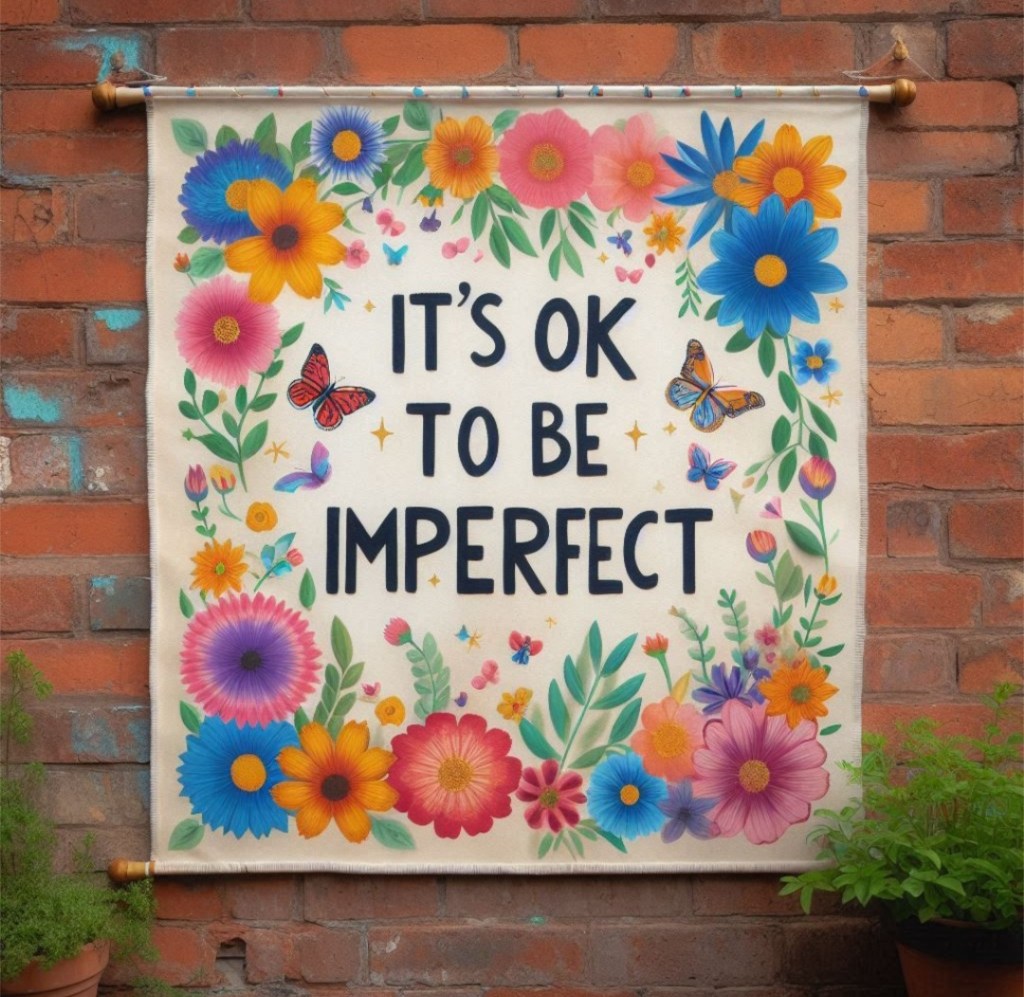
It’s Perfectly Okay to Be Imperfect

In a world that often glorifies perfection, embracing our imperfections can be a liberating and empowering experience. Here are some simple, realistic points that highlight why it’s perfectly okay to be imperfect:

1. Embrace Your Authentic Self

  • Realness Over Perfection: Embracing your imperfections allows you to be true to yourself, fostering deeper connections with others.
  • Unique Stories: Our flaws and imperfections tell our personal stories. They shape who we are and make us unique.

2. Learn and Grow

  • Mistakes as Learning Opportunities: Imperfections often come with valuable lessons. Each mistake is a chance to learn and grow, paving the way for personal development.
  • Resilience: Facing and accepting our flaws builds resilience. Overcoming challenges strengthens our character and helps us handle future setbacks more gracefully.

3. Redefine Success

  • Flawed Yet Thriving: Success doesn’t require perfection. Many successful people have faced failures and setbacks, proving that it’s our efforts and perseverance that count.
  • Setting Realistic Goals: Instead of aiming for perfection, set realistic and achievable goals. This shift in mindset leads to more sustainable success and happiness.

4. Connect with Others

  • Shared Imperfections: When we openly share our imperfections, we invite others to do the same. This creates a supportive environment where everyone feels safe to express their true selves.
  • Building Empathy: Recognizing that everyone has flaws fosters empathy and compassion, allowing us to connect more deeply with those around us.

5. Practice Self-Compassion

  • Be Kind to Yourself: Treat yourself with the same kindness and understanding that you would offer a friend. Accepting your imperfections is a form of self-love.
  • Mindfulness: Practicing mindfulness helps us stay present and appreciate ourselves as we are, rather than how we think we should be.

6. Challenge Perfectionism

  • Letting Go of High Standards: Perfectionism can be paralyzing. Challenge the notion that you must meet impossibly high standards to be worthy or successful.
  • Celebrate Progress: Focus on the progress you make rather than the end result. Celebrate small victories and the steps you take towards your goals.

7. Shift Your Perspective

  • View Imperfections as Strengths: Sometimes, our flaws can become our greatest assets. They can inspire creativity, innovation, and problem-solving.
  • A Different Lens: Try to view imperfections as a natural part of life, not something to be ashamed of. This perspective shift can lead to greater acceptance and peace.

Conclusion

Embracing imperfection is a journey, not a destination. It takes time and practice to shift our mindset, but the benefits are profound. By accepting our flaws, we open ourselves up to authenticity, growth, connection, and joy. Remember, it’s perfectly okay to be imperfect—after all, that’s what makes us human.

Finding Freedom in Flexibility: When No Plan is the Best Plan

Introduction
Life often pushes us to plan everything, but what if we embraced spontaneity instead? As John Lennon said, “Life is what happens to you while you’re busy making other plans.” Sometimes, the best moments come from letting go and enjoying the journey.

1. Embrace Flexibility

  • Life is unpredictable. Being flexible helps us adapt to new opportunities and challenges.
  • “Blessed are the flexible, for they shall not be bent out of shape.”

2. Trust Your Instincts

  • Our instincts can guide us better than any plan.
  • “Your intuition knows what to do. The trick is getting your head to shut up so you can hear it.” – Louise Smith

3. Plans Can Limit Creativity

  • Over-planning can stifle creativity. Without strict plans, we can explore innovative solutions.
  • “You can’t use up creativity. The more you use, the more you have.” – Maya Angelou

4. Learning Through Experience

  • Diving in without a plan often teaches us more than preparation ever could.
  • “Experience is the teacher of all things.” – Julius Caesar

5. Living in the Moment

  • Plans can make us focus too much on the future. Letting go helps us enjoy the present.
  • “Realize deeply that the present moment is all you ever have.” – Eckhart Tolle

6. Openness to Serendipity

  • Unplanned moments often lead to the best experiences.
  • “Serendipity is looking in a haystack for a needle and discovering a farmer’s daughter.”

7. Reduced Stress

  • Sticking to a plan can be stressful. Going with the flow can lead to a more relaxed life.
  • “Do not let the behavior of others destroy your inner peace.” – Dalai Lama

8. Growth Through Uncertainty

  • Stepping into the unknown fosters personal growth and resilience.
  • “The only thing that makes life possible is permanent, intolerable uncertainty; not knowing what comes next.” – Ursula K. Le Guin

9. Building Confidence

  • Navigating life without a plan builds confidence in handling whatever comes your way.
  • “It is in your moments of decision that your destiny is shaped.” – Tony Robbins

10. Plans Can Change

  • Even the best-laid plans can fail. Being okay with this helps us adapt and avoid disappointment.
  • “The best-laid schemes o’ mice an’ men / Gang aft agley.” – Robert Burns

Conclusion
While plans have their place, life doesn’t always need a strict roadmap. As Rumi said, “Do not be satisfied with the stories that come before you. Unfold your own myth.” Embrace the unknown, trust your instincts, and enjoy the journey without a plan.

This Too Shall Pass: Embracing the Impermanence of Life

Introduction

Life is a series of highs and lows, joys and sorrows. One of the most comforting and empowering truths is that “this too shall pass.” Embracing the idea that nothing is permanent can bring peace and strength in times of difficulty. Here are some key points to understand and accept this concept, along with relevant quotes from famous personalities.

1. Understanding Impermanence

  • Everything Changes: Whether it’s happiness or hardship, nothing stays the same forever.
    • Quote: “This too shall pass.” – Persian adage

2. Emotional Resilience

  • Temporary Feelings: Emotions, whether good or bad, are fleeting.
    • Quote: “If you’re going through hell, keep going.” – Winston Churchill
  • Stay Present: Mindfulness can help you stay grounded during turbulent times.
    • Quote: “The present moment is the only time over which we have dominion.” – Thích Nhất Hạnh

3. Appreciating Good Times

  • Cherish Moments: Knowing they won’t last forever helps you savor joyful times.
    • Quote: “Happiness is not something ready-made. It comes from your own actions.” – Dalai Lama
  • Live Fully: Embrace and enjoy the good moments as they come.
    • Quote: “The best way to pay for a lovely moment is to enjoy it.” – Richard Bach

4. Navigating Difficult Times

  • Endurance: Hard times are part of life, but they are temporary.
    • Quote: “Tough times never last, but tough people do.” – Robert H. Schuller
  • Learn and Grow: Difficult experiences can lead to personal growth and strength.
    • Quote: “What lies behind us and what lies before us are tiny matters compared to what lies within us.” – Ralph Waldo Emerson

5. Adapting to Change

  • Embrace Change: Life’s changes can bring new opportunities and perspectives.
    • Quote: “The only way to make sense out of change is to plunge into it, move with it, and join the dance.” – Alan Watts
  • Stay Flexible: Being adaptable helps you navigate life’s inevitable changes.
    • Quote: “It is not the strongest of the species that survive, nor the most intelligent, but the one most responsive to change.” – Charles Darwin

6. Maintaining Hope

  • Hope and Positivity: Even in the darkest times, maintaining hope can guide you through.
    • Quote: “The darkest hour has only sixty minutes.” – Morris Mandel
  • Look Forward: Trust that better times are ahead.
    • Quote: “Every adversity, every failure, every heartache carries with it the seed of an equal or greater benefit.” – Napoleon Hill

Conclusion

Remembering that “this too shall pass” helps you navigate the highs and lows of life with greater ease. Embracing impermanence allows you to cherish the good times, endure the tough times, and stay open to the ever-changing journey of life.

Happiness is Contagious: Spread More

Introduction

Happiness is a transformative emotion that can improve our lives and positively impact those around us. Spreading happiness can create a ripple effect that fosters community, improves mental health, and enhances overall well-being.

1. The Power of a Smile

“A smile is a curve that sets everything straight.” – Phyllis Diller

  • Smiling is a simple yet powerful gesture.
  • It can uplift the mood of those around you.
  • Smiling releases endorphins, improving your own mood.
  • Encourages a chain reaction of positivity.

2. Acts of Kindness

“The best way to find yourself is to lose yourself in the service of others.” – Mahatma Gandhi

  • Small acts of kindness can have a profound impact.
  • Helping a neighbor or offering compliments spreads joy.
  • Volunteering time can brighten someone’s day.
  • Acts of kindness enhance our own sense of fulfillment.

3. Positive Attitude

“The mind is everything. What you think, you become.” – Buddha

  • Maintaining a positive attitude influences those around us.
  • Positivity can be contagious.
  • Focusing on the good creates a more uplifting environment.
  • Inspires others to remain optimistic and resilient.

4. Sharing Joy

“Happiness is not something ready-made. It comes from your own actions.” – Dalai Lama

  • Sharing your happiness amplifies it.
  • Celebrating achievements strengthens bonds.
  • Inviting others to enjoy happy moments spreads joy.
  • Creates a sense of community and shared happiness.

5. Emotional Support

“The most precious gift you can give someone is your time.” – N. R. Narayana Murthy

  • Providing emotional support is powerful.
  • Being there for someone shows you care.
  • Listening and offering time can uplift others.
  • Fosters connections and compassion in the community.

6. Gratitude and Appreciation

“Gratitude unlocks the fullness of life. It turns what we have into enough.” – Melody Beattie

  • Expressing gratitude enhances happiness for both parties.
  • Acknowledging efforts makes others feel valued.
  • Gratitude fosters contentment and joy.
  • Creates a positive and supportive environment.

7. Create Happy Environments

“The secret of happiness is not in doing what one likes, but in liking what one does.” – J.R.D. Tata

  • Creating happy environments is essential for well-being.
  • Positive environments boost productivity and creativity.
  • Open communication and celebrating achievements enhance happiness.
  • Promoting work-life balance contributes to overall joy.

Conclusion

Happiness is contagious. By spreading joy through our actions, attitudes, and words, we can create a more positive and fulfilling world. Every smile, act of kindness, and moment of gratitude contributes to a larger wave of happiness. Embrace the power of happiness and spread it far and wide.

Final Thought

“There is no way to happiness; happiness is the way.” – Thich Nhat Hanh

Spread happiness wherever you go, and watch as it multiplies!