Learn Their Game, Don’t Play It

Introduction

In life, we often meet people who are competitive, manipulative, or cunning. They play “games” to control situations or take advantage of others. Instead of falling into their traps, the smartest move is to understand their game without becoming part of it.

Here’s how you can practice this mindset:

1. Awareness Is Your First Shield

  • Know that not everyone has pure intentions.
  • Observe patterns in people’s words and actions.
  • Awareness protects you from surprise moves.

2. Understand the Rules They Follow

  • Manipulators thrive on lies, gossip, or emotional control.
  • Watch how they operate — their strengths and weaknesses.
  • Once you know their rules, they can’t use them against you.

3. Don’t Mirror Their Behavior

  • Fighting fire with fire only burns you too.
  • Stay true to your values, even if others play dirty.
  • Rise above instead of sinking to their level.

4. Protect Your Energy

  • Don’t waste energy competing in useless battles.
  • Walk away when the “game” has no real value.
  • Sometimes silence is the strongest response.

5. Stay Strategic, Not Emotional

  • People who play games often target emotions.
  • Respond with calm logic, not anger or impulse.
  • Self-control keeps you stronger than any trick.

6. Use Knowledge as Power

  • Once you know how the game works, you gain the advantage.
  • You can predict moves, set boundaries, and protect yourself.
  • But remember: knowledge is for defense, not manipulation.

Conclusion:
Life will always have people who try to play games with you. The key is simple — learn their game, but don’t play it. Understanding makes you wise, and restraint makes you powerful. Your dignity and peace are worth more than winning a dirty battle.

🌿 Soft Yet Strong: The Era of Quiet Confidence

In a world that often celebrates loud voices and bold moves, a new kind of strength is making its mark — quiet confidence. It’s calm, steady, and powerful in its own way. Let’s explore this beautiful shift.


🌟 1. What is Quiet Confidence?

  • It’s believing in yourself without needing to prove it loudly.
  • It’s the calm assurance that shows through actions, not words.
  • It’s rooted in self-awareness and inner peace.

💭 2. Why Are People Embracing It Now?

  • The fast-paced, loud world can be exhausting.
  • People are craving authenticity and calm energy.
  • Mental health awareness has shown the power of emotional balance.

🧘‍♀️ 3. Traits of Quietly Confident People

  • They listen more than they speak.
  • They stay grounded even during chaos.
  • They uplift others instead of competing with them.
  • They don’t need attention to feel valuable.

🔄 4. Softness is Not Weakness

  • Being kind, empathetic, or gentle doesn’t mean you’re weak.
  • In fact, it takes real strength to stay soft in a hard world.
  • Quiet confidence blends strength with compassion.

🌱 5. How to Build Quiet Confidence

  • Practice self-awareness and self-acceptance.
  • Set boundaries without guilt.
  • Focus on progress, not perfection.
  • Celebrate wins privately and support others openly.
  • Stay true to your values, even when no one is watching.

💼 6. In the Workplace and Leadership

  • Leaders with quiet confidence earn deep respect.
  • They guide through example, not force.
  • They create psychologically safe spaces for teams.

🧘‍♂️ 7. In Daily Life

  • You don’t need to be loud to be heard.
  • Small, consistent actions build lasting trust.
  • You inspire others just by being calm, kind, and authentic.

💬 Final Thought

Quiet confidence is the new power.
You don’t need to shout to be strong.
Being soft and sure is more than enough in this new era of strength.

Let It Go: Free Your Mind from What Doesn’t Deserve It

💭 1. Recognize What’s Taking Up Space in Your Mind

  • Not everything deserves your attention.
  • Ask yourself: Will this matter in a week, a month, or a year?

“You can’t control everything. Sometimes you just need to relax and have faith that things will work out.” – Unknown


🧠 2. Shift Your Focus

  • Focus on what you can control, not what you can’t.
  • Replace overthinking with action or reflection.

“Where focus goes, energy flows.” – Tony Robbins


🧹 3. Declutter Your Mind Like You Declutter a Room

  • Let go of negative thoughts, regrets, and what-ifs.
  • Journal it out or talk to someone you trust.

“Holding on is believing there’s only a past; letting go is knowing there’s a future.” – Daphne Rose Kingma


🛑 4. Set Boundaries with Yourself

  • Don’t let one small mistake or comment ruin your day.
  • Practice saying mentally: “This thought is not helping me.”

“You don’t have to attend every argument you’re invited to.” – Unknown


🧘 5. Practice Mindfulness

  • Stay grounded in the present moment.
  • Deep breathing, meditation, or a mindful walk can help you reset.

“Worrying is like paying a debt you don’t owe.” – Mark Twain


❤️ 6. Be Kind to Yourself

  • Stop punishing yourself for things out of your control.
  • Forgive yourself and move forward.

“Letting go means to come to the realization that some people are a part of your history, but not part of your destiny.” – Steve Maraboli


🔁 7. Let Go to Make Room for Better Things

  • When you stop holding on to the unnecessary, life becomes lighter.
  • You make space for peace, clarity, and true priorities.

“Some of us think holding on makes us strong, but sometimes it is letting go.” – Hermann Hesse


✨ Final Thought:

Letting go is not weakness—it’s wisdom.
Release what drains you and hold on to what lifts you.

Rest Is Productive: Rewriting the Burnout Narrative

1. Society Glorifies Hustle Too Much

  • We are often taught that working non-stop means success.
  • But constant hustle leads to burnout, not greatness.

2. Rest Is Not Laziness

  • Taking breaks is not wasting time.
  • It is an essential part of staying healthy and productive.

3. Your Brain Needs Time to Recharge

  • Just like your phone needs charging, your brain also needs rest.
  • Regular breaks improve focus, creativity, and decision-making.

4. Quality Matters More Than Quantity

  • Working 8 straight hours without a break can lower the quality of your work.
  • Short, focused working periods with proper rest create better results.

5. Rest Helps You Solve Problems Better

  • Many great ideas come during moments of relaxation.
  • Resting allows your subconscious mind to work on challenges in the background.

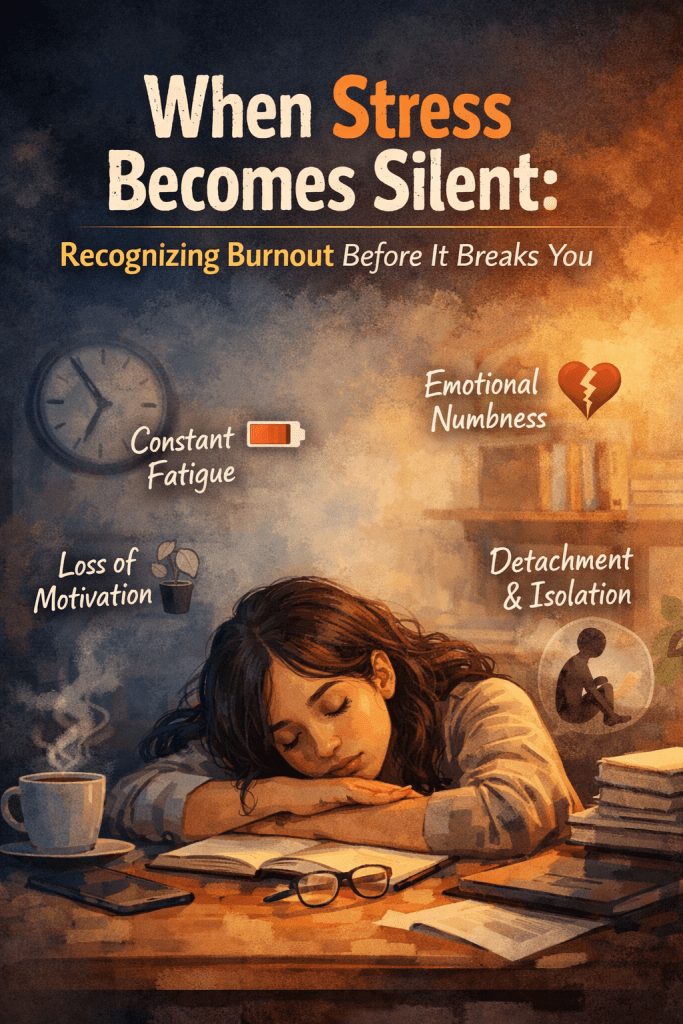
6. Burnout Is a Real Threat

  • Ignoring the need for rest can lead to emotional exhaustion, low energy, and health problems.
  • Prevention is better than cure: small daily breaks are better than big recovery periods later.

7. Redefining Success Includes Well-being

  • True success includes happiness, health, and inner peace.
  • Rest is part of a balanced, meaningful life—not a break from it.

8. Practical Ways to Rest Productively

  • Take a 5-minute break every hour.
  • Get enough sleep (7-8 hours a night).
  • Go for short walks without your phone.
  • Practice deep breathing or meditation.
  • Spend time on hobbies you enjoy.

9. Final Thought: Rest Is a Power Move

  • Rest is not a weakness; it is a strategy.
  • Protecting your energy makes you stronger and more effective in everything you do.

Self-Awareness: Understanding Yourself for Personal Growth

What Is Self-Awareness?

  • Quote: “Knowing yourself is the beginning of all wisdom.” – Aristotle
  • Self-awareness is the ability to recognize and understand your own thoughts, emotions, and behaviors.
  • It helps you identify how you react to different situations and how others perceive you.

Why Self-Awareness Is Important

  • Quote: “When I discover who I am, I’ll be free.” – Ralph Ellison
  • It helps you make better decisions, build healthier relationships, and manage emotions effectively.
  • Example: If you realize that stress makes you impatient, you can take steps to manage stress before it affects your behavior.

Types of Self-Awareness

  • Quote: “What we perceive about ourselves is greatly a reflection of how we will end up living our lives.” – Stephen Richards
  • Internal Self-Awareness: Understanding your emotions, values, and goals.
    • Example: Knowing that you value honesty can help you avoid situations where you feel pressured to be dishonest.
  • External Self-Awareness: Understanding how others see you.
    • Example: If people see you as quiet, but you think of yourself as outgoing, you may need to align your self-perception with your actions.

Benefits of Self-Awareness

  • Quote: “Self-awareness gives you the capacity to learn from your mistakes as well as your successes.” – Lawrence Bossidy
  • Improved Emotional Control: You can respond to situations more calmly.
    • Example: When you’re aware that certain topics make you angry, you can prepare to stay calm during difficult conversations.
  • Better Relationships: Understanding your own needs and recognizing others’ emotions improves communication.
    • Example: Being aware of your need for personal space helps you set boundaries in relationships.

How to Develop Self-Awareness

  • Quote: “The unexamined life is not worth living.” – Socrates
  • Reflect on Your Feelings: Take time to think about your emotions and why you feel them.
    • Example: After a tough day, reflect on why you felt upset and how you handled it.
  • Seek Feedback: Ask trusted friends or colleagues how they perceive you.
    • Example: If a colleague says you seem stressed, it might help you realize you’re overwhelmed and need to make changes.
  • Practice Mindfulness: Stay present and observe your thoughts without judgment.
    • Example: During a stressful moment, pause and notice your thoughts instead of reacting immediately.

Common Obstacles to Self-Awareness

  • Denial: Refusing to acknowledge your flaws or emotions.
    • Example: Telling yourself you’re always right, even when faced with feedback that suggests otherwise.
  • Fear of Self-Reflection: Avoiding deeper thinking because you’re afraid of what you’ll find.
    • Example: Not wanting to admit that you may need to make uncomfortable changes in your life.

How Self-Awareness Leads to Growth

  • Quote: “Self-awareness is not just relaxation and not just meditation. It must combine relaxation with activity and dynamism. Technology can aid that.” – Deepak Chopra
  • Recognizing your strengths and weaknesses helps you set realistic goals and improve over time.
  • Example: If you’re aware that procrastination is a weakness, you can work on time management skills to overcome it.

Conclusion

  • Quote: “Your visions will become clear only when you can look into your own heart. Who looks outside, dreams; who looks inside, awakes.” – Carl Jung
  • Self-awareness is the key to personal growth and better relationships.
  • By understanding yourself, you can make positive changes in your life, handle challenges more effectively, and become the best version of yourself.