🌱 Change is Painful but Necessary

Change is one of the hardest things in life—but it’s also one of the most important. Growth never comes without discomfort. Let’s explore why change hurts, and why it’s still absolutely worth it.


🔹 1. Pain Comes from Leaving the Comfort Zone

  • We are naturally wired to prefer comfort and routine.
  • Change feels like a threat to that security.
  • But comfort doesn’t lead to growth—only stagnation.

Quote:
“Life begins at the end of your comfort zone.” — Neale Donald Walsch


🔹 2. Change Forces Growth

  • Pain from change is often the birth pain of a stronger version of you.
  • Whether it’s switching careers, ending toxic habits, or healing emotionally—it pushes you to evolve.

Quote:
“Growth is painful. Change is painful. But nothing is as painful as staying stuck somewhere you don’t belong.” — Mandy Hale


🔹 3. Temporary Pain, Long-term Gain

  • Yes, change hurts initially—but the rewards are lasting.
  • You become more confident, independent, and emotionally mature.

Quote:
“Don’t fear failure. Fear being in the exact same place next year as you are today.”


🔹 4. Change Breaks Illusions

  • Often, change removes people or situations that weren’t right for us.
  • Pain reveals truth. Truth leads to freedom.

Quote:
“Sometimes painful things can teach us lessons that we didn’t think we needed to know.”


🔹 5. Without Change, There’s No Future

  • Sticking to old habits and avoiding risks limits possibilities.
  • Every successful person has had to go through some kind of painful transformation.

Quote:
“The secret of change is to focus all of your energy not on fighting the old, but on building the new.” — Socrates


🔹 6. Change Builds Resilience

  • Every time you go through change and survive it, you become more resilient.
  • You start to trust yourself even in uncertainty.

Quote:
“The measure of intelligence is the ability to change.” — Albert Einstein


🌟 Final Thought:

Change might hurt. But staying the same when you’re meant to grow—hurts even more in the long run. Embrace the discomfort. Walk through the storm. Because on the other side of change is the life you truly want.

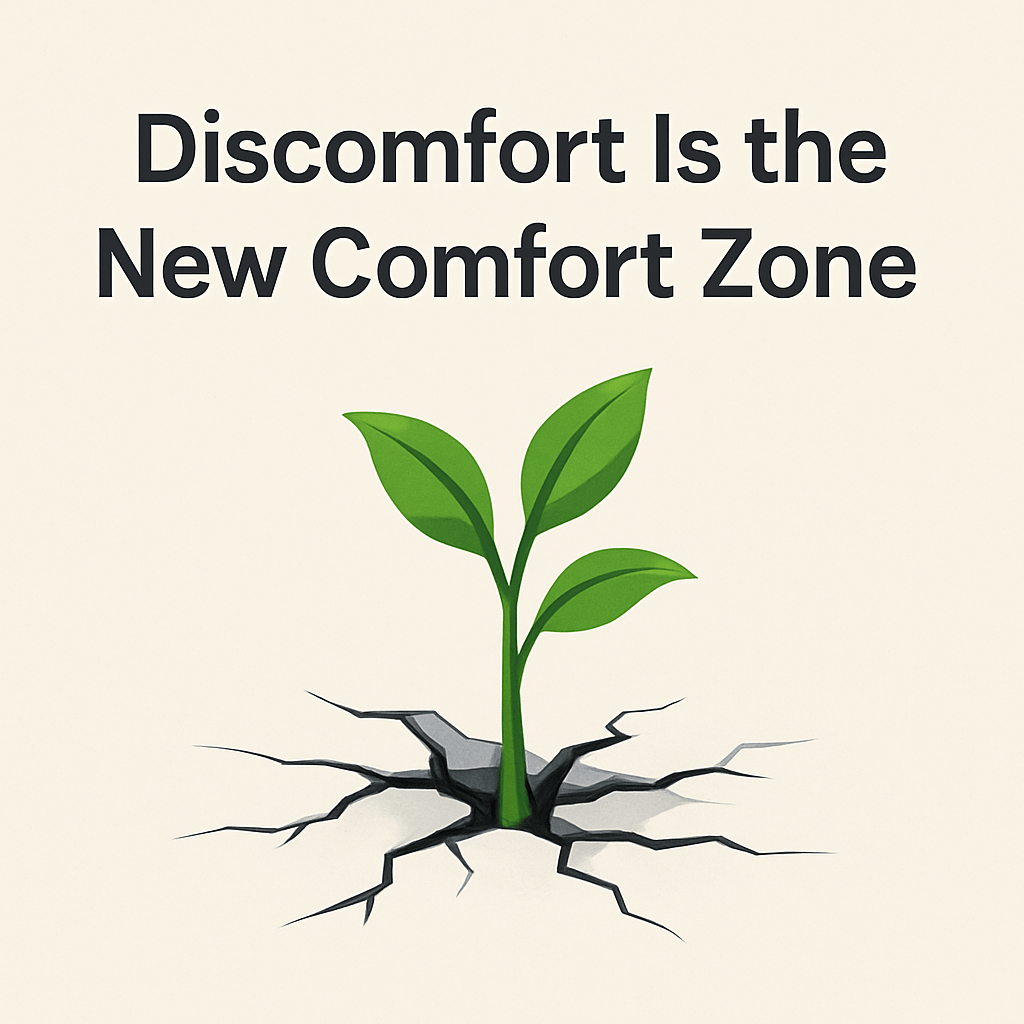
🌱 Discomfort Is the New Comfort Zone

🔹 Introduction:

In today’s fast and ever-evolving world, growth begins where comfort ends. What used to feel “safe” and “predictable” often leads to stagnation. The new-age mindset says it loud and clear:

“If it doesn’t challenge you, it won’t change you.” – Fred DeVito


🔹 Why Discomfort Should Be Welcomed:

  1. Discomfort sparks growth.
    When you face new challenges, your brain and character evolve. “Life begins at the end of your comfort zone.” – Neale Donald Walsch
  2. Comfort zones breed fear of change.
    Staying safe often means missing opportunities. “Don’t fear failure. Fear being in the same place next year.”
  3. Every breakthrough starts with uncertainty.
    The best ideas and personal revolutions happen in moments of doubt. “Growth is uncomfortable because you’ve never been here before.”
  4. Discomfort builds resilience.
    Facing new experiences strengthens your mental muscles. “Pain is temporary. Quitting lasts forever.” – Lance Armstrong
  5. You stop surviving and start thriving.
    Stepping into discomfort turns potential into progress. “Get comfortable with being uncomfortable.” – Jillian Michaels

🔹 Examples of Productive Discomfort:

  • Speaking in public for the first time.
  • Starting a business or switching careers.
  • Saying “no” when you’re used to pleasing others.
  • Waking up early for your goals.
  • Having difficult but honest conversations.

🔹 How to Embrace Discomfort:

✅ Start small – take micro-risks daily.
✅ Reframe discomfort as a teacher, not a threat.
✅ Reflect regularly – see how far you’ve come.
✅ Surround yourself with people who push you.

“Discomfort is a sign that you’re on the right path.”


🔹 Final Thought:

Discomfort isn’t a punishment — it’s a signal that you’re evolving. The more you stretch yourself, the more powerful and authentic your life becomes.

“Your comfort zone is beautiful, but nothing ever grows there.”

Embracing Change: Overcoming Fear and Thriving in Uncertainty

Why Do We Struggle with Change?

  1. Fear of the Unknown
    • Stepping into the unfamiliar creates anxiety and fear.
    • Humans tend to resist situations they cannot predict or control.
  2. Comfort Zone Attachment
    • We prefer routines that feel safe and predictable.
    • Change threatens our established comfort and forces adaptation.
  3. Emotional Resistance
    • Change often involves loss (habits, people, roles).
    • Emotional ties to the past make it harder to let go.
  4. Cognitive Bias
    • “Status quo bias” makes us prefer what we already know.
    • Overestimating risks while underestimating benefits adds to hesitation.
  5. Fear of Failure
    • Concerns about not succeeding in a new environment or role can paralyze action.
    • Self-doubt amplifies resistance to change.

How to Embrace Change Effectively

  1. Acknowledge the Discomfort
    • Understand that resistance is a natural reaction.
    • Accept your feelings without judgment.
  2. Shift Your Perspective
    • View change as an opportunity for growth rather than a threat.
    • Focus on potential benefits and new experiences.
  3. Break It Down
    • Tackle change in smaller, manageable steps.
    • Celebrate progress to build momentum.
  4. Reframe Fear as Excitement
    • Recognize that fear and excitement can feel similar.
    • Shift your mindset to focus on positive anticipation.
  5. Practice Self-Compassion
    • Be kind to yourself during the adjustment period.
    • Remember, it’s okay to struggle while adapting.
  6. Stay Curious and Open
    • Approach change with a mindset of learning.
    • Ask, “What can this teach me?” rather than resisting outright.
  7. Seek Support
    • Share your feelings with friends, family, or mentors.
    • Community and guidance can ease the transition.
  8. Visualize Success
    • Imagine yourself thriving in the new scenario.
    • Positive visualization helps reduce anxiety and motivates action.
  9. Build Resilience
    • Use challenges as an opportunity to strengthen adaptability.
    • Regularly step out of your comfort zone in small ways to prepare for bigger changes.
  10. Focus on What You Can Control
    • Identify aspects of the change you can influence.
    • Taking action where possible reduces helplessness.

Conclusion

Change is inevitable, and while it may be uncomfortable, it is also essential for growth and progress. By understanding why we resist it and adopting strategies to embrace it, we can navigate life’s transitions with confidence and optimism.

Finding Comfort with Solitude

Introduction

  • Embracing solitude can be enriching and empowering.
  • Solitude provides an opportunity for self-discovery and personal growth.
  • It helps in understanding oneself better and can lead to a more fulfilling life.

Benefits of Solitude

Self-Reflection

  • Allows you to introspect and understand your thoughts and feelings.
  • Helps in identifying personal goals and aspirations.
  • Encourages deep thinking and self-analysis.
  • Provides clarity on life’s priorities.

“In solitude, the mind gains strength and learns to lean upon itself.” – Laurence Sterne

Stress Reduction

  • Quiet time can reduce stress and anxiety.
  • Provides a break from the constant hustle and bustle of life.
  • Creates a calm environment to recharge.
  • Helps in managing emotions better.

“The greatest thing in the world is to know how to belong to oneself.” – Michel de Montaigne

Boosts Creativity

  • Alone time can spark creativity.
  • Helps in generating new ideas and solutions.
  • Encourages thinking outside the box.
  • Provides space for artistic and creative expression.

“Without great solitude, no serious work is possible.” – Pablo Picasso

Enhances Relationships

  • Improves your relationship with yourself, making you more self-sufficient.
  • Allows you to appreciate the time spent with others.
  • Teaches you to value and nurture relationships.
  • Helps in setting healthy boundaries.

“Solitude is the place of purification.” – Martin Buber

Increases Productivity

  • Fewer distractions mean more focus and efficiency.
  • Provides the opportunity to work on personal projects and goals.
  • Enhances concentration and dedication.
  • Leads to higher quality of work.

“The monotony and solitude of a quiet life stimulates the creative mind.” – Albert Einstein

Promotes Independence

  • Encourages self-reliance and confidence.
  • Helps in developing problem-solving skills and resilience.
  • Fosters a sense of independence.
  • Strengthens your ability to handle challenges alone.

“The best thinking has been done in solitude. The worst has been done in turmoil.” – Thomas A. Edison

Improves Mental Health

  • Provides time to recharge and rejuvenate.
  • Can lead to better emotional regulation and mental clarity.
  • Reduces feelings of overwhelm and burnout.
  • Supports overall mental well-being.

“Solitude is where I place my chaos to rest and awaken my inner peace.” – Nikki Rowe

How to Embrace Solitude

Create a Comfortable Space

  • Designate a cozy and peaceful area in your home for alone time.
  • Ensure it’s free from distractions.
  • Personalize it with items that bring you joy and comfort.
  • Keep it clean and organized.

Engage in Solo Activities

  • Pick up hobbies like reading, writing, or painting.
  • Enjoy solo walks or hikes in nature.
  • Explore cooking, gardening, or crafting.
  • Indulge in activities that bring you peace and happiness.

Practice Mindfulness and Meditation

  • Spend time meditating to clear your mind.
  • Practice mindfulness to stay present and enjoy the moment.
  • Engage in breathing exercises to calm the mind.
  • Use guided meditations or mindfulness apps.

“In the silence of the heart, God speaks.” – Mother Teresa

Set Boundaries

  • Let others know you need some alone time.
  • Schedule regular periods of solitude in your routine.
  • Learn to say no to unnecessary commitments.
  • Protect your personal time and space.

Journal Your Thoughts

  • Writing down your thoughts can be therapeutic and insightful.
  • Helps in processing emotions and tracking personal growth.
  • Encourages self-expression and clarity.
  • Provides a record of your journey and progress.

“Writing is utter solitude, the descent into the cold abyss of oneself.” – Franz Kafka

Pursue Learning

  • Use alone time to learn something new, like a language or a skill.
  • Engages your mind and keeps it active.
  • Enhances personal growth and knowledge.
  • Provides a sense of accomplishment.

Enjoy Leisure Activities

  • Watch movies, listen to music, or engage in any leisure activities you enjoy.
  • Provides relaxation and enjoyment.
  • Helps in unwinding and recharging.
  • Offers a break from routine.

Connect with Nature

  • Spend time outdoors in parks, gardens, or natural settings.
  • Nature can be calming and grounding.
  • Encourages physical activity and fresh air.
  • Enhances mental and emotional well-being.

“Look deep into nature, and then you will understand everything better.” – Albert Einstein

Overcoming the Fear of Solitude

Start Small

  • Begin with short periods of alone time and gradually increase.
  • Use this time for activities you enjoy.
  • Build comfort and confidence gradually.
  • Celebrate small victories.

Focus on the Positive

  • Remind yourself of the benefits of solitude.
  • Use affirmations to embrace your own company.
  • Reframe solitude as an opportunity, not a punishment.
  • Keep a gratitude journal to focus on positive aspects.

Stay Connected

  • Balance solitude with social interactions.
  • Stay in touch with friends and family through calls or messages.
  • Engage in social activities when needed.
  • Build a support system.

Develop a Routine

  • Incorporate solitude into your daily routine.
  • Regularity can help in getting comfortable with being alone.
  • Establish rituals that you look forward to.
  • Maintain a balance between solitude and social life.

Seek Professional Help if Needed

  • If the fear of solitude is overwhelming, consider talking to a therapist.
  • Professional guidance can provide valuable coping strategies.
  • Therapy can help in addressing underlying issues.
  • Don’t hesitate to seek support when needed.

“Solitude is fine, but you need someone to tell that solitude is fine.” – Honoré de Balzac

Conclusion

  • Solitude is a valuable part of life that can lead to personal growth and well-being.
  • Embrace and enjoy your own company to enhance your overall quality of life.
  • Remember, solitude is not loneliness; it’s an opportunity for self-care and enrichment.
  • Take small steps to incorporate solitude into your life and reap its numerous benefits.

This Too Shall Pass: Embracing the Impermanence of Life

Introduction

Life is a series of highs and lows, joys and sorrows. One of the most comforting and empowering truths is that “this too shall pass.” Embracing the idea that nothing is permanent can bring peace and strength in times of difficulty. Here are some key points to understand and accept this concept, along with relevant quotes from famous personalities.

1. Understanding Impermanence

  • Everything Changes: Whether it’s happiness or hardship, nothing stays the same forever.
    • Quote: “This too shall pass.” – Persian adage

2. Emotional Resilience

  • Temporary Feelings: Emotions, whether good or bad, are fleeting.
    • Quote: “If you’re going through hell, keep going.” – Winston Churchill
  • Stay Present: Mindfulness can help you stay grounded during turbulent times.
    • Quote: “The present moment is the only time over which we have dominion.” – Thích Nhất Hạnh

3. Appreciating Good Times

  • Cherish Moments: Knowing they won’t last forever helps you savor joyful times.
    • Quote: “Happiness is not something ready-made. It comes from your own actions.” – Dalai Lama
  • Live Fully: Embrace and enjoy the good moments as they come.
    • Quote: “The best way to pay for a lovely moment is to enjoy it.” – Richard Bach

4. Navigating Difficult Times

  • Endurance: Hard times are part of life, but they are temporary.
    • Quote: “Tough times never last, but tough people do.” – Robert H. Schuller
  • Learn and Grow: Difficult experiences can lead to personal growth and strength.
    • Quote: “What lies behind us and what lies before us are tiny matters compared to what lies within us.” – Ralph Waldo Emerson

5. Adapting to Change

  • Embrace Change: Life’s changes can bring new opportunities and perspectives.
    • Quote: “The only way to make sense out of change is to plunge into it, move with it, and join the dance.” – Alan Watts
  • Stay Flexible: Being adaptable helps you navigate life’s inevitable changes.
    • Quote: “It is not the strongest of the species that survive, nor the most intelligent, but the one most responsive to change.” – Charles Darwin

6. Maintaining Hope

  • Hope and Positivity: Even in the darkest times, maintaining hope can guide you through.
    • Quote: “The darkest hour has only sixty minutes.” – Morris Mandel
  • Look Forward: Trust that better times are ahead.
    • Quote: “Every adversity, every failure, every heartache carries with it the seed of an equal or greater benefit.” – Napoleon Hill

Conclusion

Remembering that “this too shall pass” helps you navigate the highs and lows of life with greater ease. Embracing impermanence allows you to cherish the good times, endure the tough times, and stay open to the ever-changing journey of life.

The Ultimate Trust: Building a Relationship with the Almighty

Have you ever felt let down or betrayed by someone you thought you could trust? You’re not alone. Human relationships can be messy and unpredictable, leaving us feeling vulnerable and unsure. But fear not, because there is one relationship that is always steadfast and trustworthy – our connection with the Almighty.

The Nature of Human Relationships

Human relationships are a beautiful and complex tapestry of emotions, but they can also be fragile and easily broken. People are flawed and imperfect, which means they can sometimes disappoint us or let us down. This can lead to feelings of mistrust and betrayal, leaving us questioning who we can truly rely on.

The Unwavering Support of the Almighty

When it comes to the Almighty, the story is different. A divine presence that offers unconditional love and unwavering support, the Almighty is always there for us, no matter what. In times of joy or sorrow, in moments of triumph or defeat, the Almighty remains a constant source of comfort and guidance.

Finding Solace in Spirituality

Turning to our faith can provide us with a sense of peace and comfort that human relationships often cannot. By deepening our spiritual connection with the Almighty, we can find solace in knowing that we are not alone in this journey of life. Through prayer, meditation, and reflection, we can strengthen our bond with the Divine and feel a sense of inner peace.

Embracing the Power of Faith

Countless individuals have found solace and strength in their relationship with the Almighty. By placing their trust in a higher power, they have been able to navigate life’s challenges with courage and resilience. The power of faith is an incredible force that can sustain us through even the darkest of times, providing us with a sense of purpose and meaning.

Remember, the Almighty is always there for you, ready to offer guidance, comfort, and love. By nurturing your relationship with the Divine, you can find a sense of peace and trust that surpasses anything the world has to offer. So, take a moment today to connect with the Almighty and feel the power of divine trust infusing your life with strength and hope.