✨ The Quantum Leap: Small Changes That Create Big Shifts in Life

Life doesn’t always change through big decisions or dramatic moments.
Sometimes, it changes through tiny actions—small steps that create powerful results over time.
In quantum physics, a “quantum leap” is a small jump of energy that leads to a big transformation.
The same idea applies to our lives.

Here’s how small changes can create big shifts, just like a quantum leap.


🌟 1. Small Changes Create New Possibilities

In quantum theory, even a tiny shift in energy can move a particle to a completely new state.
In life, a small habit change can move you to a new version of yourself.

Example:

  • Reading for 10 minutes a day can slowly turn you into a knowledgeable, confident person.
  • Drinking one extra glass of water daily can improve your energy level.

🌟 2. Every Action Raises Your “Energy Level”

Quantum leaps happen when energy increases.
Similarly, when you make small improvements, your mindset, confidence, and lifestyle rise to a higher level.

Example:

  • Waking up just 15 minutes earlier each day may give you extra time to plan your day calmly.
  • Writing three things you’re grateful for shifts your emotional energy instantly.

🌟 3. You Don’t Need Big Motivation — Just Tiny Momentum

Quantum jumps don’t require huge force; they happen instantly when enough small energy builds up.
Tiny efforts create steady momentum.

Example:

  • Walking only 2,000 steps more each day leads to better health over months.
  • Learning one new English word daily improves communication without pressure.

🌟 4. Small Decisions Change Your Direction

Even the slightest shift in angle can change your destination completely—just like how a particle’s path changes with a tiny impulse.
Small decisions today create a new future.

Example:

  • Choosing to save ₹20 a day becomes ₹600 a month and ₹7,200 a year.
  • Choosing to reduce screen time by 10 minutes daily improves focus and sleep.

🌟 5. The Power of Changing Your Environment Slightly

In quantum physics, particles change behavior depending on their environment.
Similarly, your surroundings influence your habits and mindset.

Example:

  • Keeping fruits on your table helps you eat healthier.
  • Placing books near your bed encourages reading.

🌟 6. Small Mindset Shifts Lead to Big Emotional Growth

A slight shift in thinking can transform how you feel, behave, and respond.

Example:

  • Changing the thought “I can’t do this” to “I will try” opens new opportunities.
  • Replacing negative self-talk with kinder words reduces stress.

🌟 7. Small Daily Improvements Compound Over Time

Just like small energy additions create a quantum jump, small daily efforts compound into major life progress.

Example:

  • Practicing a skill for just 5 minutes a day leads to mastery over months.
  • Saving small amounts regularly builds financial stability.

✨ Final Thought

A quantum leap is not magic.
It is the result of consistent small steps that slowly build enough energy to create a big transformation.

You don’t need huge changes.
You just need to begin—with one small step today.

🛠️ Debug My Life: Simple Fixes for a Smoother Mindset

Just like software, life too can get messy with bugs — stress, confusion, bad habits, or procrastination. It’s time to debug your life and upgrade your system!

🔍 1. Identify the Bugs

  • Notice what’s draining your energy — toxic habits, overthinking, negative people, or clutter.
  • Keep a journal or note what triggers stress or low moods.

🧹 2. Clear the Cache (Declutter)

  • Clean your space — a tidy environment boosts mental clarity.
  • Let go of emotional baggage: forgive, release, reset.

🔄 3. Restart Often

  • Take short breaks, walk in nature, or meditate.
  • Sleep well — it’s the best reset button for your brain.

🧭 4. Update Your Mindset

  • Replace “I can’t” with “How can I?”
  • Feed your mind with positive content — books, podcasts, or uplifting people.

⌛ 5. Fix Procrastination Bugs

  • Use the 5-minute rule: “I’ll do this just for 5 minutes.”
  • Break big tasks into tiny steps.

🔐 6. Strengthen Your Firewall (Boundaries)

  • Learn to say “no” without guilt.
  • Protect your time and peace like your passwords.

⚙️ 7. Install Healthy Habits

  • Eat well, move daily, and stay hydrated.
  • Start small — one habit at a time is enough to change your life.

🌐 8. Connect to Good Networks

  • Surround yourself with people who lift you up, not pull you down.
  • Share your progress, and ask for help when needed.

🧑‍💻 9. Run Daily Diagnostics

  • End each day with reflection: What went well? What can improve?
  • Appreciate small wins and keep learning.

🚀 10. Keep Debugging

  • Life won’t be perfect, but you can keep improving.
  • Debugging is not a one-time task — it’s a habit of self-awareness and self-care.

💡 Final Thought:

You don’t need to be perfect — just better than yesterday.
Keep debugging. Keep evolving.

🌿 Soft Yet Strong: The Era of Quiet Confidence

In a world that often celebrates loud voices and bold moves, a new kind of strength is making its mark — quiet confidence. It’s calm, steady, and powerful in its own way. Let’s explore this beautiful shift.


🌟 1. What is Quiet Confidence?

  • It’s believing in yourself without needing to prove it loudly.
  • It’s the calm assurance that shows through actions, not words.
  • It’s rooted in self-awareness and inner peace.

💭 2. Why Are People Embracing It Now?

  • The fast-paced, loud world can be exhausting.
  • People are craving authenticity and calm energy.
  • Mental health awareness has shown the power of emotional balance.

🧘‍♀️ 3. Traits of Quietly Confident People

  • They listen more than they speak.
  • They stay grounded even during chaos.
  • They uplift others instead of competing with them.
  • They don’t need attention to feel valuable.

🔄 4. Softness is Not Weakness

  • Being kind, empathetic, or gentle doesn’t mean you’re weak.
  • In fact, it takes real strength to stay soft in a hard world.
  • Quiet confidence blends strength with compassion.

🌱 5. How to Build Quiet Confidence

  • Practice self-awareness and self-acceptance.
  • Set boundaries without guilt.
  • Focus on progress, not perfection.
  • Celebrate wins privately and support others openly.
  • Stay true to your values, even when no one is watching.

💼 6. In the Workplace and Leadership

  • Leaders with quiet confidence earn deep respect.
  • They guide through example, not force.
  • They create psychologically safe spaces for teams.

🧘‍♂️ 7. In Daily Life

  • You don’t need to be loud to be heard.
  • Small, consistent actions build lasting trust.
  • You inspire others just by being calm, kind, and authentic.

💬 Final Thought

Quiet confidence is the new power.
You don’t need to shout to be strong.
Being soft and sure is more than enough in this new era of strength.

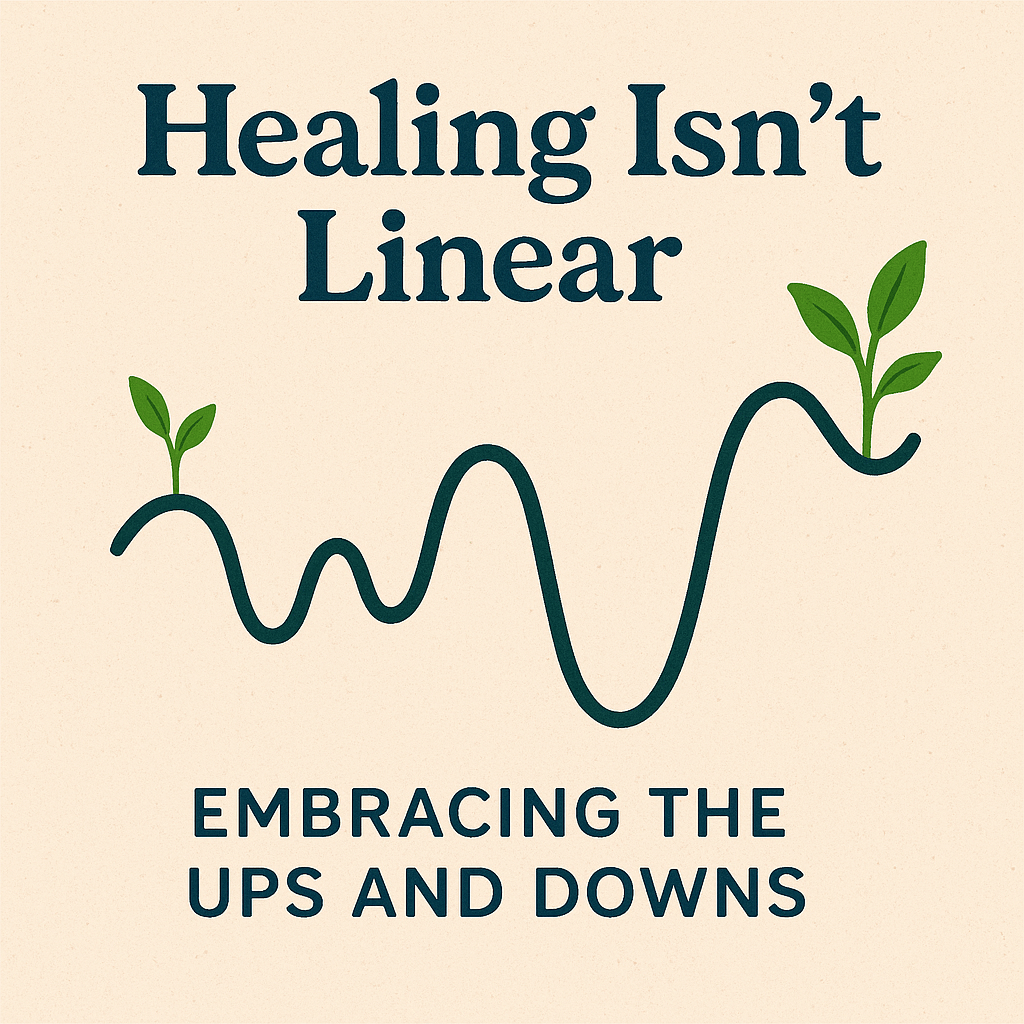
🌱 Healing Isn’t Linear: Embracing the Ups and Downs

Healing—whether emotional, mental, or physical—is not a straight path. It’s a journey filled with progress, setbacks, and moments that may feel like you’re going in circles. And that’s okay.


1. Healing Takes Time

  • Recovery doesn’t happen overnight.
  • It’s okay to take days, weeks, or even years.
  • Be patient with yourself.

2. It’s Normal to Have Good and Bad Days

  • Some days you’ll feel strong, other days you won’t.
  • Bad days don’t erase your progress.
  • Every step, even backward, is part of the journey.

3. Progress Isn’t Always Visible

  • Just because you can’t see improvement doesn’t mean it’s not happening.
  • Inner changes often take time to show on the outside.

4. Setbacks Are Not Failures

  • Falling back into old patterns is common.
  • It’s not a failure—it’s part of learning and growing.
  • Use it as a lesson, not a reason to give up.

5. Celebrate Small Wins

  • Even small steps matter—like getting out of bed, saying “no,” or smiling again.
  • Every tiny win adds up to big change.

6. Your Journey Is Unique

  • Don’t compare your healing to others.
  • Everyone heals at their own pace and in their own way.
  • What works for someone else may not work for you—and that’s okay.

7. Allow Yourself to Feel

  • Don’t hide your emotions—feel them.
  • Crying, anger, or sadness are not signs of weakness.
  • Emotions are part of processing and healing.

8. Ask for Help When You Need It

  • You don’t have to do it alone.
  • Talk to a friend, therapist, or support group.
  • Asking for help is a strength, not a weakness.

9. Be Kind to Yourself

  • Talk to yourself with love and compassion.
  • You’re doing your best, and that’s enough.
  • Replace self-criticism with encouragement.

10. Healing Is Ongoing

  • Healing doesn’t mean you’ll never feel pain again.
  • It means you learn to carry it with more strength and less fear.
  • It’s about growing through what you go through.

🌼 Final Thought:

Healing isn’t a straight line—it’s a journey of twists, turns, detours, and growth. Embrace the process, honor your progress, and trust that every step—even the tough ones—is leading you toward a stronger you.

Becoming Your Own Role Model: Why It Starts with You

We all look up to someone — a celebrity, a teacher, a parent, or a leader. But what if you could become the person you admire the most? Here’s why and how becoming your own role model is powerful:


🔹 1. You Know Yourself Best

  • You understand your strengths and struggles.
  • You know your journey, your efforts, and your pain.
  • Others may inspire you, but they haven’t walked in your shoes.

🔹 2. External Role Models Can Disappoint

  • People are human — they make mistakes.
  • Depending too much on others for motivation can be risky.
  • When you become your own role model, you control the standard.

🔹 3. You Become Accountable

  • You stop blaming others and take ownership of your growth.
  • You start asking: What would the best version of me do?
  • This mindset keeps you grounded and focused.

🔹 4. It Builds Self-Respect and Confidence

  • Every time you show up for yourself, your belief grows.
  • You realize you don’t need outside validation to feel worthy.
  • Confidence isn’t given — it’s built.

🔹 5. You Set the Standard for Others

  • When you lead yourself well, others notice.
  • You inspire friends, siblings, and even strangers without trying.
  • True leadership begins with self-leadership.

🔹 6. Progress Over Perfection

  • You don’t need to be perfect to be your own role model.
  • Keep learning, keep improving — that’s what matters.
  • Growth is what makes you admirable.

Simple Ways to Start

  • Set small goals and stick to them.
  • Talk kindly to yourself.
  • Celebrate progress, no matter how small.
  • Reflect often: Am I becoming the person I’d look up to?

💡 Final Thought:

You don’t need to chase someone else’s path. Build your own. Be someone you’d be proud to look up to — because it truly starts with you.

Healing Isn’t Linear — And That’s Okay

Healing is not a straight road. It’s a journey with ups and downs, good days and tough ones. And that’s completely normal.

Here’s a simple guide to understand and embrace the non-linear nature of healing:


💡 1. Progress Comes in Waves

  • Some days you’ll feel strong, other days not so much — both are part of healing.
  • It’s okay to have setbacks. They don’t erase the progress you’ve made.

👉 Tip: Keep a small journal. Write down even the smallest win — it helps to see how far you’ve come.


💡 2. Feel Your Feelings

  • Suppressing emotions can slow down healing.
  • Allow yourself to cry, rest, be angry, or confused.

👉 Tip: Practice deep breathing or journaling when overwhelmed. It helps release bottled-up emotions.


💡 3. Stop Comparing Your Journey

  • Everyone heals differently. What worked for someone else might not work for you — and that’s okay.

👉 Tip: Unfollow accounts or avoid people who make you feel less. Follow pages that uplift and support you.


💡 4. Healing Takes Time

  • There’s no fixed timeline for feeling better.
  • Rushing the process often adds more pressure.

👉 Tip: Focus on taking it one day at a time. Celebrate small steps.


💡 5. Rest Is Not Laziness

  • Rest is part of recovery, both physically and emotionally.
  • You’re not weak for needing a break.

👉 Tip: Schedule “rest days” just like work or errands. Use them for hobbies, naps, or doing nothing at all.


💡 6. Setbacks Are Not Failures

  • Having a tough day doesn’t mean you’re back to square one.
  • Setbacks are part of growth.

👉 Tip: Remind yourself: “This is temporary. I’ve made it through worse.”


💡 7. Ask for Help When You Need It

  • You don’t have to do it alone.
  • Talking to a friend, mentor, or therapist can bring relief.

👉 Tip: Make a small list of people you trust. Reach out to one when you feel low.


💡 8. Be Gentle With Yourself

  • Self-kindness fuels healing. Harsh self-talk doesn’t.
  • Replace “Why am I still struggling?” with “I’m doing my best, and that’s enough.”

👉 Tip: Speak to yourself like you would to a dear friend.


🌱 Final Thought

Healing isn’t a race. It’s a journey that unfolds in its own time and in its own way. Trust the process. Even on the hard days, you’re still healing.

Redefining Success: Beyond Wealth and Fame

Success means different things to different people. It is not just about wealth or fame but about achieving personal and professional goals while finding happiness and fulfillment. Here’s a simple breakdown of what success truly means:

1. Success is Personal

  • Everyone has their own definition of success.
  • For some, it is financial stability; for others, it is personal growth, happiness, or good relationships.

2. Success is Not Just About Money

  • While financial success is important, true success also includes health, relationships, and peace of mind.
  • Many wealthy people still seek meaning in life, proving that money alone is not enough.

3. Success is About Progress, Not Perfection

  • Small steps toward goals matter more than instant achievements.
  • Continuous improvement and learning make a person truly successful.

4. Success Comes from Hard Work and Persistence

  • Overnight success is a myth; dedication and effort lead to real achievements.
  • Facing failures and learning from them is an essential part of success.

5. Success is About Balance

  • A successful life includes a balance between work, health, relationships, and personal growth.
  • Focusing too much on one area while ignoring others can lead to an unfulfilled life.

6. Success is Finding Inner Happiness

  • True success is not just external achievements but also inner peace and satisfaction.
  • If a person is happy and content with their life, they are already successful.

7. Success is Making a Positive Impact

  • Helping others, contributing to society, and making a difference in someone’s life define a successful person.
  • Kindness and generosity bring more long-term fulfillment than material possessions.

8. Success is Living Your Own Dream

  • Society may define success in certain ways, but real success is living life on your own terms.
  • Doing what you love and being true to yourself is the greatest achievement.

Conclusion

Success is not a one-size-fits-all concept. It is about setting goals, making progress, staying happy, and making a difference. The true meaning of success lies in finding fulfillment in what you do and living a life that aligns with your values.

Push Forward, But Know When to Pivot

Success in any endeavor requires persistence, but it also demands adaptability. While pushing forward is essential for achieving goals, knowing when to pivot can be the difference between success and failure. Entrepreneurs, professionals, and even individuals in personal growth journeys must balance determination with flexibility to navigate challenges effectively.


1. What Does It Mean to “Push Forward”?

Pushing forward means staying committed to your goals despite setbacks. It involves:
✔️ Overcoming obstacles
✔️ Staying focused on long-term vision
✔️ Learning from failures and improving

🔹 Example:
Indian startup Zomato faced multiple rejections but continued refining its business model until it became a food-tech giant.


2. The Power of Persistence

Many success stories stem from unwavering persistence. People who achieve greatness often face years of struggle before breakthroughs.

✔️ Amitabh Bachchan – Rejected in Bollywood early on, but he kept pushing forward and became one of India’s biggest superstars.
✔️ KFC’s Colonel Sanders – His chicken recipe was rejected over 1,000 times before it became a global franchise.

Key Lesson: If you truly believe in your idea, keep refining and improving it instead of giving up too soon.


3. When Should You Pivot?

Pivoting means making a strategic shift in response to challenges, market changes, or new opportunities. Signs that it’s time to pivot include:
✔️ Constant failures with no measurable progress
✔️ Market demand is not aligning with your efforts
✔️ Competitors are moving ahead with better solutions

🔹 Example:
✔️ Instagram – Started as a check-in app called “Burbn,” but the founders noticed users were more interested in sharing photos, so they pivoted.
✔️ Flipkart – Initially an online bookstore, it pivoted into a full-fledged e-commerce platform to meet market demand.


4. How to Decide Whether to Push Forward or Pivot?

Here are key questions to ask:
✔️ Are you making consistent progress toward your goal?
✔️ Is there a real market need for your idea?
✔️ Can adjustments make your current strategy work, or is a major shift required?
✔️ Are you seeing incremental improvements, or is growth stagnating?

🔹 Example:
✔️ Netflix – Started as a DVD rental business but saw the rise of streaming and pivoted early. Today, it dominates the global entertainment industry.


5. The Balance Between Stubbornness and Flexibility

✔️ Be stubborn about your vision, but flexible about your strategy.
✔️ Be open to feedback, even if it means changing direction.
✔️ Embrace failure as a learning tool, not as a dead end.

🔹 Example:
✔️ OYO Rooms – Faced multiple setbacks but kept adapting its business model to meet market needs, making it one of India’s largest hospitality brands.


Final Thoughts: Adapt, Adjust, Achieve

Pushing forward is necessary for success, but knowing when to pivot is equally important. Smart leaders, entrepreneurs, and professionals recognize when to persist and when to change direction.

Stay determined, stay open to change, and success will follow.

Perfection and Procrastination: Two Sides of the Same Coin

The Drive for Perfection

  • Perfectionists often set high, unrealistic standards for themselves.
  • They aim for flawless results, fearing even minor mistakes.
  • While striving for excellence is positive, it can lead to unhealthy pressure.
  • Example: A person cleaning their room spends hours perfectly arranging bookshelves instead of tidying up the rest of the space.

“Perfection is the enemy of progress.” – Winston Churchill

How Perfection Leads to Procrastination

  • Fear of failure or producing less-than-perfect work causes delays.
  • Overthinking every detail creates a cycle of hesitation.
  • Tasks seem overwhelming, leading to avoidance rather than action.
  • Example: An employee delaying a presentation because they feel the slides aren’t visually stunning enough.

The “All or Nothing” Mindset

  • Perfectionists believe they must succeed fully or not try at all.
  • This black-and-white thinking often paralyzes progress.
  • Small steps or imperfect results are undervalued.
  • Example: A chef refusing to prepare a dish for friends because they don’t have the exact ingredients needed to replicate a professional recipe.

“Done is better than perfect.” – Sheryl Sandberg

Procrastination as a Coping Mechanism

  • Putting off tasks becomes a way to avoid the anxiety of imperfection.
  • The longer a task is delayed, the harder it becomes to start.
  • This creates a vicious cycle of guilt and stress.
  • Example: A photographer spends weeks picking the “perfect” editing software instead of working on editing photos.

Impact on Productivity

  • Perfectionists may spend excessive time on minor details, delaying completion.
  • Deadlines are missed, and opportunities may be lost.
  • Creativity and efficiency are stifled by the need for flawlessness.
  • Example: A startup founder delays pitching an idea to investors because their pitch deck isn’t “polished enough.”

Breaking the Cycle

  • Set Realistic Goals: Focus on progress, not perfection.
    • Example: A student decides to finish writing a draft essay in two hours, allowing time for edits later.
  • Embrace Imperfection: Understand that mistakes are part of growth.
    • Example: A graphic designer submits a project knowing it can always be revised based on feedback.
  • Prioritize Tasks: Tackle important tasks first and let go of perfection in less critical areas.
  • Use Time Limits: Set boundaries to avoid overanalyzing.
    • Example: A homemaker spends 30 minutes decluttering a space instead of perfecting it all day.
  • Start Small: Break tasks into manageable steps to reduce overwhelm.
    • Example: A runner starts with a 10-minute jog instead of obsessing over achieving a perfect mile time.

“Strive for progress, not perfection.” – Unknown

The Balance Between Excellence and Action

  • Strive for excellence but accept that perfection is unattainable.
  • Focus on completing tasks to the best of your ability, not flawlessly.
  • Progress, however small, is better than endless delay.
  • Example: A musician uploads their first song draft online rather than waiting to produce a studio-quality version.

Final Thoughts

  • Perfection and procrastination often coexist, feeding off each other.
  • Recognizing this link can help break free from the cycle.
  • Remember: Done is better than perfect!

Now or Never: The Power of Taking Action Today

Life often presents us with moments that call for immediate action. The phrase “Now or Never” is a powerful reminder that some opportunities may never return once missed.

1. Opportunities Are Fleeting

  • Many chances in life are time-sensitive.
  • Delaying action can mean losing opportunities forever.

2. Overcoming Fear of Failure

  • Fear often holds us back from taking the first step.
  • Acting now helps overcome hesitation and builds confidence.

3. Progress Over Perfection

  • Waiting for the “perfect” moment often leads to inaction.
  • Start now, and refine your path as you go.

4. Building Momentum

  • Small actions today create momentum for bigger achievements tomorrow.
  • Consistent effort compounds into significant results over time.

5. Living Without Regrets

  • Regrets often stem from what we didn’t do, not from what we tried.
  • Taking action now ensures you won’t wonder “what if” later.

6. Creating a Sense of Urgency

  • A “Now or Never” attitude instills urgency in your goals.
  • It helps prioritize what truly matters and eliminates procrastination.

7. Seizing the Power of the Present Moment

  • The present is the only time we have control over.
  • Embrace it to shape your future and take charge of your destiny.

8. Inspiration for Others

  • Bold actions inspire those around you to take initiative in their own lives.
  • Your courage can create a ripple effect of positive change.

Simple Steps to Adopt the “Now or Never” Mindset

  1. Set Clear Goals: Know what you want and why it’s important.
  2. Break Down Tasks: Divide goals into manageable steps.
  3. Eliminate Excuses: Challenge self-doubt and negative thoughts.
  4. Act Small, But Start Now: Begin with one small action today.
  5. Learn and Adjust: Use setbacks as lessons to improve.

Conclusion

Every moment is a choice—act now or let the chance slip away. Life rewards those who take action despite fear, uncertainty, or imperfection. So, whether it’s pursuing a dream, starting a new habit, or making a bold decision, remember: it’s now or never.