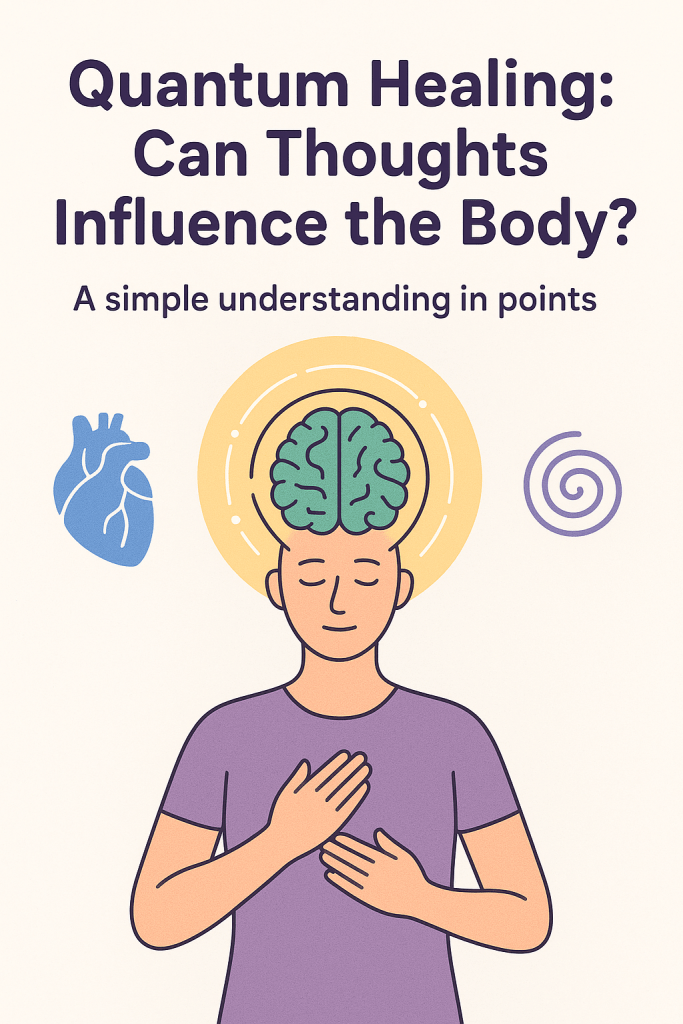
Quantum Healing: Can Thoughts Influence the Body?

1. Introduction: What is Quantum Healing?

  • Quantum healing is the idea that the mind and body are deeply connected.
  • It suggests that your thoughts, emotions, and beliefs can influence your physical health.
  • This concept is inspired by principles from quantum physics, which show that energy and consciousness can affect matter.

2. Everything in the Body Is Energy

  • At the smallest level, your body is made of atoms and energy—not just solid matter.
  • Your heartbeat, breathing, emotions, and thoughts all produce energy signals.
  • If your energy is balanced, you feel healthy; if it is disturbed, you feel unwell.

3. Thoughts Create Real Changes in the Body

  • When you think positively, your brain releases “good chemicals” like dopamine and serotonin.
  • When stressed or worried, your brain releases cortisol, which can weaken immunity.
  • This shows that thoughts have a direct physical impact.

4. The Observer Effect: Why Attention Matters

  • In quantum physics, particles behave differently when observed.
  • Similarly, when you focus your mind on healing, your body responds to that attention.
  • Meditation, prayer, and positive intention activate the body’s natural repair systems.

5. Emotions Carry Energy

  • Joy, gratitude, and love create high-energy states that support healing.
  • Fear, anger, and sadness create low-energy states that may slow down healing.
  • Shifting emotional energy can shift physical well-being.

6. Placebo Effect: Proof That Belief Heals

  • Doctors around the world have seen patients recover simply because they believed a treatment would work.
  • The mind convinced the body to heal—this is a real scientific example of quantum-like healing.

7. Daily Practices That Encourage Quantum Healing

  • Meditate for a few minutes every day to calm your energy.
  • Use positive affirmations (“My body is healing. I am strong.”).
  • Practice gratitude to raise emotional energy.
  • Visualize healing, imagining your body becoming healthier.
  • Stay conscious of your thoughts—replace negative ones gently.

8. Final Thoughts

  • Quantum healing doesn’t replace medical treatment, but it supports it.
  • Your mind is powerful—your thoughts can influence your body more than you realize.
  • When you change your thoughts, you change your energy.
  • When you change your energy, your body responds.

🧠 Mental Fitness: Treating Your Brain Like a Muscle

🌟 Introduction

Just like your body needs exercise to stay strong, your mind also needs regular training to stay healthy, calm, and focused.
Mental fitness isn’t about fixing problems — it’s about building strength, clarity, and emotional balance every day.

💬 “The mind is just like a muscle — the more you exercise it, the stronger it gets.”


💪 1. Train Your Brain Daily

  • Think of your brain as a muscle that grows stronger with use.
  • Do puzzles, read, learn new things, or try something different every day.
  • Challenge your routine to wake up new areas of your mind.

💬 “Great things never come from comfort zones.”


🧘‍♀️ 2. Practice Mindfulness and Meditation

  • Spend at least 10 minutes daily in silence or deep breathing.
  • It reduces stress, increases focus, and helps you stay grounded.
  • Mindfulness teaches you to live in the now, not in the noise.

💬 “Quiet the mind, and the soul will speak.” – Ma Jaya Sati Bhagavati


❤️ 3. Strengthen Emotional Resilience

  • Learn to manage emotions instead of running from them.
  • Focus on what you can control and let go of what you can’t.
  • Positive thinking is mental strength training in disguise.

💬 “You cannot control the waves, but you can learn to surf.”


🧩 4. Keep Learning and Growing

  • Pick up a new hobby, language, or creative skill.
  • Growth keeps your mind flexible and curious.
  • Every new experience builds fresh neural connections.

💬 “Once you stop learning, you start declining.” – Albert Einstein


🥗 5. Fuel Your Brain Right

  • Eat foods rich in omega-3, fruits, vegetables, and nuts.
  • Drink plenty of water and sleep well.
  • A healthy body supports a sharp, peaceful mind.

💬 “Take care of your body — it’s the only place you have to live.” – Jim Rohn


🤝 6. Build Social Connections

  • Talk, share, and connect with positive people.
  • Meaningful conversations boost happiness and mental stability.
  • Laughter and empathy are powerful mental vitamins.

💬 “Connection is the energy that exists between people when they feel seen, heard, and valued.” – Brené Brown


🏃‍♀️ 7. Move Your Body for Mental Strength

  • Walk, dance, or stretch — movement releases happy hormones.
  • Exercise improves focus, memory, and confidence.
  • A fit body supports a fit mind.

💬 “A healthy outside starts from the inside.” – Robert Urich


✍️ 8. Journal and Reflect

  • Write your thoughts to understand your emotions.
  • Journaling helps release mental clutter and find clarity.
  • It’s your daily talk with your inner self.

💬 “Writing is the painting of the voice.” – Voltaire


🌈 9. Rest and Recharge

  • Strength also means knowing when to pause.
  • Sleep, relax, and let your mind recover.
  • Rest is part of progress — not the absence of it.

💬 “Rest and self-care are not wasteful. They are acts of survival.”


🌻 Conclusion

Mental fitness is not about avoiding life’s challenges — it’s about training your mind to stay calm, confident, and creative through them.
Like your body, your brain becomes stronger with consistent care and attention.
Start small, stay steady, and your mental strength will grow — one thought at a time.

💬 “The mind is everything. What you think, you become.” – Buddha

🌅 Morning Routines for the Emotionally Intelligent

✨ Introduction

  • Emotionally intelligent people are self-aware, empathetic, and manage emotions wisely.
  • A strong morning routine sets the emotional tone for the entire day.

☀️ 1. Wake Up Without Rushing

  • Emotionally intelligent people give themselves time in the morning.
  • No snoozing 10 times or jumping straight into stress.
  • They wake up with intention, not panic.

🧘‍♀️ 2. Check In With Yourself First

  • They start by asking: How do I feel today?
  • Quick self-awareness check helps manage emotions early.
  • Journaling or just a 2-minute thought pause helps.

🌬 3. Deep Breathing or Meditation

  • Even 5 minutes of breathing deeply calms the mind.
  • Helps in gaining control over emotional reactions.
  • Builds emotional resilience before facing the world.

📝 4. Set a Positive Intention

  • Emotionally intelligent people don’t just plan the day, they set the mood.
  • They might say: “Today I will stay calm no matter what.”
  • This creates emotional focus and positivity.

📵 5. No Immediate Phone Use

  • They avoid social media or news first thing.
  • Emotional intelligence means choosing what enters your mind.
  • Instead, they connect with themselves before connecting with the world.

✍️ 6. Gratitude Practice

  • They list 2–3 things they’re grateful for.
  • Shifts focus from stress to contentment.
  • Gratitude rewires the brain for emotional stability.

🏃‍♂️ 7. Move the Body

  • A short walk, stretches, or workout boosts mood.
  • Physical movement releases endorphins – feel-good hormones.
  • Emotionally intelligent people know body and mind are connected.

🍵 8. Mindful Breakfast

  • No multitasking — they eat with attention and care.
  • Emotionally intelligent people honor their body with nutrition and presence.
  • A peaceful meal reduces cortisol (stress hormone).

💡 9. Review the Day with Clarity

  • They mentally walk through their day.
  • Prioritize key tasks and potential emotional triggers.
  • This pre-planning helps avoid emotional overwhelm later.

🌟 Conclusion

  • A calm, centered morning is the secret behind emotionally intelligent behavior.
  • You don’t need hours — just a few mindful habits done daily.
  • “Win the morning, win the day.” — Start with emotional awareness, and the rest will follow.

Mastering Emotional Resilience: How to Stay Strong in Tough Times

Life is full of challenges, but emotional resilience helps us navigate difficulties without losing hope. Here’s how you can build resilience and stay strong during tough times.

1. Accept That Challenges Are a Part of Life

  • Struggles and setbacks are normal.
  • Instead of resisting them, embrace them as opportunities to grow.

2. Develop a Positive Mindset

  • Focus on solutions rather than problems.
  • Look for lessons in difficult situations.
  • Practice gratitude to shift your perspective.

3. Manage Your Emotions Effectively

  • Don’t suppress emotions—acknowledge and process them.
  • Journaling, meditation, or deep breathing can help.
  • Take a break if emotions feel overwhelming.

4. Strengthen Your Support System

  • Surround yourself with positive, supportive people.
  • Don’t hesitate to seek help from friends, family, or professionals.
  • Talking about your feelings can lighten the burden.

5. Build Healthy Coping Mechanisms

  • Exercise, sleep, and healthy eating improve mental strength.
  • Engage in hobbies that bring you joy and relaxation.
  • Avoid unhealthy coping strategies like overeating or excessive screen time.

6. Cultivate Self-Compassion

  • Be kind to yourself—don’t judge yourself harshly.
  • Treat yourself with the same kindness you’d show a friend.
  • Learn from mistakes instead of dwelling on them.

7. Stay Adaptable and Open to Change

  • Life doesn’t always go as planned—be flexible.
  • Develop problem-solving skills to adjust to new situations.
  • Accept what you can’t change and focus on what you can control.

8. Set Small, Achievable Goals

  • Break big problems into smaller steps.
  • Celebrate small wins to boost motivation.
  • Progress, no matter how small, keeps you moving forward.

9. Practice Mindfulness and Stress Management

  • Stay present and avoid overthinking the past or future.
  • Meditation, yoga, and deep breathing can help manage stress.
  • Focus on what you can do now.

10. Keep a Long-Term Perspective

  • Tough times don’t last forever.
  • Remind yourself of past difficulties you’ve overcome.
  • Every challenge makes you stronger and wiser.

Final Thoughts

Emotional resilience isn’t about avoiding difficulties—it’s about facing them with strength and confidence. By developing a positive mindset, managing emotions, and staying adaptable, you can handle life’s challenges with grace and resilience.

Biohacking for Beginners: How to Optimize Your Body and Mind

Biohacking is the practice of using science, technology, and lifestyle changes to improve your physical and mental performance. It focuses on small, effective tweaks to your daily routine that enhance health, energy, and cognitive function.


1. Nutrition Hacks for Better Energy

Intermittent Fasting – Eat within a specific time window (e.g., 8 hours) to improve metabolism and energy.
Superfoods – Include brain-boosting foods like blueberries, walnuts, and dark chocolate.
Hydration – Drink enough water and add electrolytes to stay energized.
Gut Health – Eat fermented foods like yogurt to improve digestion and immunity.


2. Sleep Optimization for Peak Performance

Stick to a Routine – Sleep and wake up at the same time daily.
Blue Light Blocking – Avoid screens 1–2 hours before bed to improve melatonin production.
Cold Room Temperature – Sleep better in a cool, dark, and quiet room.
Magnesium & Herbal Teas – Natural sleep aids like chamomile tea or magnesium can improve relaxation.


3. Brain and Mind Hacks for Mental Clarity

Cold Showers – Boosts alertness, reduces stress, and improves circulation.
Meditation & Deep Breathing – Reduces stress and improves focus.
Nootropics (Brain Supplements) – Natural options like caffeine, and omega-3s enhance cognitive function.
Learning & Neuroplasticity – Read, solve puzzles, and challenge your brain daily.


4. Exercise & Movement for Longevity

Strength Training – Lifts weights to boost metabolism and bone health.
High-Intensity Interval Training (HIIT) – Short bursts of exercise improve cardiovascular health.
Walking & Sunlight – 10,000 steps a day + 20 minutes of sunlight improve mood and vitamin D levels.
Stretching & Mobility – Yoga and dynamic stretching prevent injuries and enhance flexibility.


5. Biohacking Tools & Gadgets

Wearable Tech – Smartwatches track sleep, heart rate, and activity levels.
Red Light Therapy – Helps with muscle recovery, skin health, and sleep.
Blue Light Glasses – Reduces eye strain and improves sleep quality.
Grounding (Earthing) – Walking barefoot on grass or sand improves mood and reduces stress.


6. Stress & Recovery Optimization

Gratitude Journaling – Writing down positive thoughts improves mental health.
Cold Exposure (Ice Baths) – Reduces inflammation and speeds up recovery.
Sauna & Heat Therapy – Supports detoxification and muscle relaxation.
Social Connection – Strong relationships boost overall well-being.


Final Thoughts

Biohacking doesn’t have to be extreme or expensive. Start with small changes, track your progress, and gradually add new habits. Listen to your body and find what works best for you!

The Synergy of Mind and Body: Self-Care Practices for Total Health

The mind and body are deeply connected, and taking care of both is essential for overall well-being. Understanding and nurturing this connection is key to effective self-care.

  1. Understanding the Mind-Body Link
    • The mind and body are not separate; they influence each other constantly. Our thoughts, emotions, and mental states can affect our physical health, and vice versa.
  2. Mental Health Impacts Physical Health
    • Stress, anxiety, and depression can manifest as physical symptoms like headaches, fatigue, muscle tension, or digestive issues.
    • Positive mental states like happiness and calm can promote better immune function, improve sleep, and boost energy levels.
  3. Physical Health Influences Mental Health
    • Regular physical activity boosts mood by releasing endorphins, which reduce stress and improve mental clarity.
    • A healthy diet rich in nutrients also supports brain function, reducing feelings of anxiety or depression.
  4. Self-Care Practices that Strengthen the Mind-Body Connection
    • Exercise: Whether it’s yoga, walking, or strength training, physical activity helps release pent-up tension, reduces anxiety, and improves mood.
    • Mindfulness and Meditation: These practices center the mind, reduce stress, and help you tune in to both physical and emotional needs.
    • Adequate Sleep: A good night’s sleep recharges the body and mind, enhancing emotional stability and cognitive function.
    • Healthy Eating: A balanced diet filled with fruits, vegetables, and whole grains can improve both mood and energy levels, making it easier to manage stress.
    • Deep Breathing: Simple breathing exercises can calm the nervous system, reduce heart rate, and help in moments of stress.
  5. The Power of Positive Thinking
    • Cultivating a positive mindset can reduce the physical effects of stress, such as high blood pressure and muscle tension. Positive thoughts promote relaxation and well-being.
  6. Stress Management and Relaxation
    • Chronic stress can lead to various health issues, including digestive problems and high blood pressure. Practicing relaxation techniques like progressive muscle relaxation or guided imagery can relieve tension and improve both mental and physical health.
  7. Emotional Expression
    • Suppressing emotions can negatively affect physical health. Self-care through emotional expression, such as talking with loved ones or journaling, can release built-up emotional tension and prevent it from manifesting as physical ailments.
  8. The Importance of Self-Awareness
    • Being aware of your body’s signals—such as fatigue, tension, or pain—allows you to address your needs before they escalate into more serious issues.
  9. Self-Care for Balance
    • The key to effective self-care lies in balancing both mental and physical health. Taking time for activities that nurture your body and mind will help you achieve a holistic sense of well-being.

    Create a Better Version of Yourself

    Introduction
    Life is a journey of constant growth and transformation. The desire to become a better version of yourself is not about perfection—it’s about progress. It’s about making small, meaningful changes that lead to a happier, healthier, and more fulfilled life. Self-improvement doesn’t require monumental shifts; rather, it’s the result of simple, consistent actions that align with your values and aspirations.

    Strategies for Self-Improvement

    1. Set SMART Goals
      • Make your goals Specific, Measurable, Achievable, Relevant, and Time-bound.
      • Example: Instead of “Get fit,” say, “I will exercise for 30 minutes, 3 times a week, for the next month.”
    2. Read 10 Pages a Day
      • Dedicate a small amount of time daily to reading books or articles.
      • Reading helps expand your knowledge and can be a source of motivation.
    3. Exercise for 20 Minutes
      • Start with short workouts—walk, jog, or do home exercises.
      • Regular exercise not only improves health but boosts your mood and energy.
    4. Practice Gratitude Daily
      • Each day, write down three things you’re grateful for.
      • This simple habit helps shift focus from problems to blessings.
    5. Use the Two-Minute Rule
      • If a task will take less than two minutes, do it immediately.
      • This helps build momentum and keeps your to-do list from piling up.
    6. Limit Social Media Time
      • Set specific time limits on how long you’ll spend on social media.
      • Instead, use that time for personal development activities, like journaling or learning.
    7. Create a Morning Routine
      • Start your day with a few positive habits, like stretching, making your bed, and having a healthy breakfast.
      • A solid morning routine sets a productive tone for the day.
    8. Find an Accountability Partner
      • Share your goals with someone who can encourage and check in on your progress.
      • This helps you stay motivated and committed to your goals.
    9. Practice Deep Breathing or Meditation
      • Dedicate a few minutes each day to relax your mind.
      • Simple breathing exercises or meditation can reduce stress and improve focus.
    10. Focus on One Task at a Time
      • Avoid multitasking; give your full attention to the task at hand.
      • This increases productivity and reduces mental fatigue.
    11. Invest in Learning New Skills
      • Spend 30 minutes a day on a skill you want to improve, like learning a language or coding.
      • Take advantage of free online courses to enhance your knowledge.
    12. Reflect Weekly
      • At the end of each week, reflect on your progress and what could be improved.
      • Adjust your plans as needed to stay on track.

    Conclusion
    Creating a better version of yourself doesn’t happen overnight, but with dedication and consistency, the small steps you take each day will lead to significant transformations over time. Focus on your journey, celebrate your progress, and remember that every effort counts. You already have the potential to grow—start today and embrace the process of becoming your best self!

    Master Your Mornings: Habits of Highly Successful Individuals

    How you start your morning often determines the course of your entire day. High achievers understand this and craft their mornings to align with their goals and priorities. From business tycoons to sports legends, many Indian personalities follow simple yet powerful morning routines that boost productivity, energy, and focus. By drawing inspiration from their habits, you can create your own transformative morning routine and set the stage for success.

    1. Wake Up Early

    • Inspiration: Many successful people, including Tim Cook (Apple CEO) and Richard Branson (Virgin Group), wake up around 5:00 a.m. to kickstart their day.
    • Why it Works: Early mornings are peaceful and allow time for reflection, planning, and personal development. It also gives you a head start before the world gets busy.

    2. Exercise for Physical and Mental Fitness

    • Inspiration: Virat Kohli, Indian cricketer, prioritizes fitness and starts his day with a workout or yoga session. Similarly, Bollywood actor Akshay Kumar swears by early morning exercise and martial arts practice.
    • Why it Works: Morning workouts boost energy levels, enhance focus, and maintain physical fitness. It sets a disciplined tone for the day.

    3. Meditation and Mindfulness

    • Inspiration: Deepika Padukone, actress and mental health advocate, practices yoga and mindfulness every morning to maintain emotional balance. Oprah Winfrey and Arianna Huffington swear by meditation in the morning to ground themselves before facing the day.
    • Why it Works: Meditation helps calm the mind, reduce stress, and improve clarity, which are essential for productivity and well-being.

    4. Healthy Start with Nutrition

    • Inspiration: PV Sindhu, Olympic badminton player, follows a strict and nutritious morning diet to fuel her rigorous training schedule. Chef Vikas Khanna also begins his day with fresh, wholesome food that keeps him energized.
    • Why it Works: A balanced breakfast, rich in proteins and nutrients, energizes the body and supports sustained focus throughout the day.

    5. Read or Reflect for Personal Growth

    • Inspiration: Ratan Tata, industrialist and philanthropist, values quiet mornings where he reads, reflects, or plans his day. Similarly, Shiv Nadar, founder of HCL, uses early mornings for strategic thinking.
    • Why it Works: Reading or reflecting in the morning enhances knowledge, sharpens focus, and provides clarity for decision-making.

    6. Gratitude and Journaling

    • Inspiration: Priyanka Chopra, global icon, practices gratitude and journals her thoughts each morning, focusing on positive intentions for the day.
    • Why it Works: Expressing gratitude promotes happiness and contentment. Journaling helps organize thoughts and track progress toward goals.

    7. Plan the Day with Precision

    • Inspiration: Narayana Murthy, co-founder of Infosys, emphasizes starting the day by reviewing goals and priorities. He believes in a systematic approach to tackle daily challenges.
    • Why it Works: Having a clear plan reduces decision fatigue, saves time, and ensures that important tasks are accomplished first.

    8. Stay Grounded with Spiritual Practices

    • Inspiration: Amitabh Bachchan, legendary actor, begins his day with prayer and reflection, staying connected to his values and roots.
    • Why it Works: Spiritual practices bring a sense of peace and purpose, keeping you centered amidst daily challenges.

    9. Simplify with Minimalism

    • Inspiration: Dr. APJ Abdul Kalam, former President of India, was known for his simple yet impactful routines, emphasizing minimalism and focus on work.
    • Why it Works: Simplifying decisions, such as having a consistent morning routine, frees mental energy for more critical tasks.

    10. Avoid Technology in the Early Hours

    • Inspiration: Sachin Tendulkar, cricket legend, prefers to keep his mornings free from gadgets to focus on himself and his family.
    • Why it Works: Avoiding technology prevents distractions and allows for a calm, focused start to the day.

    Key Takeaways from Indian Achievers:

    • Start Early: Waking up early gives you time to focus on yourself and set a productive tone.
    • Embrace Fitness: Physical activity is crucial for maintaining energy and discipline.
    • Stay Mindful: Meditation or yoga promotes mental clarity and emotional balance.
    • Plan Ahead: Setting priorities ensures your energy is spent on what truly matters.
    • Stay Grounded: Spirituality or gratitude practices bring positivity and purpose to your day.

    Breaking Out of Mental Blocks and Comfort Zones

    Stepping out of mental blocks and comfort zones can lead to personal growth, innovation, and new opportunities.

    1. Understand Your Mental Blocks
    • Identify Triggers: Notice situations where you feel stuck or unmotivated.
    • Self-Reflection: Reflect on why these blocks occur—fear of failure, self-doubt, or overthinking?
    • Acknowledge Patterns: Recognize recurring thoughts or behaviors that prevent progress.

    2. Acknowledge the Comfort Zone Trap

    • Recognize Comfort Habits: We often do what’s familiar to avoid discomfort or risk.
    • Reflect on Potential Stagnation: Comfort zones feel safe, but they can also prevent growth and limit experiences.
    • Identify the Costs: Consider what you might miss out on by staying in your comfort zone.

    3. Set Small, Manageable Goals

    • Start Small: Break big challenges into smaller, achievable goals.
    • Daily Challenges: Commit to doing one small thing each day that stretches you.
    • Celebrate Progress: Acknowledge each small win to build confidence and momentum.

    4. Embrace a Growth Mindset

    • Shift Your Perspective: Believe that abilities and intelligence can be developed with effort.
    • Learn from Setbacks: View failures and mistakes as learning experiences.
    • Challenge Yourself: Seek out opportunities that promote learning and personal growth.

    5. Use Visualization Techniques

    • Imagine Success: Visualize yourself successfully breaking through challenges.
    • Picture the Journey: Visualize the steps you’ll take and the effort involved.
    • Build Confidence: Use visualization to reinforce positive outcomes and reduce anxiety.

    6. Take Calculated Risks

    • Start with Low-Stakes Risks: Try something slightly uncomfortable but not overwhelming.
    • Push Gradually: Increase the difficulty or novelty of challenges over time.
    • Learn as You Go: Use each risk as an opportunity to learn and adapt.

    7. Surround Yourself with Supportive People

    • Seek Encouragement: Surround yourself with people who encourage growth and resilience.
    • Learn from Others: Observe how others handle challenges or push their limits.
    • Build Accountability: Share your goals with someone who can support and motivate you.

    8. Challenge Negative Thoughts

    • Recognize Limiting Beliefs: Question thoughts that say “I can’t” or “I’m not good enough.”
    • Replace with Positives: Use affirmations or positive statements to shift your mindset.
    • Focus on Strengths: Remind yourself of past successes to build self-belief.

    9. Develop Healthy Coping Strategies

    • Practice Stress Relief: Use meditation, journaling, or exercise to manage stress and fear.
    • Embrace Discomfort: Recognize that growth often feels uncomfortable, and that’s okay.
    • Build Resilience: Use each step out of your comfort zone to strengthen resilience over time.

    10. Reflect and Adapt Regularly

    • Assess Progress: Periodically review how far you’ve come and what you’ve learned.
    • Adjust Goals: Refine your goals as you grow, setting new ones as you conquer old challenges.
    • Stay Open to Change: Be open to evolving as you overcome each mental block or comfort zone.

    The Impact of Mental Pressure on Physical Health and How to Overcome It

    Mental pressure, or stress, can deeply affect both our mind and body. Prolonged mental pressure often leads to physical health problems. Understanding these impacts and learning how to overcome them is key to maintaining overall well-being.

    The Impact of Mental Pressure on Physical Health

    1. Headaches and Migraines
      • Mental stress often causes muscle tension, leading to frequent headaches or migraines.
    2. Weakened Immune System
      • Prolonged stress weakens the immune system, making the body more susceptible to colds and infections.
    3. Heart Issues
      • Stress raises blood pressure and heart rate, increasing the risk of heart problems like heart disease and stroke.
    4. Digestive Problems
      • Mental pressure can disrupt digestion, causing stomach issues such as bloating, indigestion, and even irritable bowel syndrome (IBS).
    5. Sleep Disorders
      • Stress leads to insomnia or poor-quality sleep, leaving you feeling tired and drained.
    6. Weight Fluctuations
      • Some people overeat when stressed, while others lose their appetite, causing weight gain or loss.
    7. Muscle Tension and Pain
      • Stress builds tension in muscles, particularly in the neck, shoulders, and back, resulting in chronic pain.
    8. Skin Problems
      • Stress can worsen skin conditions like acne, eczema, and psoriasis due to inflammation.
    9. Fatigue and Low Energy
      • Ongoing stress drains energy levels, making you feel fatigued and less motivated.

    How to Overcome Mental Pressure

    1. Practice Deep Breathing
      • Deep breathing exercises help calm your mind and body. Taking slow, deep breaths can immediately reduce stress.
    2. Regular Exercise
      • Physical activity releases endorphins, which improve mood and reduce stress. Even a short daily walk can make a difference.
    3. Prioritize Sleep
      • Maintain a regular sleep schedule to ensure quality rest. Aim for 7-8 hours of sleep each night to restore energy and reduce stress.
    4. Healthy Eating
      • A balanced diet helps keep your body and mind in better condition. Avoid excessive caffeine and sugar, which can heighten stress levels.
    5. Mindfulness and Meditation
      • Mindfulness techniques and meditation can help you stay in the present moment and manage stress more effectively.
    6. Time Management
      • Organizing your tasks and setting realistic goals can reduce the feeling of being overwhelmed and help manage stress.
    7. Social Support
      • Talking to friends, family, or a counselor can relieve mental pressure. Sharing your thoughts with others provides emotional support.
    8. Engage in Hobbies
      • Make time for activities you enjoy. Hobbies provide a healthy distraction and help recharge your mind.
    9. Limit Exposure to Stress Triggers
      • Identify stress triggers in your life and minimize exposure to them whenever possible, such as limiting social media use or news consumption.
    10. Practice Gratitude
      • Focusing on what you’re grateful for can shift your mindset from stress to positivity. This simple habit can boost your mental health.

    Conclusion

    Mental pressure significantly affects physical health, leading to headaches, digestive problems, heart issues, and more. By adopting healthy habits such as regular exercise, mindfulness, and time management, you can reduce mental pressure and protect your physical well-being.