Daily Stress vs. Chronic Stress: Knowing the Difference

Introduction

Stress is a part of everyday life. Deadlines, responsibilities, and unexpected situations often create pressure. However, not all stress is the same. Understanding the difference between daily stress and chronic stress helps us manage our mental health better and prevent long-term harm.


What Is Daily Stress?

Daily stress is short-term and usually linked to routine activities or temporary challenges.

Common causes:

  • Tight schedules or deadlines
  • Exams, meetings, or presentations
  • Traffic, minor conflicts, or small setbacks

Key characteristics:

  • Lasts for a short period
  • Reduces once the situation is resolved
  • Can sometimes improve focus and motivation

Example:
Feeling nervous before an exam but relaxed once it is over.


What Is Chronic Stress?

Chronic stress is long-lasting and occurs when stressful situations continue without relief.

Common causes:

  • Ongoing financial problems
  • Long-term work pressure
  • Family conflicts or caregiving responsibilities
  • Unresolved emotional issues

Key characteristics:

  • Persists for weeks or months
  • Feels constant and overwhelming
  • Affects both mental and physical health

Example:
Feeling anxious and exhausted every day due to prolonged work pressure.


Key Differences Between Daily and Chronic Stress

  • Duration:
    Daily stress is temporary; chronic stress is continuous.
  • Impact:
    Daily stress is manageable; chronic stress is harmful.
  • Recovery:
    Daily stress fades with rest; chronic stress does not easily go away.
  • Health effects:
    Chronic stress may lead to anxiety, depression, sleep issues, and fatigue.

Why Knowing the Difference Matters

  • Helps you recognize when stress becomes unhealthy
  • Encourages timely self-care and support
  • Prevents burnout and long-term mental health issues

Ignoring chronic stress can slowly affect emotional well-being, relationships, and overall quality of life.


Simple Ways to Manage Stress

  • Practice deep breathing or mindfulness
  • Maintain a healthy daily routine
  • Take short breaks and rest adequately
  • Share concerns with trusted people
  • Seek professional help when stress feels constant

Final Thoughts

Stress is unavoidable, but suffering is not. While daily stress is a normal part of life, chronic stress is a warning sign that should not be ignored. By understanding the difference, we can take better care of our minds and lead healthier, more balanced lives.

💫 You Are Exactly Where You’re Meant to Be

🌸 Introduction

There are times in life when we question everything — our choices, timing, and even our direction. We wonder if we’ve missed opportunities or fallen behind. But what if everything is actually happening just as it’s supposed to? What if, right now, you are exactly where you’re meant to be?
Sometimes, peace doesn’t come from changing your situation, but from trusting the path you’re already on.


Life unfolds with purpose


Every experience, whether joyful or painful, is shaping you into the person you’re meant to become. Nothing in your journey is wasted.

  1. God’s timing is perfect
    Delays aren’t denials. They are divine pauses, preparing you for something greater. You’re not late — you’re aligned with a higher plan.
  2. Every season has a reason
    Life has seasons of growth, waiting, and healing. Each one serves its own purpose in helping you evolve.
  3. Stop comparing your journey
    Someone else’s progress doesn’t define your own. Your path is uniquely yours, designed with care and intention.
  4. Embrace the present moment
    True peace comes from acceptance. When you stop resisting where you are, you begin to see the beauty hidden in this phase.
  5. Challenges are part of the process
    Struggles don’t mean you’re lost. Often, they’re lessons in disguise, guiding you toward greater strength and wisdom.
  6. You are growing, even in silence
    Growth isn’t always visible. Sometimes, God works quietly behind the scenes, aligning everything perfectly for your next step.
  7. Trust the divine plan
    Even when you don’t understand why things happen, believe that everything unfolds for your ultimate good.
  8. Be grateful for the now
    Gratitude transforms your outlook. When you focus on what’s good right now, life feels lighter and more meaningful.
  9. You are not behind — you’re becoming
    Every step, even the confusing ones, is leading you closer to where you’re supposed to be. You are learning, evolving, and becoming stronger with each experience.

Final Thoughts

Life isn’t a race, and you’re not missing out on anything meant for you. Every chapter — even the slow or difficult ones — is essential to your story. Trust that this moment has a purpose, even if you can’t see it yet.
When you let go of resistance and lean into faith, you’ll realize that you are right where you’re supposed to be — growing, healing, and preparing for what’s next.


🌼 Quote to Reflect On:

“Sometimes you just need to breathe, trust, let go, and see what happens — because you are exactly where you’re meant to be.”

🌱 Hard Times Don’t Last Forever

Life is not a straight road—it’s a journey filled with twists, turns, ups, and downs. When we go through tough times, it feels as if the pain will never end. But here’s the truth: hard times are temporary. They come to test us, to teach us, and most importantly, to prepare us for something better.

🌤️ Why Hard Times Don’t Last Forever

  1. Every Storm Eventually Ends
    No matter how heavy the rain, the clouds always clear. Similarly, every challenge you face has an expiry date. What seems unbearable today will one day just be a memory.
  2. Struggles Build Strength
    Muscles grow when they are tested by resistance. In the same way, life’s struggles make you stronger, braver, and wiser. Without difficulties, we would never discover our true strength.
  3. Time is a Great Healer
    Wounds, whether emotional or physical, need time. As days pass, pain lessens, and perspective grows. What breaks you today may build you tomorrow.
  4. Mindset Shapes the Outcome
    If you see a problem as a dead end, it becomes one. But if you see it as a lesson, it becomes a stepping stone. Choosing hope over despair changes the way you experience tough times.
  5. You’re Not Alone
    Hardships feel lighter when shared. Leaning on family, friends, or faith can provide the comfort and support you need to move forward.
  6. Growth Happens in Darkness
    Seeds grow in the dark soil before they bloom in sunlight. Likewise, your struggles may be preparing you for opportunities you cannot yet see.
  7. Hope is the Lifeline
    One of the most powerful reminders during hard times is: “This too shall pass.” Hope is not just a feeling—it is the fuel that keeps you moving forward.

🌟 A Short Story to Remember

There’s a saying: “Diamonds are made under pressure.”
A young man once complained to his grandmother about all his struggles. She boiled carrots, eggs, and coffee beans in three pots of water. After a while, she asked him what he saw.

  • The carrots became soft.
  • The eggs turned hard inside.
  • The coffee beans transformed the water itself.

She explained: “Life’s difficulties affect us differently. Some become weak, some become tough, and some use hardships to create something new and beautiful.”

The young man realized that challenges don’t define us—our response does.


💡 Final Thought

Hard times are like passing clouds—dark for a while, but they never block the sun forever. Stay patient, stay strong, and believe that brighter days are ahead. Every struggle you face today is preparing you for a stronger, wiser, and more hopeful tomorrow.

Your comeback will always be stronger than your setback. 🌈

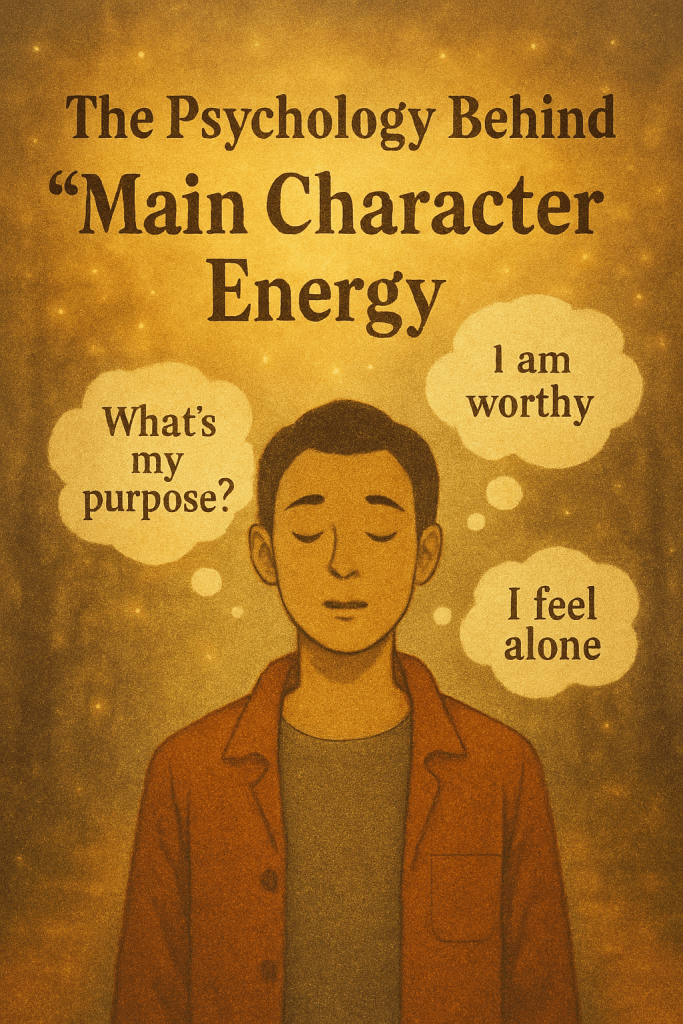
The Psychology Behind “Main Character Energy”

In recent years, you might have heard phrases like “I’m in my main character era” or “Live like the main character.” But what does it really mean? And why is it trending?

Let’s break it down simply.


🌟 What Is “Main Character Energy”?

Main Character Energy (MCE) is a mindset where a person sees themselves as the lead in their own life story. It’s about confidence, self-awareness, and making choices that align with your values, not just blending into the background.

“You are the author of your own story. Don’t hand the pen to someone else.”


🧠 Why It Feels So Good (Psychological Reasons)

  1. Boosts Self-Esteem
    • When you feel like the ‘main character,’ you value yourself more.
    • Example: Dressing up just for a walk because it makes you feel good.
  2. Encourages Mindfulness
    • You become more aware of your surroundings and actions.
    • Example: Drinking coffee slowly while enjoying the moment, like you’re in a movie scene.
  3. Helps Create a Strong Identity
    • You start asking: What kind of person do I want to be?
    • This leads to intentional decisions, not just going with the crowd.
  4. Inspires Personal Growth
    • Main characters overcome challenges.
    • Example: You treat a bad day not as the end—but as the middle of your character arc.
    “You either walk inside your story and own it, or you stand outside and hustle for your worthiness.” — Brené Brown

🎬 Main Character Energy vs. Narcissism

It’s important to note that MCE is not about being self-obsessed or thinking others are less important.
It’s about:

✅ Confidence — not arrogance
✅ Self-love — not selfishness
✅ Growth — not perfection

“You can be the main character of your life without needing to be the center of everyone else’s.”

✨ Practical Ways to Step into Your Main Character Energy

  1. Create Your “Main Character” Morning Routine
    • Start your day with intention. Stretch, journal, listen to music that motivates you.
    • Example: Brew your coffee slowly, stand by the window, and soak in the moment — like the intro scene of a movie.
  2. Dress for the Mood You Want to Create
    • Wear outfits that make you feel confident, even if you’re not going anywhere fancy.
    • Example: Wear that bold shirt or lipstick just because it feels you.
  3. Narrate Your Day (Internally or Out Loud!)
    • Turn simple moments into powerful scenes.
    • Example: Walking to the bus stop? Imagine you’re the hero heading to an important mission.
  4. Celebrate Small Wins Like Big Victories
    • Whether it’s finishing a to-do list or making it through a hard day, clap for yourself.
    • Example: Treat yourself to a solo coffee date after a productive week.
  5. Set a Soundtrack for Your Life
    • Make playlists that match your vibe — “Confidence Mode,” “Healing Era,” or “Rising Strong.”
    • Music/podcast makes every moment feel cinematic and empowering.
  6. Say Yes to Solo Moments
    • Take yourself out for a nature walk, or bookstore visit. You don’t need company to enjoy your life.
    • Example: A quiet Sunday spent journaling and reflecting can feel like a self-love scene.

📖 Final Thought

You don’t need to wait for someone to give you permission. You are already the main character.
Every small act of self-care, courage, and intention writes a better version of your life story.

“The moment you start acting like life is a movie, everything changes. The mood, the energy, the plot—it’s all in your hands.”

Bouncing Back: How to Build Resilience in Uncertain Times

Life often presents unexpected challenges—whether it’s a personal crisis, a global shift, or professional struggles. Resilience allows us to recover and grow through these times. Here’s how to build and maintain resilience in moments of uncertainty:


🌱 1. Accept What You Can’t Control

  • Don’t resist change; learn to adapt.
  • Let go of the need for certainty.

“You can’t stop the waves, but you can learn to surf.” – Jon Kabat-Zinn


💭 2. Shift Your Perspective

  • See challenges as opportunities for growth.
  • Ask, “What can this teach me?”

“In the middle of difficulty lies opportunity.” – Albert Einstein


🧘 3. Practice Self-Care

  • Prioritize sleep, nutrition, and physical activity.
  • Engage in hobbies that help you relax and unwind.

“Self-care is how you take your power back.” – Lalah Delia


🧠 4. Strengthen Your Mindset

  • Practice gratitude daily to shift your focus.
  • Use positive affirmations and challenge negative thoughts.

“It’s not the strongest of the species that survive, nor the most intelligent, but the one most responsive to change.” – Charles Darwin


🤝 5. Stay Connected

  • Lean on friends, family, or support groups.
  • Build a network that lifts you up in tough times.

“The best way to find yourself is to lose yourself in the service of others.” – Mahatma Gandhi


🗓️ 6. Take One Day at a Time

  • Focus on making the best of today, not worrying about tomorrow.
  • Don’t dwell on the unknown future.

“Do not anticipate trouble, or worry about what may never happen. Keep in the sunlight.” – Benjamin Franklin


📚 7. Keep Learning and Growing

  • Constantly evolve by reading, reflecting, and adapting.
  • Embrace new skills and knowledge to overcome difficulties.

“The only way to deal with this life meaningfully is to find one’s passion and follow it.” – Dalai Lama


🌟 Final Thought:

Resilience isn’t about avoiding challenges—it’s about facing them head-on, learning from them, and growing stronger. By nurturing your body, mind, and relationships, you can endure uncertainty and emerge more powerful.

Mastering Emotional Resilience: How to Stay Strong in Tough Times

Life is full of challenges, but emotional resilience helps us navigate difficulties without losing hope. Here’s how you can build resilience and stay strong during tough times.

1. Accept That Challenges Are a Part of Life

  • Struggles and setbacks are normal.
  • Instead of resisting them, embrace them as opportunities to grow.

2. Develop a Positive Mindset

  • Focus on solutions rather than problems.
  • Look for lessons in difficult situations.
  • Practice gratitude to shift your perspective.

3. Manage Your Emotions Effectively

  • Don’t suppress emotions—acknowledge and process them.
  • Journaling, meditation, or deep breathing can help.
  • Take a break if emotions feel overwhelming.

4. Strengthen Your Support System

  • Surround yourself with positive, supportive people.
  • Don’t hesitate to seek help from friends, family, or professionals.
  • Talking about your feelings can lighten the burden.

5. Build Healthy Coping Mechanisms

  • Exercise, sleep, and healthy eating improve mental strength.
  • Engage in hobbies that bring you joy and relaxation.
  • Avoid unhealthy coping strategies like overeating or excessive screen time.

6. Cultivate Self-Compassion

  • Be kind to yourself—don’t judge yourself harshly.
  • Treat yourself with the same kindness you’d show a friend.
  • Learn from mistakes instead of dwelling on them.

7. Stay Adaptable and Open to Change

  • Life doesn’t always go as planned—be flexible.
  • Develop problem-solving skills to adjust to new situations.
  • Accept what you can’t change and focus on what you can control.

8. Set Small, Achievable Goals

  • Break big problems into smaller steps.
  • Celebrate small wins to boost motivation.
  • Progress, no matter how small, keeps you moving forward.

9. Practice Mindfulness and Stress Management

  • Stay present and avoid overthinking the past or future.
  • Meditation, yoga, and deep breathing can help manage stress.
  • Focus on what you can do now.

10. Keep a Long-Term Perspective

  • Tough times don’t last forever.
  • Remind yourself of past difficulties you’ve overcome.
  • Every challenge makes you stronger and wiser.

Final Thoughts

Emotional resilience isn’t about avoiding difficulties—it’s about facing them with strength and confidence. By developing a positive mindset, managing emotions, and staying adaptable, you can handle life’s challenges with grace and resilience.

Embracing Change: Overcoming Fear and Thriving in Uncertainty

Why Do We Struggle with Change?

  1. Fear of the Unknown
    • Stepping into the unfamiliar creates anxiety and fear.
    • Humans tend to resist situations they cannot predict or control.
  2. Comfort Zone Attachment
    • We prefer routines that feel safe and predictable.
    • Change threatens our established comfort and forces adaptation.
  3. Emotional Resistance
    • Change often involves loss (habits, people, roles).
    • Emotional ties to the past make it harder to let go.
  4. Cognitive Bias
    • “Status quo bias” makes us prefer what we already know.
    • Overestimating risks while underestimating benefits adds to hesitation.
  5. Fear of Failure
    • Concerns about not succeeding in a new environment or role can paralyze action.
    • Self-doubt amplifies resistance to change.

How to Embrace Change Effectively

  1. Acknowledge the Discomfort
    • Understand that resistance is a natural reaction.
    • Accept your feelings without judgment.
  2. Shift Your Perspective
    • View change as an opportunity for growth rather than a threat.
    • Focus on potential benefits and new experiences.
  3. Break It Down
    • Tackle change in smaller, manageable steps.
    • Celebrate progress to build momentum.
  4. Reframe Fear as Excitement
    • Recognize that fear and excitement can feel similar.
    • Shift your mindset to focus on positive anticipation.
  5. Practice Self-Compassion
    • Be kind to yourself during the adjustment period.
    • Remember, it’s okay to struggle while adapting.
  6. Stay Curious and Open
    • Approach change with a mindset of learning.
    • Ask, “What can this teach me?” rather than resisting outright.
  7. Seek Support
    • Share your feelings with friends, family, or mentors.
    • Community and guidance can ease the transition.
  8. Visualize Success
    • Imagine yourself thriving in the new scenario.
    • Positive visualization helps reduce anxiety and motivates action.
  9. Build Resilience
    • Use challenges as an opportunity to strengthen adaptability.
    • Regularly step out of your comfort zone in small ways to prepare for bigger changes.
  10. Focus on What You Can Control
    • Identify aspects of the change you can influence.
    • Taking action where possible reduces helplessness.

Conclusion

Change is inevitable, and while it may be uncomfortable, it is also essential for growth and progress. By understanding why we resist it and adopting strategies to embrace it, we can navigate life’s transitions with confidence and optimism.

Be Proactive, Not Reactive

Introduction

Life constantly throws challenges and opportunities at us. How we handle them defines the quality of our journey. Being reactive—waiting for situations to unfold before acting—can lead to stress and missed opportunities. On the other hand, being proactive allows us to take control, plan ahead, and create positive outcomes. Proactive people don’t wait for things to happen; they make things happen.

1. What Does It Mean to Be Proactive?

  • Being proactive means taking initiative, anticipating challenges, and acting before situations demand it.
  • It’s about focusing on solutions rather than being overwhelmed by problems.

2. The Problem with Being Reactive

  • Reacting often means making decisions based on emotions, like panic or frustration.
  • It leads to rushed actions and a feeling of being out of control.

3. Benefits of Being Proactive

  • Better Control: You direct your life instead of letting circumstances dictate your path.
  • Improved Planning: You’re prepared for challenges before they arise.
  • Reduced Stress: Tackling problems early prevents them from becoming crises.
  • More Opportunities: A proactive approach often opens doors that others miss.

4. Examples of Proactive vs. Reactive

  • Proactive: Saving money regularly for emergencies.
    Reactive: Borrowing money last minute when faced with unexpected expenses.
  • Proactive: Seeking feedback at work to improve performance.
    Reactive: Waiting for a problem to occur before addressing it.

5. Steps to Be Proactive

  • Set Clear Goals: Know what you want and work steadily toward it.
  • Plan Ahead: Break tasks into smaller steps and start early.
  • Anticipate Challenges: Think about potential obstacles and prepare solutions.
  • Take Responsibility: Acknowledge your role in shaping outcomes instead of blaming circumstances.

6. Building a Proactive Mindset

  • Focus on what you can control and let go of what you can’t.
  • Practice mindfulness to stay calm and think clearly.
  • Surround yourself with people who encourage growth and positivism.

7. Overcoming Challenges to Stay Proactive

  • Stress and uncertainty can make it easy to fall back into reactive habits.
  • Build small habits like daily planning and reflecting on your actions to stay proactive.

8. Proactive People Inspire Change

  • Your proactive mindset can influence others to take charge of their lives.
  • Together, proactive actions can lead to broader positive changes in communities and workplaces.

Take Charge of Your Life

Life may not always go as planned, but a proactive mindset helps you navigate its twists and turns with confidence. Start small—create a goal, plan ahead, and take the first step. Being proactive isn’t just about solving problems; it’s about creating opportunities and leading a purposeful life. Remember, proactive people shape their destiny, while reactive people let circumstances define them.

Make It or Break It: Achieve It or Accept It

  1. What Does “Make It or Break It” Mean?
    • A mindset where you either succeed through effort or face the consequences of failure.
    • Encourages determination and perseverance in high-stakes situations.
  2. The Drive to “Make It”
    • Success comes from pushing past challenges.
    • Focus on solutions, learning from mistakes, and adapting to reach your goals.
  3. The Concept of “Achieve It or Accept It”
    • After giving your best, sometimes outcomes are beyond your control.
    • Learn to either achieve your goals or accept the situation gracefully.
  4. Why Acceptance is Important
    • Acceptance is not giving up; it’s understanding when to let go.
    • Helps shift focus to new opportunities or better approaches.
  5. Balancing the Two Mindsets
    • Use “Make It or Break It” to strive for success.
    • Apply “Achieve It or Accept It” to stay resilient when things don’t go as planned.
  6. Lessons for Life
    • Life isn’t always about winning; it’s about learning and growing.
    • Failure is a stepping stone, and acceptance leads to new possibilities.

Conclusion

  • Combine determination and acceptance for a balanced approach to challenges.
  • Strive for success, but know when to adapt and move forward.
  • Life’s journey is about persistence, resilience, and learning from every experience.

Change Is Never Easy But Always Possible

  1. What is Change?
    • Change involves doing things differently or trying new approaches. Whether it’s adjusting your lifestyle or switching careers, change helps you grow.
    • Example: Many people transitioned to working from home during the COVID-19 pandemic. While it was difficult initially, many found it beneficial, with more time spent with family and less time spent commuting.
  2. Challenges of Change
    • Change can be difficult because it forces us out of our comfort zone. We might feel anxious, overwhelmed, or unsure at first.
    • Example: When schools switched to online learning, teachers had to learn new technology quickly. It was stressful at first, but over time, teachers became more comfortable and effective in their new roles.
  3. Fear of the Unknown
    • The fear of failure or the unknown is a natural response to change. This fear often stops people from embracing new opportunities.
    • Example: A person considering a career change may fear they won’t succeed in a new field. However, once they take the leap, they often find that their skills are transferable and that the change leads to greater job satisfaction.
  4. Resisting Change
    • Many people resist change because they prefer the status quo. However, resisting change can prevent growth and opportunities.
    • Example: When a company decides to switch from a paper-based system to digital tools, employees may initially resist. However, once they realize that the new system saves time and reduces errors, they embrace the change.
  5. Mindset Matters
    • A positive mindset helps us cope with change. Instead of viewing change as a threat, see it as a chance to improve and evolve.
    • Example: An employee who faces a layoff might initially be upset. But with the right mindset, they can view it as an opportunity to explore a new career path that better aligns with their interests and goals.
  6. Small Steps Lead to Big Change
    • Change doesn’t have to happen overnight. Small, gradual changes can lead to big transformations.
    • Example: If someone wants to get healthier but feels overwhelmed by the idea of intense workouts, they can start with 10-minute walks or swapping junk food for healthier snacks. Over time, these small changes can lead to significant health improvements.

In conclusion, while change can be difficult, it is always possible with the right mindset, small steps, and patience. Change, though challenging, often leads to personal growth and new opportunities that wouldn’t have been possible otherwise.