Why ‘Good Enough’ Is the New Perfect

1. Perfection Is Exhausting

  • Striving for perfection drains time, energy, and mental peace.
  • People are realizing that chasing flawless results often leads to burnout, not happiness.

2. Progress Matters More Than Perfection

  • Taking action, even if it’s not perfect, moves you forward.
  • Small, consistent steps lead to bigger results over time.

3. Good Enough Saves Time

  • Perfecting every detail wastes valuable hours.
  • “Good enough” allows faster decision-making and quicker progress.

4. Perfection Is Often an Illusion

  • What feels perfect to one person might not to another.
  • Standards constantly change, making it impossible to please everyone.

5. Good Enough Encourages Innovation

  • When you stop fearing mistakes, you’re more willing to try new ideas.
  • Creativity flows better when you’re not stuck in a perfectionist mindset.

6. Real Success Comes from Adaptability

  • In today’s fast-moving world, flexibility is more important than flawlessness.
  • Those who adjust and move forward quickly win, not those who wait to be perfect.

7. It Improves Mental Health

  • Accepting “good enough” reduces anxiety, self-doubt, and stress.
  • It promotes a healthier relationship with yourself and your work.

8. Good Enough Builds Confidence

  • Finishing tasks (even imperfectly) builds momentum and belief in yourself.
  • You learn, grow, and improve with each completed effort.

9. The World Appreciates Authenticity, Not Perfection

  • People connect more with genuine efforts and honest mistakes.
  • Authentic work is often more inspiring than something that appears flawlessly staged.

10. Good Enough Is Sustainable

  • It’s a mindset you can maintain for the long term.
  • You stay productive, creative, and balanced without burning out.

🌟 Final Thought:

“Good enough” doesn’t mean careless. It means knowing when something is strong enough to serve its purpose — and trusting that it’s better to be real and done than stuck chasing an impossible perfect.

Building Mental Wealth: The New Definition of Success

Success has long been associated with financial wealth, status, and material possessions. However, in today’s fast-paced world, true success is increasingly being redefined as mental wealth—a state of emotional well-being, resilience, and clarity.

1. Prioritize Mental Health

  • Just as financial wealth requires investment, mental wealth needs care and attention.
  • Prioritize rest, mindfulness, and emotional well-being.
  • Seek therapy or support when needed, just as you would consult a financial advisor for money matters.

2. Develop Emotional Intelligence

  • Understand and regulate your emotions effectively.
  • Cultivate empathy and build strong interpersonal relationships.
  • Emotional intelligence enhances both personal and professional success.

3. Embrace Continuous Learning

  • Keep your mind sharp by learning new skills and expanding your knowledge.
  • Reading, problem-solving, and curiosity fuel personal growth.
  • A growth mindset leads to adaptability and long-term success.

4. Strengthen Resilience

  • Challenges and setbacks are inevitable—mental wealth equips you to handle them with strength.
  • Develop coping strategies such as mindfulness, gratitude, and positive self-talk.
  • Learn to see failures as opportunities for growth.

5. Set Boundaries and Protect Your Energy

  • Mental wealth requires saying no to negativity and energy-draining activities.
  • Limit exposure to toxic relationships, unhealthy social media habits, and unnecessary stressors.
  • Protect your peace and prioritize self-care.

6. Cultivate Meaningful Connections

  • Wealth isn’t just about money—it’s about relationships and community.
  • Build a supportive network of family, friends, and mentors.
  • Engage in deep, fulfilling conversations rather than surface-level interactions.

7. Practice Mindfulness and Gratitude

  • Being present enhances mental clarity and reduces stress.
  • Gratitude shifts your focus from what’s lacking to what’s abundant.
  • A simple daily gratitude practice can improve overall happiness and perspective.

8. Balance Work and Life

  • True success isn’t about overworking—it’s about a balanced and fulfilling life.
  • Prioritize hobbies, rest, and time with loved ones.
  • A well-rounded life contributes to both mental and financial wealth.

Conclusion

Mental wealth is the foundation of true success—it shapes how you experience life, manage challenges, and create lasting happiness. By investing in your mental well-being, you gain clarity, resilience, and fulfillment that no amount of money can buy. Start today by valuing your mind as your most precious asset!

Push Forward, But Know When to Pivot

Success in any endeavor requires persistence, but it also demands adaptability. While pushing forward is essential for achieving goals, knowing when to pivot can be the difference between success and failure. Entrepreneurs, professionals, and even individuals in personal growth journeys must balance determination with flexibility to navigate challenges effectively.


1. What Does It Mean to “Push Forward”?

Pushing forward means staying committed to your goals despite setbacks. It involves:
✔️ Overcoming obstacles
✔️ Staying focused on long-term vision
✔️ Learning from failures and improving

🔹 Example:
Indian startup Zomato faced multiple rejections but continued refining its business model until it became a food-tech giant.


2. The Power of Persistence

Many success stories stem from unwavering persistence. People who achieve greatness often face years of struggle before breakthroughs.

✔️ Amitabh Bachchan – Rejected in Bollywood early on, but he kept pushing forward and became one of India’s biggest superstars.
✔️ KFC’s Colonel Sanders – His chicken recipe was rejected over 1,000 times before it became a global franchise.

Key Lesson: If you truly believe in your idea, keep refining and improving it instead of giving up too soon.


3. When Should You Pivot?

Pivoting means making a strategic shift in response to challenges, market changes, or new opportunities. Signs that it’s time to pivot include:
✔️ Constant failures with no measurable progress
✔️ Market demand is not aligning with your efforts
✔️ Competitors are moving ahead with better solutions

🔹 Example:
✔️ Instagram – Started as a check-in app called “Burbn,” but the founders noticed users were more interested in sharing photos, so they pivoted.
✔️ Flipkart – Initially an online bookstore, it pivoted into a full-fledged e-commerce platform to meet market demand.


4. How to Decide Whether to Push Forward or Pivot?

Here are key questions to ask:
✔️ Are you making consistent progress toward your goal?
✔️ Is there a real market need for your idea?
✔️ Can adjustments make your current strategy work, or is a major shift required?
✔️ Are you seeing incremental improvements, or is growth stagnating?

🔹 Example:
✔️ Netflix – Started as a DVD rental business but saw the rise of streaming and pivoted early. Today, it dominates the global entertainment industry.


5. The Balance Between Stubbornness and Flexibility

✔️ Be stubborn about your vision, but flexible about your strategy.
✔️ Be open to feedback, even if it means changing direction.
✔️ Embrace failure as a learning tool, not as a dead end.

🔹 Example:
✔️ OYO Rooms – Faced multiple setbacks but kept adapting its business model to meet market needs, making it one of India’s largest hospitality brands.


Final Thoughts: Adapt, Adjust, Achieve

Pushing forward is necessary for success, but knowing when to pivot is equally important. Smart leaders, entrepreneurs, and professionals recognize when to persist and when to change direction.

Stay determined, stay open to change, and success will follow.

Embracing Change: Overcoming Fear and Thriving in Uncertainty

Why Do We Struggle with Change?

  1. Fear of the Unknown
    • Stepping into the unfamiliar creates anxiety and fear.
    • Humans tend to resist situations they cannot predict or control.
  2. Comfort Zone Attachment
    • We prefer routines that feel safe and predictable.
    • Change threatens our established comfort and forces adaptation.
  3. Emotional Resistance
    • Change often involves loss (habits, people, roles).
    • Emotional ties to the past make it harder to let go.
  4. Cognitive Bias
    • “Status quo bias” makes us prefer what we already know.
    • Overestimating risks while underestimating benefits adds to hesitation.
  5. Fear of Failure
    • Concerns about not succeeding in a new environment or role can paralyze action.
    • Self-doubt amplifies resistance to change.

How to Embrace Change Effectively

  1. Acknowledge the Discomfort
    • Understand that resistance is a natural reaction.
    • Accept your feelings without judgment.
  2. Shift Your Perspective
    • View change as an opportunity for growth rather than a threat.
    • Focus on potential benefits and new experiences.
  3. Break It Down
    • Tackle change in smaller, manageable steps.
    • Celebrate progress to build momentum.
  4. Reframe Fear as Excitement
    • Recognize that fear and excitement can feel similar.
    • Shift your mindset to focus on positive anticipation.
  5. Practice Self-Compassion
    • Be kind to yourself during the adjustment period.
    • Remember, it’s okay to struggle while adapting.
  6. Stay Curious and Open
    • Approach change with a mindset of learning.
    • Ask, “What can this teach me?” rather than resisting outright.
  7. Seek Support
    • Share your feelings with friends, family, or mentors.
    • Community and guidance can ease the transition.
  8. Visualize Success
    • Imagine yourself thriving in the new scenario.
    • Positive visualization helps reduce anxiety and motivates action.
  9. Build Resilience
    • Use challenges as an opportunity to strengthen adaptability.
    • Regularly step out of your comfort zone in small ways to prepare for bigger changes.
  10. Focus on What You Can Control
    • Identify aspects of the change you can influence.
    • Taking action where possible reduces helplessness.

Conclusion

Change is inevitable, and while it may be uncomfortable, it is also essential for growth and progress. By understanding why we resist it and adopting strategies to embrace it, we can navigate life’s transitions with confidence and optimism.

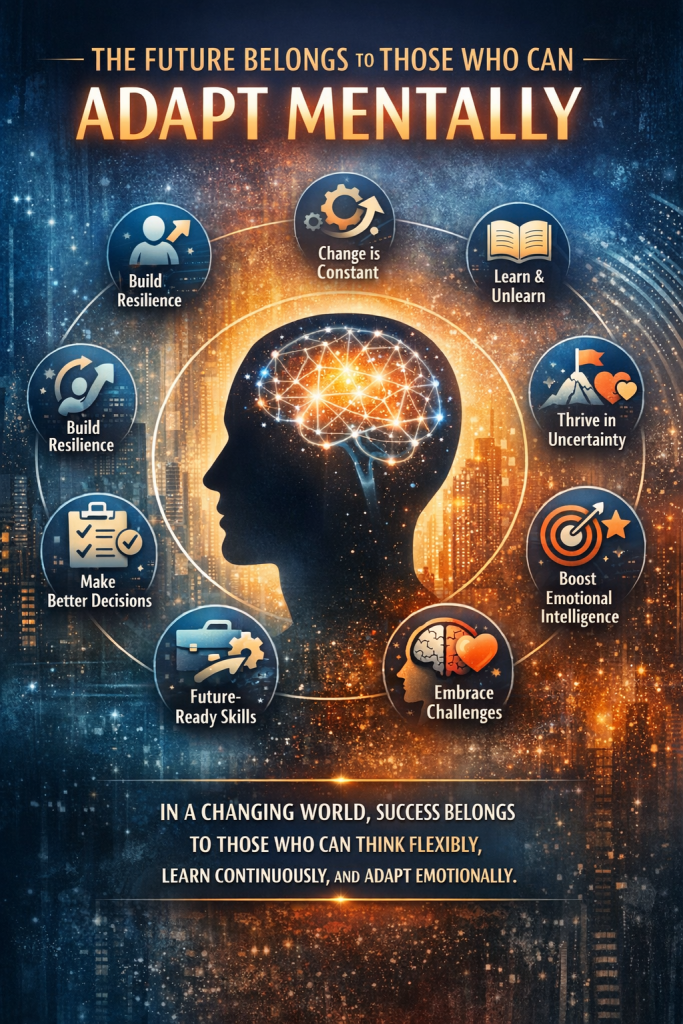
Resilience and Adaptability: Skills for Success in a Fast-Changing World

Introduction

  • Definition of Resilience: The ability to withstand challenges and bounce back from setbacks.
  • Importance of Adaptability: In a constantly changing world, adaptability is essential for long-term success, both personally and professionally.

Why Adaptability Matters in Today’s World

  1. Rapid Technological Advancements: Technology evolves fast, requiring us to continuously update our skills.
  2. Globalization: The interconnected world means we face competition and collaboration on a global scale, adding complexity to work and personal life.
  3. Environmental and Social Shifts: Climate change, social justice movements, and economic shifts all demand quick responses.

Key Benefits of Building Adaptability

  1. Increases Problem-Solving Skills: Adaptable people are more flexible in their thinking, helping them find creative solutions to new challenges.
  2. Boosts Emotional Resilience: Adaptable individuals can manage stress better and maintain mental well-being in times of uncertainty.
  3. Enhances Career Opportunities: Being adaptable is a valued skill in the workplace, opening doors to new roles and career growth.

How to Build Adaptability for Future Success

  1. Embrace Lifelong Learning: Constantly seek new skills and knowledge to stay relevant in your field.
  2. Develop a Growth Mindset: Believe in your ability to grow and change, which makes it easier to adapt when challenges arise.
  3. Practice Flexibility in Daily Life: Try new routines, hobbies, or ways of thinking to cultivate openness to change.
  4. Strengthen Emotional Intelligence: Being aware of your emotions and managing them effectively helps in handling stressful changes.
  5. Build a Support Network: Surrounding yourself with supportive people makes it easier to adapt and learn from others’ perspectives.

Real-Life Examples of Adaptability

  • Professionals Who Upskilled for Remote Work: The pandemic pushed people to embrace remote work, requiring many to quickly learn new technologies and ways of communicating.
  • Companies Pivoting During Economic Downturns: Businesses that adapt quickly during economic changes often survive longer than those that are rigid.

Conclusion

  • The Future Rewards Adaptable People: In a world where change is the only constant, adaptability is one of the most valuable skills for success.
  • Start Small, Grow Big: Building resilience and adaptability doesn’t happen overnight; start with small steps and build habits that support a flexible mindset.

Path to Progress: Setting and Reaching Your Goals

Introduction

Setting goals is a fundamental aspect of personal and professional growth. Goals provide direction, motivation, and a clear focus on what you want to achieve. However, simply having goals is not enough; you need a structured approach to turn your aspirations into reality.

1. Identify Your Goals

  • Self-reflection: Spend time thinking about what you truly want to achieve.
  • Specificity: Clearly define your goals. Instead of “I want to be fit,” try “I want to lose 10 kg in 3 months.”

2. Break Down Your Goals

  • Smaller Steps: Divide your goal into smaller, manageable tasks.
  • Milestones: Set milestones to track your progress. This keeps you motivated and helps you see how far you’ve come.

3. Make Your Goals SMART

  • Specific: Be clear about what you want to achieve.
  • Measurable: Ensure you can track your progress.
  • Achievable: Set realistic goals that are within your capabilities.
  • Relevant: Your goals should align with your broader objectives.
  • Time-bound: Set a deadline to create a sense of urgency.

4. Create a Plan of Action

  • Write it Down: Document your plan to make it more concrete.
  • Prioritize: Determine which tasks need immediate attention and which can wait.
  • Resources: Identify the resources you’ll need, such as time, money, or support from others.

5. Stay Committed and Consistent

  • Daily Habits: Integrate small tasks related to your goal into your daily routine.
  • Avoid Procrastination: Stay disciplined and avoid putting off tasks.

6. Monitor Your Progress

  • Regular Check-ins: Schedule regular intervals to review your progress.
  • Adjust as Needed: Be flexible and adjust your plan if you encounter obstacles or if circumstances change.

7. Stay Motivated

  • Celebrate Small Wins: Recognize and reward yourself for achieving milestones.
  • Stay Positive: Keep a positive mindset and remind yourself of why you set the goal in the first place.
  • Seek Support: Surround yourself with supportive people who can encourage and motivate you.

8. Learn from Setbacks

  • Reflect: Analyze what went wrong without being too harsh on yourself.
  • Adjust: Modify your plan to overcome future obstacles.
  • Persevere: Keep pushing forward, even when faced with difficulties.

9. Stay Accountable

  • Share Your Goals: Tell a friend or join a group with similar goals.
  • Track Progress Publicly: Consider blogging or using social media to share your journey.

10. Review and Celebrate

  • Evaluate: Once you reach your goal, take time to evaluate what worked and what didn’t.
  • Celebrate: Reward yourself for the hard work and effort.
  • Set New Goals: After achieving one goal, set new ones to continue growing and improving.

Conclusion

Setting and achieving goals is a process that requires careful planning, commitment, and adaptability. By following these simple steps, you can turn your aspirations into reality and continue to grow both personally and professionally.