🌊 Go With the Flow: Embracing Life Without Overthinking

Life doesn’t always go as planned — and that’s okay. “Going with the flow” doesn’t mean being lazy or careless; it means learning to accept, adjust, and breathe when things don’t go perfectly.

💡 What Does “Go With the Flow” Really Mean?

  • It means being flexible instead of forcing things.
  • Trusting that not everything needs a solution right away.
  • Allowing life to unfold naturally, without stressing about every detail.

🤯 Why Overthinking Hurts You

  • Drains your energy and mental peace.
  • Creates fear of the future and regret of the past.
  • Delays decisions and action.
  • Makes small problems feel much bigger.

🌿 Benefits of Going With the Flow

  • Increases inner peace and calmness.
  • Helps you become more present and mindful.
  • Builds emotional flexibility during unexpected events.
  • Reduces stress and anxiety.

🧘‍♀️ Simple Ways to Embrace the Flow of Life

  1. Breathe Deeply When Things Feel Out of Control
    → A few slow breaths can reset your thoughts.
  2. Accept, Don’t Resist
    → Say to yourself: “This is not what I planned, but I’ll adjust.”
  3. Be Open to Change
    → Life rarely sticks to a script — stay curious, not fearful.
  4. Stop Seeking Perfection
    → Good enough is often more than enough.
  5. Let Go of “What If” Thoughts
    → Focus on “what is,” not “what could’ve been.”
  6. Practice Saying “It’s okay”
    → A simple phrase that softens overreactions and stress.
  7. Trust Life’s Timing
    → Some things happen later for a reason — have faith.

🧠 Thought to Reflect On:

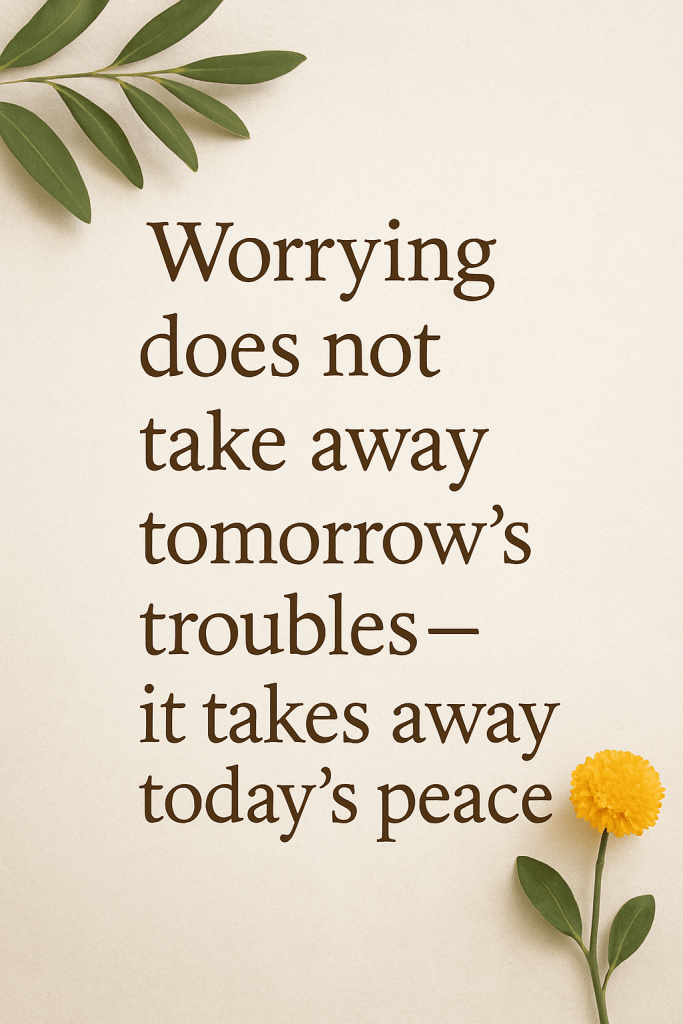
“Worrying does not take away tomorrow’s troubles — it takes away today’s peace.”


✅ Final Takeaway:

Going with the flow is a strength, not a weakness. When you stop fighting life and start flowing with it, you’ll find more joy, clarity, and freedom. Less control, more calm.

🔍 How to Focus and Avoid Distractions

Distractions are everywhere, from buzzing phones to random thoughts. Here’s how to stay focused and productive:


✅ 1. Set Clear Goals

  • Know what you need to achieve.
  • Break big tasks into smaller, manageable steps.
  • Write down your to-do list daily.

✅ 2. Create a Distraction-Free Zone

  • Turn off notifications.
  • Keep your phone out of reach.
  • Use noise-canceling headphones or calming background music.

✅ 3. Use Time Blocks

  • Try the Pomodoro Technique (25 mins work, 5 mins break).
  • Schedule breaks to avoid burnout.
  • Focus on one task per block.

✅ 4. Declutter Your Workspace

  • Keep only the essentials on your desk.
  • A clean space helps you think clearly.
  • Organize digitally too — clear your desktop!

✅ 5. Avoid Multitasking

  • Focus on one thing at a time.
  • Multitasking reduces accuracy and slows you down.

✅ 6. Train Your Brain

  • Practice mindfulness or meditation.
  • Try brain games or puzzles to improve attention span.

✅ 7. Get Enough Sleep

  • Poor sleep = poor focus.
  • Aim for 7–8 hours of quality rest each night.

✅ 8. Fuel Your Body

  • Stay hydrated.
  • Eat brain-friendly snacks like nuts, fruits, and dark chocolate.

✅ 9. Review and Reflect

  • At the end of the day, review what you did.
  • Celebrate progress and adjust goals if needed.

🌙 Delay Is Not Denial: God’s Timing vs. Our Expectations

🌿 1. We Often Want Quick Answers

  • We desire quick solutions, but Allah knows what’s best and when.
  • Our impatience can cloud our trust.

“Man is ever hasty.”
Surah Al-Isra (17:11)


2. Delay Is a Time for Growth, Not Punishment

  • Waiting is not punishment; it is a time to reflect, improve, and draw closer to Allah.
  • Allah may delay something to strengthen your heart and reliance on Him.

“And it may be that you dislike a thing while it is good for you…”
Surah Al-Baqarah (2:216)


🙏 3. Our Expectations Are Not Always God’s Plan

  • What we want may not align with what Allah knows is right.
  • He sees the whole picture — past, present, and future.

“…Allah knows, while you know not.”
Surah Al-Baqarah (2:216)


🌟 4. Allah’s Timing Is Always Perfect

  • Allah never delays without wisdom.
  • What we see as a delay is a piece of His perfect plan.

“Indeed, Allah is never unjust in the least degree…”
Surah An-Nisa (4:40)


🌱 5. Waiting Builds a Stronger Faith

  • Through waiting, our trust in Allah is tested and strengthened.
  • It’s an opportunity to show true reliance (tawakkul).

“And put your trust in Allah; and sufficient is Allah as a Disposer of affairs.”
Surah Al-Ahzab (33:3)


💡 6. Delay Doesn’t Mean Allah Forgot You

  • Allah never forgets His servants. He is closer than we think.

“And your Lord is never forgetful.”
Surah Maryam (19:64)

“Indeed, My Lord is near and responsive.”
Surah Hud (11:61)


📖 7. Quranic Stories Show the Power of Patience

  • Prophet Ayyub (Job) endured illness with sabr.
  • Prophet Yusuf (Joseph) faced betrayal and prison before success.
  • Prophet Musa (Moses) waited years before leading his people.

“Indeed, the patient will be given their reward without account.”
Surah Az-Zumar (39:10)


💖 8. Hold On to Hope and Keep the Faith

  • Keep making du’a. Allah responds in His time — not ours.
  • He may delay, but He never ignores.

“Call upon Me; I will respond to you.”
Surah Ghafir (40:60)


🌈 Final Thought

Allah’s delay is full of mercy, wisdom, and love. It is never a denial — it is divine preparation.

“So be patient. Indeed, the promise of Allah is truth.”
Surah Ar-Rum (30:60)

Being Alone vs. Feeling Lonely: There’s a Big Difference

In today’s fast-moving world, people often mix up being alone with feeling lonely. But they’re not the same thing. Let’s understand the difference and how each affects our mental well-being.


What Does “Being Alone” Mean?

  • It’s a physical state — no one is around you.
  • You choose to spend time by yourself.
  • It can be peaceful and calming.
  • It gives you space to think, reflect, or recharge.
  • Many people enjoy alone time for hobbies, self-care, or relaxation.

🧘‍♀️ Example: Reading a book alone at home and enjoying the silence.


What Does “Feeling Lonely” Mean?

  • It’s an emotional state — you feel disconnected even if surrounded by people.
  • It often comes with sadness, emptiness, or being left out.
  • You may crave deep connection but feel unseen or unheard.
  • It can happen in crowds, relationships, or social media circles.

💔 Example: Feeling unnoticed at a family gathering or in a crowded classroom.


🧠 Key Differences:

Being AloneFeeling Lonely
A choiceA feeling
PeacefulPainful
Can be healthyCan be harmful
Time to rechargeCraving connection
Helps self-discoveryMay affect self-worth

🌱 Benefits of Being Alone:

  • Boosts creativity and focus
  • Helps in self-awareness and emotional regulation
  • Reduces stress when used for self-care
  • Encourages independence and inner peace

💡 Tips to Manage Loneliness:

  1. Reach out – Talk to a friend or loved one.
  2. Join a group – Community classes, clubs, or online spaces help.
  3. Be kind to yourself – Don’t judge your feelings.
  4. Stay active – A walk, hobby, or exercise can uplift mood.
  5. Practice gratitude – It shifts focus to what’s working in your life.

🌼 Final Thought:

Being alone can be a gift. Loneliness is a call for connection. Learn to enjoy your own company, and when you feel lonely — don’t stay silent. Reach out. Speak up. You’re not alone in feeling lonely.

🌿 Soft Yet Strong: The Era of Quiet Confidence

In a world that often celebrates loud voices and bold moves, a new kind of strength is making its mark — quiet confidence. It’s calm, steady, and powerful in its own way. Let’s explore this beautiful shift.


🌟 1. What is Quiet Confidence?

  • It’s believing in yourself without needing to prove it loudly.
  • It’s the calm assurance that shows through actions, not words.
  • It’s rooted in self-awareness and inner peace.

💭 2. Why Are People Embracing It Now?

  • The fast-paced, loud world can be exhausting.
  • People are craving authenticity and calm energy.
  • Mental health awareness has shown the power of emotional balance.

🧘‍♀️ 3. Traits of Quietly Confident People

  • They listen more than they speak.
  • They stay grounded even during chaos.
  • They uplift others instead of competing with them.
  • They don’t need attention to feel valuable.

🔄 4. Softness is Not Weakness

  • Being kind, empathetic, or gentle doesn’t mean you’re weak.
  • In fact, it takes real strength to stay soft in a hard world.
  • Quiet confidence blends strength with compassion.

🌱 5. How to Build Quiet Confidence

  • Practice self-awareness and self-acceptance.
  • Set boundaries without guilt.
  • Focus on progress, not perfection.
  • Celebrate wins privately and support others openly.
  • Stay true to your values, even when no one is watching.

💼 6. In the Workplace and Leadership

  • Leaders with quiet confidence earn deep respect.
  • They guide through example, not force.
  • They create psychologically safe spaces for teams.

🧘‍♂️ 7. In Daily Life

  • You don’t need to be loud to be heard.
  • Small, consistent actions build lasting trust.
  • You inspire others just by being calm, kind, and authentic.

💬 Final Thought

Quiet confidence is the new power.
You don’t need to shout to be strong.
Being soft and sure is more than enough in this new era of strength.

🌱 Healing Isn’t Linear: Embracing the Ups and Downs

Healing—whether emotional, mental, or physical—is not a straight path. It’s a journey filled with progress, setbacks, and moments that may feel like you’re going in circles. And that’s okay.


1. Healing Takes Time

  • Recovery doesn’t happen overnight.
  • It’s okay to take days, weeks, or even years.
  • Be patient with yourself.

2. It’s Normal to Have Good and Bad Days

  • Some days you’ll feel strong, other days you won’t.
  • Bad days don’t erase your progress.
  • Every step, even backward, is part of the journey.

3. Progress Isn’t Always Visible

  • Just because you can’t see improvement doesn’t mean it’s not happening.
  • Inner changes often take time to show on the outside.

4. Setbacks Are Not Failures

  • Falling back into old patterns is common.
  • It’s not a failure—it’s part of learning and growing.
  • Use it as a lesson, not a reason to give up.

5. Celebrate Small Wins

  • Even small steps matter—like getting out of bed, saying “no,” or smiling again.
  • Every tiny win adds up to big change.

6. Your Journey Is Unique

  • Don’t compare your healing to others.
  • Everyone heals at their own pace and in their own way.
  • What works for someone else may not work for you—and that’s okay.

7. Allow Yourself to Feel

  • Don’t hide your emotions—feel them.
  • Crying, anger, or sadness are not signs of weakness.
  • Emotions are part of processing and healing.

8. Ask for Help When You Need It

  • You don’t have to do it alone.
  • Talk to a friend, therapist, or support group.
  • Asking for help is a strength, not a weakness.

9. Be Kind to Yourself

  • Talk to yourself with love and compassion.
  • You’re doing your best, and that’s enough.
  • Replace self-criticism with encouragement.

10. Healing Is Ongoing

  • Healing doesn’t mean you’ll never feel pain again.
  • It means you learn to carry it with more strength and less fear.
  • It’s about growing through what you go through.

🌼 Final Thought:

Healing isn’t a straight line—it’s a journey of twists, turns, detours, and growth. Embrace the process, honor your progress, and trust that every step—even the tough ones—is leading you toward a stronger you.

Gut Health = Mental Health? Exploring the Mind-Body Connection

🧠 What Is the Gut-Brain Connection?

  • Your gut and brain are closely linked through a communication network called the gut-brain axis.
  • The gut is often called the “second brain” because it contains millions of nerve cells.
  • Signals travel both ways — from brain to gut and gut to brain.

🦠 Role of Gut Microbiome

  • The gut is home to trillions of bacteria known as the gut microbiome.
  • These microbes help digest food, fight infections, and influence brain function.
  • A healthy gut microbiome produces neurotransmitters like serotonin, which boosts mood.

😟 How Poor Gut Health Affects the Mind

  • Unhealthy gut = inflammation, poor digestion, and mood issues.
  • Linked to anxiety, depression, and even brain fog.
  • Stress and poor diet can disturb gut bacteria, worsening mental health symptoms.

🥦 Signs Your Gut May Be Affecting Your Mental Health

  • Frequent bloating, gas, or constipation
  • Feeling anxious or low for no clear reason
  • Trouble concentrating or feeling tired all the time
  • Craving sugar or processed food often

🥗 How to Support a Healthy Gut (and Mind)

  1. Eat more fiber – Fruits, vegetables, and whole grains feed good bacteria.
  2. Include probiotics – Yogurt, fermented foods like idli/dosa batter.
  3. Reduce sugar and junk food – They feed bad bacteria.
  4. Stay hydrated – Water helps digestion.
  5. Exercise regularly – Boosts gut and brain health.
  6. Sleep well – Gut repair happens during rest.
  7. Manage stress – Try meditation, yoga, or deep breathing.

💡 Final Thought

  • A healthy gut = a healthier mind.
  • Small changes in your diet and lifestyle can bring big benefits to both mental clarity and emotional well-being.
  • Take care of your gut — your brain will thank you!

Rewriting Your Inner Dialogue: The Power of Self-Talk in Mental Well-being

What is Inner Dialogue?
Inner dialogue is the conversation you have with yourself in your mind every day. It shapes how you feel, think, and act.

Why Self-Talk Matters
Positive or negative, your self-talk influences your mood, confidence, and stress levels. It affects your mental well-being deeply.

Negative Self-Talk Can Harm
When your inner voice is critical or harsh, it can increase anxiety, lower self-esteem, and lead to feelings of depression.

Positive Self-Talk Builds Resilience
Encouraging and kind self-talk helps you cope better with challenges, boosts confidence, and supports emotional health.

How to Notice Your Self-Talk
Start by paying attention to your thoughts. Are they mostly positive, negative, or neutral? Awareness is the first step.

Common Negative Self-Talk Patterns

  • Catastrophizing: Expecting the worst outcome
  • Black-and-white thinking: Seeing things as all good or all bad
  • Personalizing: Blaming yourself unfairly

Steps to Rewrite Your Inner Dialogue

  1. Catch negative thoughts as they happen.
  2. Challenge them — ask if they are really true or helpful.
  3. Replace them with kinder, realistic thoughts.
  4. Practice regularly until positive self-talk becomes natural.

Examples of Positive Self-Talk

  • Instead of “I always fail,” say, “I am learning and improving every day.”
  • Instead of “I can’t handle this,” say, “I will do my best, and that is enough.”

Use Affirmations
Simple positive statements repeated daily can strengthen your new inner dialogue. For example, “I am worthy,” or “I can face challenges calmly.”

Benefits of Positive Self-Talk

  • Reduced stress and anxiety
  • Better problem-solving skills
  • Increased motivation and focus
  • Stronger emotional resilience

Self-Talk and Mental Health
Changing your inner dialogue can be a powerful tool alongside therapy, meditation, and self-care for improving mental health.

Final Thought
Your mind listens to your inner voice every moment. Choose words that heal, encourage, and empower you.

🌿 Stillness is Strength: The Power of Doing Nothing

In today’s fast-paced world, doing nothing is often misunderstood as laziness or a waste of time. But in reality, stillness is a hidden strength.


🌸 What Is Stillness?

  • It means mental and physical rest.
  • It’s about being present without constant activity.
  • Stillness doesn’t mean inactivity—it means intentional rest.

🌟 Why Stillness Matters

  • Restores mental energy and reduces fatigue.
  • Improves focus and clarity.
  • Helps you listen to your inner voice.
  • Creates space for creativity and problem-solving.

💥 The Power of Doing Nothing

  • Your brain needs quiet time to recharge.
  • Moments of stillness lower stress and anxiety.
  • Helps you respond calmly instead of reacting impulsively.
  • It builds emotional strength and patience.

📌 Real-World Examples

  • Great thinkers like Einstein and Newton had breakthroughs during quiet moments.
  • Many CEOs and leaders schedule “thinking time” daily.
  • Artists, writers, and creators often find ideas in silence.

🧘 Simple Ways to Practice Stillness

  1. Take short breaks during the day—no phone, no tasks.
  2. Sit quietly for 5–10 minutes every morning or night.
  3. Go for a silent walk in nature.
  4. Try mindful breathing or meditation.
  5. Schedule time to just “be” instead of always “doing.”

💡 Final Thought

In a world that praises constant hustle, doing nothing is a radical act of self-care. Stillness helps you recharge, reconnect, and rediscover your true strength. Remember, you don’t always need to move to make progress.

🌧️ Emotional First Aid: The Self-Care Toolkit for Tough Days

We all have tough days—when emotions run high and everything feels a bit too much. Just as we tend to physical injuries with first aid, we must also care for emotional wounds. That’s where emotional first aid comes in.

Think of it as your personal toolkit to handle sadness, stress, rejection, or burnout—before it builds into something heavier.


🧰 What Is Emotional First Aid?

  • A set of simple, practical actions to care for your emotional well-being.
  • Helps stop minor emotional pain from becoming chronic stress, anxiety, or depression.
  • Encourages self-awareness, self-kindness, and timely support.

🛠️ Self-Care Toolkit for Tough Days

Here are powerful emotional first aid tools you can start using right away:


✅ 1. Name Your Emotion

  • Ask yourself: “What am I feeling?”
  • Naming emotions helps reduce their intensity and gives you clarity.

✅ 2. Breathe Deeply

  • Try the 4-7-8 method: Inhale for 4 sec, hold for 7, exhale for 8.
  • Deep breathing calms your nervous system.

✅ 3. Write It Out

  • Journaling gives your emotions an outlet.
  • Write freely—don’t edit, just express.

✅ 4. Talk to Someone

  • Call a friend, mentor, or therapist.
  • Sharing lightens emotional load and brings new perspective.

✅ 5. Move Your Body

  • Stretch, go for a walk, or dance.
  • Movement releases endorphins, your brain’s feel-good chemicals.

✅ 6. Say No Without Guilt

  • Protect your peace.
  • It’s okay to decline plans or take a break from responsibilities.

✅ 7. Treat Yourself Kindly

  • Talk to yourself like you would to a loved one.
  • Replace harsh self-talk with compassion.

✅ 8. Create a Comfort Kit

  • Fill a box with things that soothe you: calming tea, scented candle, cozy socks, positive notes, or a journal.
  • Use it when you’re emotionally low.

✅ 9. Digital Detox

  • Step away from social media or stressful content.
  • Give your mind space to rest and reset.

✅ 10. Practice Gratitude

  • Note down 3 things you’re grateful for.
  • Gratitude shifts focus from pain to hope.

✨ Additional Tools for Deeper Healing

✅ 11. Allow Yourself to Cry

  • Crying is a natural way to release emotions.
  • Don’t hold back—it’s a healthy outlet.

✅ 12. Use Positive Distractions

  • Watch a feel-good show, paint, garden, or solve a puzzle.
  • Helps redirect energy without ignoring emotions.

✅ 13. Use Affirmations

  • Repeat gentle reminders:
    • “This is temporary.”
    • “I’ve gotten through worse.”
    • “I am enough.”

✅ 14. Do One Small Task

  • Fold clothes, clean a corner, or reply to one message.
  • Builds momentum and a sense of accomplishment.

✅ 15. Visualize a Safe Place

  • Close your eyes and imagine a peaceful spot—beach, mountains, or home.
  • Visualization helps calm racing thoughts.

✅ 16. Unfollow Negativity

  • Curate your social feed—mute or unfollow accounts that bring stress or comparison.

✅ 17. Limit Caffeine & Sugar

  • Excess caffeine or sugar can trigger anxiety.
  • Drink water or herbal teas instead.

✅ 18. Practice Mindfulness

  • Sit quietly and focus on the now—your breath, sounds, and sensations.
  • Reduces overthinking and brings clarity.

✅ 19. Try the 5-4-3-2-1 Grounding Technique

  • 5 things you see
  • 4 things you can touch
  • 3 things you hear
  • 2 things you smell
  • 1 thing you taste
  • A powerful method to calm anxiety.

✅ 20. Remind Yourself: This Too Shall Pass

  • Emotions are like waves—they come, peak, and fade.
  • Ride them with patience and self-trust.

🧡 Make Your Personal Emotional First Aid Plan

Put together your own toolkit with:

  • A calming playlist
  • A list of affirmations
  • Emergency contact numbers
  • A gratitude journal
  • Comforting items (a book, chocolate, art supplies, etc.)

💬 Final Thought

You deserve care—even more so on your hardest days. Emotional first aid isn’t about “fixing” yourself; it’s about showing up with compassion, understanding, and gentle action. Let your emotional wellness matter as much as your physical health—because healing begins with kindness to self.