🌿 Visualization Exercises for Mental Relaxation

Life often feels heavy with worries and endless tasks. One gentle way to relax the mind is through visualization exercises—using the power of imagination to create peaceful mental images.


🌸 What is Visualization?

  • Visualization is a mental technique where you picture calming scenes, places, or experiences in your mind.
  • It helps your brain and body feel as if you are truly there, creating relaxation.
  • Simple, safe, and can be practiced anywhere.

“The mind is everything. What you think, you become.” – Buddha


🌊 Simple Visualization Exercises

  1. Peaceful Beach Scene
    • Close your eyes and imagine waves gently washing the shore.
    • Feel the breeze, hear the waves, and sense the warmth of the sun.
    • Stay in this image for 2–3 minutes.
  2. Forest Walk
    • Picture yourself walking on a soft forest path.
    • Hear birds singing, smell fresh earth, and feel calm with every step.
    • Let the greenery soothe your mind.
  3. Light and Energy Visualization
    • Imagine a warm golden light above your head.
    • Slowly let it flow through your body, melting away stress.
    • Feel lighter and more refreshed.
  4. Safe Place Technique
    • Create a mental image of a place where you feel completely safe.
    • It could be a childhood home, a mountain cabin, or even a dream space.
    • Visit this place in your mind whenever you feel anxious.

“Imagination is the beginning of creation.” – George Bernard Shaw


🌼 Benefits of Visualization

  • Reduces stress and anxiety.
  • Improves focus and mental clarity.
  • Creates a sense of inner peace and balance.
  • Helps the body feel physically relaxed.

“Your calm mind is the ultimate weapon against your challenges.” – Bryant McGill


🌙 Final Thought

Visualization is like giving your mind a mini-vacation. Just a few minutes daily can restore calm, energy, and clarity. Close your eyes, breathe deeply, and paint a peaceful picture in your mind.

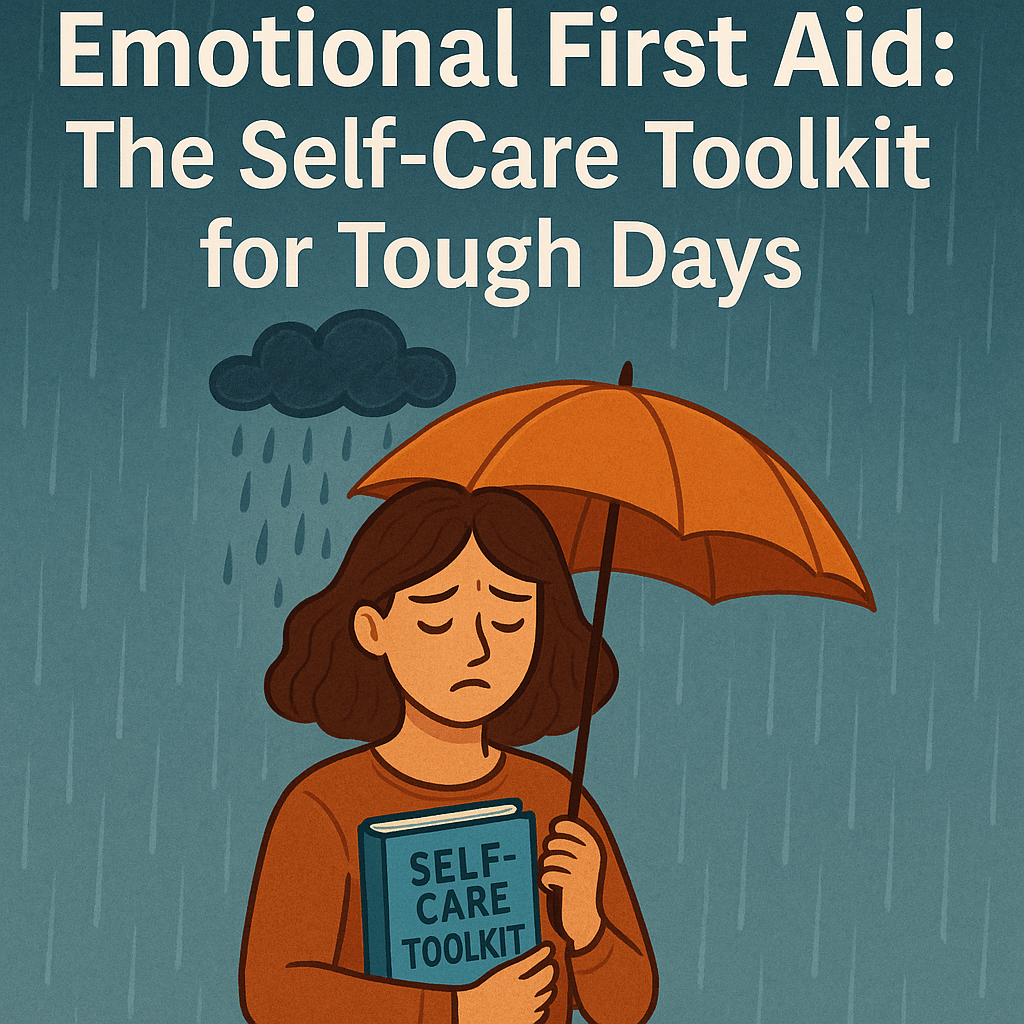
🌧️ Emotional First Aid: The Self-Care Toolkit for Tough Days

We all have tough days—when emotions run high and everything feels a bit too much. Just as we tend to physical injuries with first aid, we must also care for emotional wounds. That’s where emotional first aid comes in.

Think of it as your personal toolkit to handle sadness, stress, rejection, or burnout—before it builds into something heavier.


🧰 What Is Emotional First Aid?

  • A set of simple, practical actions to care for your emotional well-being.
  • Helps stop minor emotional pain from becoming chronic stress, anxiety, or depression.
  • Encourages self-awareness, self-kindness, and timely support.

🛠️ Self-Care Toolkit for Tough Days

Here are powerful emotional first aid tools you can start using right away:


✅ 1. Name Your Emotion

  • Ask yourself: “What am I feeling?”
  • Naming emotions helps reduce their intensity and gives you clarity.

✅ 2. Breathe Deeply

  • Try the 4-7-8 method: Inhale for 4 sec, hold for 7, exhale for 8.
  • Deep breathing calms your nervous system.

✅ 3. Write It Out

  • Journaling gives your emotions an outlet.
  • Write freely—don’t edit, just express.

✅ 4. Talk to Someone

  • Call a friend, mentor, or therapist.
  • Sharing lightens emotional load and brings new perspective.

✅ 5. Move Your Body

  • Stretch, go for a walk, or dance.
  • Movement releases endorphins, your brain’s feel-good chemicals.

✅ 6. Say No Without Guilt

  • Protect your peace.
  • It’s okay to decline plans or take a break from responsibilities.

✅ 7. Treat Yourself Kindly

  • Talk to yourself like you would to a loved one.
  • Replace harsh self-talk with compassion.

✅ 8. Create a Comfort Kit

  • Fill a box with things that soothe you: calming tea, scented candle, cozy socks, positive notes, or a journal.
  • Use it when you’re emotionally low.

✅ 9. Digital Detox

  • Step away from social media or stressful content.
  • Give your mind space to rest and reset.

✅ 10. Practice Gratitude

  • Note down 3 things you’re grateful for.
  • Gratitude shifts focus from pain to hope.

✨ Additional Tools for Deeper Healing

✅ 11. Allow Yourself to Cry

  • Crying is a natural way to release emotions.
  • Don’t hold back—it’s a healthy outlet.

✅ 12. Use Positive Distractions

  • Watch a feel-good show, paint, garden, or solve a puzzle.
  • Helps redirect energy without ignoring emotions.

✅ 13. Use Affirmations

  • Repeat gentle reminders:
    • “This is temporary.”
    • “I’ve gotten through worse.”
    • “I am enough.”

✅ 14. Do One Small Task

  • Fold clothes, clean a corner, or reply to one message.
  • Builds momentum and a sense of accomplishment.

✅ 15. Visualize a Safe Place

  • Close your eyes and imagine a peaceful spot—beach, mountains, or home.
  • Visualization helps calm racing thoughts.

✅ 16. Unfollow Negativity

  • Curate your social feed—mute or unfollow accounts that bring stress or comparison.

✅ 17. Limit Caffeine & Sugar

  • Excess caffeine or sugar can trigger anxiety.
  • Drink water or herbal teas instead.

✅ 18. Practice Mindfulness

  • Sit quietly and focus on the now—your breath, sounds, and sensations.
  • Reduces overthinking and brings clarity.

✅ 19. Try the 5-4-3-2-1 Grounding Technique

  • 5 things you see
  • 4 things you can touch
  • 3 things you hear
  • 2 things you smell
  • 1 thing you taste
  • A powerful method to calm anxiety.

✅ 20. Remind Yourself: This Too Shall Pass

  • Emotions are like waves—they come, peak, and fade.
  • Ride them with patience and self-trust.

🧡 Make Your Personal Emotional First Aid Plan

Put together your own toolkit with:

  • A calming playlist
  • A list of affirmations
  • Emergency contact numbers
  • A gratitude journal
  • Comforting items (a book, chocolate, art supplies, etc.)

💬 Final Thought

You deserve care—even more so on your hardest days. Emotional first aid isn’t about “fixing” yourself; it’s about showing up with compassion, understanding, and gentle action. Let your emotional wellness matter as much as your physical health—because healing begins with kindness to self.

Bouncing Back: How to Build Resilience in Uncertain Times

Life often presents unexpected challenges—whether it’s a personal crisis, a global shift, or professional struggles. Resilience allows us to recover and grow through these times. Here’s how to build and maintain resilience in moments of uncertainty:


🌱 1. Accept What You Can’t Control

  • Don’t resist change; learn to adapt.
  • Let go of the need for certainty.

“You can’t stop the waves, but you can learn to surf.” – Jon Kabat-Zinn


💭 2. Shift Your Perspective

  • See challenges as opportunities for growth.
  • Ask, “What can this teach me?”

“In the middle of difficulty lies opportunity.” – Albert Einstein


🧘 3. Practice Self-Care

  • Prioritize sleep, nutrition, and physical activity.
  • Engage in hobbies that help you relax and unwind.

“Self-care is how you take your power back.” – Lalah Delia


🧠 4. Strengthen Your Mindset

  • Practice gratitude daily to shift your focus.
  • Use positive affirmations and challenge negative thoughts.

“It’s not the strongest of the species that survive, nor the most intelligent, but the one most responsive to change.” – Charles Darwin


🤝 5. Stay Connected

  • Lean on friends, family, or support groups.
  • Build a network that lifts you up in tough times.

“The best way to find yourself is to lose yourself in the service of others.” – Mahatma Gandhi


🗓️ 6. Take One Day at a Time

  • Focus on making the best of today, not worrying about tomorrow.
  • Don’t dwell on the unknown future.

“Do not anticipate trouble, or worry about what may never happen. Keep in the sunlight.” – Benjamin Franklin


📚 7. Keep Learning and Growing

  • Constantly evolve by reading, reflecting, and adapting.
  • Embrace new skills and knowledge to overcome difficulties.

“The only way to deal with this life meaningfully is to find one’s passion and follow it.” – Dalai Lama


🌟 Final Thought:

Resilience isn’t about avoiding challenges—it’s about facing them head-on, learning from them, and growing stronger. By nurturing your body, mind, and relationships, you can endure uncertainty and emerge more powerful.

The Crucial Role of Rest in Enhancing Productivity

Many of us believe that the more hours we put into our work, the more productive we will be. However, this is a misconception. Rest, including sleep and regular breaks, plays a crucial role in enhancing productivity. Here’s why rest is important and how it can significantly improve your efficiency.

1. The Role of Sleep in Productivity

a. Cognitive Function

  • Memory Improvement: Sleep helps consolidate memories, making it easier to recall information.
  • Enhanced Problem-Solving: A well-rested brain is better at solving complex problems.
  • Boosted Creativity: Sleep fosters creative thinking and innovation.

b. Energy Levels

  • Sustained Energy: Sleep replenishes energy, allowing you to be active and alert throughout the day.
  • Preventing Fatigue: Adequate sleep prevents daytime sleepiness and fatigue.

c. Emotional Stability

  • Mood Regulation: Good sleep reduces mood swings and improves emotional stability.
  • Better Interpersonal Relations: Emotional stability leads to more harmonious interactions with colleagues and others.

2. The Benefits of Taking Breaks

a. Enhanced Focus

  • Improved Concentration: Short breaks help maintain focus and attention.
  • Mental Refreshment: Breaks provide a mental reset, preventing cognitive overload.

b. Stress Reduction

  • Lower Stress Levels: Regular breaks help manage and reduce stress.
  • Improved Mental Health: Taking breaks can alleviate anxiety and improve overall mental health.

c. Preventing Burnout

  • Avoiding Exhaustion: Breaks help prevent physical and mental exhaustion.
  • Sustained Performance: Regular breaks ensure long-term productivity and performance.

d. Physical Health Benefits

  • Reduced Eye Strain: Breaks from screens reduce eye strain and headaches.
  • Improved Posture: Moving around during breaks helps maintain good posture and reduces muscle tension.

3. Tips to Incorporate Rest into Your Routine

a. Prioritize Sleep

  • Consistent Sleep Schedule: Go to bed and wake up at the same time every day.
  • Relaxing Bedtime Routine: Engage in calming activities before bed, such as reading or meditation.
  • Sleep-Friendly Environment: Ensure your bedroom is dark, quiet, and cool.

b. Schedule Regular Breaks

  • Pomodoro Technique: Work for 25 minutes, then take a 5-minute break.
  • Longer Breaks: Take a 15-30 minute break every few hours for deeper rest.

c. Use Breaks Wisely

  • Physical Activity: Take a walk, stretch, or do light exercises.
  • Relaxation: Practice deep breathing, meditate, or enjoy a hobby.
  • Disconnect: Avoid checking emails or social media during breaks to fully recharge.

d. Listen to Your Body

  • Recognize Fatigue: Take breaks when you start feeling tired or unfocused.
  • Stay Hydrated and Nourished: Drink water and eat healthy snacks to maintain energy levels.

e. Micro-Breaks

  • Brief Pauses: Take short 1-2 minute breaks to stretch or close your eyes.
  • Mini-Meditations: Spend a minute practicing mindfulness or deep breathing.

Conclusion

Rest is not a luxury but a necessity for maintaining high productivity levels. Adequate sleep and regular breaks are fundamental for cognitive function, energy restoration, emotional stability, focus, stress reduction, physical health, and preventing burnout. By prioritizing rest, you can enhance your productivity, improve your overall well-being, and achieve a healthier work-life balance. Remember, sometimes the most productive thing you can do is to take a break.

Discovering Life’s Treasures: A Journey Through ‘Who Will Cry When You Die?’

As I flipped through the pages of “Who Will Cry When You Die?” by Robin Sharma, I felt like I stumbled upon a hidden gem. The book is full of great ideas and simple advice that made me stop and think. In a busy world where it’s easy to get caught up in the rush, this book reminds us to slow down and appreciate what truly matters. Join me as we explore the wisdom of this book together and discover how it can help us live happier, more meaningful lives.

“Who Will Cry When You Die?” offers a roadmap for living a life of purpose, passion, and significance. By embracing the below said timeless principles and incorporating them into our daily lives, we can cultivate greater fulfillment, joy, and meaning.

  1. Live with Purpose: Sharma emphasizes the importance of living with a sense of purpose and passion. By aligning our actions with our values and goals, we can find fulfillment and meaning in our daily lives.
  2. Embrace Change: Change is inevitable, and embracing it is key to personal growth and development. Rather than fearing change, see it as an opportunity for learning, adaptation, and renewal.
  3. Practice Gratitude: Cultivating an attitude of gratitude can transform our perspective and bring greater joy and contentment into our lives. Take time each day to reflect on the blessings and abundance that surround you.
  4. Be Mindful: Mindfulness is the practice of being fully present in the moment, free from judgment or distraction. By cultivating mindfulness, we can reduce stress, enhance our focus, and deepen our appreciation for life’s simple pleasures.
  5. Nurture Relationships: Our relationships are the cornerstone of a fulfilling life. Invest time and energy in nurturing meaningful connections with family, friends, and loved ones. Show appreciation, kindness, and compassion in your interactions.
  6. Take Care of Yourself: Self-care is essential for overall well-being. Prioritize your physical, mental, and emotional health by adopting healthy habits, setting boundaries, and making time for activities that bring you joy and relaxation.
  7. Seek Wisdom: Lifelong learning is a journey of discovery and growth. Be curious, explore new interests, and seek wisdom from books, mentors, and life experiences. Embrace challenges as opportunities for learning and personal development.
  8. Leave a Legacy: Consider the impact you want to have on the world and strive to leave a positive legacy. Live with integrity, kindness, and generosity, and inspire others to do the same. Your actions have the power to ripple outwards and create lasting change.

Unlocking Daylight: The Simple Magic of Waking Up Early

Introduction: Waking up early is more than just a habit; it’s a lifestyle choice that can transform the way you approach each day. Cultivating the early morning wake-up habit is like unlocking a secret door to a world of productivity, positivity, and personal growth. Let’s explore the simple points that make waking up early a game-changer.

“Early to bed and early to rise, makes a man healthy, wealthy, and wise.”Benjamin Franklin

“I never go to bed late. Not because I don’t like to stay up late, but I have to get up in the morning.”Philip Glass

1. Set a Consistent Wake-Up Time:

  • Choose a time to wake up every day and stick to it.
  • Consistency helps regulate your body’s internal clock.

2. Create a Relaxing Bedtime Routine:

  • Wind down before bed with calming activities like reading or gentle stretching.
  • A soothing bedtime routine prepares your mind and body for a good night’s sleep.

3. Place Your Alarm Away from Bed:

  • Keep your alarm clock or phone away from arm’s reach.
  • This encourages you to physically get out of bed to turn it off.

4. Open Curtains or Blinds for Natural Light:

  • Allow natural light to enter your room as soon as you wake up.
  • Sunlight signals your body that it’s time to start the day.

5. Avoid Screen Time Before Bed:

  • Limit exposure to screens at least an hour before bedtime.
  • The blue light from screens can interfere with your sleep.

6. Prepare for the Next Day:

  • Lay out clothes and organize essentials the night before.
  • This minimizes stress and makes your morning smoother.

7. Start with a Positive Morning Routine:

  • Begin your day with activities that bring joy or relaxation.
  • Whether it’s a quick stretch, a favorite hobby, or a moment of gratitude.

8. Hydrate First Thing in the Morning:

  • Drink a glass of water as soon as you wake up.
  • Re-hydrating jump-starts your metabolism and boosts alertness.

9. Avoid the Snooze Button:

  • Resist the temptation to hit the snooze button.
  • Snoozing can disrupt your sleep cycle, leaving you groggy.

10. Set Small Goals for the Morning:

Establish achievable tasks for the early hours. Accomplishing small goals builds momentum for the day.

11. Limit Stimulants Before Bed:

Reduce intake of caffeine or sugary drinks in the evening. These can interfere with quality sleep.

12. Connect with Nature:

Spend a few minutes outside, breathing in fresh air. Nature can invigorate and set a positive tone for the day.

13. Enjoy a Nutrient-Rich Breakfast:

Have a balanced breakfast with proteins, fruits, and whole grains. A nutritious breakfast fuels your body and brain.

14. Listen to Your Body’s Sleep Needs:

Pay attention to your body’s natural sleep requirements. Adequate rest is crucial for overall well-being.

15. Stay Consistent on Weekends:

Try to maintain your wake-up time even on weekends. –

Consistency reinforces your body’s natural sleep-wake cycle.

Conclusion: Embracing the early morning wake-up habit isn’t about sacrificing sleep; it’s about gaining a head start on the day. These simple points, when woven into your routine, can elevate your mornings into moments of purpose and vitality. Whether it’s enjoying a peaceful sunrise or accomplishing tasks before the world awakens, the early morning habit opens doors to a more fulfilling and balanced life. So, set your intention, set that alarm a bit earlier, and step into the quiet magic of early mornings. It’s a journey worth taking for a brighter and more energized day ahead.