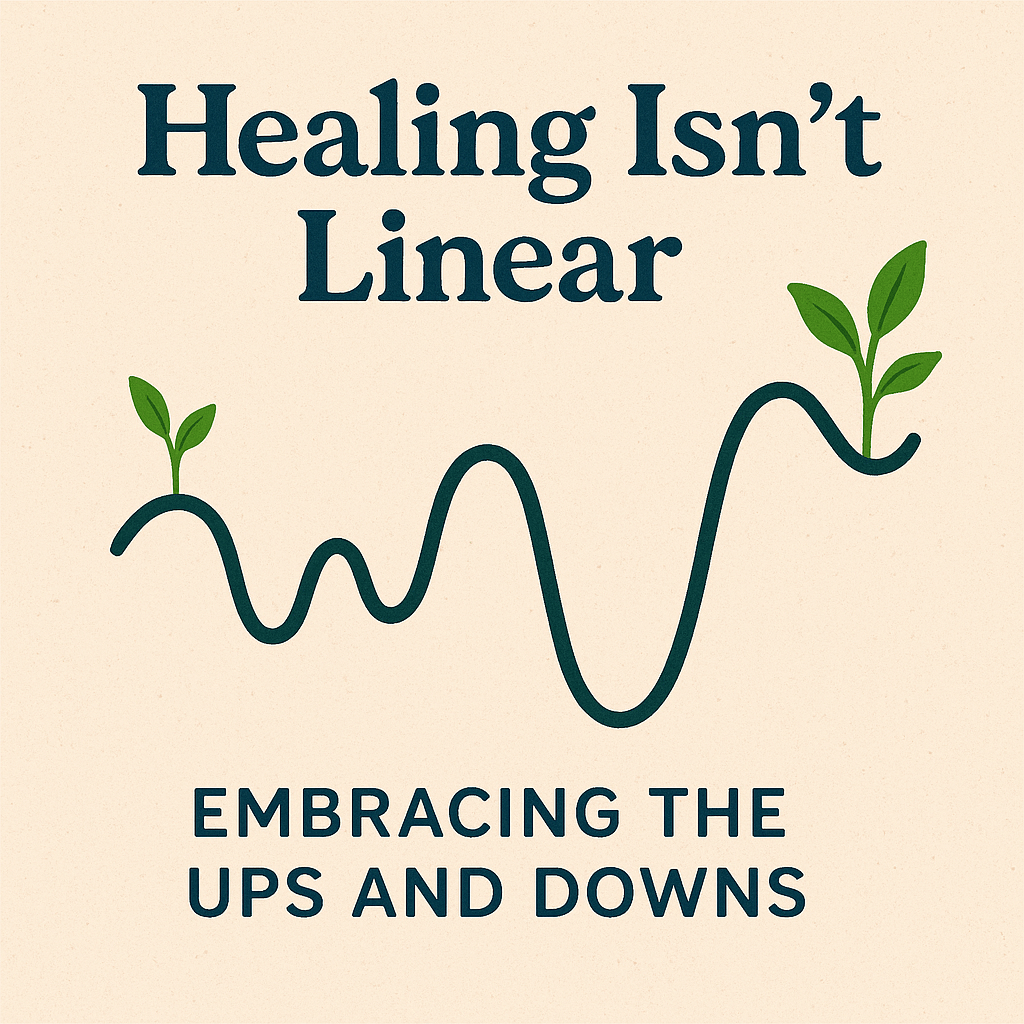
🌱 Healing Isn’t Linear: Embracing the Ups and Downs

Healing—whether emotional, mental, or physical—is not a straight path. It’s a journey filled with progress, setbacks, and moments that may feel like you’re going in circles. And that’s okay.


1. Healing Takes Time

  • Recovery doesn’t happen overnight.
  • It’s okay to take days, weeks, or even years.
  • Be patient with yourself.

2. It’s Normal to Have Good and Bad Days

  • Some days you’ll feel strong, other days you won’t.
  • Bad days don’t erase your progress.
  • Every step, even backward, is part of the journey.

3. Progress Isn’t Always Visible

  • Just because you can’t see improvement doesn’t mean it’s not happening.
  • Inner changes often take time to show on the outside.

4. Setbacks Are Not Failures

  • Falling back into old patterns is common.
  • It’s not a failure—it’s part of learning and growing.
  • Use it as a lesson, not a reason to give up.

5. Celebrate Small Wins

  • Even small steps matter—like getting out of bed, saying “no,” or smiling again.
  • Every tiny win adds up to big change.

6. Your Journey Is Unique

  • Don’t compare your healing to others.
  • Everyone heals at their own pace and in their own way.
  • What works for someone else may not work for you—and that’s okay.

7. Allow Yourself to Feel

  • Don’t hide your emotions—feel them.
  • Crying, anger, or sadness are not signs of weakness.
  • Emotions are part of processing and healing.

8. Ask for Help When You Need It

  • You don’t have to do it alone.
  • Talk to a friend, therapist, or support group.
  • Asking for help is a strength, not a weakness.

9. Be Kind to Yourself

  • Talk to yourself with love and compassion.
  • You’re doing your best, and that’s enough.
  • Replace self-criticism with encouragement.

10. Healing Is Ongoing

  • Healing doesn’t mean you’ll never feel pain again.
  • It means you learn to carry it with more strength and less fear.
  • It’s about growing through what you go through.

🌼 Final Thought:

Healing isn’t a straight line—it’s a journey of twists, turns, detours, and growth. Embrace the process, honor your progress, and trust that every step—even the tough ones—is leading you toward a stronger you.

Depression and Burnout: Understanding the Difference and Finding Solutions

Depression and burnout

Depression and burnout are two mental health issues that are often confused with each other. While they share some similarities, they are distinct conditions with different causes and treatments. Understanding the differences between depression and burnout is crucial for finding the right solutions and taking the appropriate steps to improve your mental health.

1. What is Depression?

  • Definition: Depression is a mood disorder characterized by persistent feelings of sadness, hopelessness, and a lack of interest in activities once enjoyed.
  • Symptoms: Symptoms include low energy, changes in sleep patterns, difficulty concentrating, and feelings of worthlessness.
  • Duration: Depression is long-lasting and can affect all aspects of life, from work to personal relationships.
  • Causes: It can be caused by a combination of genetic, biological, environmental, and psychological factors.

2. What is Burnout?

  • Definition: Burnout is a state of emotional, physical, and mental exhaustion caused by prolonged stress, particularly related to work.
  • Symptoms: Symptoms include feeling drained, overwhelmed, detached from work, and a reduced sense of accomplishment.
  • Duration: Burnout is generally linked to specific situations, such as work, and can improve with changes in the environment or workload.
  • Causes: Burnout is often caused by chronic workplace stress, lack of control, and unrealistic job demands.

3. Key Differences Between Depression and Burnout

  • Scope:
    • Depression affects all areas of life, while burnout is primarily related to work or specific stressors.
  • Emotional Impact:
    • Depression involves deep, pervasive sadness, while burnout is more about feeling overwhelmed and mentally drained.
  • Duration and Treatment:
    • Depression often requires medical treatment, including therapy and medication, while burnout can sometimes be alleviated by making lifestyle changes and reducing stress.

4. Recognizing Overlap

  • Common Symptoms: Both conditions can include fatigue, sleep disturbances, and irritability.
  • Risk of Misdiagnosis: Because of the overlap, burnout can sometimes be mistaken for depression and vice versa, making it important to seek professional help for an accurate diagnosis.

5. Solutions for Dealing with Depression

  • Seek Professional Help: Consult a mental health professional for therapy or medication.
  • Build a Support Network: Surround yourself with supportive friends and family.
  • Practice Self-Care: Engage in activities that promote relaxation and well-being, such as exercise, meditation, and hobbies.
  • Set Realistic Goals: Break tasks into smaller, manageable steps to reduce feelings of overwhelm.

6. Solutions for Managing Burnout

  • Identify Stressors: Recognize the specific factors at work or in life that are contributing to burnout.
  • Take Breaks: Regularly take time off to recharge, whether through vacations or short breaks during the day.
  • Set Boundaries: Learn to say no to additional responsibilities that could exacerbate stress.
  • Seek Support: Talk to a supervisor, HR, or a counselor about adjusting your workload or finding ways to manage stress.

7. Preventing Both Depression and Burnout

  • Maintain Work-Life Balance: Prioritize personal time and hobbies outside of work.
  • Stay Physically Active: Regular exercise helps reduce stress and improves mood.
  • Practice Mindfulness: Techniques like meditation and deep breathing can help manage stress and prevent burnout.
  • Get Enough Sleep: Proper rest is crucial for mental and physical health.

Conclusion
Understanding the differences between depression and burnout is key to finding the right solutions. While depression is a more pervasive condition that may require medical intervention, burnout is often linked to work stress and can be managed through lifestyle changes. Recognizing the symptoms and seeking appropriate help can lead to better mental health and a more balanced, fulfilling life.

Discovering Life’s Treasures: A Journey Through ‘Who Will Cry When You Die?’

As I flipped through the pages of “Who Will Cry When You Die?” by Robin Sharma, I felt like I stumbled upon a hidden gem. The book is full of great ideas and simple advice that made me stop and think. In a busy world where it’s easy to get caught up in the rush, this book reminds us to slow down and appreciate what truly matters. Join me as we explore the wisdom of this book together and discover how it can help us live happier, more meaningful lives.

“Who Will Cry When You Die?” offers a roadmap for living a life of purpose, passion, and significance. By embracing the below said timeless principles and incorporating them into our daily lives, we can cultivate greater fulfillment, joy, and meaning.

  1. Live with Purpose: Sharma emphasizes the importance of living with a sense of purpose and passion. By aligning our actions with our values and goals, we can find fulfillment and meaning in our daily lives.
  2. Embrace Change: Change is inevitable, and embracing it is key to personal growth and development. Rather than fearing change, see it as an opportunity for learning, adaptation, and renewal.
  3. Practice Gratitude: Cultivating an attitude of gratitude can transform our perspective and bring greater joy and contentment into our lives. Take time each day to reflect on the blessings and abundance that surround you.
  4. Be Mindful: Mindfulness is the practice of being fully present in the moment, free from judgment or distraction. By cultivating mindfulness, we can reduce stress, enhance our focus, and deepen our appreciation for life’s simple pleasures.
  5. Nurture Relationships: Our relationships are the cornerstone of a fulfilling life. Invest time and energy in nurturing meaningful connections with family, friends, and loved ones. Show appreciation, kindness, and compassion in your interactions.
  6. Take Care of Yourself: Self-care is essential for overall well-being. Prioritize your physical, mental, and emotional health by adopting healthy habits, setting boundaries, and making time for activities that bring you joy and relaxation.
  7. Seek Wisdom: Lifelong learning is a journey of discovery and growth. Be curious, explore new interests, and seek wisdom from books, mentors, and life experiences. Embrace challenges as opportunities for learning and personal development.
  8. Leave a Legacy: Consider the impact you want to have on the world and strive to leave a positive legacy. Live with integrity, kindness, and generosity, and inspire others to do the same. Your actions have the power to ripple outwards and create lasting change.

Exploring Self-Awareness: Unlocking Your Inner Potential

In our journey of personal growth and fulfillment, self-awareness acts as a guiding light. It empowers us to understand our thoughts, emotions, strengths, weaknesses, and aspirations, allowing us to navigate life’s twists and turns with clarity and purpose. However, developing self-awareness requires practice and commitment.

Understanding Self-Awareness:

Self-awareness is the ability to observe and understand our own thoughts, feelings, and behaviors without judgment. It involves tuning into our inner world, recognizing patterns, and gaining insights into what drives us. When we are self-aware, we can make conscious choices, manage our emotions effectively, and live in alignment with our values and goals.

The Significance of Self-Awareness:

  1. Enhanced Decision Making: Self-aware individuals can make decisions that are in line with their values, preferences, and long-term goals. By understanding their motivations and thought processes, they can weigh options more effectively and choose the path that resonates with them.
  2. Improved Relationships: Self-awareness fosters empathy, communication, and understanding in relationships. When we are aware of our own emotions and behaviors, we can relate to others more authentically, cultivate deeper connections, and resolve conflicts more constructively.
  3. Effective Stress Management: Self-awareness enables us to recognize stress triggers and coping mechanisms, allowing us to respond to stressful situations with greater resilience and composure. By understanding our emotional responses, we can navigate challenges with grace and poise.
  4. Personal Growth: Self-awareness is the cornerstone of personal growth and development. By continuously reflecting on our experiences, strengths, and areas for improvement, we can evolve into the best versions of ourselves and lead more fulfilling lives.

Practical Exercises to Cultivate Self-Awareness:

  1. Journaling: Set aside time each day to journal about your thoughts, feelings, and experiences. Write freely without censorship, exploring your innermost thoughts and emotions. Reflect on patterns, triggers, and insights that emerge from your writing.
  2. Mindfulness Meditation: Practice mindfulness meditation to cultivate present-moment awareness and non-judgmental observation of your thoughts and sensations. Start with a few minutes of focused breathing, gradually increasing the duration as you become more comfortable.
  3. Self-Reflection Questions: Set aside time for self-reflection by asking yourself probing questions about your values, goals, fears, and aspirations. Examples include: “What brings me joy?” “What are my greatest strengths?” “What limiting beliefs hold me back?”
  4. Feedback Seeking: Solicit feedback from trusted friends, mentors, or colleagues about your strengths, weaknesses, and blind spots. Listen openly to their perspectives, embracing constructive criticism as an opportunity for growth and self-discovery.
  5. Values Clarification: Identify your core values—principles that guide your decisions and actions. Create a list of your top values and reflect on why they are important to you. Aligning your actions with your values can enhance your sense of fulfillment and purpose.
  6. Goal Setting: Set SMART (Specific, Measurable, Achievable, Relevant, Time-bound) goals for different areas of your life, such as career, relationships, health, and personal growth. Break down larger goals into smaller, actionable steps, and track your progress regularly.

Conclusion:

Self-awareness is a transformative skill that empowers us to live authentically, purposefully, and joyfully. By incorporating simple yet effective exercises into our daily routine, we can deepen our understanding of ourselves, unlock our inner potential, and cultivate a life of meaning and fulfillment. Embrace the journey of self-discovery with curiosity and compassion, and watch as the seeds of self-awareness blossom into profound personal growth and transformation.