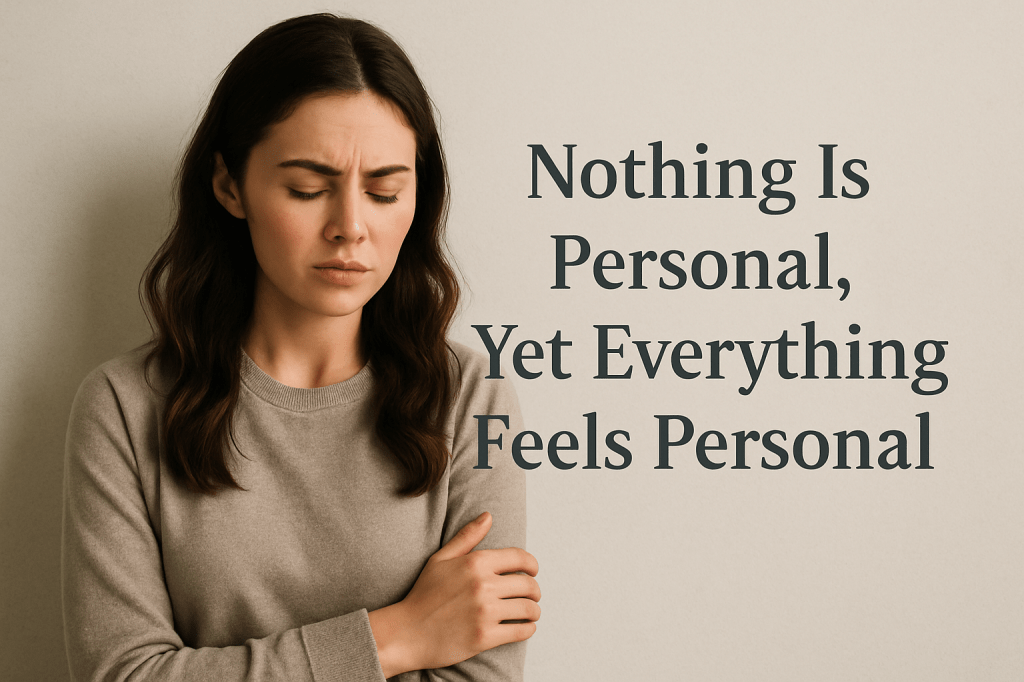
Nothing Is Personal, Yet Everything Feels Personal

Introduction

In everyday life, we often take words, actions, and silences to heart. A small change in behavior, a delayed response, or a critical comment can instantly make us question ourselves. Although logic tells us that most things are not meant personally, emotions often disagree. This inner conflict is what makes life feel heavy at times—nothing is personal, yet everything feels personal.

Why Everything Feels Personal

Human beings are emotional by nature. We connect experiences to our sense of self, which makes us interpret situations through a personal lens. When someone behaves differently, the mind immediately searches for a reason and often turns inward. This reaction is natural, but it is not always accurate.

Most Actions Reflect the Other Person

People respond based on their own stress, fears, priorities, and emotional capacity. Their words and behavior are shaped by their experiences, not by our value. Silence, distance, or harshness usually reflects what someone else is struggling with internally, even though it may feel directed at us.

How Overthinking Makes It Worse

When information is incomplete, the mind fills the gaps with assumptions. Overthinking turns neutral situations into personal failures. Emotions amplify this process, making us believe that we are the cause of every change or conflict, even when there is no clear evidence.

Understanding the Truth Without Ignoring Feelings

Saying “nothing is personal” does not mean dismissing emotions. Feelings are real and valid, but they do not always represent the full truth. The key is to acknowledge emotions without tying them to self-worth. This balance helps us stay grounded and emotionally healthy.

Letting Go of Unnecessary Emotional Weight

When we stop personalizing everything, relationships feel lighter. We react less and understand more. We learn to pause, reflect, and choose responses rather than acting from hurt. This shift reduces emotional exhaustion and brings inner calm.

Final Thoughts

Nothing is personal, yet everything feels personal because we care deeply. Growth begins when care is guided by awareness instead of assumption. By separating others’ actions from our self-worth, we create space for peace, clarity, and emotional resilience. What others do is about them; how we respond defines us.

💔You Are Your Own Strength

1. Tough Times Are Real, and So Is Loneliness

  • When life gets difficult, you may feel isolated—even when people are around.
  • Friends and family may care, but they can’t always feel what you’re feeling.
  • It’s during these moments that you truly understand: the strongest support comes from within.

2. Don’t Expect Others to Save You

  • People may promise support, but they have their own struggles too.
  • Some will disappear when things get dark—don’t take it personally.
  • Learn to rely on yourself emotionally and mentally.

3. You Are Your Own Constant

  • Life changes, people change, situations change—but you stay.
  • You live with your thoughts, your feelings, and your healing.
  • Become your own best friend and safe space.

4. Tough Times Teach Self-Reliance

  • Pain teaches you strength.
  • You learn to cope, adapt, and rise—because you have to.
  • You start discovering inner power you never knew you had.

5. It’s Okay to Ask for Help, But Don’t Depend on It

  • Reaching out is healthy—but don’t expect anyone to carry your burden fully.
  • People can guide or listen, but only you can walk your path.

6. Grow Through the Pain, Don’t Just Go Through It

  • Every tough time is a chance to evolve.
  • Learn from the silence, the rejections, and the heartaches.
  • Use pain as fuel for personal transformation.

7. Celebrate Yourself for Surviving

  • Even if no one noticed your silent battles, you won them.
  • Give yourself credit for showing up, even when it was hard.
  • You are enough. You are strong. You are healing.

Final Thought:

“At the end of the day, the one who stands by you through every breakdown and breakthrough—is YOU.”

Guarding Your Inner Peace: Don’t Let Others’ Actions Define You

In life, we encounter many people with different personalities, moods, and behaviors. While it’s easy to let others’ actions affect how we feel, it’s important to realize that our peace of mind is in our hands. By focusing on what we can control—our responses, mindset, and emotional well-being—we can maintain inner peace no matter how others behave.

  1. Understand that you can’t control others
    • People will act according to their personalities, experiences, and emotions, and you cannot control how they behave.
    • Focus on what you can control: your reactions and mindset.
  2. Set boundaries
    • Establish healthy boundaries with people who negatively affect your peace.
    • Don’t feel guilty about protecting your emotional well-being.
  3. Practice mindfulness
    • Stay present in the moment and observe your thoughts and feelings without judgment.
    • Mindfulness can help you respond rather than react to others.
  4. Don’t take things personally
    • Recognize that someone’s behavior is more about them than it is about you.
    • Their actions are a reflection of their own emotions, not your worth.
  5. Choose your response
    • You have the power to decide how to react.
    • Instead of getting angry or upset, choose calmness and peace.
  6. Focus on positive influences
    • Surround yourself with people who uplift and support you.
    • Positive relationships nurture your inner peace, while toxic ones drain it.
  7. Let go of grudges
    • Holding onto resentment only harms you.
    • Practice forgiveness, not for the other person, but for your own peace of mind.
  8. Self-care is crucial
    • Engage in activities that relax and rejuvenate you, like meditation, exercise, or a hobby.
    • When you feel centered and calm, external negativity doesn’t affect you as much.
  9. Remember your worth
    • No one’s behavior can diminish your value.
    • Trust in your own strength and ability to maintain peace within, regardless of external circumstances.
  10. Shift your perspective
  • View challenges and difficult people as opportunities to grow in patience and understanding.
  • Inner peace often comes from mastering how we perceive and deal with the world around us.

By not letting others’ behavior dictate your peace, you can create a calm and grounded life. Focus on yourself and your inner balance, and let go of the things that don’t serve your well-being.

Body Image and Self-Esteem of Working Women

Introduction:

  • In today’s fast-paced world, working women face multiple pressures, both professionally and personally.
  • One major issue that often affects their confidence is body image and its direct link to self-esteem.

1. What is Body Image?

  • Body image refers to how a person perceives their own body and how they think others see them.
  • For working women, maintaining a positive body image can be challenging due to societal standards and media portrayal of “ideal” beauty.

2. The Link Between Body Image and Self-Esteem

  • Self-esteem is how much we value and feel confident about ourselves.
  • When a woman has a negative body image, it can directly impact her self-esteem, leading to feelings of inadequacy or insecurity.

3. Pressure from Society

  • Media often sets unrealistic beauty standards. This can make working women feel that they need to look a certain way to be accepted.
  • Social media, magazines, and advertisements often highlight physical appearances, leading to comparisons and dissatisfaction with one’s body.

4. Workplace Challenges

  • Working women feel pressured to meet both professional expectations and societal standards of beauty.
  • Body image issues can influence confidence levels at work, affecting job performance and professional relationships.

5. The Role of Self-Care

  • Self-care plays a crucial role in improving body image and self-esteem.
  • Simple practices like eating healthy, exercising, getting enough rest, and practicing mindfulness can help women feel better about their bodies.

6. Building a Positive Body Image

  • Shift the focus from appearance to health, strength, and capability.
  • Surround yourself with positive influences that promote body positivism and self-acceptance.
  • Engage in activities that make you feel confident and empowered.

7. Importance of Self-Acceptance

  • Accepting yourself as you are, is key to improving self-esteem.
  • Understanding that every body is unique and valuable can lead to a healthier, more positive outlook.

8. Encouraging Body Positivism in the Workplace

  • Promote body-positive conversations and create an inclusive environment where women feel confident and accepted.
  • Employers can support women by promoting a healthy work-life balance and encouraging positive self-image initiatives.

Conclusion:

  • Body image and self-esteem are deeply interconnected. For working women, maintaining a healthy balance between the two is vital. This is important for both personal and professional success.
  • It’s essential to embrace body positivism and foster a supportive environment that encourages self-confidence and well-being.

By addressing these issues and fostering a positive mindset, working women can improve both their self-esteem and overall quality of life.