This blog is a handy guide that helps you streamline your daily tasks, save and grow your money, and get better at handling your feelings. It’s filled with easy-to-follow advice that makes a big difference in how you work, spend, and feel. Dive into our Pioneeredge.io site for practical tips and tricks that make life smoother and more fulfilling.
In today’s fast-paced world, working women face multiple pressures, both professionally and personally.
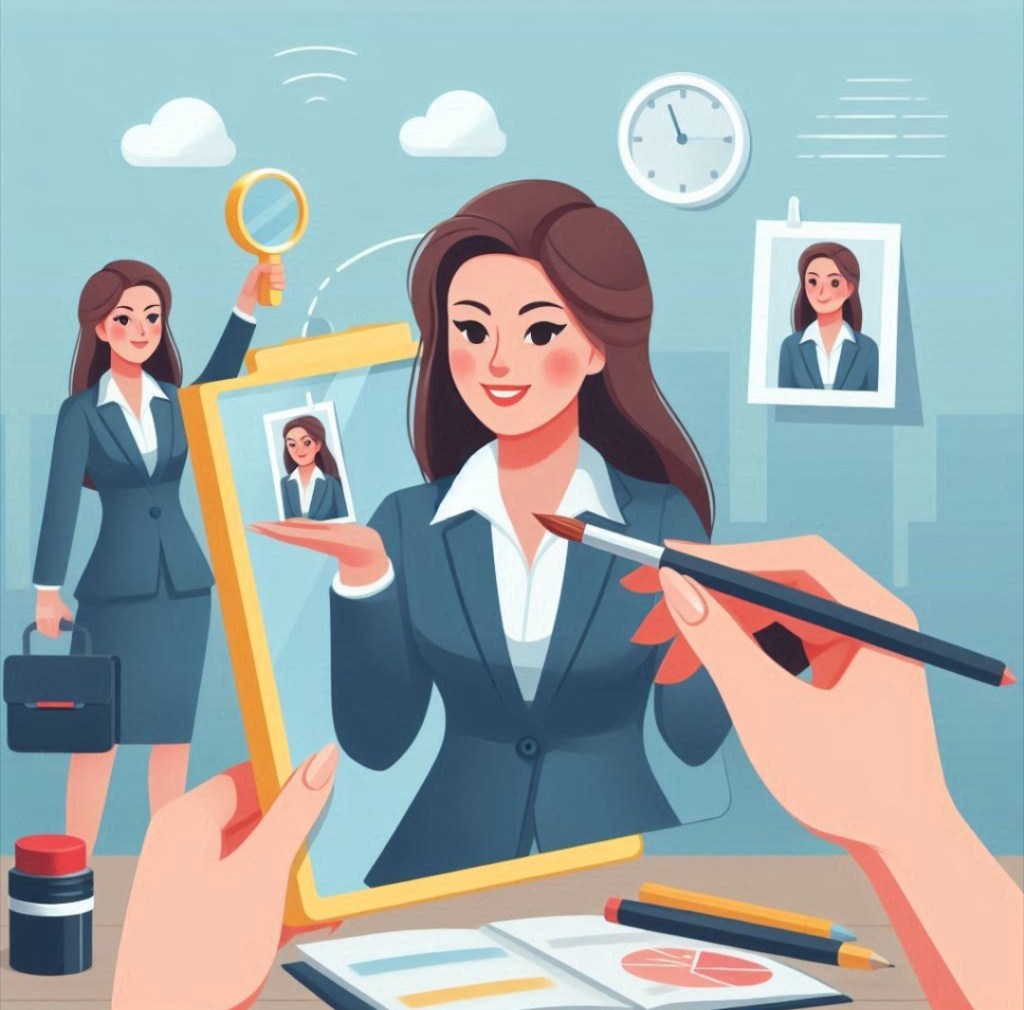
One major issue that often affects their confidence is body image and its direct link to self-esteem.
1. What is Body Image?
Body image refers to how a person perceives their own body and how they think others see them.
For working women, maintaining a positive body image can be challenging due to societal standards and media portrayal of “ideal” beauty.
2. The Link Between Body Image and Self-Esteem
Self-esteem is how much we value and feel confident about ourselves.
When a woman has a negative body image, it can directly impact her self-esteem, leading to feelings of inadequacy or insecurity.
3. Pressure from Society
Media often sets unrealistic beauty standards. This can make working women feel that they need to look a certain way to be accepted.
Social media, magazines, and advertisements often highlight physical appearances, leading to comparisons and dissatisfaction with one’s body.
4. Workplace Challenges
Working women feel pressured to meet both professional expectations and societal standards of beauty.
Body image issues can influence confidence levels at work, affecting job performance and professional relationships.
5. The Role of Self-Care
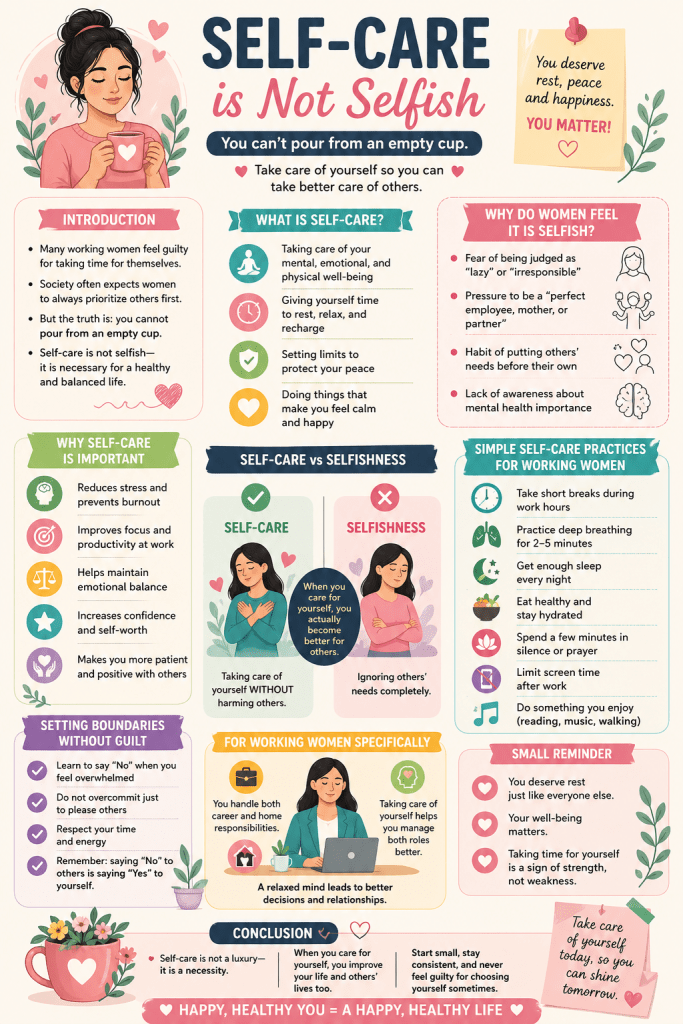
Self-care plays a crucial role in improving body image and self-esteem.
Simple practices like eating healthy, exercising, getting enough rest, and practicing mindfulness can help women feel better about their bodies.
6. Building a Positive Body Image
Shift the focus from appearance to health, strength, and capability.
Surround yourself with positive influences that promote body positivism and self-acceptance.
Engage in activities that make you feel confident and empowered.
7. Importance of Self-Acceptance
Accepting yourself as you are, is key to improving self-esteem.
Understanding that every body is unique and valuable can lead to a healthier, more positive outlook.
8. Encouraging Body Positivism in the Workplace
Promote body-positive conversations and create an inclusive environment where women feel confident and accepted.
Employers can support women by promoting a healthy work-life balance and encouraging positive self-image initiatives.
Conclusion:
Body image and self-esteem are deeply interconnected. For working women, maintaining a healthy balance between the two is vital. This is important for both personal and professional success.
It’s essential to embrace body positivism and foster a supportive environment that encourages self-confidence and well-being.
By addressing these issues and fostering a positive mindset, working women can improve both their self-esteem and overall quality of life.