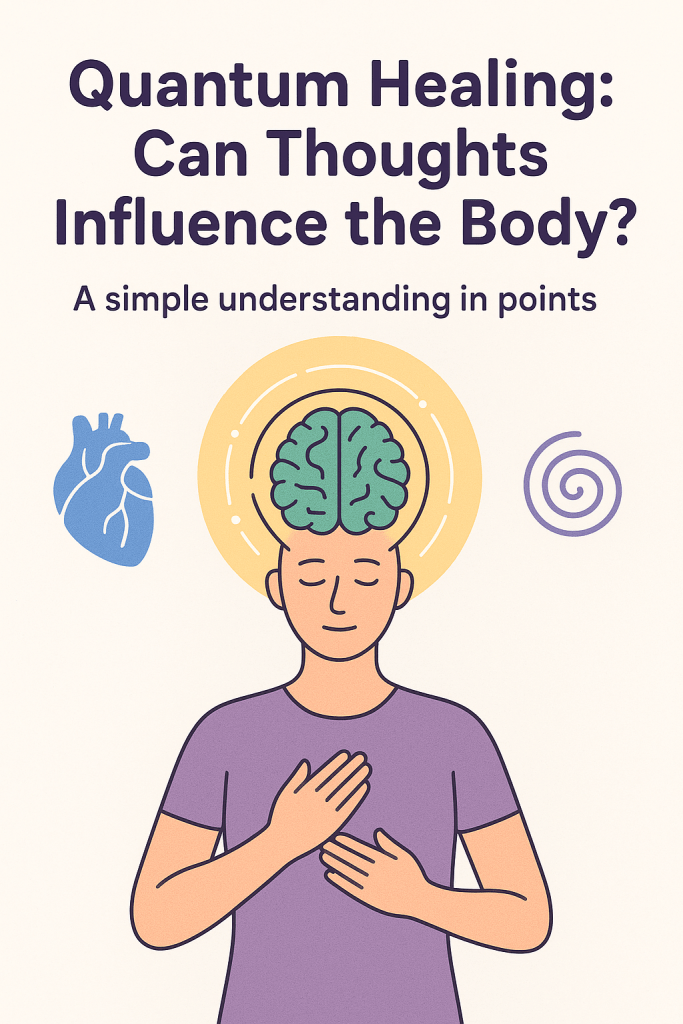
Quantum Healing: Can Thoughts Influence the Body?

1. Introduction: What is Quantum Healing?

  • Quantum healing is the idea that the mind and body are deeply connected.
  • It suggests that your thoughts, emotions, and beliefs can influence your physical health.
  • This concept is inspired by principles from quantum physics, which show that energy and consciousness can affect matter.

2. Everything in the Body Is Energy

  • At the smallest level, your body is made of atoms and energy—not just solid matter.
  • Your heartbeat, breathing, emotions, and thoughts all produce energy signals.
  • If your energy is balanced, you feel healthy; if it is disturbed, you feel unwell.

3. Thoughts Create Real Changes in the Body

  • When you think positively, your brain releases “good chemicals” like dopamine and serotonin.
  • When stressed or worried, your brain releases cortisol, which can weaken immunity.
  • This shows that thoughts have a direct physical impact.

4. The Observer Effect: Why Attention Matters

  • In quantum physics, particles behave differently when observed.
  • Similarly, when you focus your mind on healing, your body responds to that attention.
  • Meditation, prayer, and positive intention activate the body’s natural repair systems.

5. Emotions Carry Energy

  • Joy, gratitude, and love create high-energy states that support healing.
  • Fear, anger, and sadness create low-energy states that may slow down healing.
  • Shifting emotional energy can shift physical well-being.

6. Placebo Effect: Proof That Belief Heals

  • Doctors around the world have seen patients recover simply because they believed a treatment would work.
  • The mind convinced the body to heal—this is a real scientific example of quantum-like healing.

7. Daily Practices That Encourage Quantum Healing

  • Meditate for a few minutes every day to calm your energy.
  • Use positive affirmations (“My body is healing. I am strong.”).
  • Practice gratitude to raise emotional energy.
  • Visualize healing, imagining your body becoming healthier.
  • Stay conscious of your thoughts—replace negative ones gently.

8. Final Thoughts

  • Quantum healing doesn’t replace medical treatment, but it supports it.
  • Your mind is powerful—your thoughts can influence your body more than you realize.
  • When you change your thoughts, you change your energy.
  • When you change your energy, your body responds.

🌅 Morning Routines for the Emotionally Intelligent

✨ Introduction

  • Emotionally intelligent people are self-aware, empathetic, and manage emotions wisely.
  • A strong morning routine sets the emotional tone for the entire day.

☀️ 1. Wake Up Without Rushing

  • Emotionally intelligent people give themselves time in the morning.
  • No snoozing 10 times or jumping straight into stress.
  • They wake up with intention, not panic.

🧘‍♀️ 2. Check In With Yourself First

  • They start by asking: How do I feel today?
  • Quick self-awareness check helps manage emotions early.
  • Journaling or just a 2-minute thought pause helps.

🌬 3. Deep Breathing or Meditation

  • Even 5 minutes of breathing deeply calms the mind.
  • Helps in gaining control over emotional reactions.
  • Builds emotional resilience before facing the world.

📝 4. Set a Positive Intention

  • Emotionally intelligent people don’t just plan the day, they set the mood.
  • They might say: “Today I will stay calm no matter what.”
  • This creates emotional focus and positivity.

📵 5. No Immediate Phone Use

  • They avoid social media or news first thing.
  • Emotional intelligence means choosing what enters your mind.
  • Instead, they connect with themselves before connecting with the world.

✍️ 6. Gratitude Practice

  • They list 2–3 things they’re grateful for.
  • Shifts focus from stress to contentment.
  • Gratitude rewires the brain for emotional stability.

🏃‍♂️ 7. Move the Body

  • A short walk, stretches, or workout boosts mood.
  • Physical movement releases endorphins – feel-good hormones.
  • Emotionally intelligent people know body and mind are connected.

🍵 8. Mindful Breakfast

  • No multitasking — they eat with attention and care.
  • Emotionally intelligent people honor their body with nutrition and presence.
  • A peaceful meal reduces cortisol (stress hormone).

💡 9. Review the Day with Clarity

  • They mentally walk through their day.
  • Prioritize key tasks and potential emotional triggers.
  • This pre-planning helps avoid emotional overwhelm later.

🌟 Conclusion

  • A calm, centered morning is the secret behind emotionally intelligent behavior.
  • You don’t need hours — just a few mindful habits done daily.
  • “Win the morning, win the day.” — Start with emotional awareness, and the rest will follow.

The Role of Cortisol in Stress and How to Manage It

In today’s fast-paced world, stress has quietly become part of our daily routine. And behind the scenes of that constant tension? Cortisol — our body’s main stress hormone. While it’s essential for survival in small doses, too much of it for too long can lead to anxiety, weight gain, sleep problems, and even burnout.

The good news? You can naturally lower cortisol with small, doable changes in your routine. Let’s explore some realistic wellness trends that actually help.


🌿 1. Nature Walks Are the New Therapy

What to do: Spend 20–30 minutes walking in a park, beach, or any green space.

Why it works: Nature has a calming effect on the nervous system. Just being around trees or hearing birds can reduce cortisol levels.

Tip: Leave your phone at home or on silent for best results.


💤 2. Prioritize Quality Sleep (Not Just Hours)

What to do: Stick to a regular sleep schedule and avoid screens 1 hour before bed.

Why it works: Poor sleep increases cortisol and makes you more reactive to stress the next day.

Tip: Try a warm shower, low lighting, or calming music before bedtime.


🍵 3. Drink Less Coffee, Try Adaptogens Instead

What to do: Replace your second or third coffee with herbal teas or adaptogens like ashwagandha or tulsi.

Why it works: Too much caffeine can spike cortisol. Adaptogens help your body adapt to stress and calm the system.

Tip: Look for natural teas labeled “stress relief” or “calm.”


🧘 4. Slow Movement = Fast Recovery

What to do: Practice 10 minutes of stretching, yoga, or tai chi daily.

Why it works: Gentle movement lowers stress hormones without exhausting the body, unlike intense workouts that can raise cortisol if overdone.

Tip: Don’t overthink it—just move slowly and breathe deeply.


✍️ 5. Journaling = Emotional Detox

What to do: Write down your worries, wins, or simply how you feel.

Why it works: Expressing emotions on paper helps clear mental clutter and reduces the need for the brain to “hold it all in.”

Tip: Try a simple prompt: “What’s making me feel tense today?”


👥 6. Limit Time with Energy Drainers

What to do: Notice who uplifts you and who drains you—adjust your time accordingly.

Why it works: Toxic conversations and people raise cortisol unconsciously.

Tip: Set boundaries guilt-free. Protecting your peace is part of self-care.


📱 7. Digital Detox Moments

What to do: Take intentional breaks from screens, especially social media.

Why it works: Doom-scrolling and constant notifications overstimulate the brain and trigger cortisol release.

Tip: Try “no-screen mornings” or “silent Sunday afternoons.”


🧠 8. Mindfulness Over Multitasking

What to do: Do one thing at a time—eat, walk, or even talk without checking your phone or rushing.

Why it works: Multitasking keeps your brain in constant alert mode. Mindfulness brings calm and clarity.

Tip: Start with mindful eating—focus on the taste, not the screen.


🙌 9. Gratitude is a Game-Changer

What to do: End your day listing 3 things you’re grateful for.

Why it works: Gratitude shifts your focus from what’s wrong to what’s right—naturally lowering stress levels.

Tip: Keep a “small wins” journal. It builds emotional resilience over time.


🌈 Final Thought:

You don’t need expensive supplements or hours at the gym to fight stress. The real magic is in simple, intentional living. These small wellness habits might not trend forever—but their positive effect on your cortisol levels will definitely last.

Mastering Stress: Recognizing Stressors and Embracing Remedies

1. Stress:

  • Stress is a complex physiological and psychological response that occurs when individuals perceive threats, challenges, or demands in their environment.
  • This response triggers the body’s “fight or flight” mechanism, activating various systems such as the nervous, endocrine, and immune systems to prepare for action.
  • While stress is a natural and adaptive response, chronic or excessive stress can have detrimental effects on physical health, mental well-being, and overall quality of life.

2. Recognizing Stressors:

  • Stressors are external factors, events, or situations that provoke stress reactions in individuals.
  • They can vary widely in nature and can include work-related pressures (e.g., deadlines, workload), financial concerns (e.g., debt, financial instability), relationship dynamics (e.g., conflicts, communication breakdowns), health issues, major life changes (e.g., relocation, job loss), and environmental factors (e.g., noise, pollution).
  • Identifying stressors is essential for understanding the sources of stress and developing effective coping strategies.

Examples of Stressors and Remedies:

  • Work-related Stress:
    • Excessive workload, tight deadlines, and high job demands can lead to stress and burnout.
    • Remedies may include time management techniques, setting realistic goals, delegating tasks, seeking support from colleagues or supervisors, and establishing work-life balance boundaries.
  • Financial Stress:
    • Financial difficulties, debt, and economic uncertainty can cause significant stress and anxiety.
    • Remedies may include creating a budget, seeking financial counseling or assistance, exploring additional income opportunities, and practicing frugality and financial planning.
  • Relationship Strain:
    • Conflict, misunderstandings, and interpersonal tensions in relationships can contribute to stress.
    • Remedies may include open and honest communication, seeking couples counseling or therapy, practicing empathy and active listening, setting boundaries, and nurturing positive aspects of the relationship.

3. Effective Remedies for Stress:

  • While stress cannot be entirely avoided, individuals can adopt various strategies to manage and reduce its impact:
  • Mindfulness and Meditation:
    • Mindfulness practices, such as meditation, deep breathing exercises, and mindfulness-based stress reduction (MBSR) techniques, can help individuals cultivate awareness, focus, and relaxation, leading to reduced stress levels and increased resilience.
  • Regular Exercise:
    • Engaging in physical activity, such as aerobic exercises, strength training, yoga, or tai chi, releases endorphins (natural mood elevators), reduces cortisol levels (stress hormone), improves sleep quality, and enhances overall physical and mental well-being.
  • Social Support:
    • Building and maintaining supportive relationships with friends, family members, peers, or support groups provides emotional comfort, encouragement, and practical assistance during challenging times, buffering the negative effects of stress and promoting psychological resilience.

Conclusion:

  • Stress is an inevitable aspect of life, but individuals can take proactive steps to manage and cope with stress effectively.
  • By recognizing stressors, implementing practical remedies, and seeking support when needed, individuals can enhance their ability to adapt to stressors, promote well-being, and lead fulfilling lives.
  • Ultimately, developing resilience and adopting healthy coping mechanisms are essential for navigating life’s challenges with strength, optimism, and resilience.