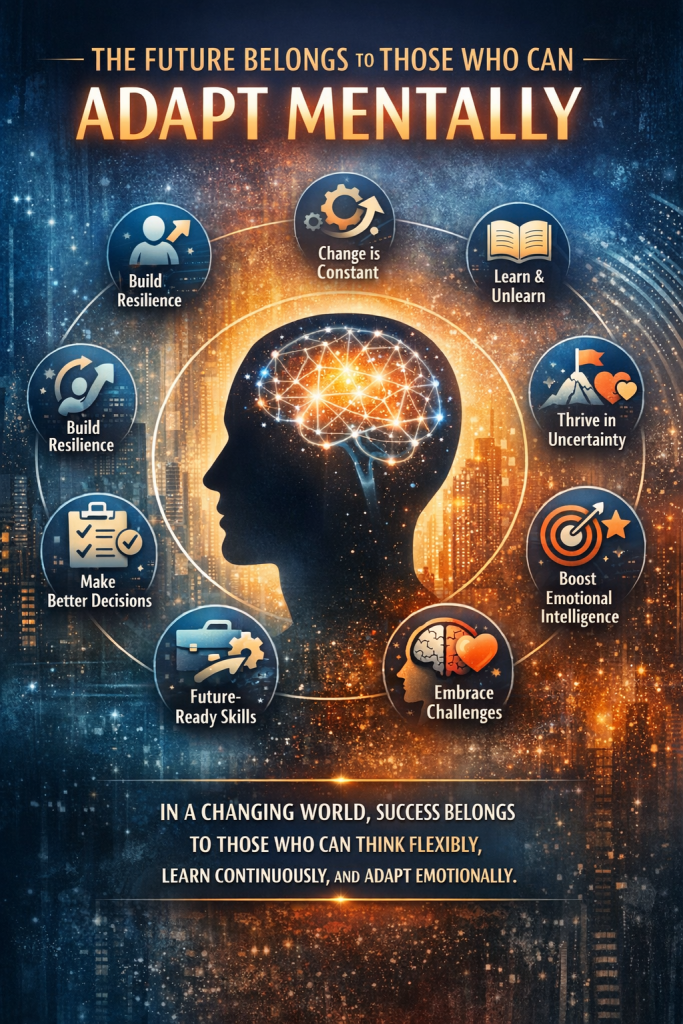
The Future Belongs to Those Who Can Adapt Mentally

In a rapidly changing world, success is no longer determined only by intelligence, talent, or experience. The ability to adapt mentally has become the most important life skill. Below are simple, clear points explaining why mental adaptability shapes the future.


1. Change Is Constant, Not Optional

Technology, workplaces, and lifestyles are evolving faster than ever. Those who mentally resist change experience stress and stagnation, while adaptable minds learn to adjust and move forward.


2. Mental Flexibility Enables Faster Learning

Adaptable individuals are open to unlearning old habits and acquiring new skills. This learning mindset allows them to stay relevant in education, careers, and personal growth.


3. Resilient Minds Handle Uncertainty Better

The future is unpredictable. Mental adaptability helps individuals remain calm during uncertainty, view challenges as temporary, and respond with problem-solving rather than panic.


4. Adaptability Strengthens Emotional Intelligence

Mentally adaptable people regulate emotions effectively, accept feedback positively, and adjust behavior based on situations. This improves relationships and leadership effectiveness.


5. Fixed Mindsets Limit Growth

A rigid mindset clings to comfort zones and fears failure. In contrast, adaptable minds see failure as feedback and change as an opportunity for improvement.


6. Mental Adaptation Supports Well-Being

Being mentally flexible reduces stress, anxiety, and burnout. Acceptance and adjustment protect mental health in high-pressure environments.


7. Future Careers Demand Cognitive Agility

Jobs of the future will require continuous upskilling. Mental adaptability enables individuals to transition across roles, industries, and technologies with confidence.


8. Adaptable Minds Make Better Decisions

Open-minded thinking allows individuals to evaluate situations objectively, consider alternatives, and make informed decisions even with limited information.


9. Growth Begins with Self-Awareness

Understanding one’s thoughts, beliefs, and emotional patterns is the first step toward mental adaptability. Awareness creates choice rather than automatic reactions.


10. Adaptability Is a Trainable Skill

Mental flexibility can be developed through reflection, lifelong learning, mindfulness, and embracing new experiences.


Conclusion

The future will not favor the strongest or the smartest, but those who can think flexibly, learn continuously, and adapt emotionally. Mental adaptability is no longer optional—it is the foundation for sustainable success and well-being in an uncertain world.


Change Is Never Easy But Always Possible

  1. What is Change?
    • Change involves doing things differently or trying new approaches. Whether it’s adjusting your lifestyle or switching careers, change helps you grow.
    • Example: Many people transitioned to working from home during the COVID-19 pandemic. While it was difficult initially, many found it beneficial, with more time spent with family and less time spent commuting.
  2. Challenges of Change
    • Change can be difficult because it forces us out of our comfort zone. We might feel anxious, overwhelmed, or unsure at first.
    • Example: When schools switched to online learning, teachers had to learn new technology quickly. It was stressful at first, but over time, teachers became more comfortable and effective in their new roles.
  3. Fear of the Unknown
    • The fear of failure or the unknown is a natural response to change. This fear often stops people from embracing new opportunities.
    • Example: A person considering a career change may fear they won’t succeed in a new field. However, once they take the leap, they often find that their skills are transferable and that the change leads to greater job satisfaction.
  4. Resisting Change
    • Many people resist change because they prefer the status quo. However, resisting change can prevent growth and opportunities.
    • Example: When a company decides to switch from a paper-based system to digital tools, employees may initially resist. However, once they realize that the new system saves time and reduces errors, they embrace the change.
  5. Mindset Matters
    • A positive mindset helps us cope with change. Instead of viewing change as a threat, see it as a chance to improve and evolve.
    • Example: An employee who faces a layoff might initially be upset. But with the right mindset, they can view it as an opportunity to explore a new career path that better aligns with their interests and goals.
  6. Small Steps Lead to Big Change
    • Change doesn’t have to happen overnight. Small, gradual changes can lead to big transformations.
    • Example: If someone wants to get healthier but feels overwhelmed by the idea of intense workouts, they can start with 10-minute walks or swapping junk food for healthier snacks. Over time, these small changes can lead to significant health improvements.

In conclusion, while change can be difficult, it is always possible with the right mindset, small steps, and patience. Change, though challenging, often leads to personal growth and new opportunities that wouldn’t have been possible otherwise.

From Stagnation to Success: The Power of Growth Challenges

Stepping out of your comfort zone is one of the most empowering actions you can take for personal growth. While it can feel uncomfortable at first, embracing growth challenges leads to a more fulfilling and successful life.


1. Understanding the Comfort Zone

  • Your comfort zone is a mental space where you feel safe, familiar, and secure.
  • It often involves routine habits and predictable outcomes.
  • While it feels comforting, staying here limits personal development and potential.

2. Why It’s Important to Step Out

  • Personal Growth: Facing challenges leads to skill development and improved resilience.
  • New Experiences: It opens doors to new opportunities, relationships, and experiences.
  • Increased Confidence: Each time you face something difficult, you build more self-assurance.
  • Expanded Mindset: You start seeing the world and your capabilities in a broader light.

3. Common Fears of Leaving the Comfort Zone

  • Fear of Failure: You may worry about not succeeding, but failure is often the best teacher.
  • Fear of the Unknown: The unfamiliar can be intimidating, but it’s where growth happens.
  • Fear of Judgment: Concern about how others perceive you can hold you back, but remember, growth is personal, not public.

4. Steps to Break Free

  • Start Small: Begin with manageable challenges that push you just beyond your current limits.
  • Set Goals: Clear goals provide direction and make challenges feel achievable.
  • Embrace Discomfort: Understand that discomfort is a sign of growth, not a barrier.
  • Seek Support: Surround yourself with people who encourage and support your growth.

5. Benefits of Embracing Challenges

  • Increased Creativity: When faced with new situations, you learn to think outside the box.
  • Better Problem-Solving: You develop sharper skills in handling tough situations.
  • Personal Fulfillment: Overcoming challenges boosts your sense of achievement and satisfaction.
  • Growth Mindset: Regularly stepping out of your comfort zone fosters a mindset that thrives on learning and development.

6. Embrace the Journey

  • Growth is a journey, not a destination. The more you push yourself, the more you expand your capabilities.
  • Celebrate small wins along the way to stay motivated.

Conclusion:

Breaking free from your comfort zone might be intimidating at first, but it’s essential for growth. Embrace the challenges, take small steps, and trust in the process. You’ll soon realize that growth and transformation are waiting just outside your comfort zone.

Everyone Has Hidden Strengths and Talents

Introduction:
“Everyone has talent. What is rare is the courage to follow the talent to the dark place where it leads.” — Erica Jong

  • Everyone possesses unique strengths and talents.
  • These qualities play a crucial role in personal growth and success.

Recognizing Hidden Strengths:
“You are never too old to set another goal or to dream a new dream.” — C.S. Lewis

  • Hidden strengths are abilities or qualities you may not realize you have.
  • These could include:
    • Problem-solving skills
    • Empathy
    • Creativity
    • Resilience
  • Often revealed in challenging situations or when stepping out of your comfort zone.

Why Are They Hidden?
“Doubt kills more dreams than failure ever will.” — Suzy Kassem

  • Hidden due to self-doubt or lack of confidence.
  • Cultural and societal influences may cause people to overlook or undervalue their talents.
  • The fast-paced nature of life can prevent self-reflection.

The Importance of Discovering Your Talents:
“What lies behind us and what lies before us are tiny matters compared to what lies within us.” — Ralph Waldo Emerson

  • Boosts self-esteem and helps set realistic goals.
  • Leads to personal and professional growth.
  • Allows for more effective contribution to your community and workplace.

How to Uncover Your Hidden Strengths:
“Life isn’t about finding yourself. Life is about creating yourself.” — George Bernard Shaw

  • Self-Reflection: Think about what you enjoy and excel at, even if it seems trivial.
  • Feedback from Others: Others might see strengths in you that you overlook.
  • Explore New Experiences: Trying new activities or challenges can reveal hidden talents.
  • Journaling: Writing about your experiences can help identify recurring themes of strength and talent.

Nurturing and Developing Your Strengths:
“The only way to do great work is to love what you do.” — Steve Jobs

  • Identify and nurture your strengths.
  • Set goals that align with your talents to keep improving.
  • Seek opportunities that allow you to use and refine your strengths.

Applying Your Strengths:
“Success is not the key to happiness. Happiness is the key to success. If you love what you are doing, you will be successful.” — Albert Schweitzer

  • Apply strengths in various areas of life, such as work, relationships, and personal projects.
  • Use your talents to help others, which can reveal more hidden abilities.
  • Continually challenge yourself to grow and expand your skill set.

The Ripple Effect:
“Believe you can and you’re halfway there.” — Theodore Roosevelt

  • Embracing your strengths can inspire others to do the same.
  • Creates a positive ripple effect, leading to a more empowered community.

Conclusion:
“The only limit to our realization of tomorrow will be our doubts of today.” — Franklin D. Roosevelt

  • Everyone has hidden strengths and talents waiting to be discovered.
  • Uncovering and developing these qualities leads to a more fulfilling life.

Call to Action:
“Your talent is God’s gift to you. What you do with it is your gift back to God.” — Leo Buscaglia

  • Reflect on your hidden strengths today.
  • Challenge yourself to uncover and develop a talent you haven’t fully explored yet.

Investing in Yourself: Personal Growth Strategies for an Uncertain Future

In a world marked by constant change and unpredictability, one of the most valuable investments you can make is in yourself. Personal growth not only enhances your skills and capabilities but also equips you with the resilience and adaptability needed to thrive in an uncertain future. In this blog post, we’ll explore the importance of investing in yourself, accompanied by famous quotes and practical techniques to foster personal growth and development.


Why Invest in Yourself?
Investing in yourself is not only about acquiring new skills or knowledge but also about nurturing your well-being and maximizing your potential. As the famous entrepreneur Jim Rohn once said, “The only way to attract better is to become better yourself.” Here are some reasons why investing in yourself is essential for navigating an uncertain future:

  1. Enhanced Resilience: Personal growth equips you with the resilience needed to bounce back from setbacks and adapt to change effectively.
  2. Increased Confidence: As you invest in yourself and witness your growth, your confidence levels naturally soar, enabling you to tackle challenges with greater assurance.
  3. Expanding Opportunities: Continuous learning and development open up new opportunities and avenues for personal and professional advancement.
  4. Improved Well-being: Engaging in activities that promote personal growth, such as mindfulness practices or hobbies, can enhance your overall well-being and quality of life.

Famous Quotes on Personal Growth:

  • “The only person you should try to be better than is the person you were yesterday.” – Unknown
  • “Invest in yourself. It pays the best interest.” – Benjamin Franklin
  • “The beautiful thing about learning is that no one can take it away from you.” – B.B. King

Techniques for Personal Growth:

  1. Set Clear Goals: Define specific, achievable goals that align with your values and aspirations. Break them down into smaller, actionable steps to track your progress effectively.
  2. Continuous Learning: Cultivate a growth mindset by embracing opportunities for learning and development. This could involve reading books, taking online courses, attending workshops, or seeking mentorship.
  3. Practice Self-Reflection: Set aside time for self-reflection to assess your strengths, weaknesses, and areas for improvement. Journaling or meditation can be valuable tools for gaining clarity and insight into your personal growth journey.
  4. Step Outside Your Comfort Zone: Challenge yourself to step outside your comfort zone regularly. Growth often occurs when we push ourselves beyond familiar boundaries and embrace new experiences.
  5. Prioritize Self-Care: Remember to prioritize self-care as part of your personal growth journey. This includes taking care of your physical, emotional, and mental well-being through activities like exercise, healthy eating, and stress management techniques.
  6. Seek Feedback: Welcome constructive feedback from others as an opportunity for growth and learning. Actively seek input from mentors, peers, or trusted individuals to gain different perspectives and identify areas for improvement.

Conclusion:
Investing in yourself is not a one-time event but an ongoing commitment to personal growth and development. By embracing this journey and dedicating time and effort to nurture your skills, talents, and well-being, you are equipping yourself with the tools and resilience needed to navigate an uncertain future with confidence and clarity. As you embark on this journey, remember the words of Lao Tzu: “The journey of a thousand miles begins with one step.” Start investing in yourself today, and watch as you grow into the best version of yourself, ready to tackle whatever the future may hold.