The Psychology of Validation: Why We Crave It and How to Detach

Introduction

  • Validation means feeling acknowledged, accepted, or approved by others.
  • Everyone enjoys being appreciated—it boosts our mood and confidence.
  • However, constantly depending on others for approval can harm our mental health.
  • Understanding why we seek validation can help us learn how to break free from it.

Why We Crave Validation

  • Survival instinct: In early human history, acceptance by the group meant safety.
  • Brain chemistry: Praise and likes release dopamine, making us feel good.
  • Childhood influence: We learned to rely on others to form our self-image.
  • Social pressure: Society values external achievements (followers, grades, titles) over inner peace.

Signs You May Rely Too Much on Validation

  • You feel anxious waiting for feedback.
  • Your mood depends on praise or criticism.
  • You often try to please others at your own expense.
  • You avoid mistakes or risks because of fear of judgment.
  • You constantly compare yourself to others.

The Cost of Seeking Constant Validation

  • Leads to low and fragile self-esteem.
  • Makes you act inauthentically to gain approval.
  • Creates emotional exhaustion and stress.
  • Stops you from taking bold steps or growing personally.

How to Detach from the Need for Validation

  • Become self-aware: Notice when you’re seeking approval instead of being true to yourself.
  • Set personal goals: Focus on what matters to you, not what others expect.
  • Practice self-compassion: Be kind to yourself, especially during failures.
  • Limit social media: Avoid comparing your life to filtered online images.
  • Value genuine feedback: Ask for input to grow, not just to feel good.
  • Build meaningful connections: Surround yourself with people who support the real you.
  • Celebrate silent wins: Keep track of your personal progress, even if no one else sees it.

Conclusion

  • Seeking validation is natural, but overdependence on it weakens your self-worth.
  • True confidence comes from within—when you trust your own judgment.
  • By practicing internal validation, you free yourself from the constant need for approval and live more authentically.

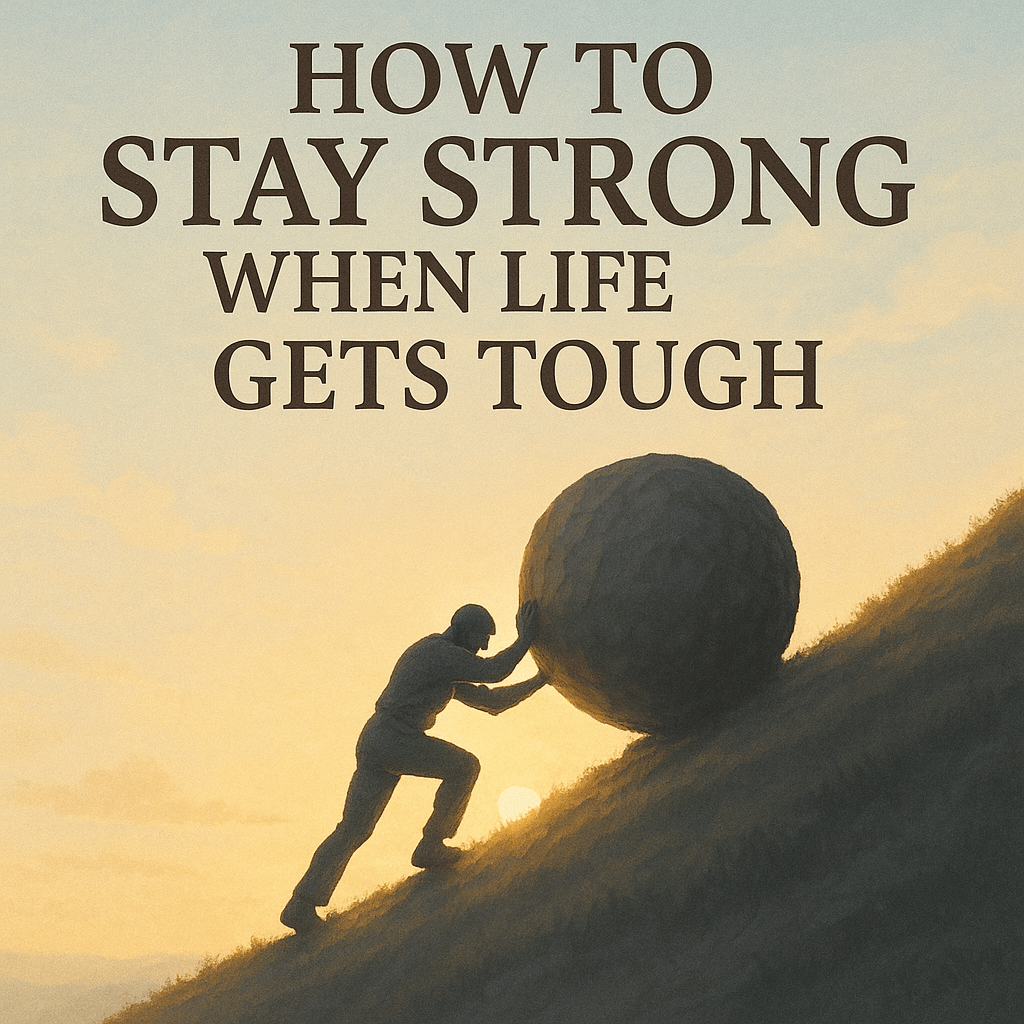
How to Stay Strong When Life Gets Tough

Mental toughness is the ability to stay strong, focused, and calm—even when life gets difficult. It doesn’t mean you’re emotionless, but that you don’t give up easily. Here’s how you can build it step by step:


1. Start Your Day with Purpose

  • Wake up with a plan or goal in mind.
  • Avoid immediately checking your phone.
  • Take 5 minutes to reflect or set your intention for the day.

2. Do Difficult Things First

  • Tackle your most challenging task early.
  • This builds confidence and discipline.
  • It also reduces stress for the rest of the day.

3. Practice Self-Control

  • Learn to say “no” when needed.
  • Avoid emotional outbursts—pause and breathe.
  • Respond, don’t react.

4. Accept What You Can’t Control

  • Don’t waste energy on things outside your control (like traffic or other people’s opinions).
  • Focus on your actions and attitude.

5. Stay Positive, But Realistic

  • Positive thinking helps—but don’t ignore problems.
  • Learn to say: “This is hard, but I can handle it.”

6. Learn from Mistakes

  • Don’t fear failure; use it as a teacher.
  • Ask yourself: What can I learn from this?
  • Keep moving forward, even after a setback.

7. Keep Promises to Yourself

  • Do what you say you’ll do, even when it’s hard.
  • This builds self-respect and inner strength.

8. Take Care of Your Body

  • Eat well, sleep enough, and exercise regularly.
  • A strong body supports a strong mind.

9. Surround Yourself with Positive People

  • Be around those who uplift and challenge you.
  • Limit time with negative or toxic influences.

10. Practice Gratitude Daily

  • Write down 3 things you’re thankful for.
  • Gratitude builds resilience and peace of mind.

Final Thought:

Mental toughness isn’t about being perfect—it’s about staying steady during ups and downs. Build it slowly, one small action at a time. Over time, you’ll notice you’re stronger, calmer, and more confident in whatever life throws at you.

Mind Over Scroll: Reclaiming Focus in a Noisy World

🌐 The Problem: Constant Distraction

  • We live in an age of endless scrolling — social media, news feeds, and notifications.
  • Our attention is constantly pulled in different directions.
  • The average person checks their phone over 100 times a day.
  • This digital overload leads to reduced focus, stress, and productivity.

🧠 Why Focus Matters

  • Focus is the foundation of deep work and creative thinking.
  • Without it, tasks take longer and quality suffers.
  • Regaining control of your attention helps improve mental health, relationships, and overall well-being.

📱 Signs You’re Trapped in the Scroll Loop

  • You reach for your phone first thing in the morning.
  • You feel anxious when you’re offline.
  • You struggle to complete tasks without checking your phone.
  • You lose track of time while using social media.

🔁 The Cycle of Digital Distraction

  1. You feel bored or stressed.
  2. You open your phone for a “quick check.”
  3. Minutes turn into hours.
  4. You feel guilty and unproductive.
  5. You repeat the cycle.

🛠️ How to Reclaim Your Focus

1. Digital Declutter

  • Unfollow unnecessary accounts.
  • Turn off non-essential notifications.
  • Use “Do Not Disturb” mode during work hours.

2. Set Time Limits

  • Use built-in app timers (like Screen Time or Digital Wellbeing).
  • Try the Pomodoro technique – 25 minutes of focus, 5-minute break.

3. Create Phone-Free Zones

  • Keep your phone out of the bedroom and dining area.
  • Use a real alarm clock instead of your phone.

4. Practice Mindfulness

  • Start your day with 5 minutes of deep breathing or journaling.
  • Take short walks without your phone.

5. Replace Scrolling with Purposeful Habits

  • Read a physical book.
  • Do a puzzle or doodle.
  • Call a friend instead of texting.

🌟 Benefits of Reclaiming Focus

  • Improved concentration and memory.
  • Better sleep and reduced anxiety.
  • More meaningful connections with people.
  • Increased time for hobbies and passions.

✅ Final Thought

It’s not about quitting technology — it’s about using it mindfully.
When you choose mind over scroll, you gain back your most valuable asset: your attention.

Not Everything Is in Our Control: Learning to Let Go

Life doesn’t always go the way we plan. Sometimes, no matter how hard we try, things happen beyond our control. Learning to accept this truth can bring peace and strength.


1. Plans May Change — And That’s Okay

  • We may plan every detail, but life often surprises us.
  • Flexibility helps us handle sudden changes better.

2. We Can’t Control Other People

  • We can’t control how others think, feel, or act.
  • What we can control is our own response to them.

3. Unexpected Problems Will Arise

  • Health issues, weather changes, job losses—some things happen without warning.
  • Worrying doesn’t prevent problems; calm thinking helps us face them.

4. Letting Go Reduces Stress

  • Trying to control everything only makes us anxious.
  • Letting go gives us mental freedom and inner peace.

5. Focus on What You Can Control

  • Your attitude, choices, words, and actions are always in your hands.
  • Shifting focus here builds confidence and clarity.

6. Mistakes Happen – Learn, Don’t Blame

  • Blaming yourself for everything that goes wrong is unfair.
  • Learn the lesson, then move forward with kindness toward yourself.

7. Life Isn’t Always Fair

  • Not all efforts give the result we expect.
  • But showing up with honesty and effort still builds strength of character.

8. Accepting Uncertainty Brings Freedom

  • Life is uncertain, but that’s also what makes it interesting.
  • Accepting the unknown helps you live in the present.

9. Trust the Process

  • Sometimes delays or detours lead to better outcomes.
  • Have faith that things unfold for a reason, even if you don’t see it yet.

10. Peace Comes from Within

  • Control doesn’t create peace—acceptance does.
  • True peace comes when we stop fighting what we cannot change.

Final Thought:

You don’t have to control everything. You just need to manage your mindset, do your best, and let life flow. The rest will take care of itself.

Why ‘Good Enough’ Is the New Perfect

1. Perfection Is Exhausting

  • Striving for perfection drains time, energy, and mental peace.
  • People are realizing that chasing flawless results often leads to burnout, not happiness.

2. Progress Matters More Than Perfection

  • Taking action, even if it’s not perfect, moves you forward.
  • Small, consistent steps lead to bigger results over time.

3. Good Enough Saves Time

  • Perfecting every detail wastes valuable hours.
  • “Good enough” allows faster decision-making and quicker progress.

4. Perfection Is Often an Illusion

  • What feels perfect to one person might not to another.
  • Standards constantly change, making it impossible to please everyone.

5. Good Enough Encourages Innovation

  • When you stop fearing mistakes, you’re more willing to try new ideas.
  • Creativity flows better when you’re not stuck in a perfectionist mindset.

6. Real Success Comes from Adaptability

  • In today’s fast-moving world, flexibility is more important than flawlessness.
  • Those who adjust and move forward quickly win, not those who wait to be perfect.

7. It Improves Mental Health

  • Accepting “good enough” reduces anxiety, self-doubt, and stress.
  • It promotes a healthier relationship with yourself and your work.

8. Good Enough Builds Confidence

  • Finishing tasks (even imperfectly) builds momentum and belief in yourself.
  • You learn, grow, and improve with each completed effort.

9. The World Appreciates Authenticity, Not Perfection

  • People connect more with genuine efforts and honest mistakes.
  • Authentic work is often more inspiring than something that appears flawlessly staged.

10. Good Enough Is Sustainable

  • It’s a mindset you can maintain for the long term.
  • You stay productive, creative, and balanced without burning out.

🌟 Final Thought:

“Good enough” doesn’t mean careless. It means knowing when something is strong enough to serve its purpose — and trusting that it’s better to be real and done than stuck chasing an impossible perfect.

Rest Is Productive: Rewriting the Burnout Narrative

1. Society Glorifies Hustle Too Much

  • We are often taught that working non-stop means success.
  • But constant hustle leads to burnout, not greatness.

2. Rest Is Not Laziness

  • Taking breaks is not wasting time.
  • It is an essential part of staying healthy and productive.

3. Your Brain Needs Time to Recharge

  • Just like your phone needs charging, your brain also needs rest.
  • Regular breaks improve focus, creativity, and decision-making.

4. Quality Matters More Than Quantity

  • Working 8 straight hours without a break can lower the quality of your work.
  • Short, focused working periods with proper rest create better results.

5. Rest Helps You Solve Problems Better

  • Many great ideas come during moments of relaxation.
  • Resting allows your subconscious mind to work on challenges in the background.

6. Burnout Is a Real Threat

  • Ignoring the need for rest can lead to emotional exhaustion, low energy, and health problems.
  • Prevention is better than cure: small daily breaks are better than big recovery periods later.

7. Redefining Success Includes Well-being

  • True success includes happiness, health, and inner peace.
  • Rest is part of a balanced, meaningful life—not a break from it.

8. Practical Ways to Rest Productively

  • Take a 5-minute break every hour.
  • Get enough sleep (7-8 hours a night).
  • Go for short walks without your phone.
  • Practice deep breathing or meditation.
  • Spend time on hobbies you enjoy.

9. Final Thought: Rest Is a Power Move

  • Rest is not a weakness; it is a strategy.
  • Protecting your energy makes you stronger and more effective in everything you do.

From Burnout to Balance: The Rise of Intentional Living

In today’s always-on world, many people are facing emotional exhaustion and losing touch with what truly matters. As a response, the idea of intentional living is gaining popularity. It’s a quiet but powerful shift—from burnout to balance, from chaos to clarity.


🌪️ What is Burnout?

  • A state of physical, emotional, and mental exhaustion
  • Caused by chronic stress and overwork
  • Signs include:
    • Constant fatigue
    • Lack of motivation
    • Mood swings or irritability
    • Sleep problems
    • Feeling disconnected from work and life

🌱 What is Intentional Living?

  • Living consciously and purposefully
  • Making decisions based on your values, not external pressure
  • Creating a life that feels meaningful and aligned with who you are
  • It’s not about doing more—it’s about doing what matters

💡 Why the Shift?

People are choosing intentional living because:

  • 🧠 Mental health matters more than ever
  • 🧘‍♂️ Work-life balance is now a priority
  • 📵 Digital burnout is real—constant scrolling is draining
  • ❤️ People want meaning, not just money or titles

🌸 Core Principles of Intentional Living

  • Clarity – Know what matters to you
  • Boundaries – Say “no” to what drains your energy
  • Mindfulness – Be present in the moment
  • Simplicity – Less noise, more peace
  • Authenticity – Live your truth, not someone else’s idea of success

🧘 5 Small Steps to Start Today

  1. Reflect – What’s exhausting you right now?
  2. Simplify – Declutter your schedule and your space
  3. Prioritize self-care – Eat well, sleep enough, move your body
  4. Unplug regularly – Spend time without screens
  5. Check in with yourself – Ask: Does this add value to my life?

🔄 The Cultural Shift

We’re seeing a quiet revolution:

  • Professionals leaving the hustle culture behind
  • Young people choosing passion over pressure
  • Families focusing on time together, not just productivity
  • A return to slower, simpler living that feels good on the inside

🌟 Final Thought

Intentional living is not a trend—it’s a tool for a healthier, more meaningful life. In a world that celebrates busy, choosing to live with purpose is a bold, beautiful act.

From burnout to balance, one mindful choice at a time.

🌿 Habits That Heal: Creating Rituals for a Healthier You

Sometimes, the smallest habits have the biggest impact on our health—both physically and emotionally. Healing doesn’t always come from major changes; it often starts with simple, daily rituals. Here’s how to create habits that heal and help you become a healthier, happier version of yourself.


🌞 1. Start Your Day With Stillness

  • Spend 5–10 minutes in quiet reflection, prayer, or deep breathing.
  • Helps reduce stress and gives your day a peaceful start.
  • Journaling your thoughts or gratitude can also clear mental clutter.

💧 2. Hydrate First Thing in the Morning

  • Drink a glass of water as soon as you wake up.
  • Rehydrates your body and boosts metabolism.
  • Add a slice of lemon for extra detox benefits.

🍎 3. Choose Nourishing Foods

  • Eat fresh fruits, vegetables, whole grains, and lean proteins.
  • Avoid processed and sugary foods that make you feel tired or anxious.
  • Eating mindfully improves digestion and reduces emotional eating.

🚶‍♂️ 4. Move Your Body Daily

  • Aim for at least 20–30 minutes of physical activity.
  • Walking, dancing, yoga, or stretching—all count!
  • Movement releases “happy hormones” and heals your mood.

📴 5. Unplug for Mental Peace

  • Take regular breaks from screens and social media.
  • Try a “digital detox hour” every evening.
  • Helps lower anxiety and improves sleep quality.

💤 6. Stick to a Sleep Routine

  • Go to bed and wake up at the same time every day.
  • Keep your room dark, cool, and quiet for better sleep.
  • A bedtime ritual (like reading or meditation) helps you unwind.

💬 7. Speak Kindly to Yourself

  • Replace negative self-talk with gentle, encouraging words.
  • Affirmations like “I am enough” can shift your mindset.
  • Your inner voice matters—make it a healing one.

🤝 8. Connect with People Who Uplift You

  • Spend time with family and friends who make you feel good.
  • Share, laugh, and support each other.
  • Healthy relationships are powerful for emotional healing.

📚 9. Do Something Just for You

  • Take time for hobbies or things that bring you joy.
  • Even 10 minutes a day can boost your mental health.
  • When you nourish your soul, healing begins naturally.

🎯 10. Be Patient with the Process

  • Healing takes time—don’t rush it.
  • Celebrate small wins and progress, not perfection.
  • Consistency is key; one small habit at a time makes a big difference.

💚 Final Thoughts

Healthy rituals don’t need to be complicated. The secret lies in doing simple things consistently. Begin with just one or two habits and build from there. Over time, these healing rituals will become a natural part of your daily life—and so will your well-being.

How to Set Boundaries Without Feeling Guilty

Setting boundaries is not about being rude or selfish — it’s about protecting your time, energy, and mental well-being. Here’s how you can set healthy boundaries without feeling guilty:


🧠 1. Understand Why Boundaries Matter

  • They protect your peace and mental health.
  • They help others know your limits.
  • They prevent burnout and resentment.

💬 2. Be Clear and Honest

  • Use simple and direct language.
  • Example: “I need some time to rest, so I won’t be able to join this time.”
  • Avoid over-explaining or apologizing too much.

🙅‍♀️ 3. Learn to Say “No” Politely

  • Saying no doesn’t make you a bad person.
  • Try phrases like:
    • “I wish I could, but I can’t.”
    • “Thanks for asking, but I need to pass.”

⏰ 4. Start Small

  • Set boundaries in small, everyday situations.
  • Example: Not replying to messages after a certain time or taking a break when you’re tired.

🧘‍♀️ 5. Prioritize Your Needs Too

  • You matter just as much as others.
  • Don’t feel guilty for choosing yourself when needed.

🙌 6. Expect Mixed Reactions

  • Some people may not like your boundaries at first — that’s okay.
  • Stand firm with kindness and confidence.

🔁 7. Be Consistent

  • The more consistent you are, the more people will respect your limits.
  • Repeating your boundaries helps others adjust.

🫶 8. Practice Self-Compassion

  • Remind yourself: “It’s okay to take care of me.”
  • Guilt is normal at first — but it fades as you grow stronger.

✨ Final Thought:

Setting boundaries is a form of self-respect. You don’t have to feel guilty for protecting your peace. The people who truly care about you will understand.

Healing Isn’t Linear — And That’s Okay

Healing is not a straight road. It’s a journey with ups and downs, good days and tough ones. And that’s completely normal.

Here’s a simple guide to understand and embrace the non-linear nature of healing:


💡 1. Progress Comes in Waves

  • Some days you’ll feel strong, other days not so much — both are part of healing.
  • It’s okay to have setbacks. They don’t erase the progress you’ve made.

👉 Tip: Keep a small journal. Write down even the smallest win — it helps to see how far you’ve come.


💡 2. Feel Your Feelings

  • Suppressing emotions can slow down healing.
  • Allow yourself to cry, rest, be angry, or confused.

👉 Tip: Practice deep breathing or journaling when overwhelmed. It helps release bottled-up emotions.


💡 3. Stop Comparing Your Journey

  • Everyone heals differently. What worked for someone else might not work for you — and that’s okay.

👉 Tip: Unfollow accounts or avoid people who make you feel less. Follow pages that uplift and support you.


💡 4. Healing Takes Time

  • There’s no fixed timeline for feeling better.
  • Rushing the process often adds more pressure.

👉 Tip: Focus on taking it one day at a time. Celebrate small steps.


💡 5. Rest Is Not Laziness

  • Rest is part of recovery, both physically and emotionally.
  • You’re not weak for needing a break.

👉 Tip: Schedule “rest days” just like work or errands. Use them for hobbies, naps, or doing nothing at all.


💡 6. Setbacks Are Not Failures

  • Having a tough day doesn’t mean you’re back to square one.
  • Setbacks are part of growth.

👉 Tip: Remind yourself: “This is temporary. I’ve made it through worse.”


💡 7. Ask for Help When You Need It

  • You don’t have to do it alone.
  • Talking to a friend, mentor, or therapist can bring relief.

👉 Tip: Make a small list of people you trust. Reach out to one when you feel low.


💡 8. Be Gentle With Yourself

  • Self-kindness fuels healing. Harsh self-talk doesn’t.
  • Replace “Why am I still struggling?” with “I’m doing my best, and that’s enough.”

👉 Tip: Speak to yourself like you would to a dear friend.


🌱 Final Thought

Healing isn’t a race. It’s a journey that unfolds in its own time and in its own way. Trust the process. Even on the hard days, you’re still healing.