This blog is a handy guide that helps you streamline your daily tasks, save and grow your money, and get better at handling your feelings. It’s filled with easy-to-follow advice that makes a big difference in how you work, spend, and feel. Dive into our Pioneeredge.io site for practical tips and tricks that make life smoother and more fulfilling.
Too many people live on autopilot — repeating routines, meeting others’ expectations, and letting life “just happen.” Living by design means you choose your path intentionally.
🚫 Living on Default
You react instead of act.
Others’ opinions shape your life.
You drift without direction.
✅ Living by Design
You decide what matters most.
You create your own opportunities.
You align your actions with your values.
🛠 Steps to Start Living by Design
1️⃣ Clarify your values – Know what truly matters. 2️⃣ Set clear goals – Have a vision for your future. 3️⃣ Create systems – Build routines that support your goals. 4️⃣ Say no – Protect your time and energy. 5️⃣ Reflect often – Adjust your direction when needed.
💡 Daily Intentional Habits
Start your day with a goal.
Keep a gratitude journal.
Review your priorities before committing.
Dedicate time each week for self-growth.
✨ Mindset Shift
From: “I’ll see what happens” To: “I’ll make it happen”
📢 Final Thought: You don’t need to control every detail—just be intentional about the direction you’re heading. Small, conscious choices today create a life you truly love tomorrow.
Difficult times can feel overwhelming, but they often leave behind the greatest lessons. When life tests you, it’s not to punish — it’s to teach. No classroom, no textbook, no mentor can teach what a bad time can.
💡 1. Reveals True Strength
Hard times show us what we’re truly capable of enduring.
When life throws you down, you learn how to rise.
Quote: 👉 “You never know how strong you are until being strong is your only choice.” – Bob Marley
🧠 2. Teaches Valuable Life Lessons
Pain teaches humility.
Struggles shape character.
Every hardship holds a hidden message.
Quote: 👉 “Turn your wounds into wisdom.” – Oprah Winfrey
🔍 3. Shows Who Truly Cares
People you thought would stand by you may leave.
But some unexpected ones show up and stay.
Quote: 👉 “Hard times will always reveal true friends.” – Unknown
🛑 4. Forces You to Pause and Reflect
Setbacks slow us down and give us time to rethink our lives.
That silence becomes our loudest teacher.
Quote: 👉 “In the middle of every difficulty lies opportunity.” – Albert Einstein
🔁 5. Builds Emotional Strength
Emotional pain teaches resilience.
Every tear strengthens your ability to face the next storm.
Quote: 👉 “Out of suffering have emerged the strongest souls.” – Khalil Gibran
🧭 6. Redefines Priorities
You begin to value peace over popularity, truth over trend.
Bad times push you to focus on what truly matters.
Quote: 👉 “Difficulties strengthen the mind, as labor does the body.” – Seneca
🌱 7. Pushes You Toward Change
Often, growth begins when comfort ends.
A bad phase leads to new beginnings.
Quote: 👉 “Rock bottom became the solid foundation on which I rebuilt my life.” – J.K. Rowling
⏳ 8. Teaches Patience and Faith
You learn that healing takes time.
That seasons change, and storms always pass.
Quote: 👉 “This too shall pass.” – Persian Proverb
🔒 9. Makes You Wiser
Pain deepens your perspective.
After the struggle, you see life more clearly.
Quote: 👉 “Adversity is the first path to truth.” – Lord Byron
🌤️ 10. Prepares You for the Future
Each challenge makes you better equipped for the next.
You become braver, calmer, and smarter.
Quote: 👉 “The world breaks everyone, and afterward, some are strong at the broken places.” – Ernest Hemingway
📝 Final Thought
No one wants bad times — but those who survive them become wiser, stronger, and more alive. Sometimes, the worst moments bring out your best self.
“A bad time may break your heart, but it will build your soul.” – Unknown
Life doesn’t always go as planned — and that’s okay. “Going with the flow” doesn’t mean being lazy or careless; it means learning to accept, adjust, and breathe when things don’t go perfectly.
💡 What Does “Go With the Flow” Really Mean?
It means being flexible instead of forcing things.
Trusting that not everything needs a solution right away.
Allowing life to unfold naturally, without stressing about every detail.
🤯 Why Overthinking Hurts You
Drains your energy and mental peace.
Creates fear of the future and regret of the past.
Delays decisions and action.
Makes small problems feel much bigger.
🌿 Benefits of Going With the Flow
Increases inner peace and calmness.
Helps you become more present and mindful.
Builds emotional flexibility during unexpected events.
Reduces stress and anxiety.
🧘♀️ Simple Ways to Embrace the Flow of Life
Breathe Deeply When Things Feel Out of Control → A few slow breaths can reset your thoughts.
Accept, Don’t Resist → Say to yourself: “This is not what I planned, but I’ll adjust.”
Be Open to Change → Life rarely sticks to a script — stay curious, not fearful.
Stop Seeking Perfection → Good enough is often more than enough.
Let Go of “What If” Thoughts → Focus on “what is,” not “what could’ve been.”
Practice Saying “It’s okay” → A simple phrase that softens overreactions and stress.
Trust Life’s Timing → Some things happen later for a reason — have faith.
🧠 Thought to Reflect On:
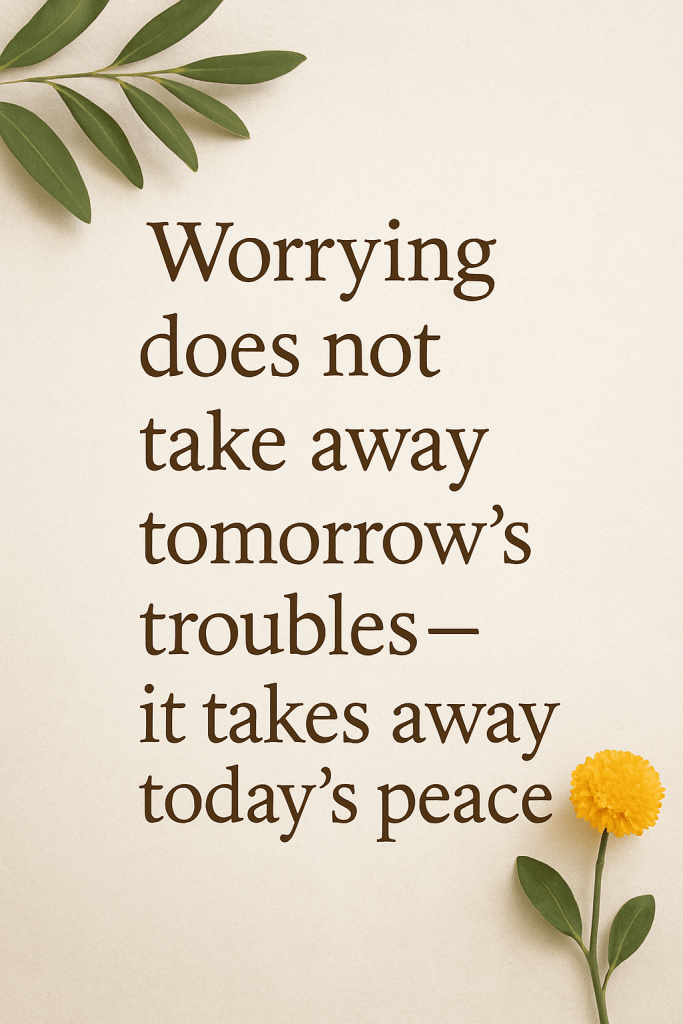
“Worrying does not take away tomorrow’s troubles — it takes away today’s peace.”
✅ Final Takeaway:
Going with the flow is a strength, not a weakness. When you stop fighting life and start flowing with it, you’ll find more joy, clarity, and freedom. Less control, more calm.
In today’s fast-moving world, people often mix up being alone with feeling lonely. But they’re not the same thing. Let’s understand the difference and how each affects our mental well-being.
✅ What Does “Being Alone” Mean?
It’s a physical state — no one is around you.
You choose to spend time by yourself.
It can be peaceful and calming.
It gives you space to think, reflect, or recharge.
Many people enjoy alone time for hobbies, self-care, or relaxation.
🧘♀️ Example: Reading a book alone at home and enjoying the silence.
❌ What Does “Feeling Lonely” Mean?
It’s an emotional state — you feel disconnected even if surrounded by people.
It often comes with sadness, emptiness, or being left out.
You may crave deep connection but feel unseen or unheard.
It can happen in crowds, relationships, or social media circles.
💔 Example: Feeling unnoticed at a family gathering or in a crowded classroom.
🧠 Key Differences:
Being Alone
Feeling Lonely
A choice
A feeling
Peaceful
Painful
Can be healthy
Can be harmful
Time to recharge
Craving connection
Helps self-discovery
May affect self-worth
🌱 Benefits of Being Alone:
Boosts creativity and focus
Helps in self-awareness and emotional regulation
Reduces stress when used for self-care
Encourages independence and inner peace
💡 Tips to Manage Loneliness:
Reach out – Talk to a friend or loved one.
Join a group – Community classes, clubs, or online spaces help.
Be kind to yourself – Don’t judge your feelings.
Stay active – A walk, hobby, or exercise can uplift mood.
Practice gratitude – It shifts focus to what’s working in your life.
🌼 Final Thought:
Being alone can be a gift. Loneliness is a call for connection. Learn to enjoy your own company, and when you feel lonely — don’t stay silent. Reach out. Speak up. You’re not alone in feeling lonely.
In a world that often celebrates loud voices and bold moves, a new kind of strength is making its mark — quiet confidence. It’s calm, steady, and powerful in its own way. Let’s explore this beautiful shift.
🌟 1. What is Quiet Confidence?
It’s believing in yourself without needing to prove it loudly.
It’s the calm assurance that shows through actions, not words.
It’s rooted in self-awareness and inner peace.
💭 2. Why Are People Embracing It Now?
The fast-paced, loud world can be exhausting.
People are craving authenticity and calm energy.
Mental health awareness has shown the power of emotional balance.
🧘♀️ 3. Traits of Quietly Confident People
They listen more than they speak.
They stay grounded even during chaos.
They uplift others instead of competing with them.
They don’t need attention to feel valuable.
🔄 4. Softness is Not Weakness
Being kind, empathetic, or gentle doesn’t mean you’re weak.
In fact, it takes real strength to stay soft in a hard world.
Quiet confidence blends strength with compassion.
🌱 5. How to Build Quiet Confidence
Practice self-awareness and self-acceptance.
Set boundaries without guilt.
Focus on progress, not perfection.
Celebrate wins privately and support others openly.
Stay true to your values, even when no one is watching.
💼 6. In the Workplace and Leadership
Leaders with quiet confidence earn deep respect.
They guide through example, not force.
They create psychologically safe spaces for teams.
🧘♂️ 7. In Daily Life
You don’t need to be loud to be heard.
Small, consistent actions build lasting trust.
You inspire others just by being calm, kind, and authentic.
💬 Final Thought
Quiet confidence is the new power. You don’t need to shout to be strong. Being soft and sure is more than enough in this new era of strength.
Healing—whether emotional, mental, or physical—is not a straight path. It’s a journey filled with progress, setbacks, and moments that may feel like you’re going in circles. And that’s okay.
1. Healing Takes Time
Recovery doesn’t happen overnight.
It’s okay to take days, weeks, or even years.
Be patient with yourself.
2. It’s Normal to Have Good and Bad Days
Some days you’ll feel strong, other days you won’t.
Bad days don’t erase your progress.
Every step, even backward, is part of the journey.
3. Progress Isn’t Always Visible
Just because you can’t see improvement doesn’t mean it’s not happening.
Inner changes often take time to show on the outside.
4. Setbacks Are Not Failures
Falling back into old patterns is common.
It’s not a failure—it’s part of learning and growing.
Use it as a lesson, not a reason to give up.
5. Celebrate Small Wins
Even small steps matter—like getting out of bed, saying “no,” or smiling again.
Every tiny win adds up to big change.
6. Your Journey Is Unique
Don’t compare your healing to others.
Everyone heals at their own pace and in their own way.
What works for someone else may not work for you—and that’s okay.
7. Allow Yourself to Feel
Don’t hide your emotions—feel them.
Crying, anger, or sadness are not signs of weakness.
Emotions are part of processing and healing.
8. Ask for Help When You Need It
You don’t have to do it alone.
Talk to a friend, therapist, or support group.
Asking for help is a strength, not a weakness.
9. Be Kind to Yourself
Talk to yourself with love and compassion.
You’re doing your best, and that’s enough.
Replace self-criticism with encouragement.
10. Healing Is Ongoing
Healing doesn’t mean you’ll never feel pain again.
It means you learn to carry it with more strength and less fear.
It’s about growing through what you go through.
🌼 Final Thought:
Healing isn’t a straight line—it’s a journey of twists, turns, detours, and growth. Embrace the process, honor your progress, and trust that every step—even the tough ones—is leading you toward a stronger you.