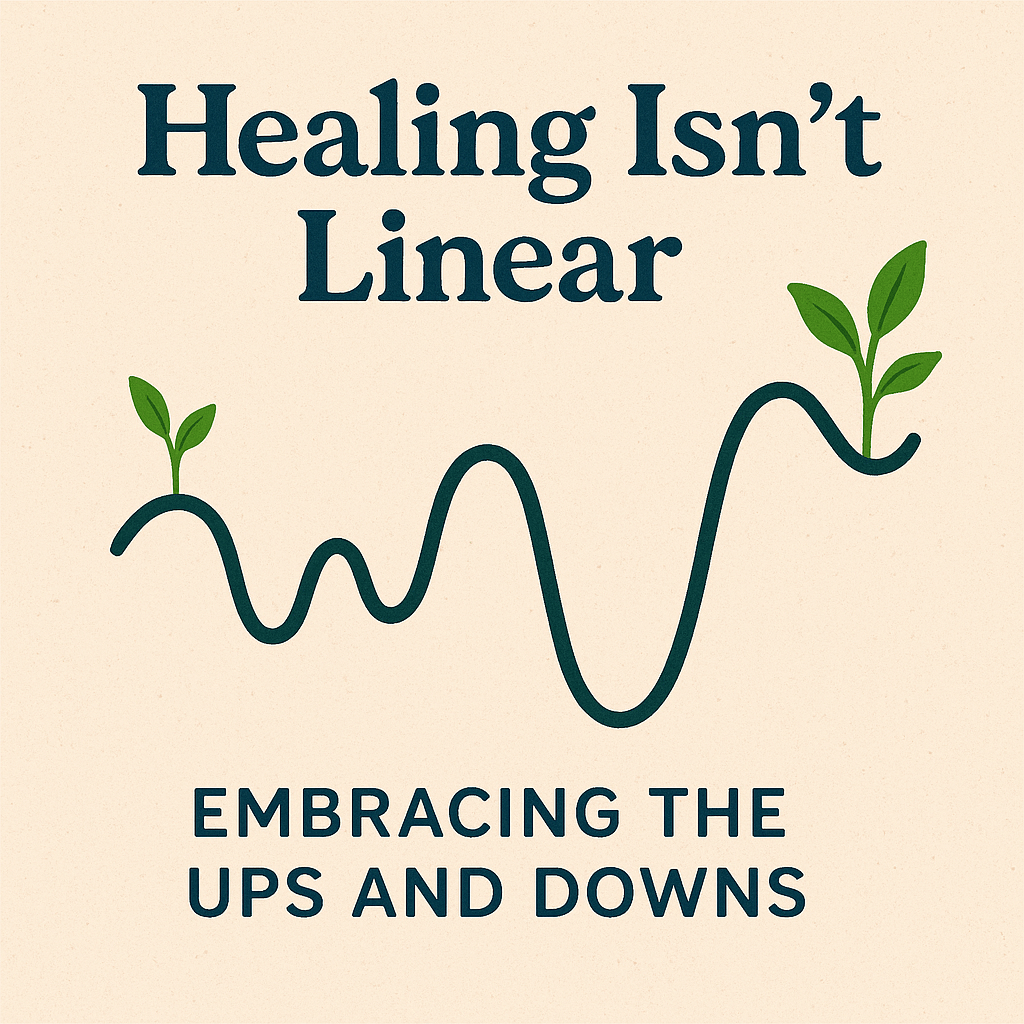
🌱 Healing Isn’t Linear: Embracing the Ups and Downs

Healing—whether emotional, mental, or physical—is not a straight path. It’s a journey filled with progress, setbacks, and moments that may feel like you’re going in circles. And that’s okay.


1. Healing Takes Time

  • Recovery doesn’t happen overnight.
  • It’s okay to take days, weeks, or even years.
  • Be patient with yourself.

2. It’s Normal to Have Good and Bad Days

  • Some days you’ll feel strong, other days you won’t.
  • Bad days don’t erase your progress.
  • Every step, even backward, is part of the journey.

3. Progress Isn’t Always Visible

  • Just because you can’t see improvement doesn’t mean it’s not happening.
  • Inner changes often take time to show on the outside.

4. Setbacks Are Not Failures

  • Falling back into old patterns is common.
  • It’s not a failure—it’s part of learning and growing.
  • Use it as a lesson, not a reason to give up.

5. Celebrate Small Wins

  • Even small steps matter—like getting out of bed, saying “no,” or smiling again.
  • Every tiny win adds up to big change.

6. Your Journey Is Unique

  • Don’t compare your healing to others.
  • Everyone heals at their own pace and in their own way.
  • What works for someone else may not work for you—and that’s okay.

7. Allow Yourself to Feel

  • Don’t hide your emotions—feel them.
  • Crying, anger, or sadness are not signs of weakness.
  • Emotions are part of processing and healing.

8. Ask for Help When You Need It

  • You don’t have to do it alone.
  • Talk to a friend, therapist, or support group.
  • Asking for help is a strength, not a weakness.

9. Be Kind to Yourself

  • Talk to yourself with love and compassion.
  • You’re doing your best, and that’s enough.
  • Replace self-criticism with encouragement.

10. Healing Is Ongoing

  • Healing doesn’t mean you’ll never feel pain again.
  • It means you learn to carry it with more strength and less fear.
  • It’s about growing through what you go through.

🌼 Final Thought:

Healing isn’t a straight line—it’s a journey of twists, turns, detours, and growth. Embrace the process, honor your progress, and trust that every step—even the tough ones—is leading you toward a stronger you.


Mastering the ‘Soft Life’: Balancing Hustle and Self-Care

What is the ‘Soft Life’?

  • The ‘Soft Life’ is about living with ease, peace, and minimal stress.
  • It doesn’t mean avoiding responsibilities but prioritizing self-care and well-being.
  • It’s a shift from the hustle culture to a balanced, mindful approach to success.

Why Balancing Hustle and Self-Care is Important

  • Hustle culture can lead to burnout and mental exhaustion.
  • A balanced life enhances productivity and happiness.
  • Self-care helps maintain energy, creativity, and motivation.

How to Master the ‘Soft Life’ While Hustling

1. Work Smart, Not Hard

✅ Set clear goals and focus on high-impact tasks.
✅ Use productivity tools like time blocking or Pomodoro technique.
✅ Delegate and outsource tasks where possible.

2. Prioritize Rest and Recovery

✅ Get enough sleep (7–9 hours per night).
✅ Take short breaks during work to refresh your mind.
✅ Schedule ‘me-time’ for relaxation and hobbies.

3. Set Boundaries

✅ Say NO to unnecessary commitments.
✅ Set work hours and stick to them.
✅ Avoid checking emails or messages during personal time.

4. Embrace Self-Care Daily

✅ Practice mindfulness or meditation.
✅ Engage in activities that bring you joy (reading, music, nature walks).
✅ Stay active—exercise, yoga, or simple stretching.

5. Choose Quality Over Quantity

✅ Focus on meaningful relationships over toxic connections.
✅ Invest in experiences rather than excessive material possessions.
✅ Simplify your lifestyle—less stress, more happiness.

6. Financial Wellness for a Soft Life

✅ Build a financial cushion (savings, emergency funds).
✅ Avoid toxic hustle for money—choose fulfilling work.
✅ Invest in passive income or side hustles for financial freedom.

Final Thoughts

  • A ‘Soft Life’ isn’t about laziness; it’s about intentional living.
  • Balance is the key—hustle when needed, but never at the cost of well-being.
  • Prioritize peace, happiness, and self-care while working towards success.

Biohacking for Beginners: How to Optimize Your Body and Mind

Biohacking is the practice of using science, technology, and lifestyle changes to improve your physical and mental performance. It focuses on small, effective tweaks to your daily routine that enhance health, energy, and cognitive function.


1. Nutrition Hacks for Better Energy

Intermittent Fasting – Eat within a specific time window (e.g., 8 hours) to improve metabolism and energy.
Superfoods – Include brain-boosting foods like blueberries, walnuts, and dark chocolate.
Hydration – Drink enough water and add electrolytes to stay energized.
Gut Health – Eat fermented foods like yogurt to improve digestion and immunity.


2. Sleep Optimization for Peak Performance

Stick to a Routine – Sleep and wake up at the same time daily.
Blue Light Blocking – Avoid screens 1–2 hours before bed to improve melatonin production.
Cold Room Temperature – Sleep better in a cool, dark, and quiet room.
Magnesium & Herbal Teas – Natural sleep aids like chamomile tea or magnesium can improve relaxation.


3. Brain and Mind Hacks for Mental Clarity

Cold Showers – Boosts alertness, reduces stress, and improves circulation.
Meditation & Deep Breathing – Reduces stress and improves focus.
Nootropics (Brain Supplements) – Natural options like caffeine, and omega-3s enhance cognitive function.
Learning & Neuroplasticity – Read, solve puzzles, and challenge your brain daily.


4. Exercise & Movement for Longevity

Strength Training – Lifts weights to boost metabolism and bone health.
High-Intensity Interval Training (HIIT) – Short bursts of exercise improve cardiovascular health.
Walking & Sunlight – 10,000 steps a day + 20 minutes of sunlight improve mood and vitamin D levels.
Stretching & Mobility – Yoga and dynamic stretching prevent injuries and enhance flexibility.


5. Biohacking Tools & Gadgets

Wearable Tech – Smartwatches track sleep, heart rate, and activity levels.
Red Light Therapy – Helps with muscle recovery, skin health, and sleep.
Blue Light Glasses – Reduces eye strain and improves sleep quality.
Grounding (Earthing) – Walking barefoot on grass or sand improves mood and reduces stress.


6. Stress & Recovery Optimization

Gratitude Journaling – Writing down positive thoughts improves mental health.
Cold Exposure (Ice Baths) – Reduces inflammation and speeds up recovery.
Sauna & Heat Therapy – Supports detoxification and muscle relaxation.
Social Connection – Strong relationships boost overall well-being.


Final Thoughts

Biohacking doesn’t have to be extreme or expensive. Start with small changes, track your progress, and gradually add new habits. Listen to your body and find what works best for you!

Recharge: Easy Steps for Better Sleep and Improved Fitness

Sleep is a crucial component of our overall health, particularly for fitness enthusiasts aiming to optimize performance and recovery. By incorporating simple yet effective sleep hygiene practices into your routine, you can reap the benefits of improved restorative sleep. Let’s explore these steps together.

Step 1: Establish a Consistent Sleep Schedule

  • Set a regular bedtime and wake-up time, even on weekends, to regulate your body’s internal clock.
  • Aim for 7-9 hours of sleep per night, aligning with your individual sleep needs.

Step 2: Create a Relaxing Bedtime Routine

  • Wind down before bed with calming activities such as reading, gentle stretching, or deep breathing exercises.
  • Avoid screens and stimulating activities that can interfere with your ability to fall asleep.

Step 3: Prioritize Sleep Environment

  • Ensure your bedroom is conducive to sleep by keeping it cool, dark, and quiet.
  • Invest in a comfortable mattress and pillows to support restful sleep.

Step 4: Monitor Your Caffeine Intake

  • Limit caffeine consumption, especially in the afternoon and evening, as it can disrupt sleep patterns.

Step 5: Stay Active During the Day

  • Engage in regular physical activity, but avoid intense workouts close to bedtime.
  • Incorporate relaxation exercises like yoga or meditation into your daily routine to reduce stress and promote better sleep.

Step 6: Watch Your Diet

  • Avoid heavy meals and spicy foods before bedtime, opting for light, easily digestible snacks if needed.
  • Stay hydrated throughout the day but limit fluid intake in the hours leading up to bedtime to minimize disruptions from nighttime bathroom trips.

Conclusion:
By following these simple steps for better sleep hygiene, you can enhance your fitness journey and support optimal recovery. Remember, quality sleep is not a luxury but a necessity for overall well-being. Start implementing these practices today and experience the transformative power of restorative sleep in your life.