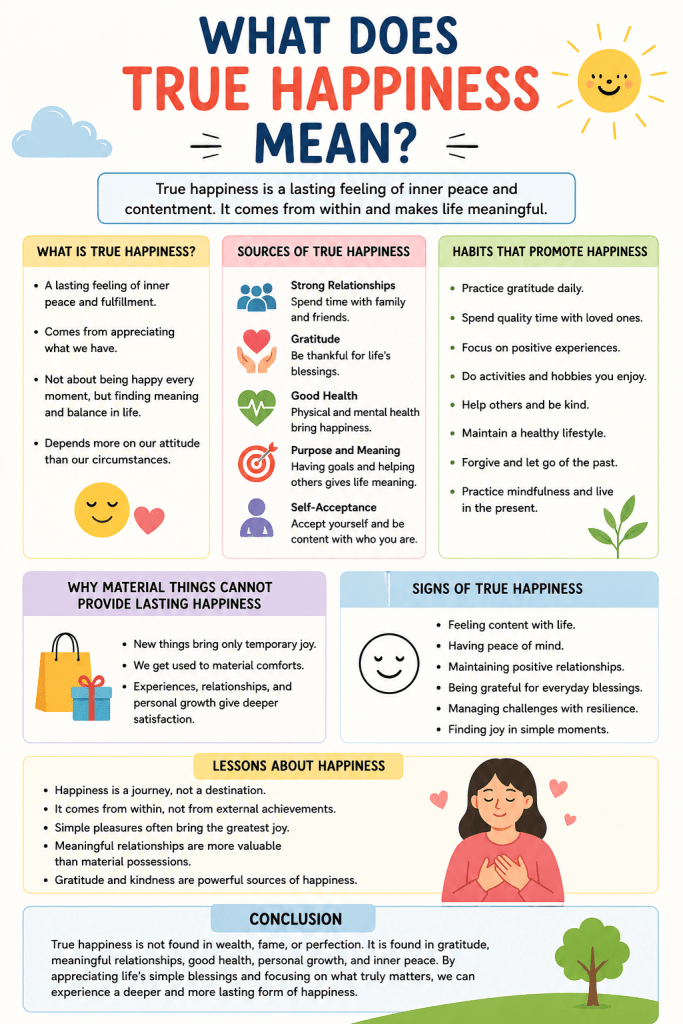
What does True Happiness means?

Introduction

In today’s fast-paced world, many people chase happiness through money, success, possessions, or social status. However, true happiness goes beyond temporary pleasures. It is a deeper sense of contentment, peace, and satisfaction with life.


What is True Happiness?

  • True happiness is a lasting feeling of inner peace and fulfillment.
  • It comes from appreciating what we have rather than constantly wanting more.
  • It is not about being happy every moment but about finding meaning and balance in life.
  • Happiness is a state of mind that depends more on our attitude than our circumstances.

Common Misconceptions About Happiness

1. Happiness Means Being Rich

  • Money can provide comfort and security.
  • However, wealth alone does not guarantee happiness.
  • Many wealthy individuals still experience stress and dissatisfaction.

2. Happiness Means Having Everything

  • No one has a perfect life.
  • True happiness comes from accepting imperfections and making the best of situations.

3. Happiness is Permanent

  • Life includes both joyful and difficult moments.
  • Experiencing sadness does not mean a person is unhappy overall.

Sources of True Happiness

1. Strong Relationships

  • Spending time with family and friends creates emotional support.
  • Meaningful connections improve overall well-being.

2. Gratitude

  • Being thankful for life’s blessings increases satisfaction.
  • Gratitude helps people focus on what they have rather than what they lack.

3. Good Health

  • Physical and mental well-being contribute greatly to happiness.
  • Regular exercise, healthy eating, and sufficient sleep improve mood.

4. Purpose and Meaning

  • Having goals and a sense of purpose makes life more fulfilling.
  • Helping others and contributing to society can create lasting happiness.

5. Self-Acceptance

  • Accepting oneself, including strengths and weaknesses, builds inner peace.
  • Comparing ourselves with others often reduces happiness.

Habits That Promote Happiness

  • Practice gratitude daily.
  • Spend quality time with loved ones.
  • Focus on positive experiences.
  • Engage in hobbies and activities you enjoy.
  • Help others through acts of kindness.
  • Maintain a healthy lifestyle.
  • Learn to forgive and let go of past mistakes.
  • Practice mindfulness and live in the present moment.

Why Material Things Cannot Provide Lasting Happiness

  • New possessions often bring temporary excitement.
  • Over time, people become accustomed to material comforts.
  • Experiences, relationships, and personal growth usually provide deeper satisfaction than material goods.

Signs of True Happiness

  • Feeling content with life.
  • Having peace of mind.
  • Maintaining positive relationships.
  • Being grateful for everyday blessings.
  • Managing challenges with resilience.
  • Finding joy in simple moments.

Lessons About Happiness

  • Happiness is a journey, not a destination.
  • It comes from within rather than external achievements.
  • Simple pleasures often bring the greatest joy.
  • Meaningful relationships are more valuable than material possessions.
  • Gratitude and kindness are powerful sources of happiness.

Conclusion

True happiness is not found in wealth, fame, or perfection. It is found in gratitude, meaningful relationships, good health, personal growth, and inner peace. By appreciating life’s simple blessings and focusing on what truly matters, we can experience a deeper and more lasting form of happiness. True happiness is not about having the best of everything—it is about making the best of everything we have. 🌸✨


Money Matters: How to Earn, Save, and Invest Wisely

Money Matters: How to Earn, Save, and Invest Wisely

Money plays a vital role in our lives, influencing our ability to meet our needs, enjoy comfort, and achieve our goals. Here’s a simple guide on how to earn, save, and invest money wisely, complete with relevant quotes and practical tips.

1. Earning Money

“Financial freedom is available to those who learn about it and work for it.” – Robert Kiyosaki

Tips to Earn Wisely:

  • Explore Side Hustles: Take on freelance work or gig economy jobs to boost your income.
  • Upgrade Skills: Invest in education and training to enhance your career prospects and earning potential.
  • Network: Build professional relationships to discover new job opportunities and business ventures.

2. Saving Money

“Do not save what is left after spending, but spend what is left after saving.” – Warren Buffett

Tips to Save Wisely:

  • Create a Budget: Track your income and expenses to identify areas where you can cut costs.
  • Automate Savings: Set up automatic transfers to your savings account to ensure consistent saving.
  • Reduce Debt: Focus on paying off high-interest debt to free up more money for saving.

3. Investing Money

“An investment in knowledge pays the best interest.” – Benjamin Franklin

Tips to Invest Wisely:

  • Start Early: The earlier you start investing, the more time your money has to grow.
  • Diversify Investments: Spread your investments across different asset classes to reduce risk.
  • Educate Yourself: Learn about various investment options, such as stocks, bonds, mutual funds, and real estate.

4. Meeting Basic Needs

“Money is only a tool. It will take you wherever you wish, but it will not replace you as the driver.” – Ayn Rand

Tips for Managing Essentials:

  • Prioritize Spending: Focus on essentials like food, shelter, and clothing first.
  • Plan Purchases: Make a list of necessary items and stick to it to avoid impulse buying.

5. Health and Well-being

“Health is the greatest gift, contentment the greatest wealth, faithfulness the best relationship.” – Buddha

Tips for Health-related Expenses:

  • Health Insurance: Ensure you have a good health insurance plan to cover medical expenses.
  • Regular Check-ups: Allocate funds for regular health check-ups to prevent serious illnesses.

6. Education

“Education is the most powerful weapon which you can use to change the world.” – Nelson Mandela

Tips for Educational Savings:

  • Education Fund: Set up a dedicated savings account for education expenses.
  • Scholarships and Grants: Research and apply for scholarships and grants to help cover costs.

7. Security

“Wealth consists not in having great possessions, but in having few wants.” – Epictetus

Tips for Financial Security:

  • Emergency Fund: Save at least three to six months’ worth of living expenses for emergencies.
  • Insurance: Ensure you have adequate insurance coverage for health, life, and property.

8. Freedom and Choices

“Too many people spend money they haven’t earned to buy things they don’t want to impress people they don’t like.” – Will Rogers

Tips for Financial Freedom:

  • Mindful Spending: Spend money on things that truly add value to your life.
  • Save for Goals: Allocate funds towards achieving your personal and financial goals.

9. Supporting Others

“We make a living by what we get, but we make a life by what we give.” – Winston Churchill

Tips for Helping Others:

  • Charity: Regularly donate a portion of your income to charitable causes.
  • Support Network: Be prepared to help family and friends in times of need.

10. Planning for the Future

“Someone is sitting in the shade today because someone planted a tree a long time ago.” – Warren Buffett

Tips for Future Planning:

  • Retirement Savings: Contribute to retirement plans.
  • Long-term Goals: Invest in long-term goals such as buying a home or starting a business.

In summary, managing money wisely by earning, saving, and investing effectively ensures financial stability and allows you to enjoy a more fulfilling life. Use these tips to guide your financial decisions and build a secure future.