
Why We Delay Things and How to Overcome It
“Procrastination is not about being lazy—it’s about understanding why we avoid certain tasks and learning how to take the first step.”
🌱 Introduction
Almost everyone procrastinates at some point. Whether it’s delaying homework, postponing an important project, or avoiding household chores, procrastination is a common habit. While taking occasional breaks is normal, repeatedly putting off important tasks can lead to stress, missed opportunities, and reduced productivity.
Understanding the psychology behind procrastination can help us break the cycle and develop better habits.
🧠 What Is Procrastination?
Procrastination is the habit of delaying or postponing tasks, even when we know they are important and should be completed on time.
It often means choosing short-term comfort over long-term success.
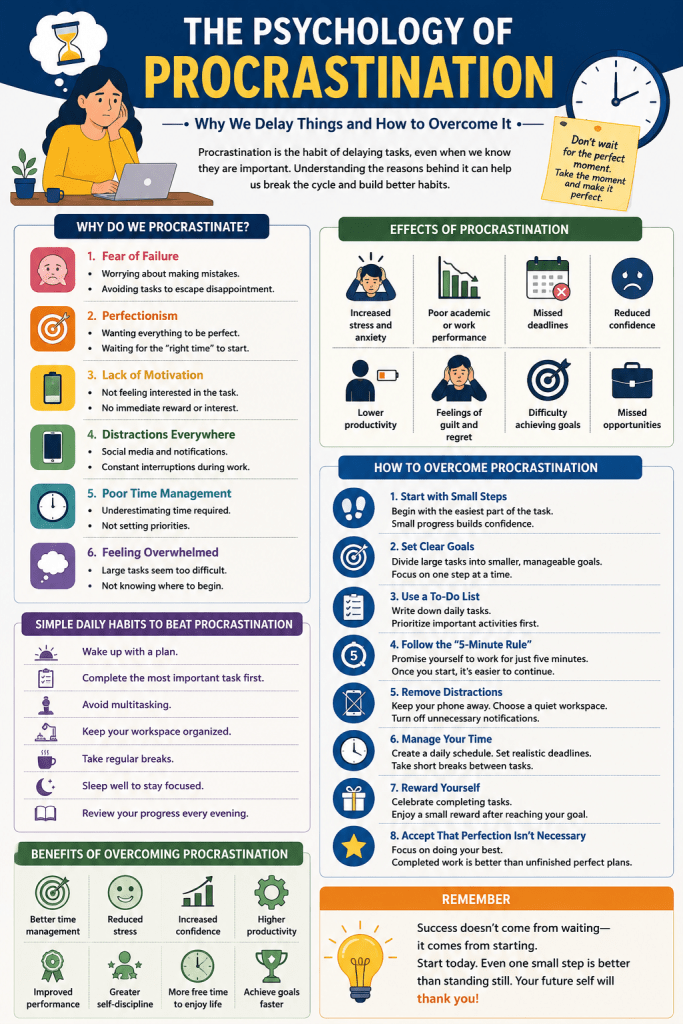
🤔 Why Do People Procrastinate?
1. 😟 Fear of Failure
- Worrying about making mistakes.
- Feeling that the work won’t be good enough.
- Avoiding tasks to escape disappointment.
Key Message: Fear often stops us before we even begin.
2. 🎯 Perfectionism
- Wanting everything to be perfect.
- Waiting for the “right time” to start.
- Spending too much time planning instead of doing.
Key Message: Progress is more important than perfection.
3. 😴 Lack of Motivation
- Not feeling interested in the task.
- Finding the work boring or difficult.
- Losing focus because there is no immediate reward.
Key Message: Action often creates motivation.
4. 📱 Distractions Everywhere
- Social media notifications.
- Mobile phones and online entertainment.
- Constant interruptions during work or study.
Key Message: Small distractions can lead to big delays.
5. ⏳ Poor Time Management
- Underestimating how long tasks will take.
- Not setting priorities.
- Waiting until the last minute.
Key Message: Planning your time reduces procrastination.
6. 😰 Feeling Overwhelmed
- Seeing a large task as too difficult.
- Not knowing where to begin.
- Giving up before starting.
Key Message: Breaking big tasks into smaller steps makes them easier.
⚠️ Effects of Procrastination
- Increased stress and anxiety.
- Poor academic or work performance.
- Missed deadlines.
- Reduced confidence.
- Lower productivity.
- Feelings of guilt and regret.
- Difficulty achieving personal and professional goals.
🌟 How to Overcome Procrastination
✅ Start with Small Steps
- Begin with the easiest part of the task.
- Small progress builds confidence.
✅ Set Clear Goals
- Divide large tasks into smaller, manageable goals.
- Focus on completing one step at a time.
✅ Use a To-Do List
- Write down daily tasks.
- Prioritize important activities first.
✅ Follow the “5-Minute Rule”
- Promise yourself to work for just five minutes.
- Once you start, it’s often easier to continue.
✅ Remove Distractions
- Keep your phone away while studying or working.
- Choose a quiet workspace.
- Turn off unnecessary notifications.
✅ Manage Your Time
- Create a daily schedule.
- Set realistic deadlines.
- Take short breaks between tasks.
✅ Reward Yourself
- Celebrate completing tasks.
- Enjoy a small reward after reaching your goal.
✅ Accept That Perfection Isn’t Necessary
- Focus on doing your best.
- Remember that completed work is better than unfinished perfect plans.
💡 Simple Daily Habits to Beat Procrastination
- Wake up with a plan.
- Complete the most important task first.
- Avoid multitasking.
- Keep your workspace organized.
- Take regular breaks.
- Sleep well to stay focused.
- Review your progress every evening.
🌈 Benefits of Overcoming Procrastination
- Better time management.
- Reduced stress.
- Increased confidence.
- Higher productivity.
- Improved academic and work performance.
- Greater self-discipline.
- More free time to enjoy life.
📌 Conclusion
Procrastination is a habit that can affect anyone, but it can be overcome with awareness, planning, and consistent action. Instead of waiting for motivation, take the first small step. Every completed task brings you closer to your goals and builds confidence for the next challenge.
Remember, success doesn’t come from waiting—it comes from starting.
🌟 Final Thought
Start today. Even one small step is better than standing still. Your future self will thank you!

