This blog is a handy guide that helps you streamline your daily tasks, save and grow your money, and get better at handling your feelings. It’s filled with easy-to-follow advice that makes a big difference in how you work, spend, and feel. Dive into our Pioneeredge.io site for practical tips and tricks that make life smoother and more fulfilling.
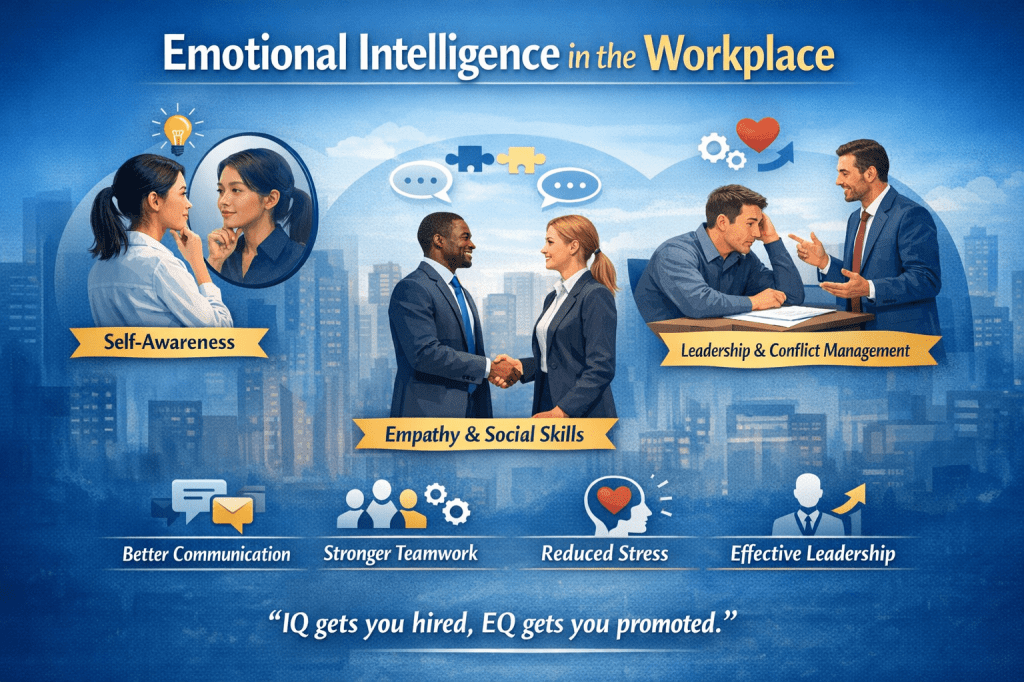
Emotional Intelligence (EI) is the ability to understand, manage, and use emotions effectively — both your own and others’. In today’s workplace, technical skills alone are not enough. Emotional intelligence determines how well we lead, communicate, and collaborate.
🔹 1. What is Emotional Intelligence?
Emotional Intelligence includes:
Self-awareness – Understanding your own emotions
Self-regulation – Controlling impulsive reactions
Motivation – Staying driven toward goals
Empathy – Understanding others’ feelings
Social skills – Building healthy relationships
“IQ may get you hired, but EQ gets you promoted.”
🔹 2. Why Emotional Intelligence Matters at Work
Improves communication
Reduces workplace conflicts
Builds stronger teamwork
Enhances leadership effectiveness
Increases job satisfaction
Employees with high EI create a positive and respectful work culture.
“People may forget what you said, but they will never forget how you made them feel.”
🔹 3. Emotional Intelligence in Leadership
A leader with emotional intelligence:
Listens actively
Handles criticism calmly
Encourages team members
Resolves conflicts fairly
Inspires trust
Such leaders create psychological safety within teams.
“Leadership is not about control, it is about connection.”
🔹 4. Emotional Intelligence and Teamwork
Teams function better when members:
Respect different opinions
Manage disagreements maturely
Support each other during stress
Communicate clearly
High EI reduces misunderstandings and strengthens cooperation.
“Strong teams are built on understanding, not just skill.”
🔹 5. How to Improve Emotional Intelligence
Practice self-reflection daily
Pause before reacting
Develop active listening skills
Seek constructive feedback
Show empathy in conversations
Small behavioral changes can create a big professional impact.
“Emotional intelligence is not about being emotional; it is about being emotionally smart.”
🔹 Conclusion
In modern workplaces, success depends not only on knowledge but also on emotional maturity. Emotional intelligence builds trust, strengthens relationships, and drives long-term performance.
“Your attitude and emotional control define your professional success more than your technical ability.”
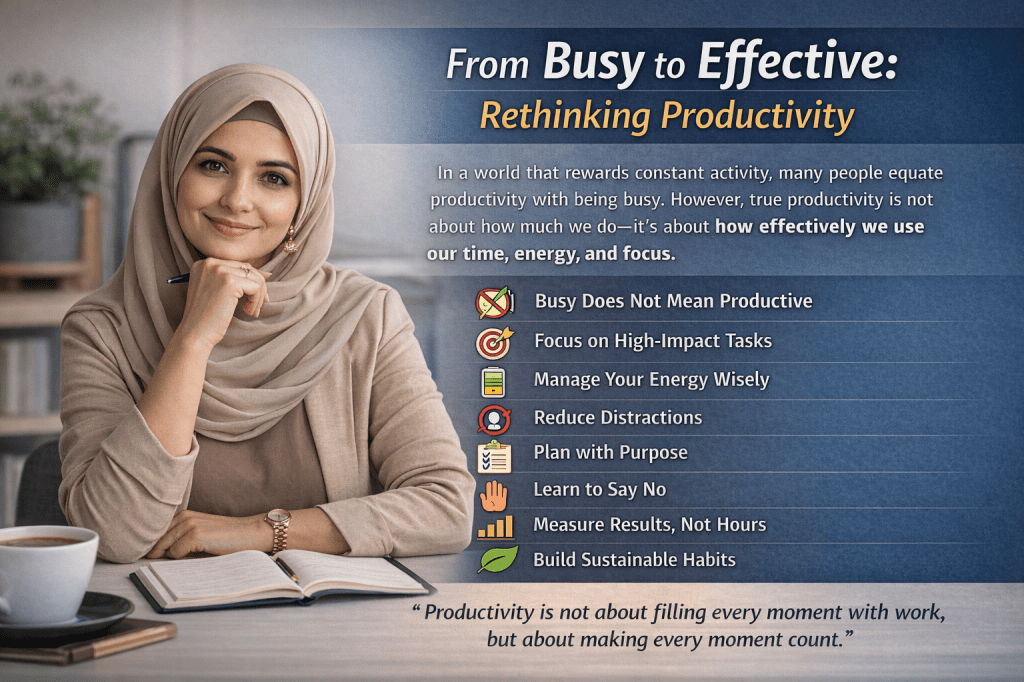
In a world that rewards constant activity, many people equate productivity with being busy. Long to-do lists, packed schedules, and endless notifications create the illusion of progress. However, true productivity is not about how much we do—it is about how effectively we use our time, energy, and focus. Moving from busyness to effectiveness requires a shift in mindset, not just better tools.
Key Ideas Explained in Simple Points
1. Being Busy Is Easy, Being Effective Is Intentional
True productivity is not about doing more—it is about doing what matters most with clarity and purpose. When the mind is focused and priorities are clear, effectiveness replaces exhaustion, and success becomes sustainable.
Closing Quote
“Productivity is not about filling every moment with work, but about making every moment count.”
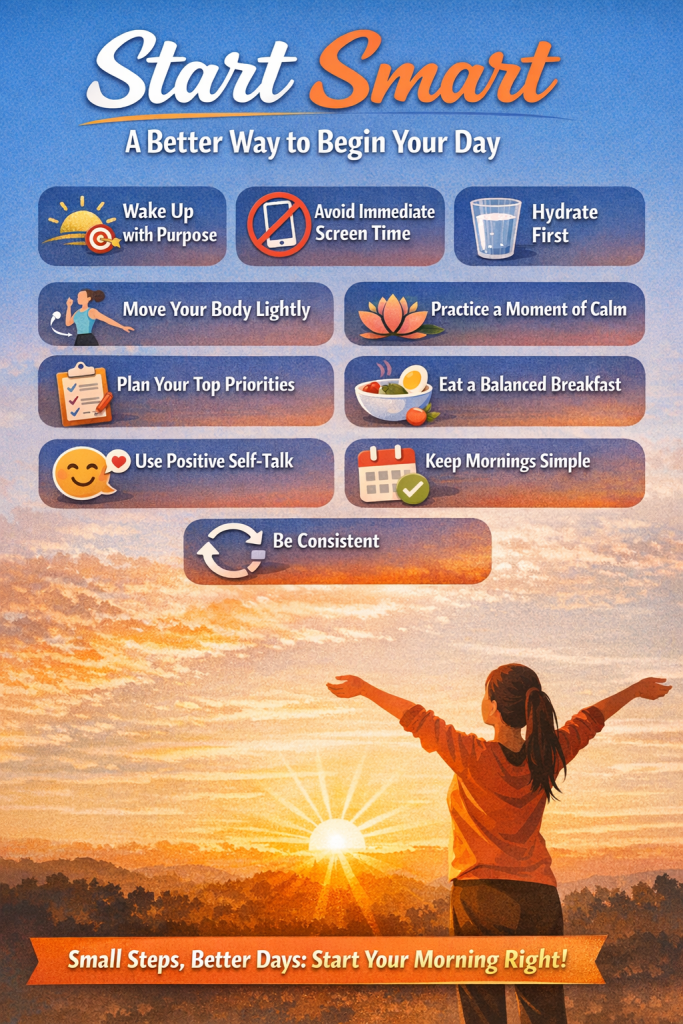
How you begin your morning often determines how effective, calm, and focused the rest of your day will be. A smart start does not require drastic changes. Small, intentional actions can create clarity, energy, and direction. Below are simple, practical points to help you start your day better.
1. Wake Up with Purpose
Avoid rushing out of bed. Take a moment to remind yourself of one important task or goal for the day. This creates direction and reduces mental clutter.
2. Avoid Immediate Screen Time
Checking your phone immediately can increase stress and distraction. Give your mind at least 15–20 minutes before engaging with messages or social media.
3. Hydrate First
Drinking water soon after waking up helps activate your body, improves concentration, and supports overall health.
4. Move Your Body Lightly
Simple stretching, a short walk, or light exercise boosts blood circulation and helps you feel more alert and positive.
5. Practice a Moment of Calm
Spend a few minutes in silence, deep breathing, or prayer/meditation. This improves emotional balance and mental clarity.
6. Plan Your Top Priorities
List two or three important tasks for the day. Clear priorities reduce overwhelm and improve productivity.
7. Eat a Balanced Breakfast
A healthy breakfast supports energy levels and concentration. Avoid skipping meals or relying only on caffeine.
8. Use Positive Self-Talk
Begin your day with encouraging thoughts. Confidence in the morning strengthens resilience throughout the day.
9. Keep Mornings Simple
Avoid overloading your schedule early in the day. A calm morning sets the tone for better decision-making.
10. Be Consistent
A smart start works best when practiced daily. Consistency turns good habits into lasting routines.
Conclusion
Starting smart is about being intentional, not perfect. A few mindful steps each morning can lead to improved focus, reduced stress, and better outcomes—both personally and professionally. When you begin your day with clarity, the rest of the day follows naturally.
In today’s fast-paced world, everyone wants to get more done in less time. But should you focus on one task at a time or juggle multiple things at once? Let’s explore the difference between deep work and multitasking to see which one is more effective.
What is Deep Work?
Deep work is when you focus entirely on one task without distractions. It requires complete concentration and helps you produce high-quality results. When you engage in deep work, you enter a state of flow where you can solve complex problems, think creatively, and complete work efficiently.
Benefits of Deep Work:
Better Quality – Since you are fully focused, your work is more accurate and detailed.
Increased Productivity – You finish tasks faster because you are not switching between different activities.
Stronger Memory and Learning – Focusing deeply improves your ability to learn and retain information.
More Creativity – Your brain has more space to think deeply and come up with new ideas.
What is Multitasking?
Multitasking means doing multiple tasks at the same time. It sounds like a great way to be more productive, but in reality, it divides your attention and makes it harder to concentrate.
Why Multitasking Doesn’t Work Well:
Lower Quality of Work – You make more mistakes because your brain is constantly switching between tasks.
Slower Progress – It takes longer to complete each task when your attention is divided.
Higher Stress Levels – Your brain has to work harder, leading to mental fatigue and stress.
Reduced Focus and Memory – Constantly shifting attention weakens your ability to remember information.
Which is More Effective?
Research shows that deep work is far more effective than multitasking. When you focus on one thing at a time, you get better results, complete tasks faster, and feel more satisfied with your work. On the other hand, multitasking reduces efficiency and increases stress.
How to Develop Deep Work Habits:
Set Specific Time Blocks – Dedicate fixed hours to deep work without interruptions.
Eliminate Distractions – Turn off notifications, close unnecessary tabs, and find a quiet place to work.
Use the Pomodoro Technique – Work for 25-50 minutes, take a short break, and repeat.
Train Your Focus – Start with short deep work sessions and gradually increase the time.
Prioritize Important Tasks – Identify tasks that need deep concentration and schedule them first.
Conclusion
While multitasking may seem productive, it actually slows you down and lowers the quality of your work. Deep work, on the other hand, helps you stay focused, creative, and efficient. By practicing deep work, you can achieve better results and make the most of your time. So, next time you work, choose focus over multitasking, and see the difference!
Do you practice deep work or multitasking? Share your experience in the comments!
Intermittent fasting (IF) has become a popular health trend, known for its simple yet effective approach to weight loss and overall well-being. Unlike traditional diets that focus on what to eat, intermittent fasting emphasizes when to eat by cycling between eating and fasting periods. Studies suggest that IF can help with fat loss, metabolism boost, and better brain function. But does it really work? Let’s explore how intermittent fasting functions, its benefits, and whether it’s the right choice for you.
1. What is Intermittent Fasting?
Intermittent fasting is an eating pattern that alternates between periods of eating and fasting. It does not focus on what you eat but when you eat. The most common methods include:
16/8 Method – Fast for 16 hours, eat within an 8-hour window.
5:2 Method – Eat normally for 5 days and consume fewer calories (500-600) on 2 days.
OMAD (One Meal a Day) – Eat one large meal daily and fast the rest of the time.
2. How Does It Work?
During fasting, the body undergoes several changes:
Fat Burning – The body uses stored fat for energy.
Cell Repair (Autophagy) – The body removes damaged cells and regenerates new ones.
3. Key Benefits of Intermittent Fasting
✅ Aids in Weight Loss – Reduces calorie intake and increases fat-burning. ✅ Improves Brain Function – Supports brain health and lowers the risk of diseases. ✅ Boosts Heart Health – Helps regulate blood sugar and cholesterol levels. ✅ Enhances Longevity – May slow aging and increase lifespan.
4. Who Should Try or Avoid It?
✔️ Recommended For:
Individuals looking for weight loss and better metabolism.
Those who can control cravings and stick to a schedule.
❌ Not Suitable For:
Pregnant women or individuals with medical conditions.
People with a history of eating disorders.
Those who experience dizziness, fatigue, or discomfort while fasting.
Conclusion
Intermittent fasting is a simple and effective approach to improving health, boosting metabolism, and managing weight. It helps regulate insulin levels, supports fat burning, and promotes cell repair. While it offers several benefits, it may not be suitable for everyone. Success with intermittent fasting depends on consistency, mindful eating, and a balanced lifestyle. If practiced correctly, it can be a powerful tool for overall well-being. However, it’s always best to consult a healthcare professional before making any major dietary changes.
Living a simple life is all about focusing on what truly matters and letting go of the clutter—whether it’s physical, mental, or emotional. Here’s how embracing simplicity can transform your life:
1. Less Stress, More Peace
Fewer distractions: A simplified life means fewer things to worry about. When your space is clean and clutter-free, your mind feels clearer too.
More focus on the present: With fewer worries about the past or future, you’ll feel more at ease and enjoy each moment.
Example: Without the pressure of keeping up with trends or buying the latest gadgets, you’ll feel a weight lifted from your mind, allowing you to focus on what truly brings you joy.
2. More Time for What Matters
Less busywork: Simplifying your schedule frees up time. You can say “no” to unnecessary obligations and “yes” to the things you love.
Focus on relationships: When your life isn’t filled with endless tasks, you have more time to nurture relationships with family and friends.
Example: Instead of running from one commitment to another, you can spend a leisurely afternoon with your loved ones, enjoying meaningful conversations without constantly checking the clock.
3. Better Financial Stability
Spend less, save more: A simple life encourages you to cut unnecessary spending. You’ll find yourself saving money by focusing on needs, not wants.
Avoid debt: By living within your means, you can reduce or avoid debt, creating more financial freedom and less stress.
Example: Instead of feeling pressured to buy the latest phone, you can keep using your current one and save that money for meaningful experiences, like a trip or personal growth.
4. Healthier Lifestyle
More focus on self-care: With fewer distractions, you’ll have more time to invest in your physical and mental health.
Simpler, healthier meals: Eating simple, nutritious foods instead of fast, processed meals helps you feel better and more energized.
Example: Cooking a simple, healthy meal at home not only saves you money but also improves your well-being, leaving you feeling energized and refreshed rather than sluggish.
5. Deeper Connections
More meaningful relationships: With less time spent on material pursuits, you can invest more in building genuine connections with people around you.
Real conversations: Instead of mindless scrolling on social media, you can engage in deeper, face-to-face interactions with those who matter.
Example: Instead of texting while having dinner with a friend, you’ll be fully present, which strengthens your bond and makes the experience more rewarding.
6. Freedom from Comparison
Letting go of social pressures: By living simply, you stop comparing yourself to others. You learn to appreciate what you have instead of chasing what others have.
Living for yourself: A simple life helps you focus on your own values and happiness, rather than trying to meet the expectations of others.
Example: When you no longer feel the need to buy the latest fashion trends to impress others, you find joy in dressing in a way that truly reflects your personality and makes you comfortable.
7. More Energy and Focus
Fewer decisions to make: When your life is simple, there’s less decision fatigue. By reducing clutter and focusing on essentials, your mind becomes clearer.
More productive: Simplifying your day helps you focus on what’s most important, making you more effective and less overwhelmed.
Example: Instead of feeling scattered with a long to-do list, you’ll be able to tackle the tasks that truly matter, leaving you with a sense of accomplishment.
8. Closer to Nature
Enjoying the outdoors: A simple life encourages you to spend time in nature. Whether it’s a walk in the park or a hike in the mountains, nature has a calming effect.
Living with less impact: Simplicity often means being more mindful of how you consume resources, which can lead to a more eco-friendly lifestyle.
Example: You’ll find peace by enjoying the beauty of a sunset, feeling the breeze, or appreciating a quiet moment in your garden, rather than rushing to keep up with a busy city life.
9. More Gratitude, Less Want
Appreciating the small things: When you’re not constantly chasing after more, you start to appreciate the little things—like a quiet morning, a good meal, or a kind gesture.
Contentment: Simplifying your life helps you find joy in what you already have rather than always wanting more.
Example: Instead of wishing for a bigger house, you’ll learn to love and make the most of the space you already have, creating a warm, comfortable environment that suits your needs.
10. Increased Creativity
More mental space: A simpler life clears your mind, leaving more room for creativity and innovation.
Time for hobbies: With fewer distractions, you’ll have more time and energy to explore creative outlets like painting, writing, or gardening.
Example: By cutting down on unnecessary commitments, you finally have time to pursue that photography hobby you’ve always wanted to explore, leading to greater personal fulfillment.
Final Thoughts
Living a simple life means more freedom, less stress, and deeper joy. It’s about focusing on what truly matters—whether it’s relationships, health, or inner peace. By letting go of unnecessary distractions and pressures, you’ll create space for the things that bring real value and happiness into your life. The result is a life that feels more genuine, peaceful, and fulfilling.
Emotional Intelligence: Why It Matters and How to Improve It
Emotional Intelligence (EI) is the ability to understand and manage your own emotions, as well as recognize and influence the emotions of others. Here’s why it matters and how you can improve it:
Why Emotional Intelligence Matters
Better Relationships
Quote: “The greatest ability in business is to get along with others and to influence their actions.” – John Hancock
Understanding emotions helps you connect with others, fostering strong personal and professional relationships.
Improved Communication
Quote: “Effective communication is 20% what you know and 80% how you feel about what you know.” – Jim Rohn
High EI enables clearer and more empathetic communication, reducing misunderstandings and conflicts.
Enhanced Decision-Making
Quote: “Emotions can get in the way or get you on the way.” – Mavis Mazhura
Being aware of your emotions can help you make more balanced and thoughtful decisions.
Increased Self-Awareness
Quote: “Knowing yourself is the beginning of all wisdom.” – Aristotle
Understanding your emotions and their impact helps you grow and improve in both personal and professional areas.
Better Stress Management
Quote: “It’s not stress that kills us, it is our reaction to it.” – Hans Selye
High EI helps you manage stress better by recognizing and addressing your emotional responses.
How to Improve Emotional Intelligence
Practice Self-Awareness
Reflect on your emotions and how they influence your thoughts and actions.
Tip: Keep a journal to track your emotional responses and identify patterns.
Develop Self-Regulation
Learn to control your emotional impulses and think before acting.
Tip: Practice deep breathing or meditation to stay calm in stressful situations.
Enhance Empathy
Try to understand and share the feelings of others.
Tip: Listen actively and ask open-ended questions to better understand others’ perspectives.
Improve Social Skills
Work on building and maintaining healthy relationships.
Tip: Practice effective communication, show appreciation, and resolve conflicts calmly.
Cultivate Motivation
Find internal motivation to pursue your goals with passion and persistence.
Tip: Set personal goals and celebrate small achievements to keep yourself motivated.
Seek Feedback
Ask for constructive feedback from trusted friends or colleagues to gain insights into your emotional behavior.
Tip: Be open to criticism and use it as an opportunity for growth.
Quote to Remember: “Emotional intelligence is the key to both personal and professional success.” – Daniel Goleman
By focusing on these areas, you can enhance your emotional intelligence and reap the benefits in all aspects of your life. Remember, improving EI is a continuous journey that requires practice and dedication.







 Pioneer Edge