Daily Stress vs. Chronic Stress: Knowing the Difference

Introduction

Stress is a part of everyday life. Deadlines, responsibilities, and unexpected situations often create pressure. However, not all stress is the same. Understanding the difference between daily stress and chronic stress helps us manage our mental health better and prevent long-term harm.


What Is Daily Stress?

Daily stress is short-term and usually linked to routine activities or temporary challenges.

Common causes:

  • Tight schedules or deadlines
  • Exams, meetings, or presentations
  • Traffic, minor conflicts, or small setbacks

Key characteristics:

  • Lasts for a short period
  • Reduces once the situation is resolved
  • Can sometimes improve focus and motivation

Example:
Feeling nervous before an exam but relaxed once it is over.


What Is Chronic Stress?

Chronic stress is long-lasting and occurs when stressful situations continue without relief.

Common causes:

  • Ongoing financial problems
  • Long-term work pressure
  • Family conflicts or caregiving responsibilities
  • Unresolved emotional issues

Key characteristics:

  • Persists for weeks or months
  • Feels constant and overwhelming
  • Affects both mental and physical health

Example:
Feeling anxious and exhausted every day due to prolonged work pressure.


Key Differences Between Daily and Chronic Stress

  • Duration:
    Daily stress is temporary; chronic stress is continuous.
  • Impact:
    Daily stress is manageable; chronic stress is harmful.
  • Recovery:
    Daily stress fades with rest; chronic stress does not easily go away.
  • Health effects:
    Chronic stress may lead to anxiety, depression, sleep issues, and fatigue.

Why Knowing the Difference Matters

  • Helps you recognize when stress becomes unhealthy
  • Encourages timely self-care and support
  • Prevents burnout and long-term mental health issues

Ignoring chronic stress can slowly affect emotional well-being, relationships, and overall quality of life.


Simple Ways to Manage Stress

  • Practice deep breathing or mindfulness
  • Maintain a healthy daily routine
  • Take short breaks and rest adequately
  • Share concerns with trusted people
  • Seek professional help when stress feels constant

Final Thoughts

Stress is unavoidable, but suffering is not. While daily stress is a normal part of life, chronic stress is a warning sign that should not be ignored. By understanding the difference, we can take better care of our minds and lead healthier, more balanced lives.

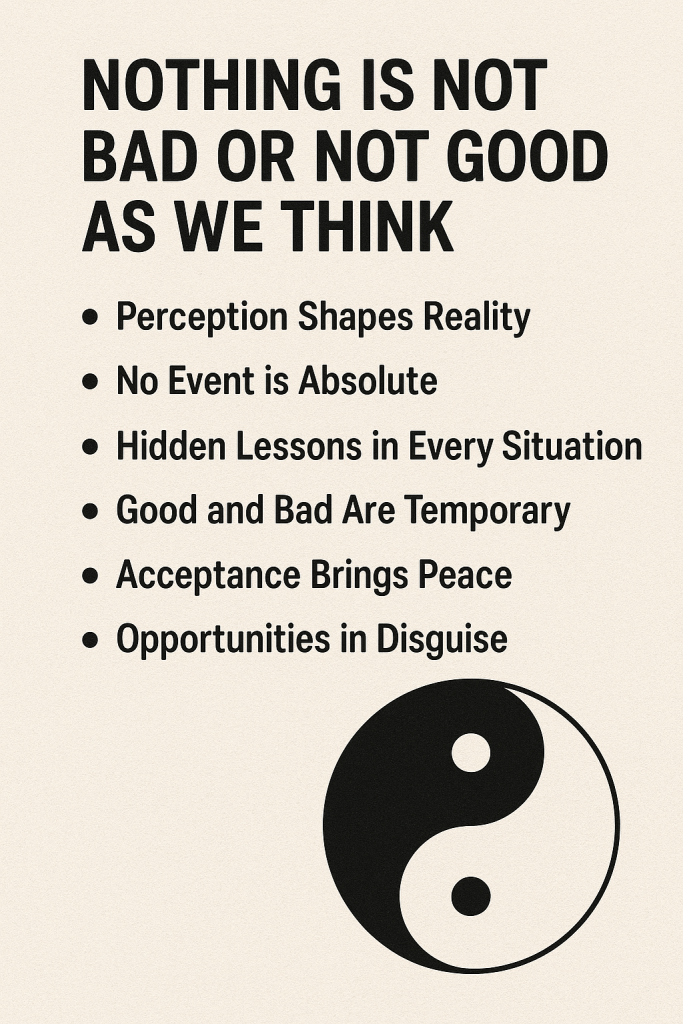
Nothing is Not Bad or Not Good as We Think

Introduction

Life often surprises us with situations that we quickly label as good or bad. But in reality, many things are neither completely good nor completely bad—it is our perception that shapes how we feel about them.


Key Points

  • Perception Shapes Reality
    • What feels like a setback today may turn into a blessing tomorrow.
    • Example: Losing a job can seem bad, but it may lead to better opportunities.
  • No Event is Absolute
    • Life events are neutral; it is we who add the meaning.
    • Something that feels painful to one person might feel like growth to another.
  • Hidden Lessons in Every Situation
    • Even challenges carry lessons, strength, and wisdom.
    • What seems “bad” can make us stronger and more resilient.
  • Good and Bad Are Temporary
    • Joy and sorrow are like waves—they come and go.
    • Nothing remains permanent; every phase changes with time.
  • Acceptance Brings Peace
    • Instead of labeling things as good or bad, accepting them as experiences brings calmness.
    • This mindset helps us handle stress with balance.
  • Opportunities in Disguise
    • Difficulties often open doors we would never notice otherwise.
    • The key is to stay open-minded and patient.

Conclusion

Nothing in life is completely good or bad—it is our thoughts and judgments that create those labels. When we look at situations with an open and neutral mind, we find peace, growth, and unexpected opportunities. Life is a teacher, and every moment—whether pleasant or painful—has a purpose.

🌱 Hard Times Don’t Last Forever

Life is not a straight road—it’s a journey filled with twists, turns, ups, and downs. When we go through tough times, it feels as if the pain will never end. But here’s the truth: hard times are temporary. They come to test us, to teach us, and most importantly, to prepare us for something better.

🌤️ Why Hard Times Don’t Last Forever

  1. Every Storm Eventually Ends
    No matter how heavy the rain, the clouds always clear. Similarly, every challenge you face has an expiry date. What seems unbearable today will one day just be a memory.
  2. Struggles Build Strength
    Muscles grow when they are tested by resistance. In the same way, life’s struggles make you stronger, braver, and wiser. Without difficulties, we would never discover our true strength.
  3. Time is a Great Healer
    Wounds, whether emotional or physical, need time. As days pass, pain lessens, and perspective grows. What breaks you today may build you tomorrow.
  4. Mindset Shapes the Outcome
    If you see a problem as a dead end, it becomes one. But if you see it as a lesson, it becomes a stepping stone. Choosing hope over despair changes the way you experience tough times.
  5. You’re Not Alone
    Hardships feel lighter when shared. Leaning on family, friends, or faith can provide the comfort and support you need to move forward.
  6. Growth Happens in Darkness
    Seeds grow in the dark soil before they bloom in sunlight. Likewise, your struggles may be preparing you for opportunities you cannot yet see.
  7. Hope is the Lifeline
    One of the most powerful reminders during hard times is: “This too shall pass.” Hope is not just a feeling—it is the fuel that keeps you moving forward.

🌟 A Short Story to Remember

There’s a saying: “Diamonds are made under pressure.”
A young man once complained to his grandmother about all his struggles. She boiled carrots, eggs, and coffee beans in three pots of water. After a while, she asked him what he saw.

  • The carrots became soft.
  • The eggs turned hard inside.
  • The coffee beans transformed the water itself.

She explained: “Life’s difficulties affect us differently. Some become weak, some become tough, and some use hardships to create something new and beautiful.”

The young man realized that challenges don’t define us—our response does.


💡 Final Thought

Hard times are like passing clouds—dark for a while, but they never block the sun forever. Stay patient, stay strong, and believe that brighter days are ahead. Every struggle you face today is preparing you for a stronger, wiser, and more hopeful tomorrow.

Your comeback will always be stronger than your setback. 🌈

Your Current Situation is Not Your Destination

Introduction

  • Life is a journey filled with ups and downs.
  • Current challenges do not define your future.

Understanding the Present

  • Acknowledge Your Feelings: It’s okay to feel stuck or overwhelmed.
  • Reality Check: Assess where you are without judgment.

The Power of Perspective

  • Temporary vs. Permanent: Understand that situations are often temporary.
  • Growth Mindset: Embrace challenges as opportunities for growth.

Steps to Move Forward

  1. Set Clear Goals:
    • Define what you want to achieve.
    • Break goals into manageable steps.
  2. Take Action:
    • Small, consistent actions lead to big changes.
    • Focus on what you can control.
  3. Seek Support:
    • Surround yourself with positive influences.
    • Don’t hesitate to ask for help from friends, family, or professionals.
  4. Learn from Setbacks:
    • View failures as lessons rather than obstacles.
    • Reflect on what you can do differently next time.
  5. Stay Patient:
    • Change takes time; be kind to yourself.
    • Celebrate small victories along the way.

Cultivating Resilience

  • Build Coping Strategies: Develop skills to manage stress and uncertainty.
  • Stay Flexible: Be open to new paths and possibilities.

Conclusion

  • Your current situation is just one part of your life’s journey.
  • With effort and persistence, you can shape your future.
  • Remember, the best is yet to come!

Thinking is the Root Cause of All Suffering

Understanding the Power of Thoughts

  • Our thoughts shape how we perceive and experience life.
  • Example: If you constantly think about failure, you may start to believe you’re not capable, even when there’s no real evidence to support that.

Negative Thinking Leads to Suffering

  • Dwelling on negative thoughts can create unnecessary mental pain.
  • Example: Worrying about things beyond your control, like what others think of you, can lead to anxiety and stress, even if the situation is harmless.

Overthinking Amplifies Problems

  • Thinking too much about a problem often makes it seem bigger than it is.
  • Example: If you overthink a minor mistake at work, it might feel like a disaster, causing you to feel more stress than the situation warrants.

Attachment to Thoughts Creates Suffering

  • Becoming too attached to certain ideas or outcomes can lead to disappointment and frustration.
  • Example: If you’re fixated on getting a promotion and it doesn’t happen, the attachment to that expectation can cause deep emotional pain.

The Illusion of Control Through Thinking

  • We often believe that by thinking more, we can control outcomes, but this can create stress.
  • Example: A person may obsess over how to make everything perfect in their life, only to feel overwhelmed when things don’t go as planned.

Judgmental Thinking Creates Unhappiness

  • Constantly judging yourself or others leads to dissatisfaction.
  • Example: If you compare yourself to others and think you’re not good enough, it can cause feelings of inadequacy and low self-esteem.

Living in the Past or Future Causes Suffering

  • When we focus on past regrets or future worries, we miss the present moment and create stress.
  • Example: Thinking about past mistakes or worrying about future problems robs you of the peace and joy available in the present.

Breaking Free from the Cycle of Thought-Based Suffering

  • Mindfulness helps reduce the power thoughts have over you by bringing focus to the present moment.
  • Example: Practicing meditation can help calm the mind and reduce overthinking, allowing you to experience life without being overwhelmed by thoughts.

Accepting Impermanence Reduces Suffering

  • Realizing that thoughts and emotions are temporary helps reduce suffering.
  • Example: Understanding that bad moods or stressful thoughts will pass can help you avoid getting stuck in negative thinking patterns.

Conclusion

  • Thinking, when not controlled, can become the root cause of much of our suffering.
  • Learning to manage our thoughts and staying present can help reduce mental stress and bring peace.