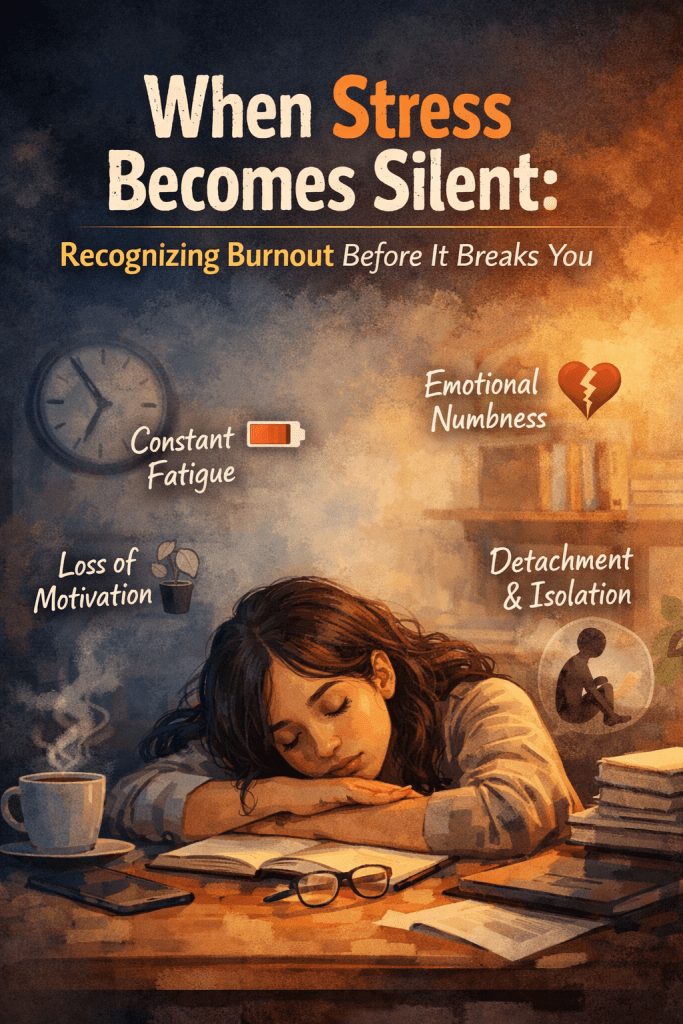
When Stress Becomes Silent: Recognizing Burnout Before It Breaks You

Introduction

Stress is often visible. We feel tired, worried, or overwhelmed and we talk about it.
Burnout, however, is different. It grows quietly. Many people do not realize they are burned out until their health, motivation, or relationships begin to suffer. Understanding early signs of burnout can help us take action before it becomes serious.


What Is Silent Burnout?

Silent burnout happens when prolonged stress is ignored or normalized. A person may continue working, meeting responsibilities, and appearing “fine” while internally feeling drained and disconnected.

It is not sudden. It develops slowly due to continuous pressure without enough rest, emotional support, or recovery.


Early Signs You Should Not Ignore

  • Constant tiredness even after rest
  • Loss of interest in work or daily activities
  • Feeling emotionally numb or detached
  • Irritability over small issues
  • Difficulty concentrating or making decisions
  • Frequent headaches, body pain, or sleep problems
  • Feeling unappreciated or hopeless

These signs are often dismissed as “just stress,” but they may indicate burnout.


Why Burnout Goes Unnoticed

  • We get used to being busy all the time
  • We believe taking rest is a weakness
  • We prioritize work over health
  • We feel guilty for slowing down
  • Others praise us for “handling everything”

Over time, this mindset makes burnout invisible.


Difference Between Stress and Burnout

  • Stress: Too many demands, but you still care
  • Burnout: Emotional exhaustion, loss of motivation, and feeling empty

Stress makes you feel overloaded. Burnout makes you feel drained and disconnected.


How to Prevent Burnout Early

  • Take regular breaks without guilt
  • Set realistic limits on work and responsibilities
  • Learn to say no when needed
  • Talk openly about how you feel
  • Prioritize sleep, nutrition, and physical activity
  • Do at least one activity daily that brings calm or joy

Small changes practiced consistently make a big difference.


When to Seek Support

If exhaustion, sadness, or detachment lasts for weeks, professional help is important. Speaking to a counselor, mentor, or healthcare professional is a sign of strength, not weakness.


Final Thoughts

Burnout does not announce itself loudly. It whispers through fatigue, silence, and loss of joy. Listening early can protect your mental and physical well-being.

Taking care of yourself is not optional. It is essential for long-term success and a healthy life.

Daily Stress vs. Chronic Stress: Knowing the Difference

Introduction

Stress is a part of everyday life. Deadlines, responsibilities, and unexpected situations often create pressure. However, not all stress is the same. Understanding the difference between daily stress and chronic stress helps us manage our mental health better and prevent long-term harm.


What Is Daily Stress?

Daily stress is short-term and usually linked to routine activities or temporary challenges.

Common causes:

  • Tight schedules or deadlines
  • Exams, meetings, or presentations
  • Traffic, minor conflicts, or small setbacks

Key characteristics:

  • Lasts for a short period
  • Reduces once the situation is resolved
  • Can sometimes improve focus and motivation

Example:
Feeling nervous before an exam but relaxed once it is over.


What Is Chronic Stress?

Chronic stress is long-lasting and occurs when stressful situations continue without relief.

Common causes:

  • Ongoing financial problems
  • Long-term work pressure
  • Family conflicts or caregiving responsibilities
  • Unresolved emotional issues

Key characteristics:

  • Persists for weeks or months
  • Feels constant and overwhelming
  • Affects both mental and physical health

Example:
Feeling anxious and exhausted every day due to prolonged work pressure.


Key Differences Between Daily and Chronic Stress

  • Duration:
    Daily stress is temporary; chronic stress is continuous.
  • Impact:
    Daily stress is manageable; chronic stress is harmful.
  • Recovery:
    Daily stress fades with rest; chronic stress does not easily go away.
  • Health effects:
    Chronic stress may lead to anxiety, depression, sleep issues, and fatigue.

Why Knowing the Difference Matters

  • Helps you recognize when stress becomes unhealthy
  • Encourages timely self-care and support
  • Prevents burnout and long-term mental health issues

Ignoring chronic stress can slowly affect emotional well-being, relationships, and overall quality of life.


Simple Ways to Manage Stress

  • Practice deep breathing or mindfulness
  • Maintain a healthy daily routine
  • Take short breaks and rest adequately
  • Share concerns with trusted people
  • Seek professional help when stress feels constant

Final Thoughts

Stress is unavoidable, but suffering is not. While daily stress is a normal part of life, chronic stress is a warning sign that should not be ignored. By understanding the difference, we can take better care of our minds and lead healthier, more balanced lives.

Adjust Your Priorities Based on What Truly Matters to You

Living a purposeful life starts with aligning your priorities with what truly matters.


1. Reflect on What’s Important

  • Regularly assess what truly matters to you (family, health, career, relationships).
  • Write down your core values and use them as a guide to evaluate your priorities.

2. Review How You Spend Your Time

  • Track how you spend your day to identify if your time is spent on what aligns with your values.
  • Cut back on activities that drain your energy and time but offer little reward.

3. Align Your Goals with Your Values

  • Set specific goals that reflect your values, like improving health, building relationships, or learning new skills.
  • Break down large goals into smaller, manageable steps to keep yourself on track.

4. Learn to Say No

  • Saying no is empowering. Don’t feel guilty about turning down things that don’t align with your goals.
  • Protect your time by saying no to unnecessary tasks, obligations, or events that don’t add value.

5. Make Time for What Brings You Joy

  • Schedule time for activities that make you happy—whether it’s hobbies, exercise, or spending time with loved ones.
  • Focus on the present moment and enjoy the simple things that bring you peace.

6. Let Go of Perfectionism

  • Understand that things don’t need to be perfect to be valuable.
  • Focus on progress, not perfection. Mistakes are part of growth.

7. Practice Self-Care

  • Prioritize sleep, healthy eating, and exercise to maintain physical health.
  • Take regular breaks to avoid burnout and recharge your energy.

8. Regularly Review and Adjust

  • Life changes, and so should your priorities. Reevaluate them regularly to stay on track.
  • Be open to change and allow your priorities to evolve as you grow.

9. Delegate or Share Responsibilities

  • Don’t try to do everything on your own. Delegate tasks to others when possible to free up time for what matters most.
  • Trust others with responsibilities, whether at work or home, to reduce stress.

10. Focus on One Thing at a Time

  • Avoid multitasking, which can dilute your attention and energy. Focus on one task or priority at a time.
  • Deep work on a single task leads to better results and a greater sense of accomplishment.

11. Surround Yourself with Positive Influences

  • Spend time with people who uplift and inspire you.
  • Limit time with people who drain your energy or distract you from your goals.

12. Embrace Flexibility

  • Life is unpredictable. Be willing to adjust your priorities when necessary.
  • Flexibility allows you to respond to opportunities or challenges without feeling overwhelmed.

13. Stay True to Yourself

  • Don’t chase after other people’s dreams or priorities. Stay true to what makes you feel fulfilled.
  • Be authentic in your choices, whether in personal or professional settings.

14. Celebrate Achievements, Big and Small

  • Celebrate your progress, even if it’s a small step forward. It boosts motivation and reinforces positive behavior.
  • Reflect on the accomplishments you’ve made along the way to remind yourself of your growth.

15. Let Go of Guilt

  • Don’t feel guilty for prioritizing yourself or saying no to others. Your well-being should come first.
  • Let go of the need to please everyone and focus on what’s best for you and your goals.

Conclusion

Adjusting your priorities based on what truly matters is essential for living a fulfilling life. By reflecting on your values, making time for what brings joy, and regularly reviewing your priorities, you can create a life that aligns with your deepest needs and aspirations. Focus on what’s truly important, and let go of distractions that don’t serve you.

Battle of the Mind

What is the Battle of the Mind?

  • The “battle of the mind” refers to the internal conflict we face between our thoughts, emotions, and desires.
  • It’s the mental struggle between positive and negative thinking, fear and courage, or hope and doubt.

Common Causes of Mental Struggles

  • Self-doubt: Questioning your abilities and feeling inadequate.
  • Fear of failure: Worrying about making mistakes or not meeting expectations.
  • Overthinking: Obsessing over situations, replaying conversations, or imagining worst-case scenarios.
  • Stress and anxiety: Feeling overwhelmed by responsibilities, work, or personal challenges.

The Impact of Mental Struggles

  • A constant battle in the mind can lead to stress, anxiety, and even depression.
  • It affects our ability to make decisions, lowers confidence, and can cause us to feel stuck in life.

Ways to Overcome the Battle of the Mind

  • Positive self-talk: Replace negative thoughts with encouraging ones. Remind yourself of past achievements.
  • Mindfulness: Stay present in the moment. Focus on what you can control and let go of worries about the future.
  • Goal-setting: Break down tasks into small, achievable goals to reduce overwhelm and create a sense of progress.
  • Self-compassion: Be kind to yourself. It’s okay to make mistakes or feel unsure sometimes.

Building Resilience

  • Strengthening mental resilience helps in managing inner conflicts better.
  • Learn from challenges rather than being discouraged by them.
  • Practice gratitude to shift focus from problems to positive aspects of life.

Seeking Help

  • If the battle feels too overwhelming, don’t hesitate to reach out for support from friends, family, or professionals.
  • Talking to someone can give you a new perspective and help ease mental burdens.

Conclusion

  • The battle of the mind is something we all face, but it’s important to recognize it and take steps to manage it.
  • With the right mindset and support, we can win this internal struggle and live a more peaceful, fulfilling life.