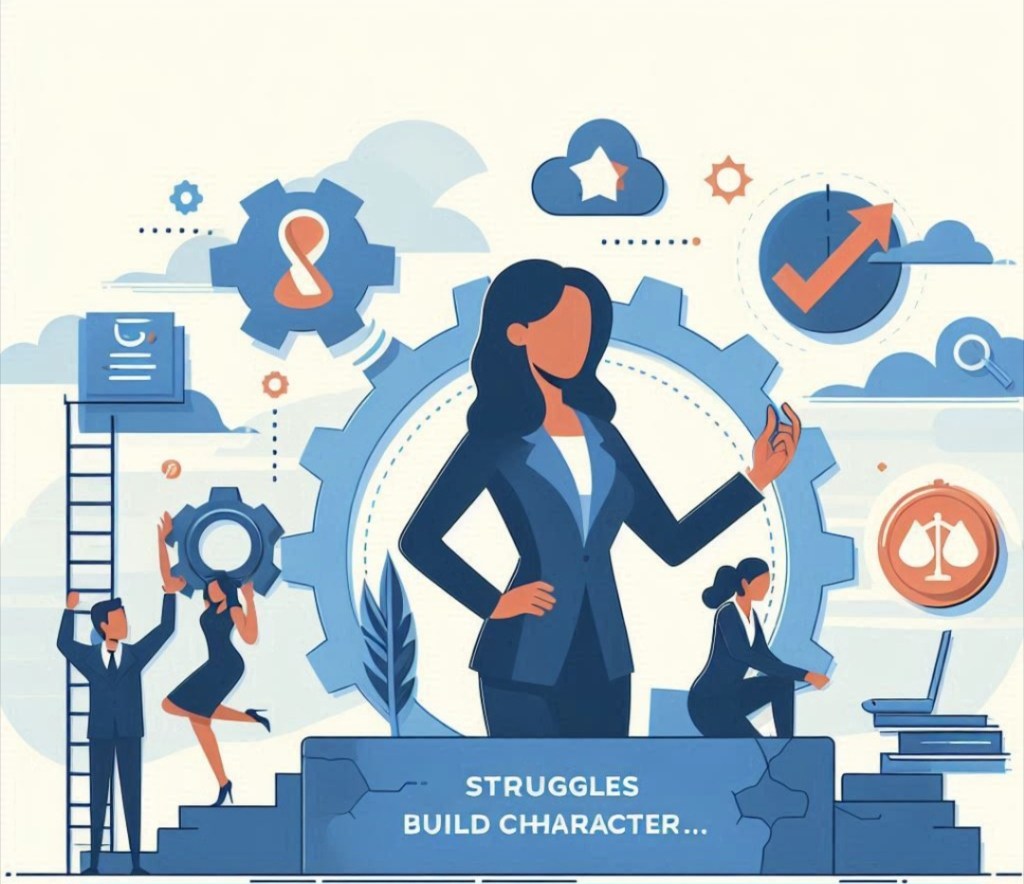
Why Facing Challenges Makes Us Stronger

Introduction: Life is full of ups and downs, and we all experience struggles at some point. Whether it’s personal, professional, or emotional, these challenges can be difficult to face. However, struggles play a crucial role in shaping who we are and building our character. While we may want to avoid them, it is often through overcoming challenges that we grow stronger, wiser, and more resilient.

1. Strengthens Resilience:

  • Struggles teach us to bounce back from failures and setbacks. The more we face challenges, the stronger our ability to keep going despite difficulties.
  • Example: Every time we get through a tough situation, we become more confident in our ability to handle future challenges.

2. Develops Patience:

  • Struggle often requires time to overcome. During this process, we learn to be patient and trust that things will improve with effort and persistence.
  • Example: Working through a difficult project or overcoming a personal setback teaches us the value of waiting for positive outcomes.

3. Enhances Problem-Solving Skills:

  • Facing struggles forces us to think creatively and find solutions. It sharpens our ability to look at problems from different perspectives and come up with effective strategies.
  • Example: When you face obstacles, you learn to brainstorm alternatives and think outside the box to solve problems.

4. Builds Confidence:

  • Overcoming challenges boosts self-esteem. Each struggle we conquer reminds us of our capabilities and strengthens our belief in ourselves.
  • Example: Achieving a goal after hard work or getting through a difficult time makes us more confident in handling future challenges.

5. Encourages Self-Reflection:

  • Struggles often lead to personal growth by making us reflect on our strengths and weaknesses. Through self-reflection, we gain better self-awareness and understanding.
  • Example: After facing a tough time, we often take a step back and think about what we’ve learned about ourselves.

6. Cultivates Empathy and Compassion:

  • Going through struggles helps us understand the challenges others may face. This makes us more empathetic and compassionate towards others who are going through hard times.
  • Example: People who have faced financial struggles or health issues are often more understanding and supportive of others in similar situations.

7. Strengthens Mental Toughness:

  • Struggles build mental toughness, teaching us to stay calm under pressure and keep our emotions in check when things get difficult.
  • Example: Athletes, soldiers, and entrepreneurs all develop mental toughness by pushing through their struggles and staying focused on their goals.

8. Fuels Personal Growth:

  • Every challenge we face is an opportunity to grow. Struggles push us to step out of our comfort zones, learn new things, and develop as individuals.
  • Example: A difficult job, a failed relationship, or any setback can make us more mature and capable.

9. Teaches Gratitude:

  • Struggles help us appreciate the good things in life. Once we’ve been through tough times, we tend to be more grateful for the positive moments and the progress we’ve made.
  • Example: After overcoming illness or financial hardship, we appreciate our health and stability even more.

10. Builds Perseverance:

  • Struggles teach us not to give up. The more we persevere through difficulties, the more we learn to keep going, even when success seems far away.
  • Example: Inventors, scientists, and successful entrepreneurs often face repeated failures before they succeed, but their perseverance keeps them moving forward.

Conclusion:

Struggles are a necessary part of life, shaping who we are and helping us grow. Instead of fearing challenges, we should embrace them as opportunities to build character, strength, and resilience. Through struggle, we discover our true potential.

Boost Your Emotional Intelligence: Strategies for Personal and Professional Growth

Emotional Intelligence: Why It Matters and How to Improve It

Emotional Intelligence (EI) is the ability to understand and manage your own emotions, as well as recognize and influence the emotions of others. Here’s why it matters and how you can improve it:

Why Emotional Intelligence Matters

  1. Better Relationships
    • Quote: “The greatest ability in business is to get along with others and to influence their actions.” – John Hancock
    • Understanding emotions helps you connect with others, fostering strong personal and professional relationships.
  2. Improved Communication
    • Quote: “Effective communication is 20% what you know and 80% how you feel about what you know.” – Jim Rohn
    • High EI enables clearer and more empathetic communication, reducing misunderstandings and conflicts.
  3. Enhanced Decision-Making
    • Quote: “Emotions can get in the way or get you on the way.” – Mavis Mazhura
    • Being aware of your emotions can help you make more balanced and thoughtful decisions.
  4. Increased Self-Awareness
    • Quote: “Knowing yourself is the beginning of all wisdom.” – Aristotle
    • Understanding your emotions and their impact helps you grow and improve in both personal and professional areas.
  5. Better Stress Management
    • Quote: “It’s not stress that kills us, it is our reaction to it.” – Hans Selye
    • High EI helps you manage stress better by recognizing and addressing your emotional responses.

How to Improve Emotional Intelligence

  1. Practice Self-Awareness
    • Reflect on your emotions and how they influence your thoughts and actions.
    • Tip: Keep a journal to track your emotional responses and identify patterns.
  2. Develop Self-Regulation
    • Learn to control your emotional impulses and think before acting.
    • Tip: Practice deep breathing or meditation to stay calm in stressful situations.
  3. Enhance Empathy
    • Try to understand and share the feelings of others.
    • Tip: Listen actively and ask open-ended questions to better understand others’ perspectives.
  4. Improve Social Skills
    • Work on building and maintaining healthy relationships.
    • Tip: Practice effective communication, show appreciation, and resolve conflicts calmly.
  5. Cultivate Motivation
    • Find internal motivation to pursue your goals with passion and persistence.
    • Tip: Set personal goals and celebrate small achievements to keep yourself motivated.
  6. Seek Feedback
    • Ask for constructive feedback from trusted friends or colleagues to gain insights into your emotional behavior.
    • Tip: Be open to criticism and use it as an opportunity for growth.

Quote to Remember: “Emotional intelligence is the key to both personal and professional success.” – Daniel Goleman

By focusing on these areas, you can enhance your emotional intelligence and reap the benefits in all aspects of your life. Remember, improving EI is a continuous journey that requires practice and dedication.

The Basics of To-Do Lists: Your Key to Productivity

In the hustle and bustle of daily life, staying organized and on top of tasks can feel like an uphill battle. This is where to-do lists come in as invaluable allies. Let’s explore the fundamental aspects of to-do lists and unveil why they are crucial for unlocking your productivity potential.

  1. What are to-do lists?
    • To-do lists are lists of tasks or activities that you need to complete within a certain timeframe.
    • They can range from simple handwritten notes to sophisticated digital apps, tailored to suit individual preferences.
  2. Why are to-do lists important?
    • Organization: To-do lists help you organize your tasks and prioritize them based on their importance and urgency.
    • Clarity: They provide clarity on what needs to be done, reducing the mental clutter and anxiety associated with trying to remember everything.
    • Focus: To-do lists keep you focused on the tasks at hand, preventing distractions and ensuring that you stay on track towards your goals.
    • Productivity: By breaking down larger tasks into smaller, actionable steps, to-do lists make tasks more manageable and increase your overall productivity.
    • Accountability: To-do lists hold you accountable for your tasks, serving as a tangible reminder of your commitments and deadlines.
  3. How to create an effective to-do list:
    • Start with Brain Dump: Begin by listing down all the tasks that come to mind without worrying about the order or priority.
    • Prioritize: Once you have a comprehensive list, prioritize tasks based on their importance and urgency. Consider using techniques like the Eisenhower Matrix or the ABC method.
    • Break it Down: Break down larger tasks into smaller, actionable steps to make them more manageable and less overwhelming.
    • Set Realistic Goals: Be realistic about what you can accomplish within a given timeframe and avoid overloading your to-do list with too many tasks.
    • Review and Update: Regularly review and update your to-do list as new tasks arise or priorities change. This ensures that your list remains relevant and actionable.

To-do lists are simple yet powerful tools that can revolutionize the way you approach your tasks and goals. By incorporating them into your daily routine, you can enhance your productivity, reduce stress, and achieve greater success in both your personal and professional life. Start creating your to-do list today and experience the transformative impact it can have on your productivity!

Finding Balance: Wisdom from Indian Women on Work and Life

In today’s busy world, finding a balance between work and personal life is really important, especially for women who have many different responsibilities. In this blog, we’ll take a close look at how working women manage to juggle it all. We’ll learn from some famous Indian women who have achieved success in their careers while also finding happiness in their personal lives.

Quotes from Indian Personalities:

Indra Nooyi: “Being a CEO doesn’t mean you’re done learning. Keep growing, thinking differently, and improving how you lead.” Indra Nooyi, former CEO of PepsiCo, highlights the importance of continuous learning and personal growth, showing that there’s always room for improvement even at the top.

Kiran Bedi: “Balance isn’t just about managing time. It’s about setting boundaries and enjoying the choices you make.” Kiran Bedi, India’s first female Indian Police Service officer, explains that balance comes from making mindful choices and respecting the limits we set for ourselves.

Naina Lal Kidwai: “There’s no one-size-fits-all solution for balance. It’s about figuring out what works best for you and making it happen.” Naina Lal Kidwai, former CEO of HSBC India, emphasizes the importance of self-awareness and customization in finding our own version of work-life harmony, reminding us that it’s a personal journey.

Strategies for Achieving Work-Life Balance:

  • Take Care of Yourself: Make time for activities that make you happy and healthy, like exercise, hobbies, and spending time with loved ones.
  • Set Boundaries: Decide when work time ends and personal time begins, and stick to those boundaries to avoid burnout.
  • Ask for Help: Don’t be afraid to delegate tasks at work and home to lighten your load and reduce stress.
  • Stay Present: Practice mindfulness by focusing on the present moment and avoiding distractions, which can help you feel more balanced and less overwhelmed.

Conclusion: By following the advice of these inspiring Indian figures, working women can find balance in their lives by making choices that prioritize their well-being and happiness. Whether it’s through self-care, setting boundaries, asking for help, or staying present, achieving work-life harmony is possible for everyone.