When the Future is Foggy, Find Peace in the Present

Life often feels uncertain. The future can seem unclear, and that uncertainty may cause stress or anxiety. The best way to deal with it is to bring your attention back to the present moment.


🌿 Why the Future Feels “Foggy”

  • We cannot control everything that lies ahead.
  • Overthinking future outcomes creates fear.
  • Expectations and “what-ifs” make the mind restless.

🧘 How to Find Peace in the Present

  1. Focus on Your Breath – Breathing deeply calms the mind instantly.
  2. Practice Gratitude – Note down 2–3 things you’re thankful for each day.
  3. Do One Task at a Time – Multitasking creates stress, single-tasking brings focus.
  4. Spend Time in Nature – Walks, fresh air, and greenery help you stay grounded.
  5. Limit Future Worry – Replace “What if?” with “What now?”

🌞 Benefits of Living in the Now

  • Reduces stress and anxiety.
  • Improves focus and productivity.
  • Builds emotional resilience.
  • Increases happiness and inner peace.

✨ Final Thought

The fog of the future will always exist. But when you choose to live in the present, you create clarity within yourself. Peace doesn’t come from knowing the future—it comes from embracing the moment you have right now.

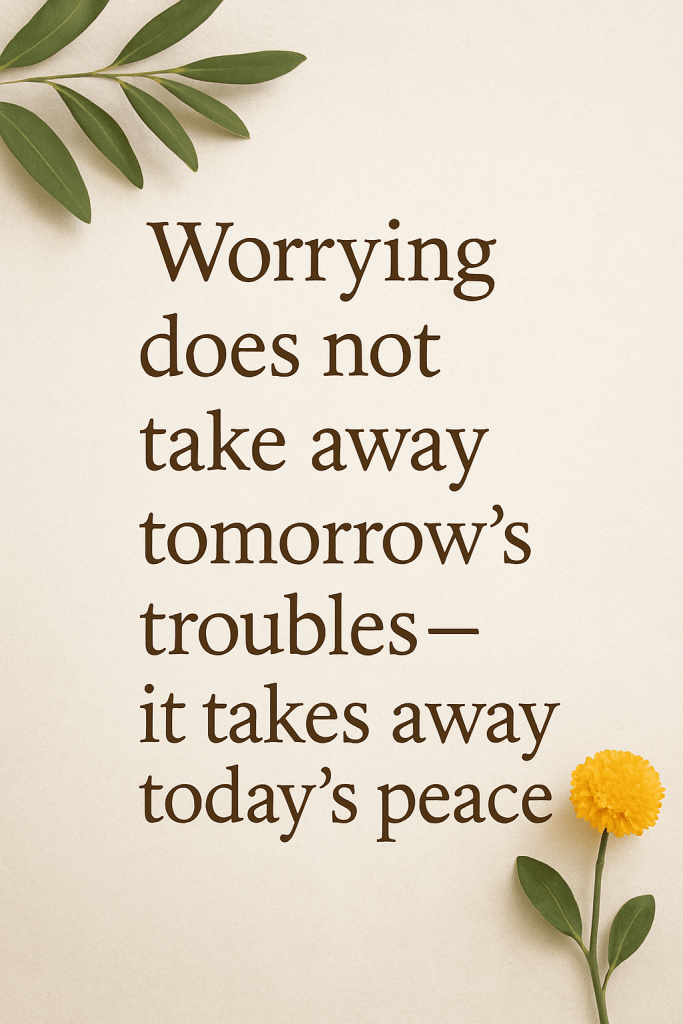
Worrying Doesn’t Take Away Tomorrow’s Troubles — It Takes Away Today’s Peace

🌿 Introduction

  • We all worry — about the future, about people, about situations we can’t control.
  • But have you ever noticed that worrying rarely solves anything?
  • The famous quote reminds us: “Worrying does not take away tomorrow’s troubles — it takes away today’s peace.”

💭 1. Worry is a Thief of the Present

  • Worrying pulls your mind into the future.
  • You miss what’s happening right now — the beauty, the joy, the calm moments.
  • It’s like carrying an umbrella every day in fear of rain that may never come.

🌪 2. Worry Doesn’t Solve Problems

  • Planning helps. Preparing helps. But worrying just drains your energy.
  • It gives you a sense of false control, but no real solutions.
  • Most of what we worry about either never happens or isn’t as bad as we imagined.

🕊 3. Peace Is Found in the Present

  • Peace lives in this moment, not in the next hour or tomorrow.
  • When you’re too focused on “what if,” you lose the “what is.”
  • Mindfulness and deep breathing can help you stay grounded.

🌼 4. Worry Affects Your Health

  • Constant worrying causes stress, anxiety, and even physical illness.
  • It can disturb your sleep, your appetite, and your emotional balance.
  • Taking care of your mind is just as important as taking care of your body.

🌟 5. Choose Faith Over Fear

  • Let go of the need to control everything.
  • Have faith that life will unfold in its own time.
  • Replace worry with action — or acceptance.

💬 Quote to Remember

“Worrying is like a rocking chair. It gives you something to do but gets you nowhere.” — Erma Bombeck


🌈 Conclusion

  • Worrying doesn’t help the future — it only steals today’s peace.
  • Live each moment with calmness, hope, and faith.
  • You deserve a peaceful mind today — don’t let tomorrow take that away.

The Art of Letting Go: Embracing Life as It Comes

  1. Understand What Letting Go Means
    • Letting go is about releasing control over things beyond your influence.
    • It involves accepting situations, emotions, and outcomes as they are.
  2. Recognize the Need to Let Go
    • Clinging to the past or unrealistic expectations causes stress and unhappiness.
    • Letting go helps you focus on the present and move forward.
  3. Identify What You Need to Release
    • Reflect on the areas of your life where you feel stuck or burdened.
    • Common things to let go of include grudges, fears, and regrets.
  4. Practice Acceptance
    • Accept that life is unpredictable and not everything will go as planned.
    • Embrace the imperfections in yourself and others.
  5. Focus on the Present Moment
    • Dwelling on the past or worrying about the future prevents you from enjoying the now.
    • Use mindfulness techniques like deep breathing to stay present.
  6. Forgive Yourself and Others
    • Forgiveness is a key step in letting go of resentment and anger.
    • It’s not about condoning actions but freeing yourself from their hold.
  7. Release the Need for Control
    • Understand that you cannot control everything or everyone.
    • Focus on controlling your responses rather than external circumstances.
  8. Cultivate Gratitude
    • Shift your focus to what you have rather than what you’ve lost or can’t control.
    • Daily gratitude practices can foster a positive outlook.
  9. Create Healthy Boundaries
    • Letting go doesn’t mean allowing harmful behaviors.
    • Set boundaries to protect your peace and well-being.
  10. Seek Support When Needed
    • Share your feelings with trusted friends or seek professional help.
    • Sometimes, talking to someone provides clarity and relief.
  11. Adopt a Growth Mindset
    • View challenges as opportunities to learn and grow.
    • Letting go becomes easier when you see setbacks as stepping stones.
  12. Engage in Activities that Bring Joy
    • Fill your time with hobbies and activities that uplift your spirit.
    • This helps redirect your energy towards positivity.
  13. Practice Self-Compassion
    • Be kind to yourself during this process.
    • Letting go takes time, and it’s okay to take small steps.
  14. Embrace Change
    • Life is constantly evolving, and change is inevitable.
    • Welcome new experiences with an open mind and heart.
  15. Trust the Process
    • Believe that everything happens for a reason, even if it’s not immediately clear.
    • Trust that letting go will bring peace and new opportunities.

Life Uncertainty: Embracing the Unknown

  1. Life Is Unpredictable
    • “The only certainty is that nothing is certain.” – Pliny the Elder
    • Unexpected events can disrupt our plans, but they also open new possibilities.
  2. Uncertainty Brings Opportunity
    • “In the middle of every difficulty lies opportunity.” – Albert Einstein
    • Challenges force us to explore new paths and think creatively.
  3. The Role of Resilience
    • “It’s not what happens to you, but how you react to it that matters.” – Epictetus
    • Resilience helps us recover from setbacks and move forward stronger.
  4. Control What You Can
    • “Do what you can, with what you have, where you are.” – Theodore Roosevelt
    • Focus on your actions and responses, letting go of uncontrollable factors.
  5. The Power of Acceptance
    • “Grant me the serenity to accept the things I cannot change, courage to change the things I can, and wisdom to know the difference.” – Serenity Prayer
    • Acceptance reduces stress and helps us find peace in uncertainty.
  6. Uncertainty Fuels Growth
    • “You can only grow if you’re willing to feel awkward and uncomfortable when you try something new.” – Brian Tracy
    • Growth often comes when we step out of our comfort zones.
  7. Stay Present
    • “Do not dwell in the past, do not dream of the future, concentrate the mind on the present moment.” – Buddha
    • Staying in the present reduces anxiety about the unknown future.
  8. Build a Support System
    • “Alone we can do so little; together we can do so much.” – Helen Keller
    • Leaning on loved ones makes navigating uncertainty easier.
  9. Learn to Adapt
    • “It is not the strongest of the species that survive, nor the most intelligent, but the one most responsive to change.” – Charles Darwin
    • Adaptability is key to thriving in an unpredictable world.
  10. Focus on Gratitude
    • “Gratitude turns what we have into enough.” – Anonymous
    • Shifting focus to what we have rather than what we lack brings positivity.
  11. Uncertainty Is Part of Life’s Beauty
    • “Life is a journey to be experienced, not a problem to be solved.” – Winnie the Pooh
    • The unpredictability of life makes it exciting and full of possibilities.

By embracing uncertainty with courage and an open heart, we can transform it from a source of fear into a path of growth and discovery. Life’s unpredictability is not something to resist but a reality to accept and navigate.

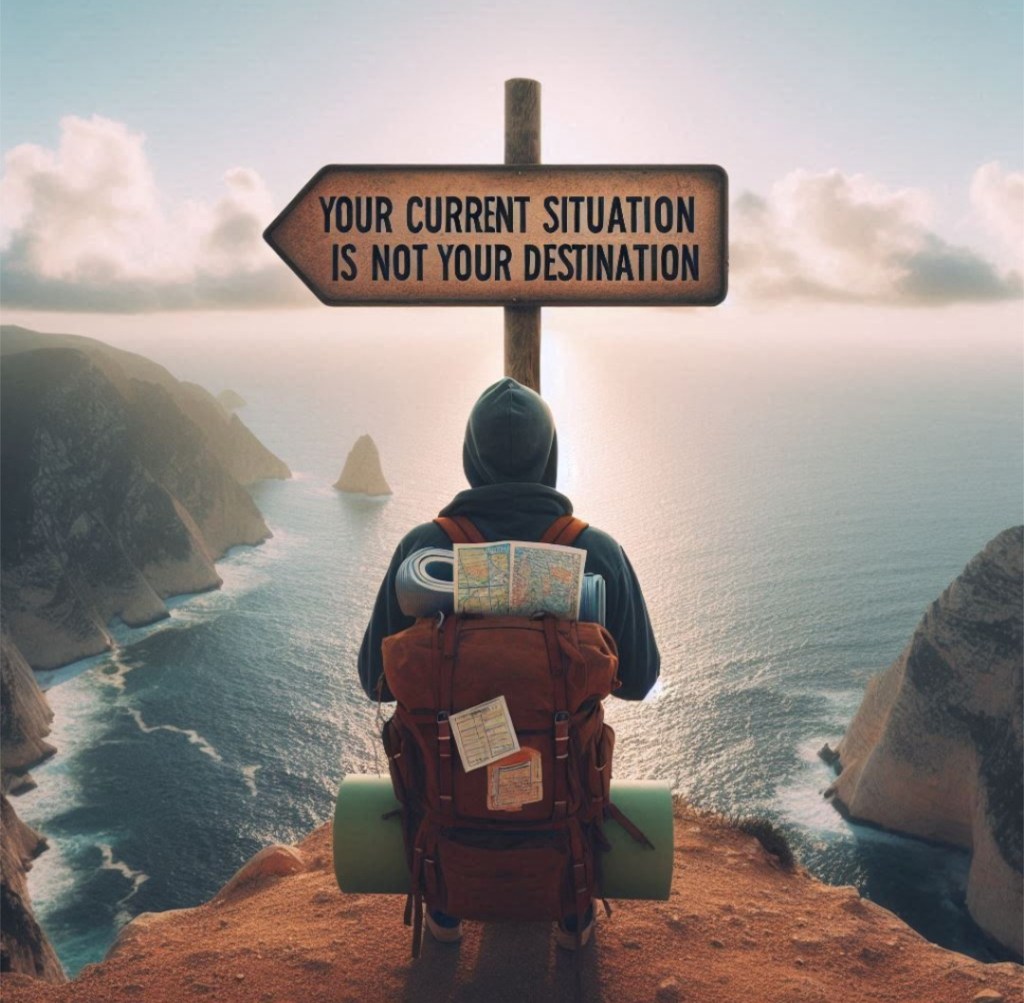
Your Current Situation is Not Your Destination

Introduction

  • Life is a journey filled with ups and downs.
  • Current challenges do not define your future.

Understanding the Present

  • Acknowledge Your Feelings: It’s okay to feel stuck or overwhelmed.
  • Reality Check: Assess where you are without judgment.

The Power of Perspective

  • Temporary vs. Permanent: Understand that situations are often temporary.
  • Growth Mindset: Embrace challenges as opportunities for growth.

Steps to Move Forward

  1. Set Clear Goals:
    • Define what you want to achieve.
    • Break goals into manageable steps.
  2. Take Action:
    • Small, consistent actions lead to big changes.
    • Focus on what you can control.
  3. Seek Support:
    • Surround yourself with positive influences.
    • Don’t hesitate to ask for help from friends, family, or professionals.
  4. Learn from Setbacks:
    • View failures as lessons rather than obstacles.
    • Reflect on what you can do differently next time.
  5. Stay Patient:
    • Change takes time; be kind to yourself.
    • Celebrate small victories along the way.

Cultivating Resilience

  • Build Coping Strategies: Develop skills to manage stress and uncertainty.
  • Stay Flexible: Be open to new paths and possibilities.

Conclusion

  • Your current situation is just one part of your life’s journey.
  • With effort and persistence, you can shape your future.
  • Remember, the best is yet to come!

What’s Meant to be Yours Will be Yours

Life doesn’t always go the way we plan. Sometimes we chase after things, hoping they’ll bring us happiness, only to find that they slip away. The idea that “what’s meant to be yours will be yours” reminds us to let go of constant control and trust that what’s right for us will come naturally.


1. Let Go of the Need for Control

  • Trying to control everything leads to stress and disappointment.
  • Life has its own timing—things come when they’re supposed to, so relax and trust the process.
  • “Sometimes, things have to go wrong in order to go right.” – Sherrilyn Kenyon

2. Find Peace in the Present

  • Focusing on the future too much can create anxiety.
  • Believing that what’s meant for you will come helps you enjoy the present moment more.

3. Accept Setbacks as Redirection

  • Not getting what you want can feel disappointing, but it often opens doors to better things.
  • “You must learn to let go. Release the stress. You were never in control anyway.” – Steve Maraboli

4. Be Patient

  • Good things take time. Rushing often makes us miss what’s truly right for us.
  • “Patience is not the ability to wait, but the ability to keep a good attitude while waiting.” – Joyce Meyer

5. Be Yourself

  • When you’re authentic, you naturally attract people and opportunities that fit who you are.
  • “What you seek is seeking you.” – Rumi

6. Trust Life’s Flow

  • Some things just fall into place without any effort. This is life’s way of showing you that it’s meant to be.
  • Let life flow and trust that the right things will come.

7. Practice Gratitude

  • Being thankful for what you have makes you more open to new opportunities.
  • “Gratitude turns what we have into enough.” – Aesop

Finding Balance: Wisdom from Indian Women on Work and Life

In today’s busy world, finding a balance between work and personal life is really important, especially for women who have many different responsibilities. In this blog, we’ll take a close look at how working women manage to juggle it all. We’ll learn from some famous Indian women who have achieved success in their careers while also finding happiness in their personal lives.

Quotes from Indian Personalities:

Indra Nooyi: “Being a CEO doesn’t mean you’re done learning. Keep growing, thinking differently, and improving how you lead.” Indra Nooyi, former CEO of PepsiCo, highlights the importance of continuous learning and personal growth, showing that there’s always room for improvement even at the top.

Kiran Bedi: “Balance isn’t just about managing time. It’s about setting boundaries and enjoying the choices you make.” Kiran Bedi, India’s first female Indian Police Service officer, explains that balance comes from making mindful choices and respecting the limits we set for ourselves.

Naina Lal Kidwai: “There’s no one-size-fits-all solution for balance. It’s about figuring out what works best for you and making it happen.” Naina Lal Kidwai, former CEO of HSBC India, emphasizes the importance of self-awareness and customization in finding our own version of work-life harmony, reminding us that it’s a personal journey.

Strategies for Achieving Work-Life Balance:

  • Take Care of Yourself: Make time for activities that make you happy and healthy, like exercise, hobbies, and spending time with loved ones.
  • Set Boundaries: Decide when work time ends and personal time begins, and stick to those boundaries to avoid burnout.
  • Ask for Help: Don’t be afraid to delegate tasks at work and home to lighten your load and reduce stress.
  • Stay Present: Practice mindfulness by focusing on the present moment and avoiding distractions, which can help you feel more balanced and less overwhelmed.

Conclusion: By following the advice of these inspiring Indian figures, working women can find balance in their lives by making choices that prioritize their well-being and happiness. Whether it’s through self-care, setting boundaries, asking for help, or staying present, achieving work-life harmony is possible for everyone.