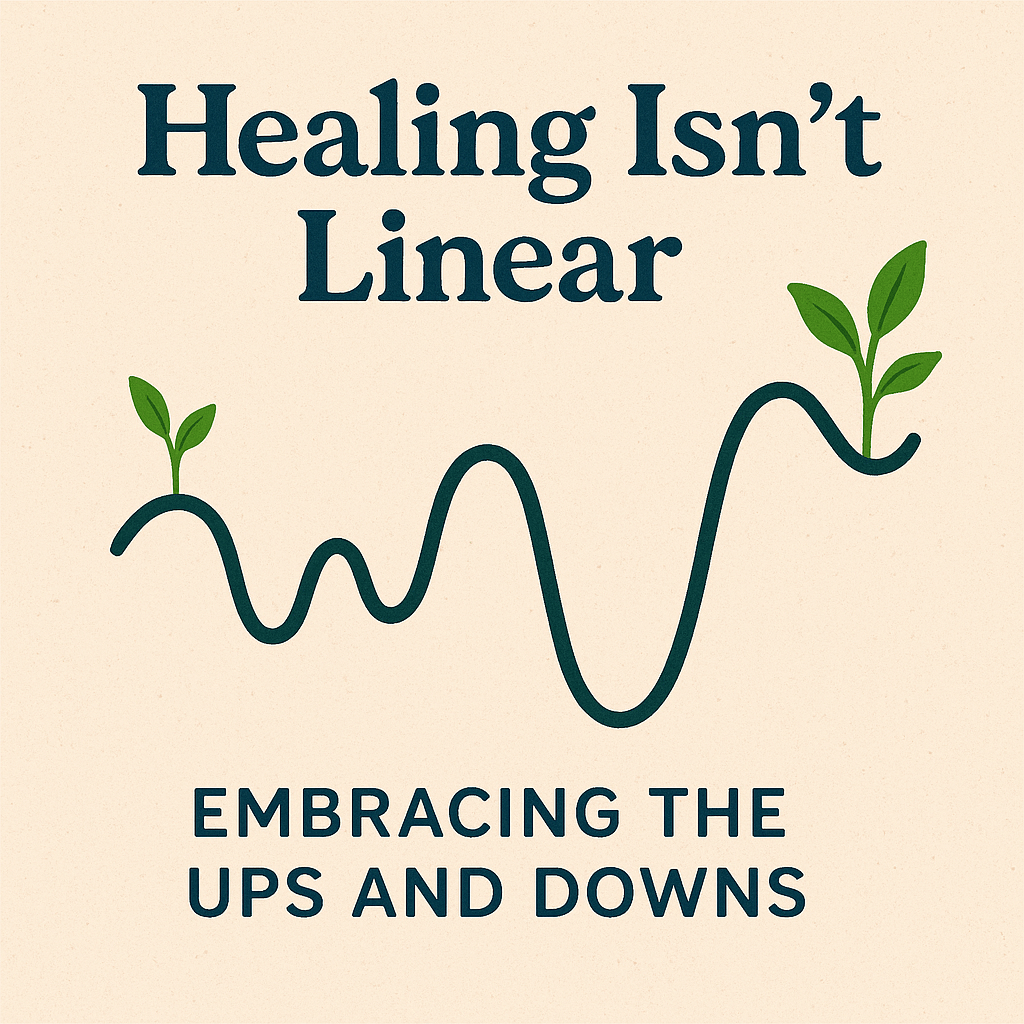
🌱 Healing Isn’t Linear: Embracing the Ups and Downs

Healing—whether emotional, mental, or physical—is not a straight path. It’s a journey filled with progress, setbacks, and moments that may feel like you’re going in circles. And that’s okay.


1. Healing Takes Time

  • Recovery doesn’t happen overnight.
  • It’s okay to take days, weeks, or even years.
  • Be patient with yourself.

2. It’s Normal to Have Good and Bad Days

  • Some days you’ll feel strong, other days you won’t.
  • Bad days don’t erase your progress.
  • Every step, even backward, is part of the journey.

3. Progress Isn’t Always Visible

  • Just because you can’t see improvement doesn’t mean it’s not happening.
  • Inner changes often take time to show on the outside.

4. Setbacks Are Not Failures

  • Falling back into old patterns is common.
  • It’s not a failure—it’s part of learning and growing.
  • Use it as a lesson, not a reason to give up.

5. Celebrate Small Wins

  • Even small steps matter—like getting out of bed, saying “no,” or smiling again.
  • Every tiny win adds up to big change.

6. Your Journey Is Unique

  • Don’t compare your healing to others.
  • Everyone heals at their own pace and in their own way.
  • What works for someone else may not work for you—and that’s okay.

7. Allow Yourself to Feel

  • Don’t hide your emotions—feel them.
  • Crying, anger, or sadness are not signs of weakness.
  • Emotions are part of processing and healing.

8. Ask for Help When You Need It

  • You don’t have to do it alone.
  • Talk to a friend, therapist, or support group.
  • Asking for help is a strength, not a weakness.

9. Be Kind to Yourself

  • Talk to yourself with love and compassion.
  • You’re doing your best, and that’s enough.
  • Replace self-criticism with encouragement.

10. Healing Is Ongoing

  • Healing doesn’t mean you’ll never feel pain again.
  • It means you learn to carry it with more strength and less fear.
  • It’s about growing through what you go through.

🌼 Final Thought:

Healing isn’t a straight line—it’s a journey of twists, turns, detours, and growth. Embrace the process, honor your progress, and trust that every step—even the tough ones—is leading you toward a stronger you.


Tai Chi: A Path to Health and Harmony

1. Introduction to Tai Chi

  • Tai Chi is an ancient Chinese martial art that focuses on slow, deliberate movements and deep breathing.
  • It is often described as “meditation in motion” and is known for its health benefits.

2. Benefits of Tai Chi

  • Physical Health: Improves balance, flexibility, and strength. It’s gentle on the joints, making it suitable for people of all ages.
  • Mental Well-being: Reduces stress, anxiety, and improves overall mental clarity.
  • Prevention of Falls: Especially beneficial for older adults in improving balance and reducing the risk of falls.
  • Improved Posture: Regular practice promotes better posture by strengthening muscles and encouraging awareness of body alignment.

3. Principles of Tai Chi

  • Slow and Controlled Movements: Movements are deliberate and slow, promoting focus and relaxation.
  • Breath Control: Deep breathing is integrated into each movement, enhancing relaxation and energy flow.
  • Balance and Coordination: Tai Chi involves shifting weight from one leg to the other, improving overall balance.

4. How Tai Chi Works

  • Flow of Energy (Qi): Tai Chi focuses on cultivating and balancing “Qi” (pronounced “chee”), the life energy that flows through the body.
  • Yin and Yang: Tai Chi teaches the balance between opposites, such as movement and stillness, soft and hard, in every gesture.

5. Tai Chi for Beginners

  • Start with simple movements and short sessions.
  • Focus on posture and breathing, letting go of distractions.
  • It’s best to practice in a quiet, open space to enhance concentration.

6. Tai Chi for Mental Health

  • The slow movements help bring the mind into the present, reducing stress and promoting mindfulness.
  • Studies have shown that Tai Chi can help alleviate symptoms of depression and anxiety.

7. Conclusion

  • Whether you’re looking to improve physical health, reduce stress, or find a way to connect with your body, Tai Chi offers a holistic approach to wellness.
  • With regular practice, Tai Chi can become a lifelong tool for maintaining balance, both physically and mentally.

Discovering Life’s Treasures: A Journey Through ‘Who Will Cry When You Die?’

As I flipped through the pages of “Who Will Cry When You Die?” by Robin Sharma, I felt like I stumbled upon a hidden gem. The book is full of great ideas and simple advice that made me stop and think. In a busy world where it’s easy to get caught up in the rush, this book reminds us to slow down and appreciate what truly matters. Join me as we explore the wisdom of this book together and discover how it can help us live happier, more meaningful lives.

“Who Will Cry When You Die?” offers a roadmap for living a life of purpose, passion, and significance. By embracing the below said timeless principles and incorporating them into our daily lives, we can cultivate greater fulfillment, joy, and meaning.

  1. Live with Purpose: Sharma emphasizes the importance of living with a sense of purpose and passion. By aligning our actions with our values and goals, we can find fulfillment and meaning in our daily lives.
  2. Embrace Change: Change is inevitable, and embracing it is key to personal growth and development. Rather than fearing change, see it as an opportunity for learning, adaptation, and renewal.
  3. Practice Gratitude: Cultivating an attitude of gratitude can transform our perspective and bring greater joy and contentment into our lives. Take time each day to reflect on the blessings and abundance that surround you.
  4. Be Mindful: Mindfulness is the practice of being fully present in the moment, free from judgment or distraction. By cultivating mindfulness, we can reduce stress, enhance our focus, and deepen our appreciation for life’s simple pleasures.
  5. Nurture Relationships: Our relationships are the cornerstone of a fulfilling life. Invest time and energy in nurturing meaningful connections with family, friends, and loved ones. Show appreciation, kindness, and compassion in your interactions.
  6. Take Care of Yourself: Self-care is essential for overall well-being. Prioritize your physical, mental, and emotional health by adopting healthy habits, setting boundaries, and making time for activities that bring you joy and relaxation.
  7. Seek Wisdom: Lifelong learning is a journey of discovery and growth. Be curious, explore new interests, and seek wisdom from books, mentors, and life experiences. Embrace challenges as opportunities for learning and personal development.
  8. Leave a Legacy: Consider the impact you want to have on the world and strive to leave a positive legacy. Live with integrity, kindness, and generosity, and inspire others to do the same. Your actions have the power to ripple outwards and create lasting change.